
14. Colin Mathers. The Year We Broke: An Open Relationship, Shattered Trust and a Bitter End. Lulu.com, Australia, 2025(95 pages).
I met Trish in mid-1993 and within a few months we were living together as a blended family with our children. Then Trish got a job working in Cambodia for a year and we agreed to open our relationship. In the aftermath, our trust in each other was broken. Our relationship ended in bitterness and violence after five years together. This memoir is my attempt to describe what happened as truthfully as I can. I achieved my main objective of understanding my role in what happened, reaching closure and acceptance, and the resolution of trauma originating in early childhood.
13. Colin Mathers. Colin and Megan: memoir of a marriage and its aftermath. Edition 1, Lulu.com, Australia, 2024 (75 pages).
My 17-year marriage to Megan came to an abrupt end in late 1992. The following two years were full of contention, serious allegations, and several court cases. Seven years later, when I told Megan I was going overseas for 15 months, she cut off all access to my daughters. They have refused to communicate with me since the early 2000s. This memoir is my attempt to describe what happened as objectively as I can, three decades later, with memories revised and updated through a review of relevant documentation. It may also be of interest to my daughters someday.
12. Colin Mathers. A Baker Family History. Thomas and Mary Baker, their Australian descendants and European ancestors. Lulu.com, Australia, 2024 (143 pages).
The Baker ancestors of my mother Audrey Baker can be traced back to Thomas and Mary Baker, who migrated from England to Queensland in 1870. Their son John Modral Baker was born on the voyage to Australia and married Minnie Warren who was descended from two convicts transported to Australia. William Warren was transported from Ireland in 1817 and Thomas Wilson from England in 1837. This book documents the history of the family in Australia and traces their English and Irish ancestors back to the 1600s and earlier. William Warren’s ancestors can also be traced back to German refugees who fled the wars in Rhine-Palatinate in 1709 and settled in Ireland.
11. Colin Mathers. James Cook and the discovery of Queensland: The Australian descendants and English ancestors of James Cook and Anne Cobb. Lulu.com, Australia, 2023 (98 pages).
The Australian ancestors of my mother Audrey Mathers (nèe Baker) can be traced back to two immigrant families: Thomas and Mary Baker and James and Anne Cook, who migrated from England to Queensland in 1870 and 1872. This book documents James and Anne Cook, their descendants in Australia and traces their English ancestors back to the 1600s and earlier.
10. Colin Mathers. A Baker Family History. The family and ancestors of Audrey May Baker: from England and Ireland to Australia. Lulu.com, Australia, 2023 (253 pages).
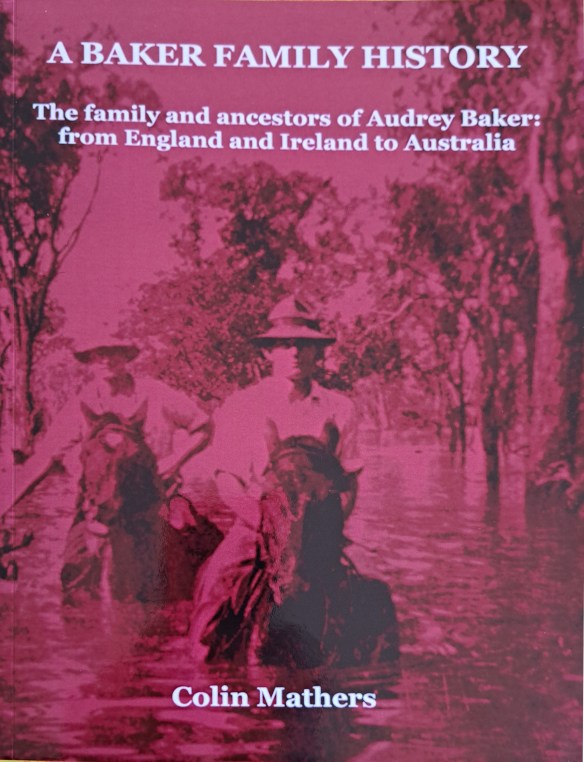
The Australian ancestors of my mother Audrey Mathers (nèe Baker) can be traced back to two immigrant families: Thomas and Mary Baker and James and Anne Cook, who migrated from England to Queensland in 1870 and 1872. Thomas and Mary’s son John Modral Baker was born on the voyage to Australia and married Minnie Warren who was descended from two convicts transported to Australia. This book documents the history of the family in Australia and traces the Baker and Cook ancestors in England back to the 1600s and earlier. They come from a long line of labourers, mostly on farms around small villages in England, the Bakers from Hampshire, the Longs and Cobbs from Warwickshire and Gloucestershire. Minnie Warren’s ancestors can be traced back to German refugees who fled the wars in Rhine-Palatinate in 1709 and settled in Ireland.
9. Colin Mathers and Irene Waters. Audrey’s Family: a Daughter, Mother and Grandmother. Pixxibook, November 2021 (148 pages).
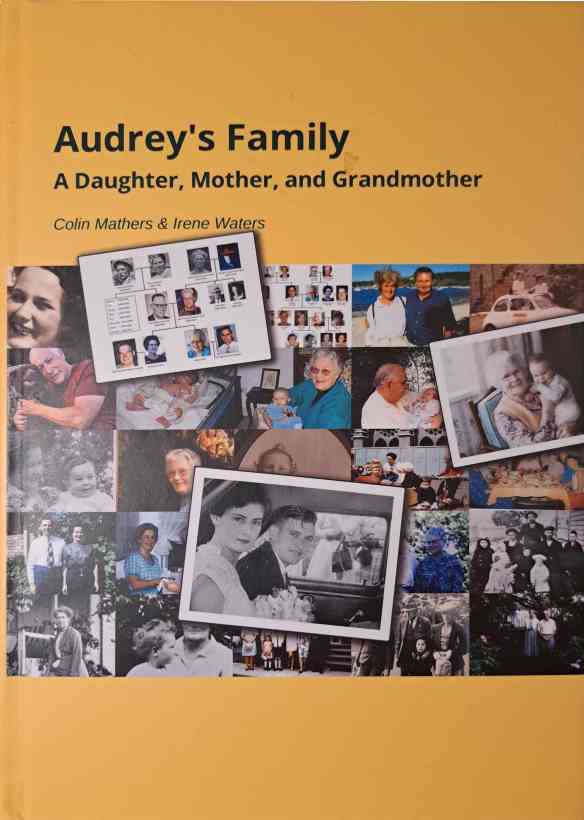
This book was put together by Audrey Mathers’ children Colin and Irene to provide her with a family trees, and biographies of all the people in her family, younger and older generations together with selected photos. As Audrey reached her 90s, her memories of family members started to fade, and this book was made in order to help her remember all her relatives and their lives and relationships with her.
8. Colin Mathers. Shall I try Australia? A history of the Mathers family in Ireland, Scotland and Australia from the 17th to the 21st century. Lulu.com, Australia, 2010 (148 pages).

My great-grandfather, James Mathers, was born in Armagh, Ireland, in 1852 and moved to Scotland in the 1860s where he married Margaret Melrose. They migrated to Australia with their six surviving children in 1897. This book documents the history of the family in Australia, and traces the Mathers and Melrose ancestors in Ireland and Scotland back to the 1700s and earlier. The previous generation, born around the 1820s, were almost all illiterate labourers and coalminers. The subsequent history of the Mathers family encapsulates the dramatic changes in the educational, cultural and economic opportunities brought by the Industrial Revolution in Britain.
This edition of the book was available only to Mathers family members. A second edition is planned and will be publicly available. The second edition will include substantial additions and new information, not least because it has recently been discovered that James Mathers had an older sister, who migrated to Australia earlier, and whose existence was unknown to his descendants.
7. Lopez AD, Mathers CD, Ezzati M, Murray CJL, Jamison DT. Global Burden of Disease and Risk Factors. Oxford University Press, 2006 (475 pages).
This book provides a single up-to-date source (504 pages) of the data, methods and results for the Global Burden of Disease study for the year 2001.It draws on more than 10,000 data sources to provide a comprehensive picture of global health and of trends from 1990 to 2001. It is the primary source document for the methods developed for the Global Burden of Disease updates carried out by WHO during the period 1999-2010. The accompanying article published in the Lancet in 2006 is highly cited (>5500 citations). Available at http://www.dcp2.org/pubs/GBD
6. Murray CJL, Lopez AD, Mathers CD. The Global Epidemiology of Infectious Diseases. Geneva: World Health Organization, 2004 (391 pages).
The fourth volume of the original planned 10 volume series of the original Global Burden of Disease Study, detailing data, methods and assumptions for the infectious diseases included in the GBD study. Volumes 5 to 10 were never published.
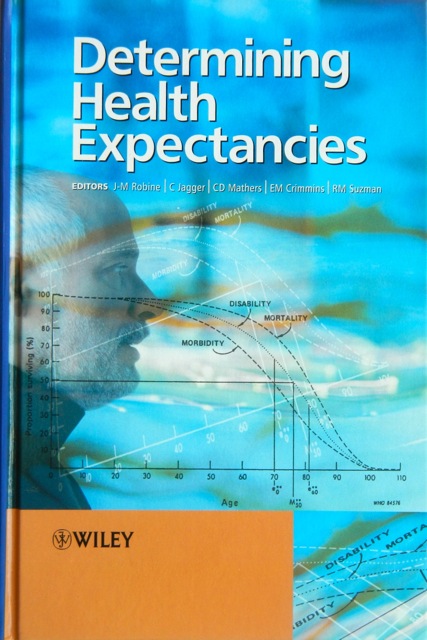
5. Robine JM, Jagger C, Mathers CD, Crimmins EM, Suzman RM (eds.). Determining health expectancies. John Wiley & Sons, Chichester, 2003 (428 pages).
A comprehensive text on methods, results and applications of health expectancies, drawing on more than ten years work of the REVES network on health expectancy. Health expectancies are a summary measure which takes into account mortality and morbidity or disability.
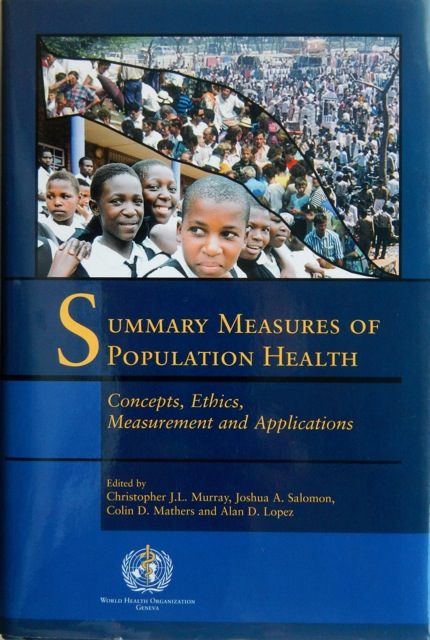
4. Murray CJL, Salomon J, Mathers C, Lopez A (eds.). Summary measures of population health: concepts, ethics, measurement and applications. Geneva: World Health Organization, 2002 (770 pages).
A fundamental reference book addressing a wide array of critical issues regarding the development and application of summary measures of population health. Contributors included leading experts in epidemiological methods, ethics, health economics, health status measurement and the valuation of health states.
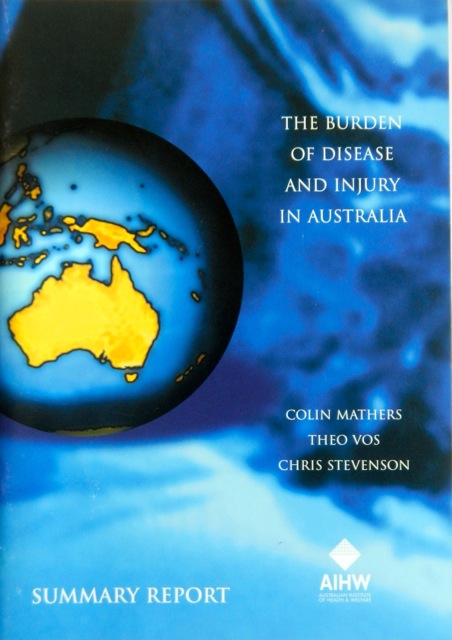
3. Colin Mathers, Theo Vos, Chris Stevenson 1999. The burden of disease and injury in Australia. Canberra: Australian Institute of Health and Welfare.
This book sets out in detail the methods, data sources and key findings of Australia’s national assessment of the major causes of disease burden, incorporating both death and non-fatal health outcomes, and also quantifying the burden of major risk factors (around 1300 citations).
2. Colin D. Mathers, John R. Bear. Shimete – the Jujutsu Art of Strangulation. International Jujutsu Institute of Australasia, Canberra, 1998 (200 pages).
This book documents the shimete art of the Kokusai Jujutsu and was prepared and published by me as part of the requirements for grading to the yondan (4th dan) black belt level. I drew extensively on documentation and notes prepared by the Ryu’s Australian Chief Instructor, John Bear and additionally on his teaching and advice. The Kokusai Jujutsu Ryu has preserved combat jujutsu techniques from the ancient Japanese ryu, predating the rise of Kodokan judo. Of the more than 730 named techniques taught in the ryu, around one quarter contain a shimete (strangulation). These are completely documented in the book, together with a detailed examination of the three principle classes of strangles: respiratory, sanguinous and nervous system. Due to the nature of the techniques described in this book, it was published solely for senior students in the ryu and is not publicly available.
- Colin Mathers, Neil Phillips. Illuminating the Way: A History of the Kokusai Ju-Jitsu Ryu in the Canberra Region. Australian National University Ju-Jitsu Club, Canberra, 1993 (100 pages).
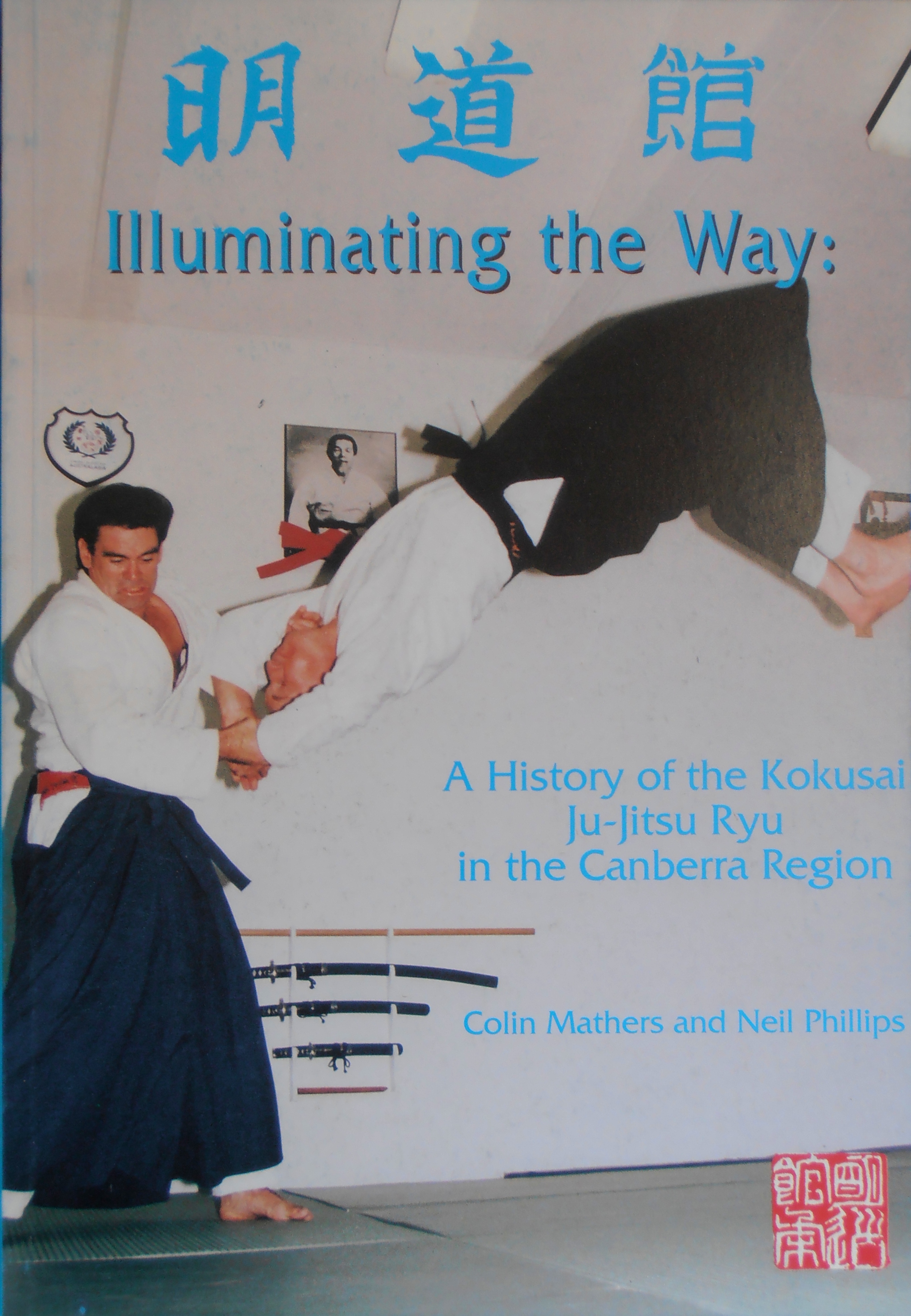
Starting with the origins of ju-jitsu in feudal Japan, this book describes how the ju-jitsu and kuatsu arts of the Kokusai Ju-Jitsu Ryu were brought from Japan to Malaysia in the 1930s by Professor Kam Hock Hoe (1903-1990) who passed them on in the 1960s to Australian students. The book includes detauls of Professor Kam’s life, as well as rare historical photos. It also describes and illustrates the dynamic techniques of this authentic ju-jitsu art, as taught in the Canberra region during the period 1970-1993. This book is now out of print.
 Mountains and rivers