
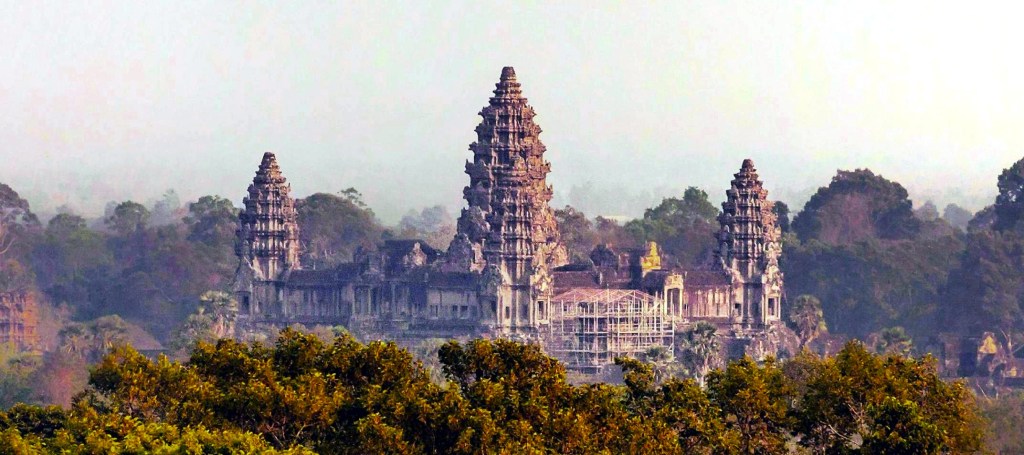
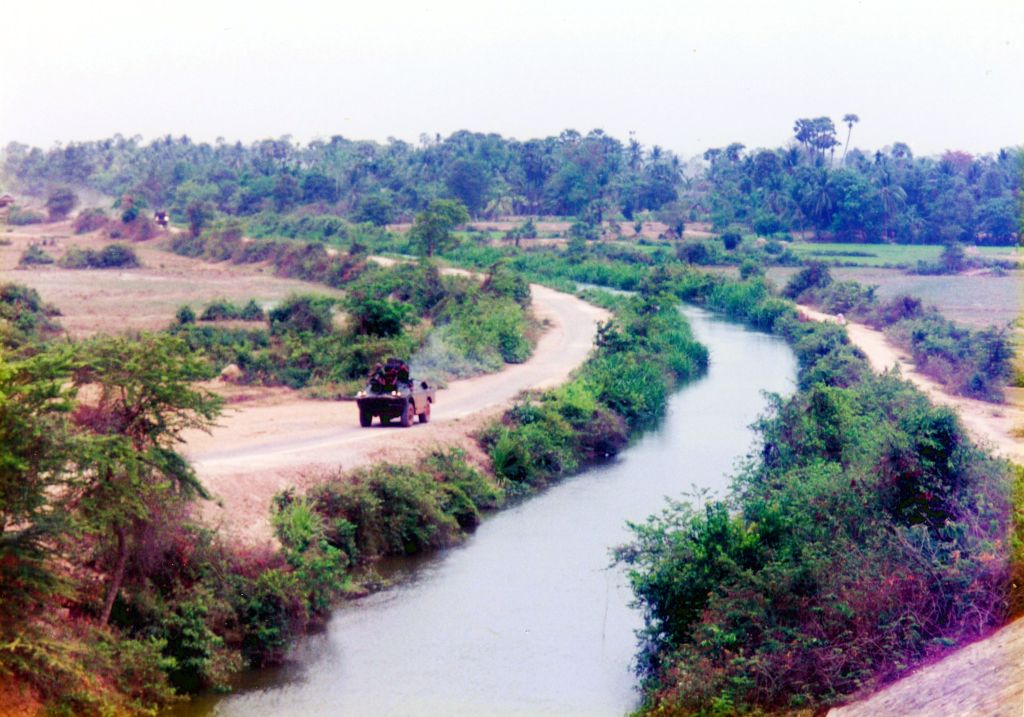
In March 1995, I spent two weeks in Cambodia and was able to make a visit to Angkor Wat. At that time, the Khmer Rouge were still active. As part of the peace process following the civil war of the 1980s, the UN-sponsored elections in 1993. The Khmer Rouge excluded itself from the peace process and maintained control of areas in northwestern Cambodia, in the provinces of Battambang and Siem Reap (where Angkor Wat was located), and neighbouring Thailand. Its forces numbered around 10,000 fighters and were able to extend Khmer Rouge control to more than half a million Cambodians, four times as many as before the peace accords. During the dry season in late 1994 and early 1995, the Khmer Rouge adopted new tactics, including the murder of civilians, the systematic destruction of civilian homes and rice fields, looting, rape and the kidnapping and murder of Westerners.
My then partner Trish went to Cambodia in January 1995 to manage a Red Cross clinic providing prosthetic limbs and rehabilitation to mine victims. I visited her in March for two weeks. In the second week, we flew from Phnom Penh to Siem Reap, Cambodia’s second largest city about 320 km north of Phnom Penh, to obtain a permit to visit nearby Angkor Wat.
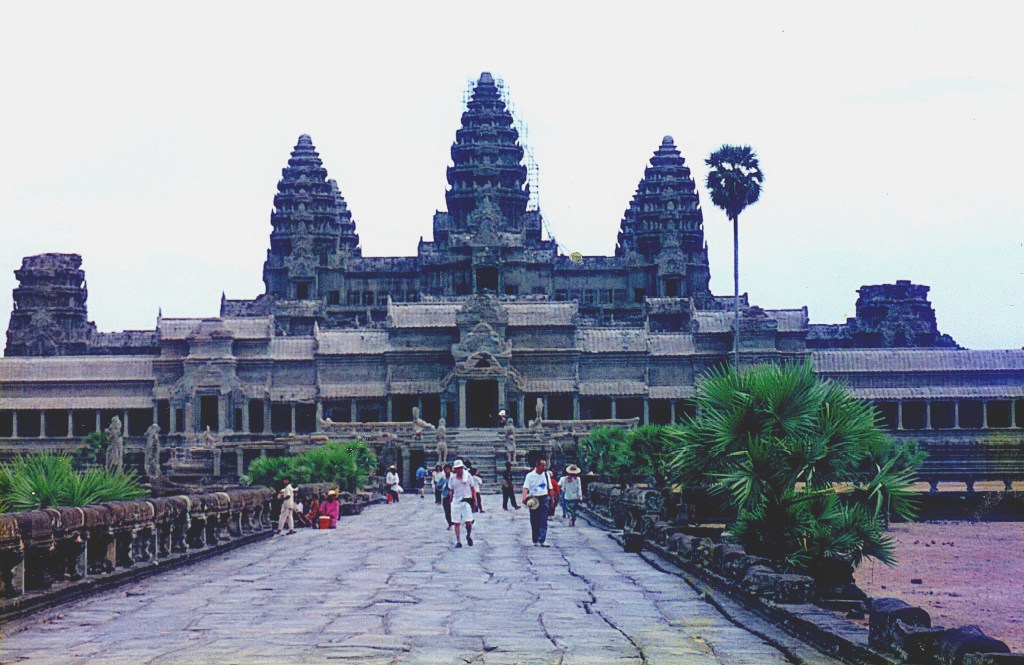
Angkor Wat is an architectural masterpiece and the largest religious monument in the world – covering an area four times the size of Vatican City. It was built by the Khmer King Suryavarman II in the first half of the 12th century, around the years 1110-1150, making Angkor Wat almost 900 years old. The temple complex was built by 300,000 workers and took approximately 30 years to build. It was originally dedicated to the Hindu god Vishnu before becoming a Buddhist temple by the end of the 12th century.
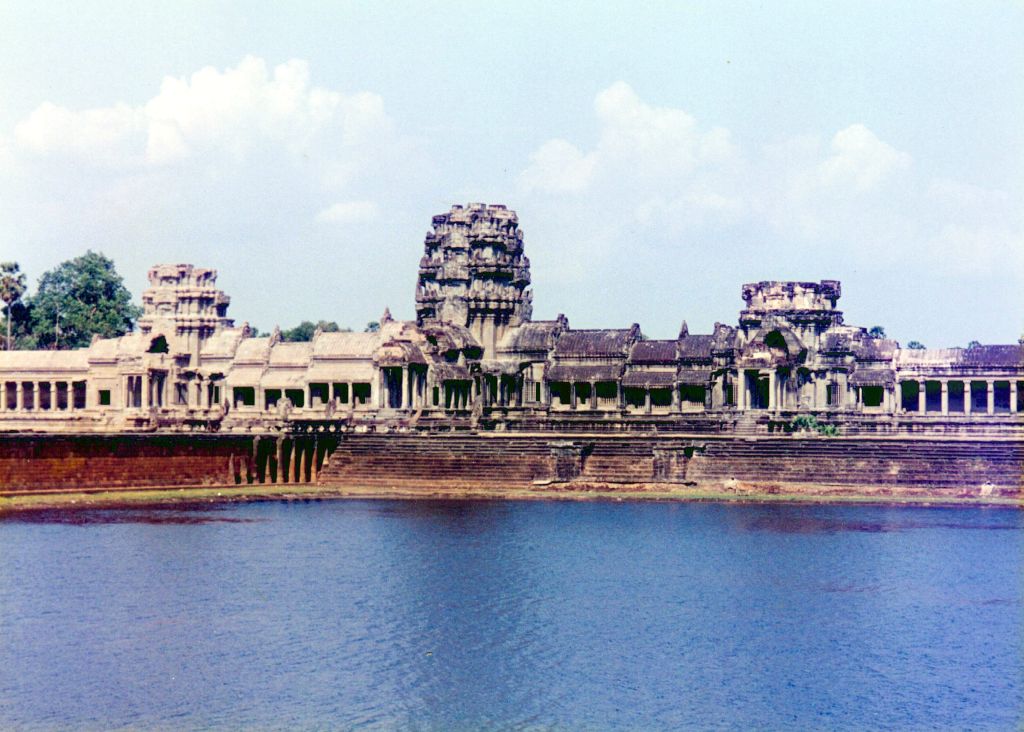
Inside the main gate, there is a grassy field with two pools, a lower gallery running all around the main building, a middle gallery with four courtyard pools, and the five towers. The lower gallery is covered in bas-relief carvings to a height of two metres, covering over 500 metres of wall. They depict various religious and historical epics.
In the West Gallery is the Battle of Kurukshetra, one of longest bas-relief in the world. Extending for 50 metres, it illustrates the epic battle of Kurukshetra from the Hindu epic Mahabharata, depicting the fierce clash between the Kauravas and Pandavas.
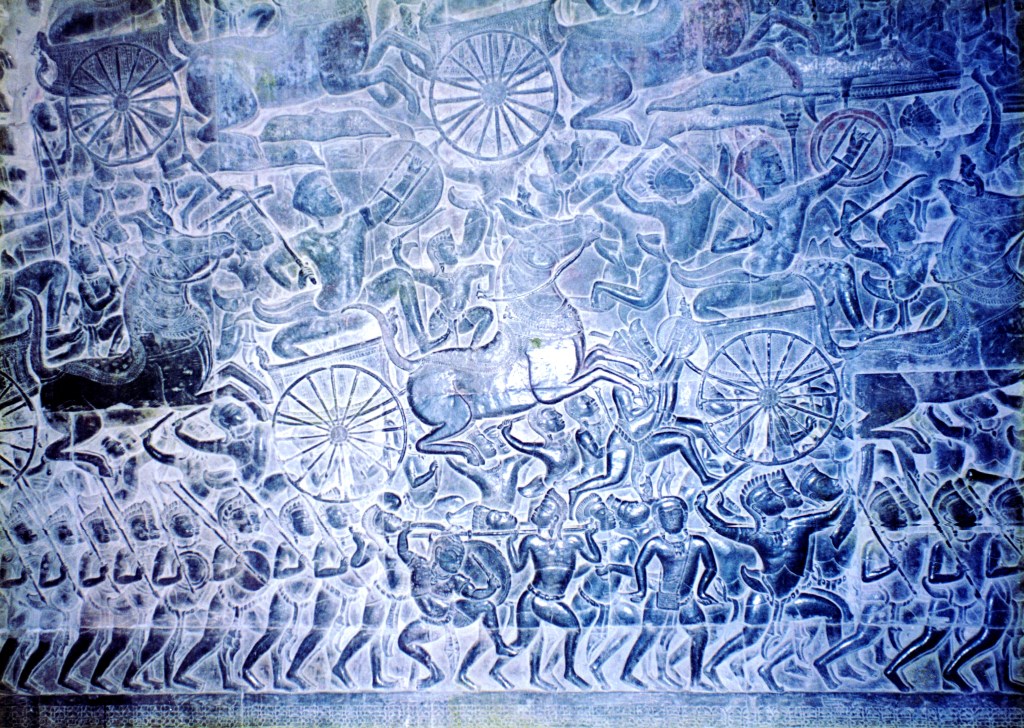
This section depicts the army of the Kauravas marching into battle.
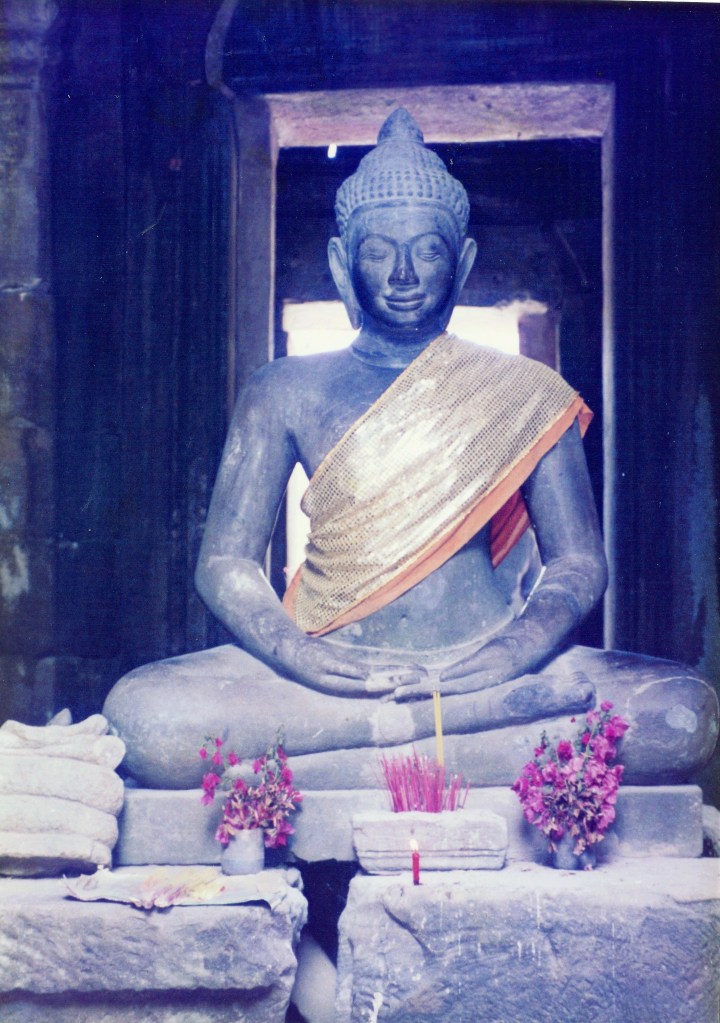
Originally serving as a Hindu temple, Angkor Wat switched from Hinduism to Buddhism twice due to the beliefs of different kings. The first transition to Buddhism occurred in the late 12th century under King Jayavarman VII, who converted it to Mahayana Buddhism. Then there was a brief return to Hinduism: after Jayavarman VII’s death, some Hindu practices were restored. By the 14th century, Angkor Wat fully embraced Theravada Buddhism, which remains the dominant religion.
Angkor had a complex water management network, to protect inhabitants from floods in the rainy season, to provide water for domestic use and irrigation in the dry season, and to stabilize the ground beneath the temples of Angkor Wat.
The decline of Angkor is thought to be associated with the collapse of the water system in the 14th century due to a decline in maintenance and some extreme climate events. After this, Angkor was lost to all but locals for the best part of 400 years. The city returned to the jungle.
One of the first Western visitors to the temple was a Portuguese friar, Antonio de Madalena, who visited in 1586. Angkor Wat was then effectively rediscovered by the French explorer Henri Mouhot in 1860. He described Angkor Wat as “grander than anything left to us by Greece or Rome” and wrote extensive descriptions of the temples accompanied by drawings that were published after his death the following year. Mouhot died in Siam from malaria at the age of 35 and was buried near the Nam Khan river. Ironically, during the Vietnam War period his grave was lost to the jungle and was rediscovered and restored in 1989 by another French scholar.
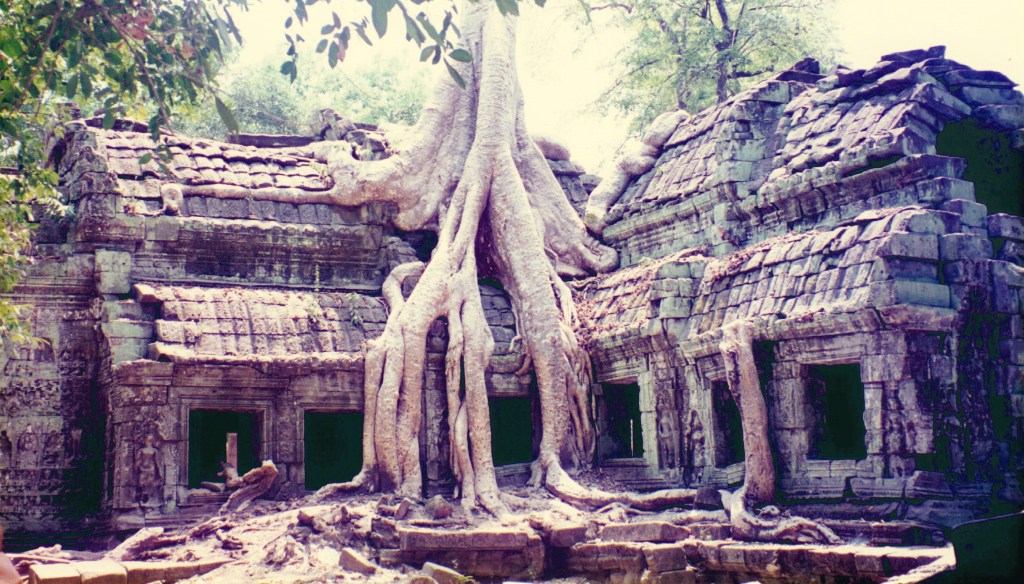
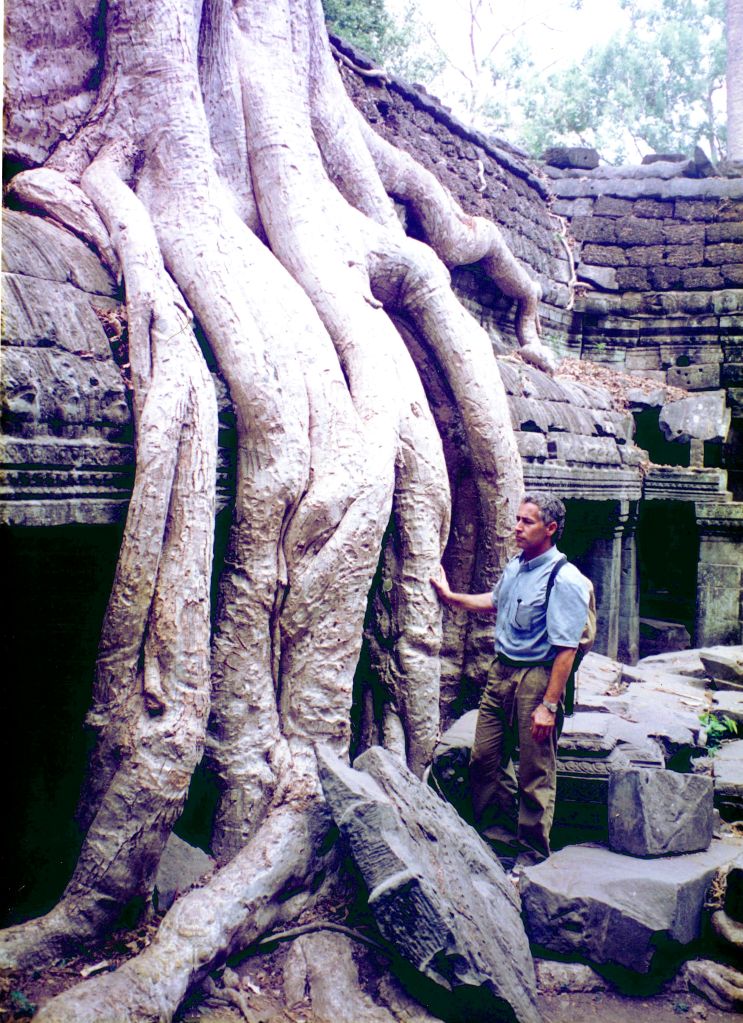
I read about the “rediscovery” of Angkor Wat as a child and had visions of Mouhot suddenly stumbling across ruins overgrown by the jungle. In reality, the ruins were always easily visible, but indeed giant banyan trees and other vegetation had dramatically grown over some of the temples.
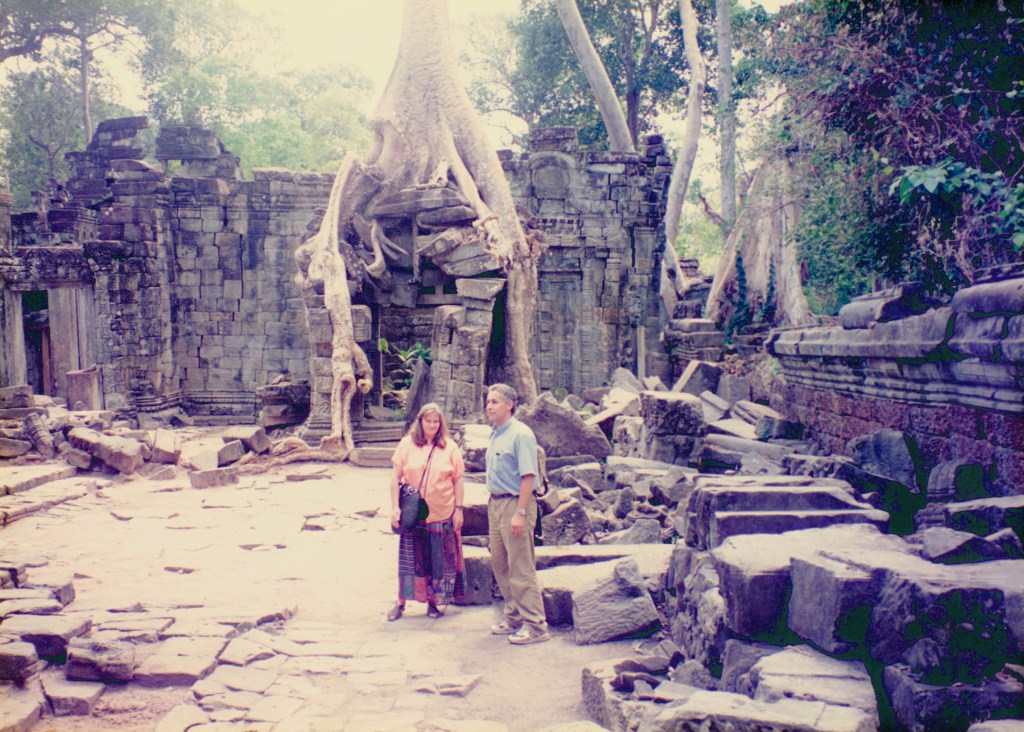
Ta Prohm Temple was built in 1186 CE by Jayavarman VII and has many trees growing out of and over the ruins, some of them over 400 years old. When the French began restoration of the temples, they chose Ta Prohm to be left in its “natural state”. It was the site of some of the filming for the movie Lara Croft: Tomb Raider.
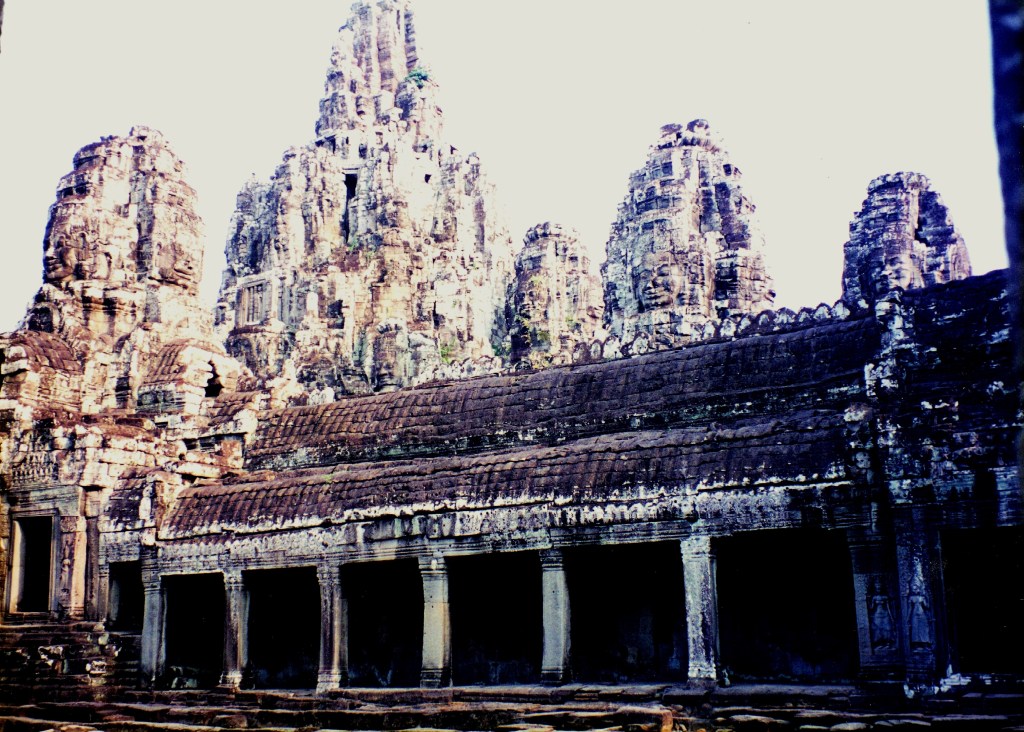
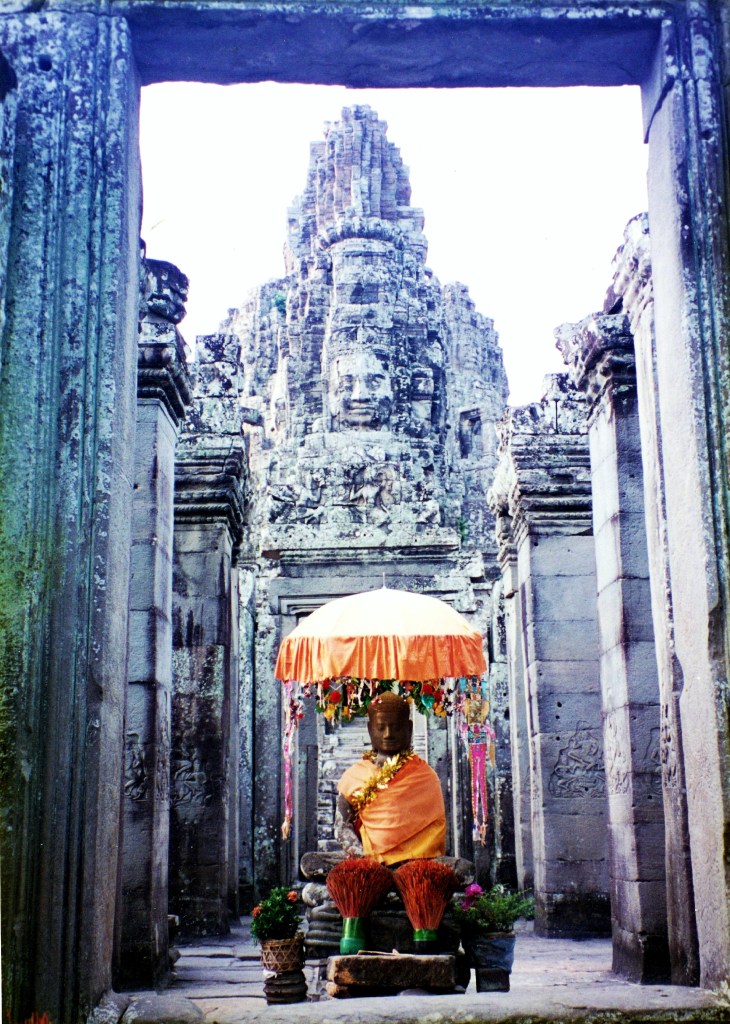
After walking north from Angkor Wat for a little over one kilometre, we crossed a causeway over the moat leading to the South Gate of Angkor Thom. This and the other four causeways are flanked by 54 statues on each side with gods on the left and demons on the right. As we reached the gates, large faces looked out to the four cardinal points. These faces, on towers 23 metres high, are thought to represent the King Jayavarman VII or the bodhisattva Avalokiteshvara, or a combination of the two.
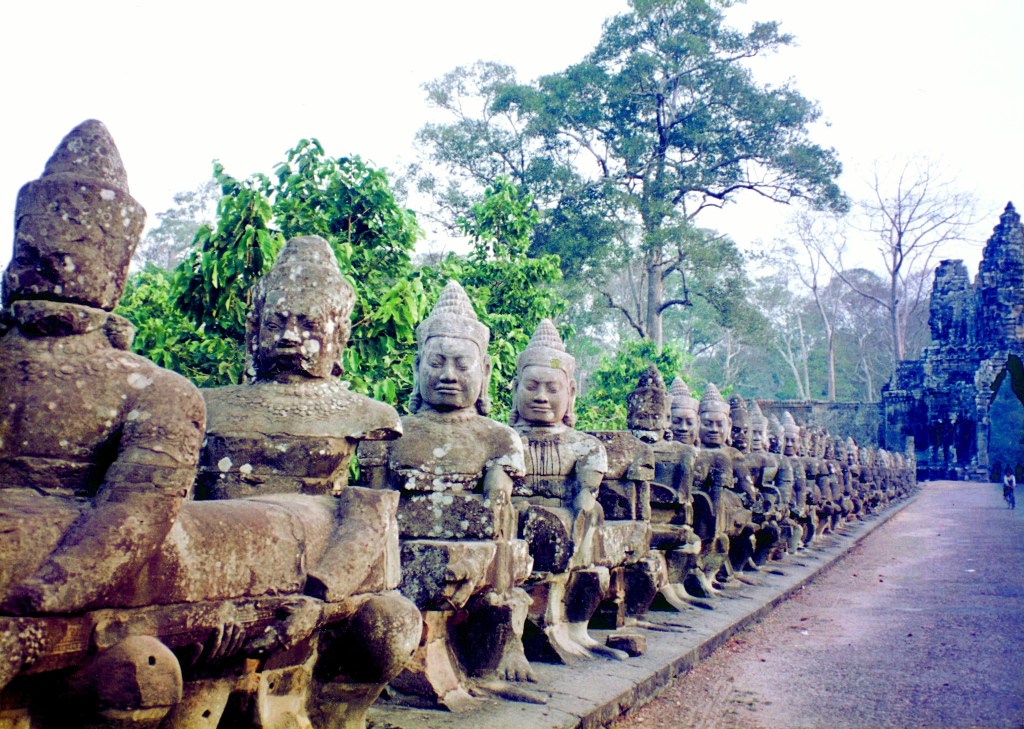
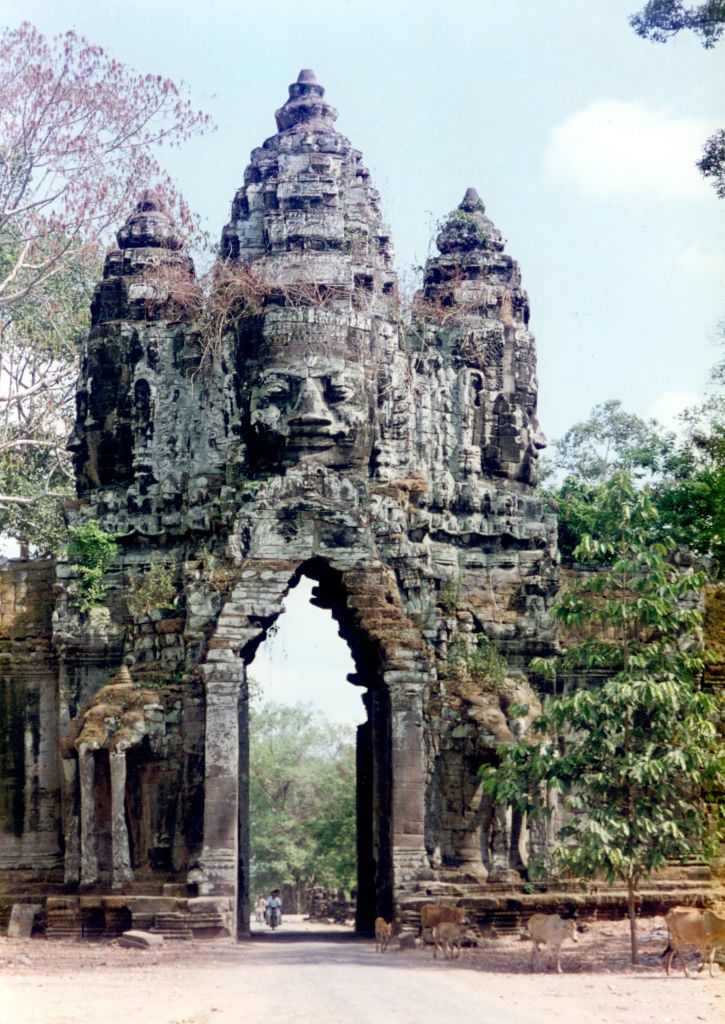
The walled city Angkor Thom was built in its present form in the late12th century by Jayavarman VII (1122-1218). The city covers an area of 9 square kilometres with 4 walls 3km in length. Each wall faces a cardinal point and there is a crocodile-filled moat surrounding the entire city.
The Bayon is the central temple of Angkor Thom and was built by Jayavarman VII and VIII in the late 12th to 13th centuries. It is located in the exact centre of Angkor Thom, the symbolic centre of the universe. According to a medieval Chinese visitor, the towers of the Bayon were once covered in gold.
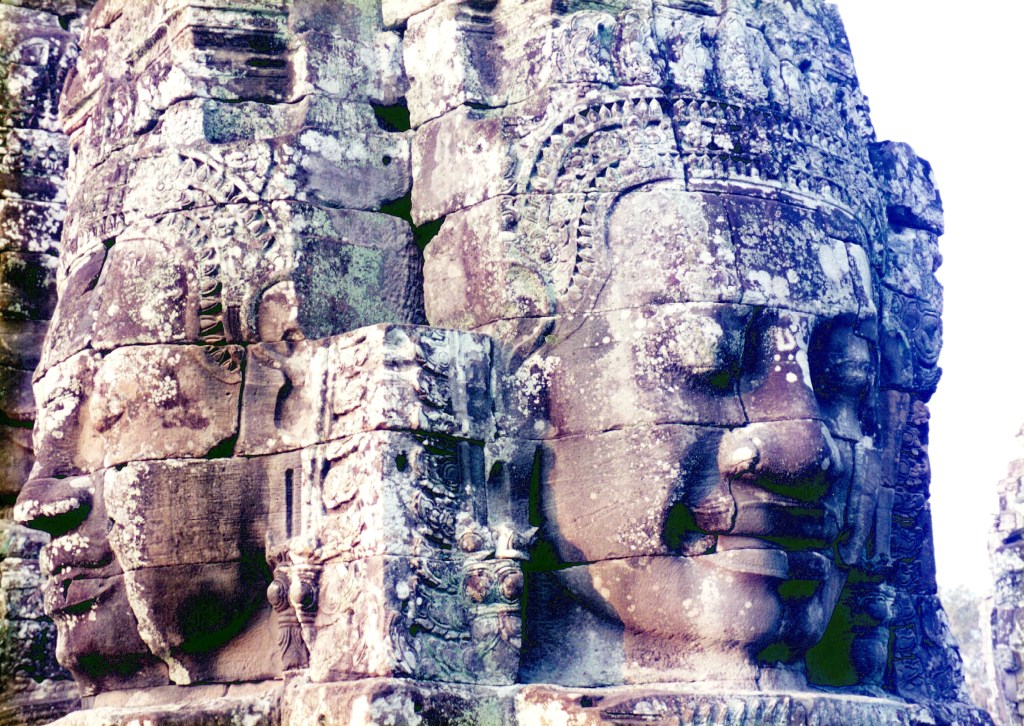
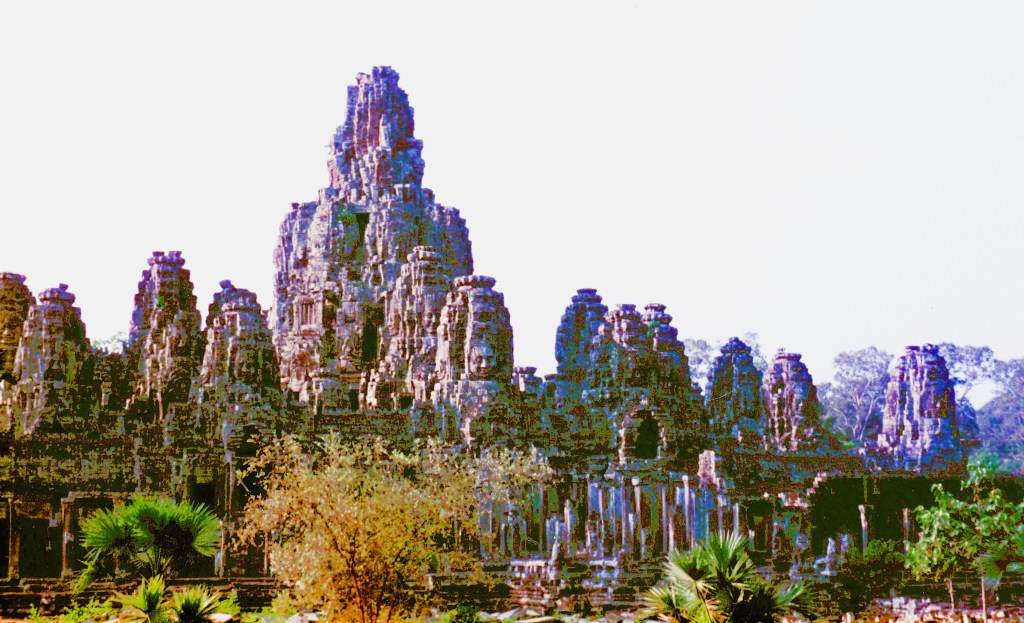
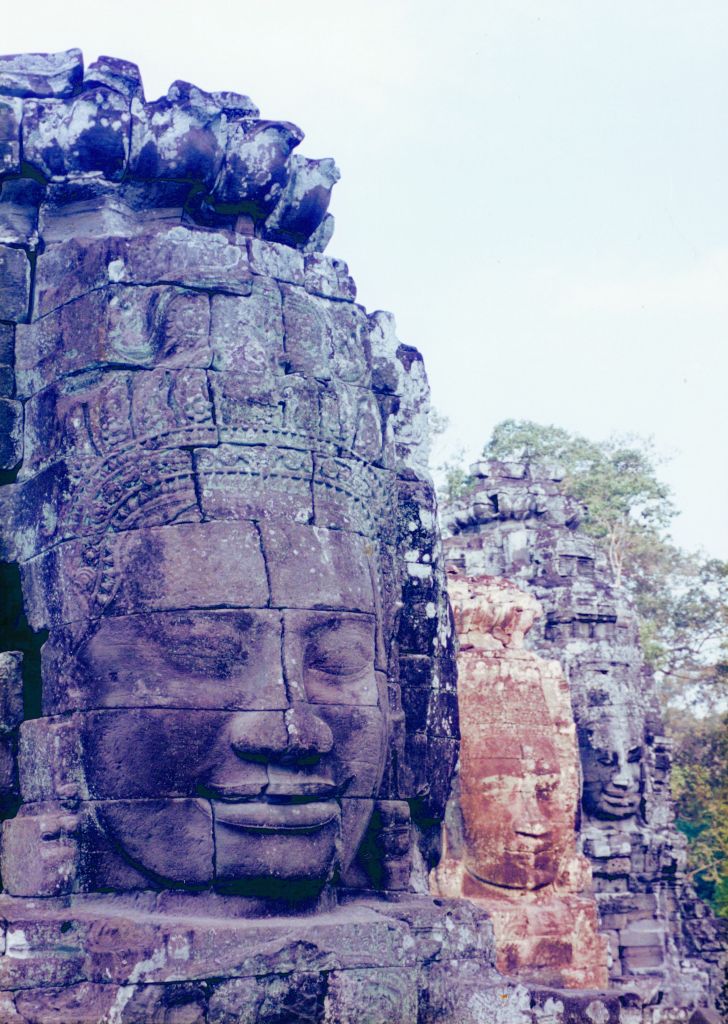
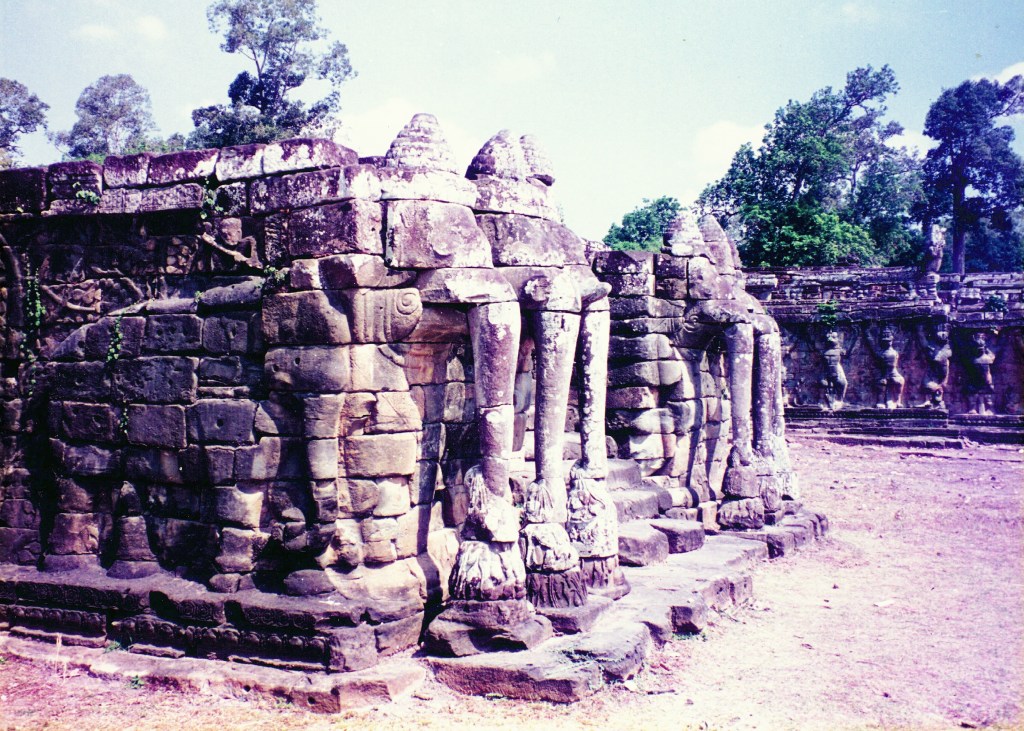
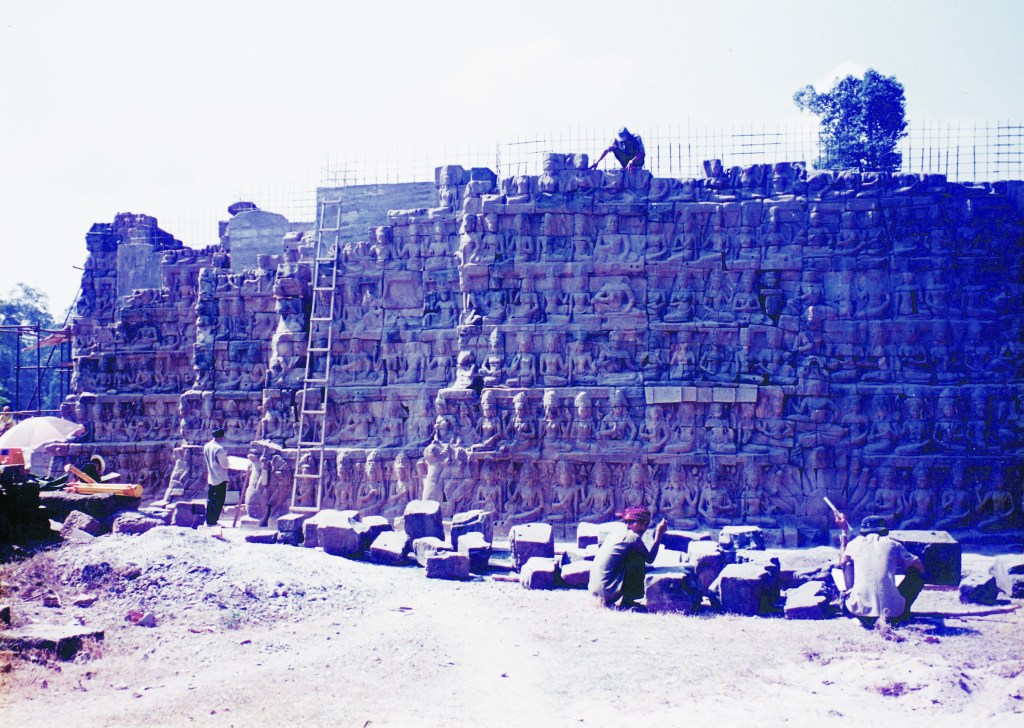
The city of Angkor was the capital of the Khmer Empire and at its peak in the 12th century is thought to have had a population of 700,000 to 1 million, most living in dwellings outside the walls of Angkor Thom.
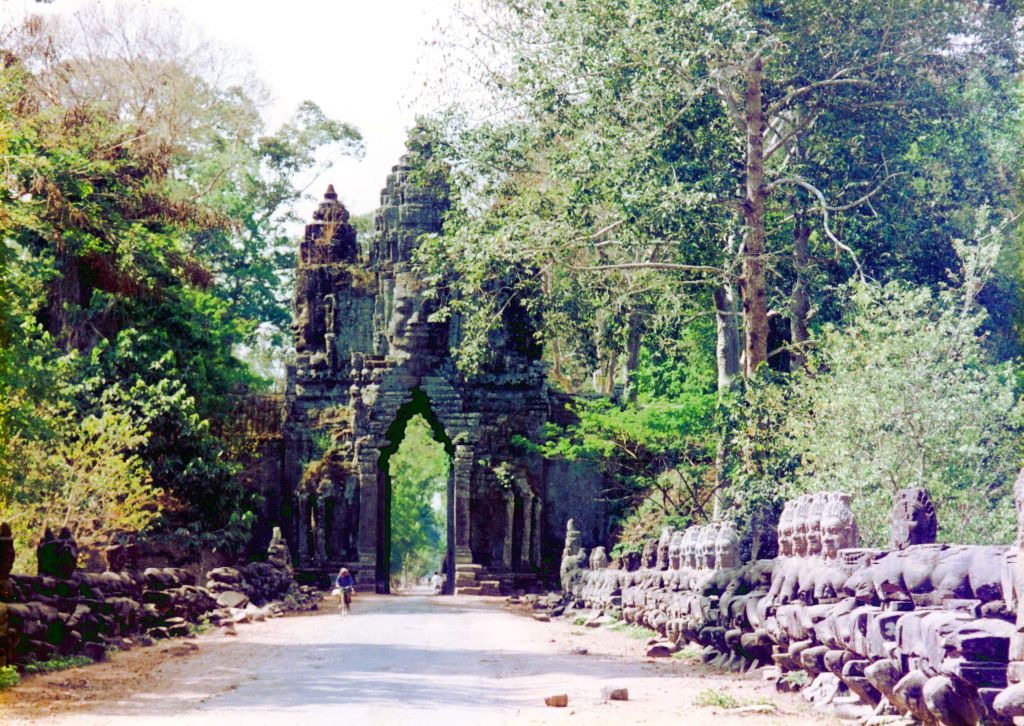
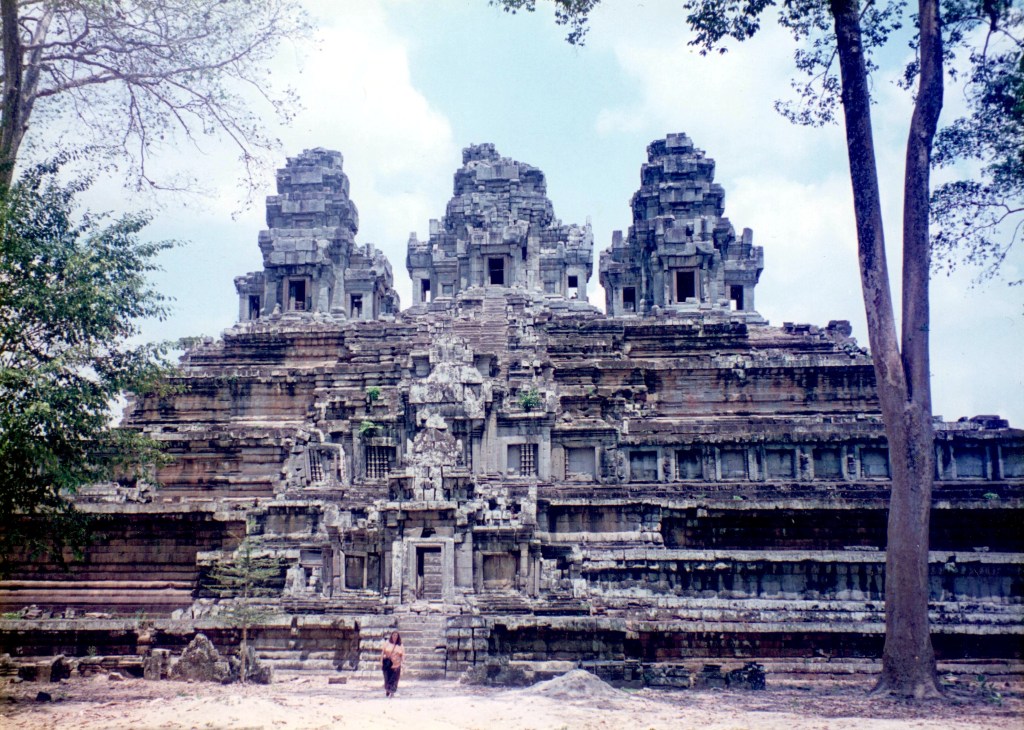
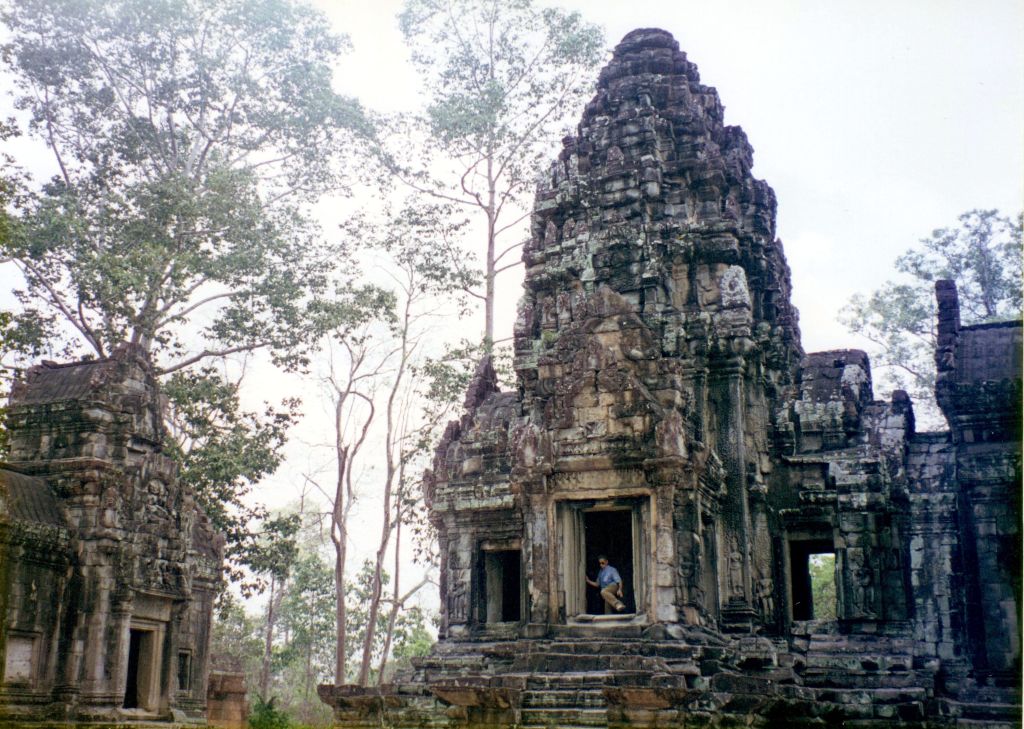
Preah Khan Temple is a short walk from the North Gate of Angkor Thom and is one of the northern-most Temples on the Angkor site.
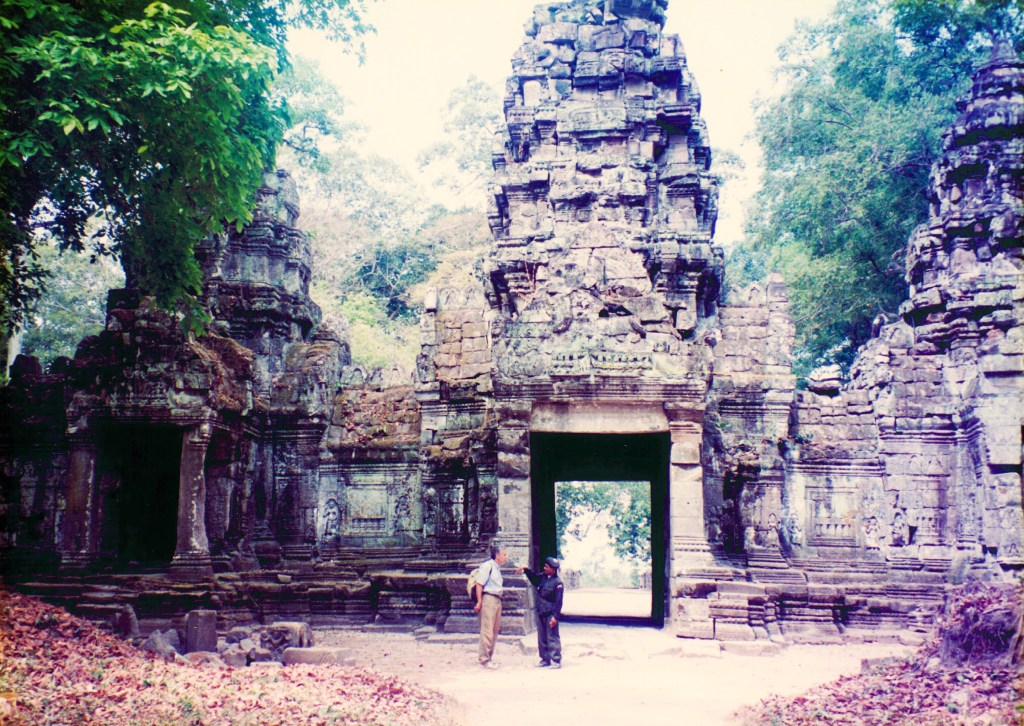
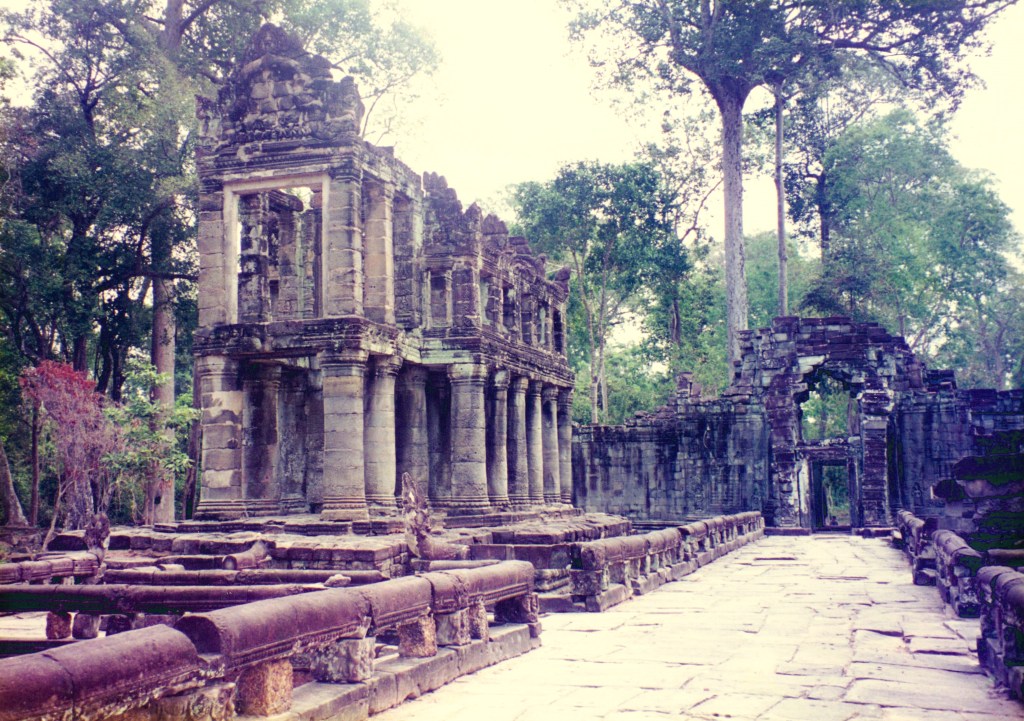
When we were walking on a fairly deserted path towards one of the outlying temples, I was a few metres ahead of Trish. She suddenly called to me “What’s that?” I turned around and just behind me was a landmine lying on the path. It was a circular metallic disk, about 10 cm across and a couple of centimetres high. It looked just like one of the landmines we had seen in posters. I had stepped right over it.
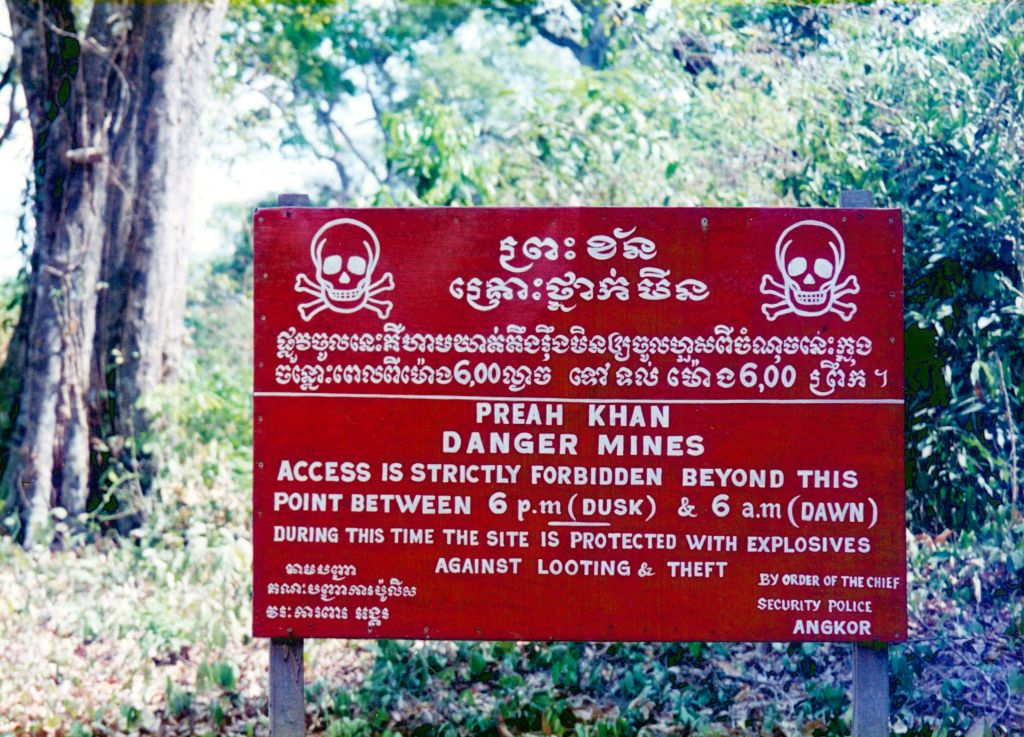
We had earlier seen a notice at Preah Khan Temple warning that mines were laid at 6 pm to protect the site from looters and picked up at 6 am. This mine must have been overlooked that morning. When I first started writing this post I remembered the mine incident but was not sure whether my memory was accurate that mines were laid at night. I spent quite a bit of time searching online for confirmation of this memory, without success. Then when I went through my photos from Cambodia I found the photo below, obviously the source of my memory.
We stayed in Siem Reap that night and the next morning flew back to Phnom Penm on a very old Russian aircraft. When the plane took off, the cabin filled with a dense fog, visibility was close to zero until it cleared. The plane shook dreadfully as we flew back. I was very happy to be on the ground again.
Angkor – one of the most astonishingly beautiful places I have ever visited. And glad I was lucky enough not to step on that landmine.
 Mountains and rivers