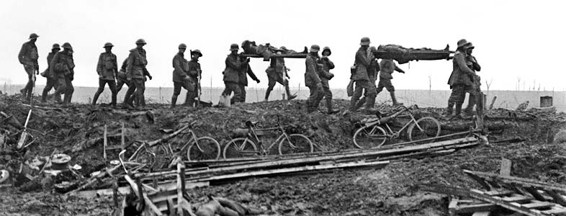
On the Western Front – Part 4. Villers-Bretonneux and Péronne

This is my fourth post on the World War I battlefields where my grandfather Will Mathers (1893-1953) served from 1916 to1918. See here, here, here, and here for previous posts.

After Flanders, Tom and Will spent December 2017 until March 2018 well behind the front lines near Boulogne-sur-mer in the Pas-de-Calais. They were sent to the front at Villers-Bretonneux in late March 1918.
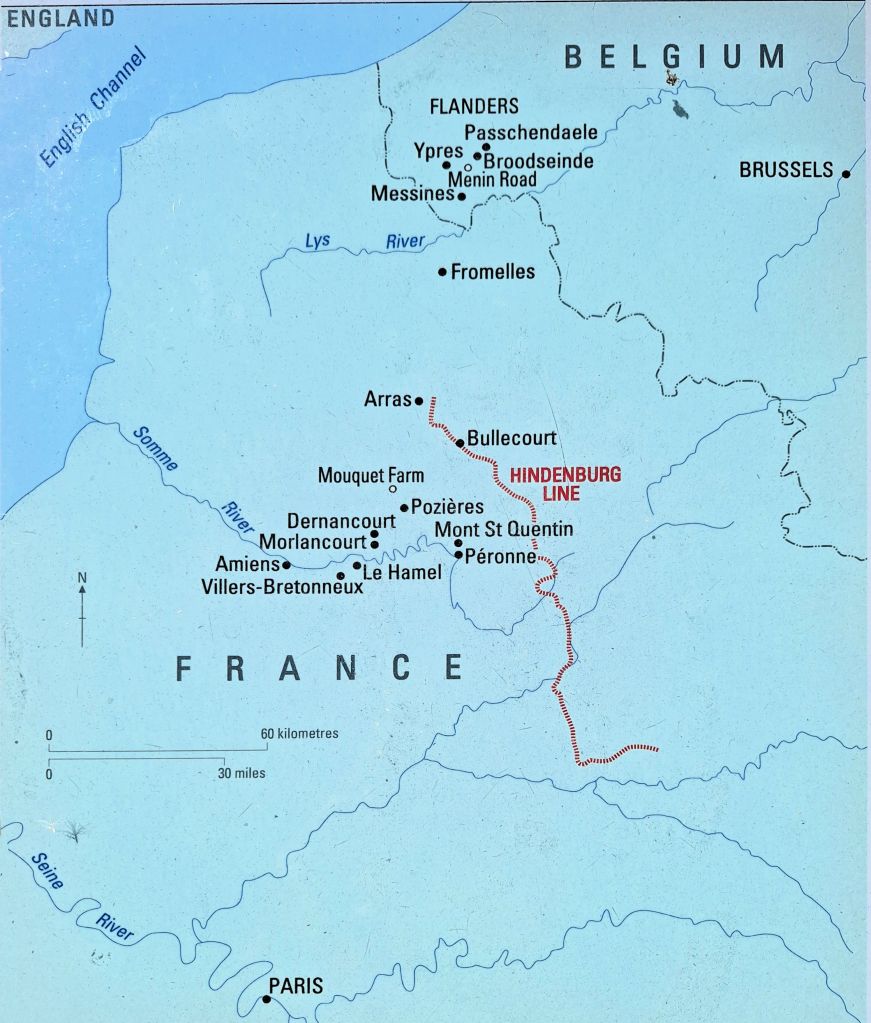
The Western Front – Flanders and the Somme.
The Germans pushed the front line to Le Hamel and Villers-Bretonneux in March-April 1918

On 21 March 1918, the Germans launched an offensive against Allied forces around the Somme. Within two weeks they had advanced around 65 km, but were halted at Villers-Bretonneux by British and Australian troops on 4 and 5 April 1918. On 24 April, a renewed German attack captured the town, but that night the 13th and 15th Australian Brigades counter attacked from the north and south, driving the Germans from the town and nearby woodland. These battles were fought across the ground on which the Villers-Bretonneux Military Cemetery now stands.
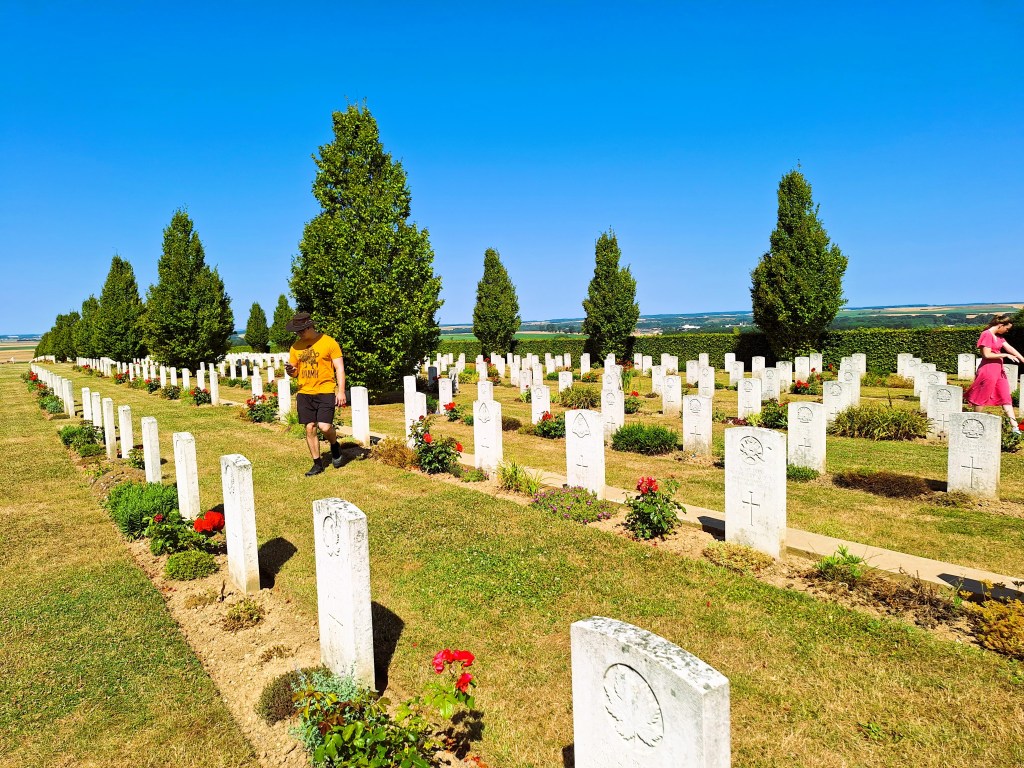
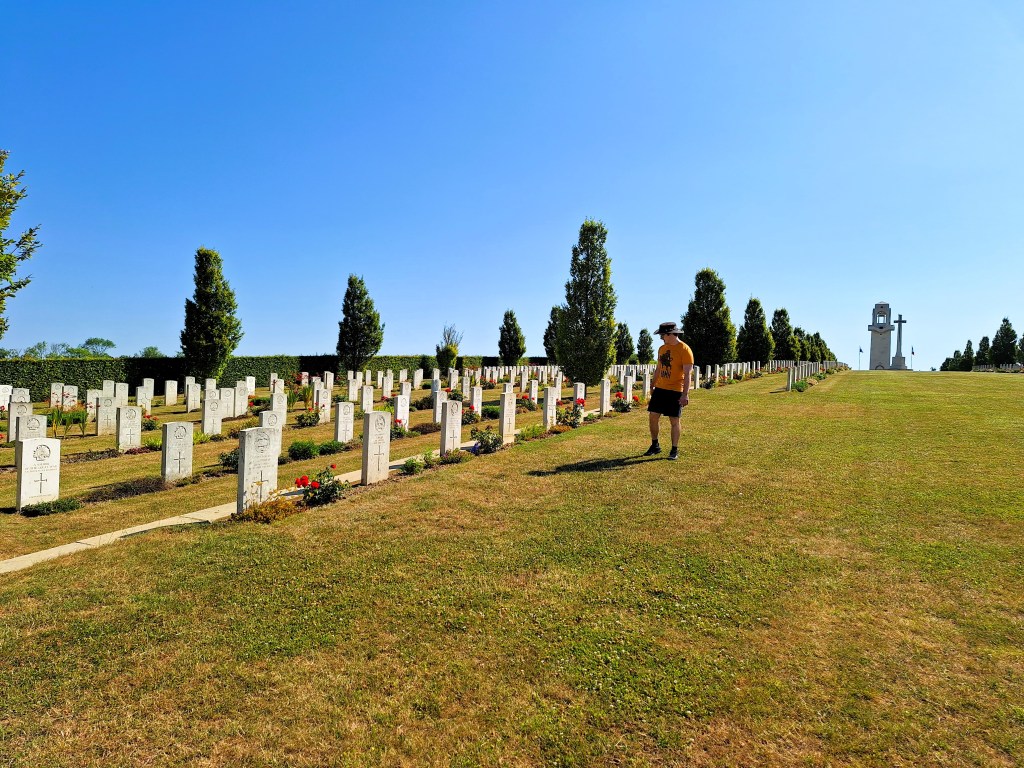
Villers-Bretonneux Military Cemetery
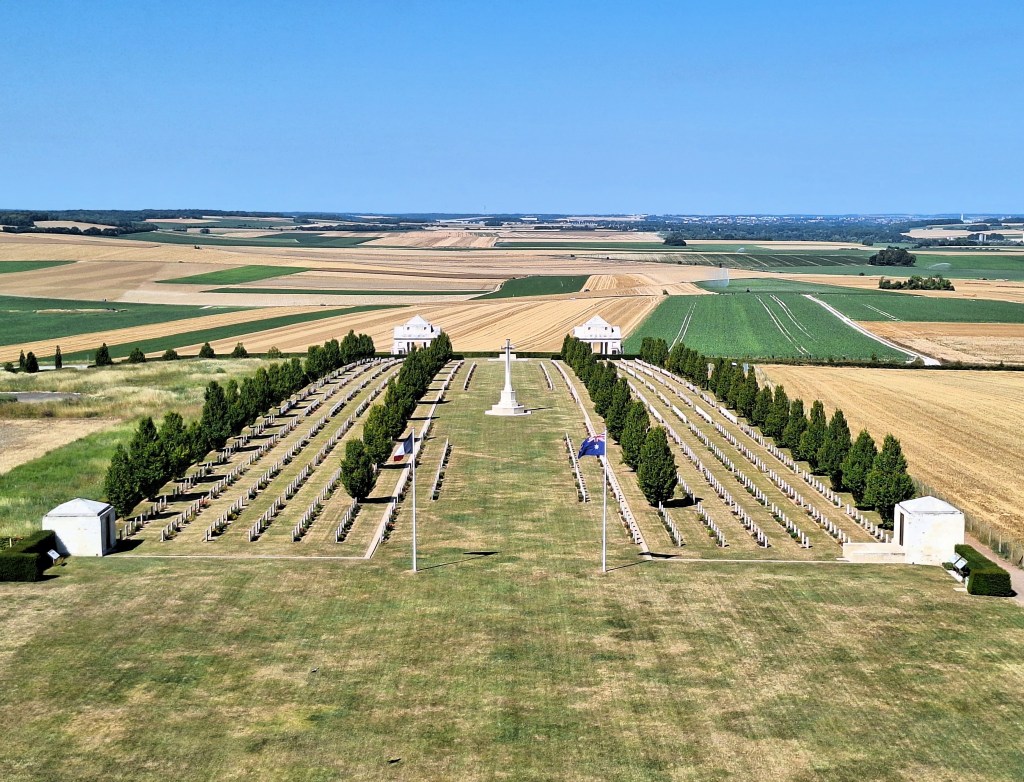
Villers-Bretonneux Military Cemetery with the Australian National Memorial in the background

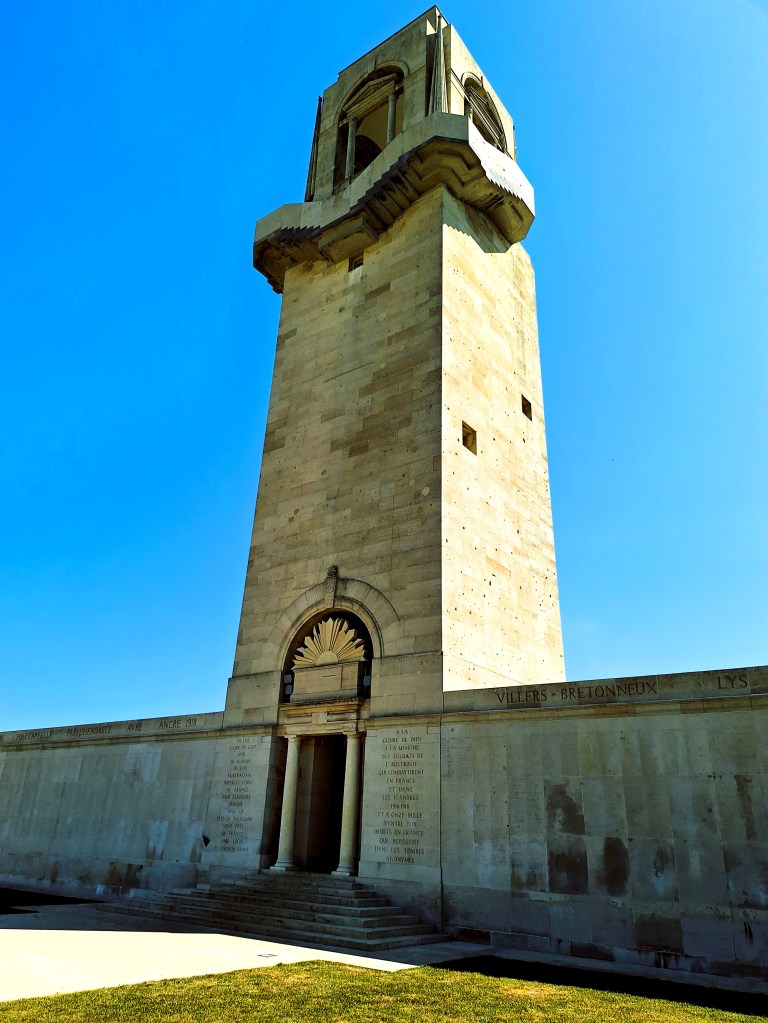
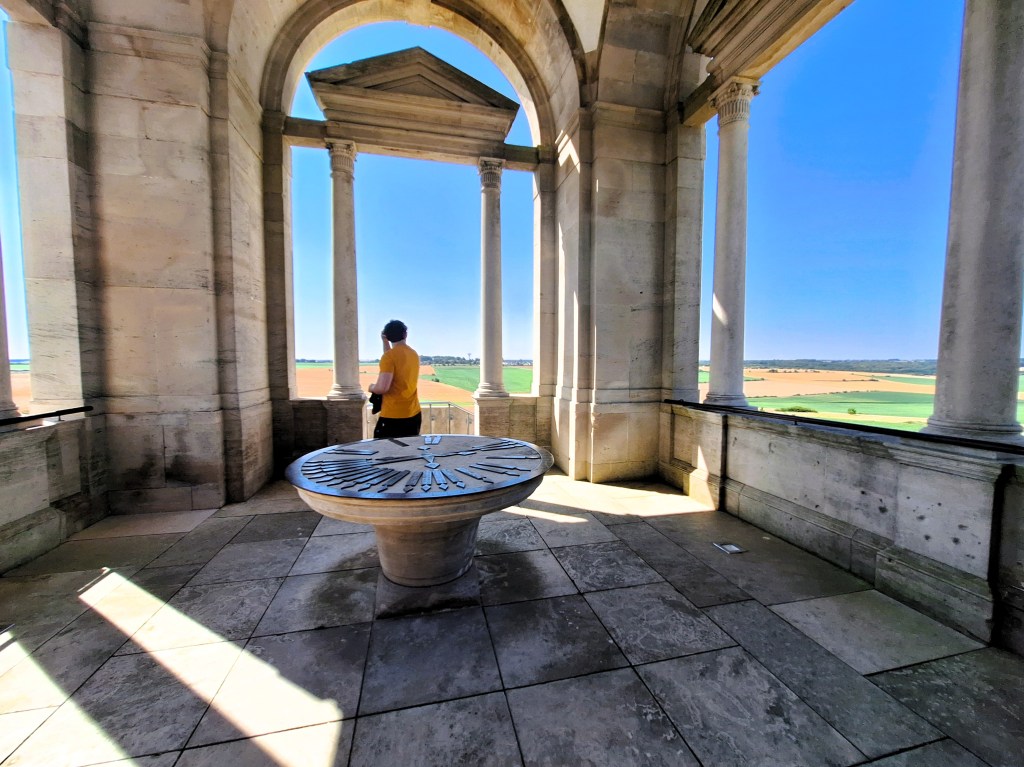
The Cemetery contains more than 2100 graves of Commonwealth servicemen of the First World War, of whom more than 600 remain unidentified. At the back of the cemetery is the Australian National Memorial, which honours the Australian soldiers who served in France and Belgium. It consists of a central tower, with spectacular views of the surrounding countryside, flanked by wing walls commemorating the 10,796 Australian who died in France and who have no known grave. Along the upper edges of the Memorial, the battle honours of major engagements involving Australian troops in France and Belgium are inscribed.
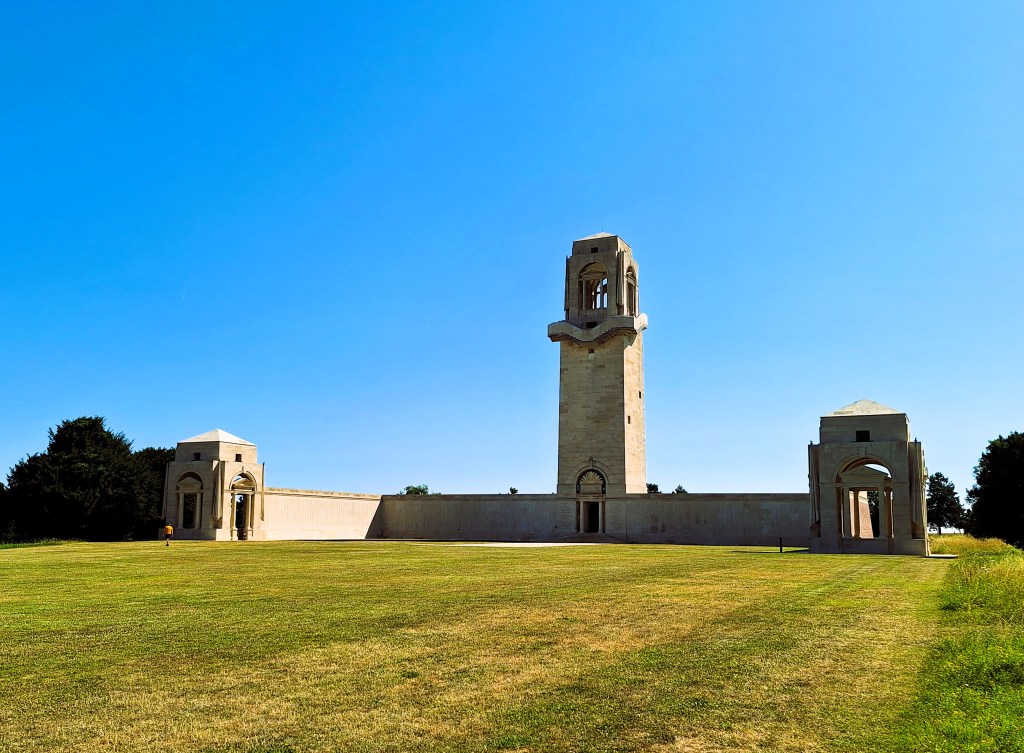
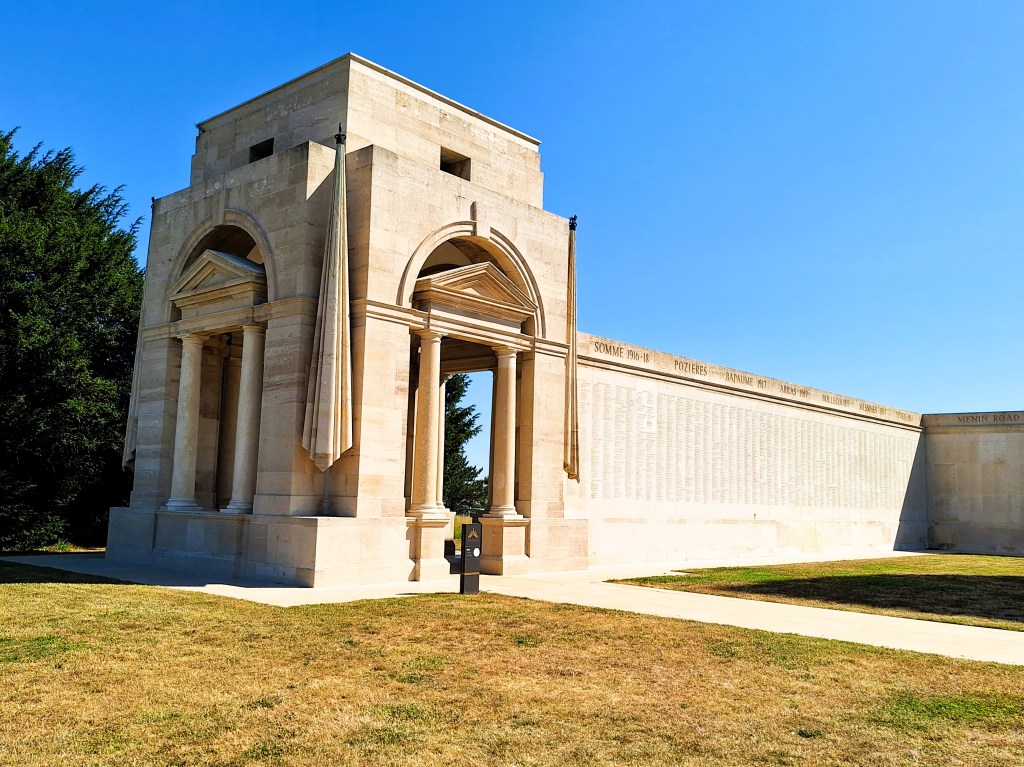
The Australian National Memorial at Villers-Bretonneux
The central tower of the Australian National Memorial
The view west over the Cemetery from the top of the Australian National Memorial tower.
The view south towards Villers-Bretonneux from the Memorial Tower
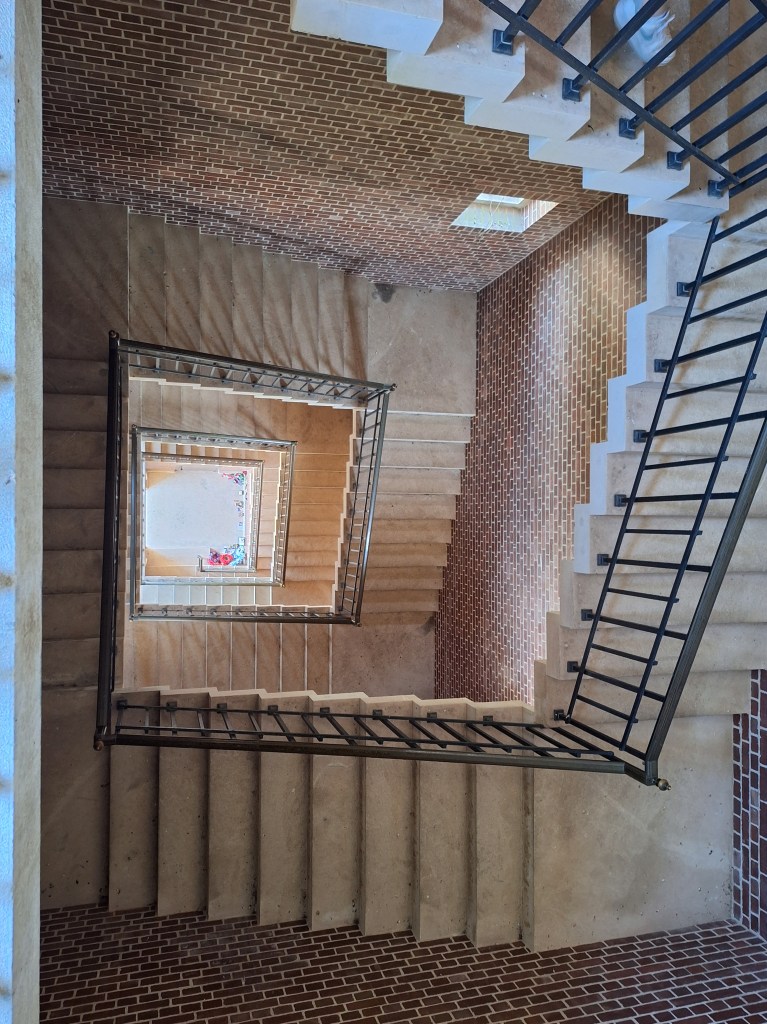
Looking down the Tower staircase

On 21 April, 1918 the 8th Australian Field Ambulance, including Will and Tom, were sent to relieve the 15th Australian Field Ambulance at Hamelet, a village a few kilometres north-east of Villers-Bretonneux. The German air ace Baron von Richthofen (the Red Baron) was shot down nearby on that day. The field where he crashed is across the road from the Australia Corps Memorial (see further below).

The Red Baron was the top German air ice of the First World War. With some 80 victories to his name, he shot down more aircraft in the war than any other pilot. His name re refers to his red Fokker triplane. His squadron was known as the Flying Circus, many decades later inspiring the name Monty Python’s Flying Circus. On the morning of 21st of April 1918, the red Baron was pursuing a British aircraft, and had another Canadian aircraft on his tail. He flew extremely low and was killed by machine gun fire from the 24th Australian Machine Gun Company.
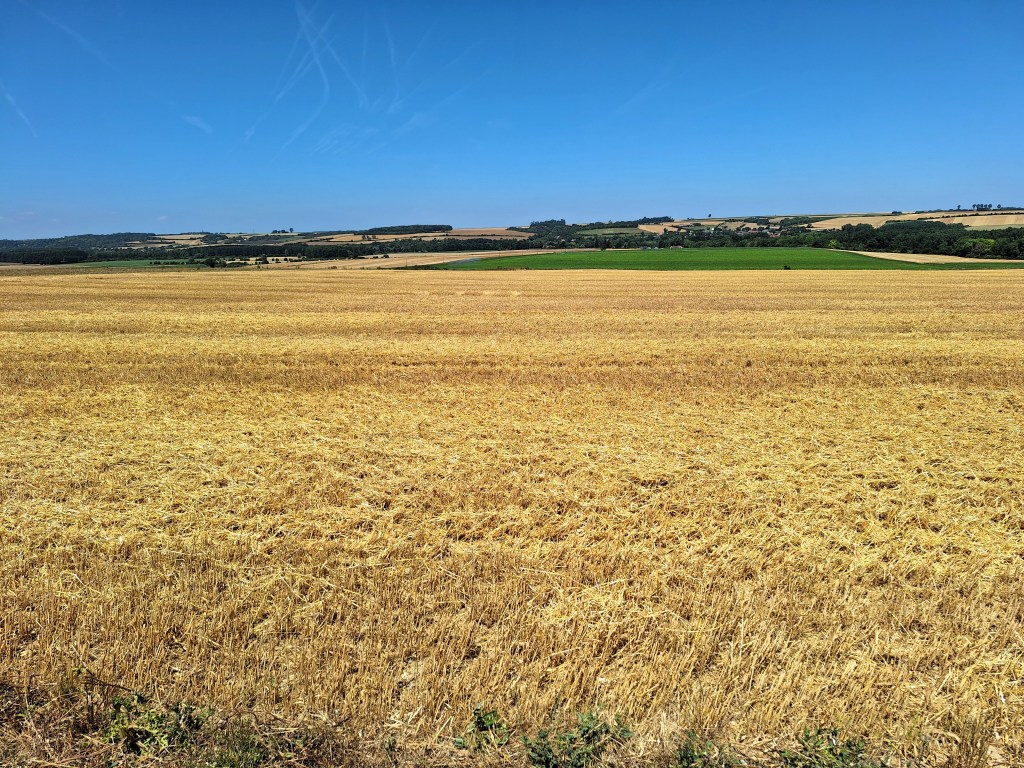
The field where the Red Baron was shot down, seen from the Australia Corps Memorial

Two days later, Will and Tom were both gassed on the battlefield, and Will and Tom were gassed a second time on 30 April, suffering gas burns all over their bodies. After a couple of weeks to recover, they manned an aid post at Villers-Betonneux, carrying men back to the post from the front line under heavy shelling.

The Australia Corps Memorial is on a slight rise to the east of the village of Le Hamel. The memorial honours all those who served with the AIF in France and Belgium and bears the names of nearly 11,000 of their number who fell in France and have known no one grave. Around 3800 of those named here were killed during the battle of the Somme in July and August 1916. Another further 2800 fell in April and May 1917 at Bullecourt (Battle of the Hindenburg Line) and more than 2100 were lost in 1918 in the Battle of Le Hamel.
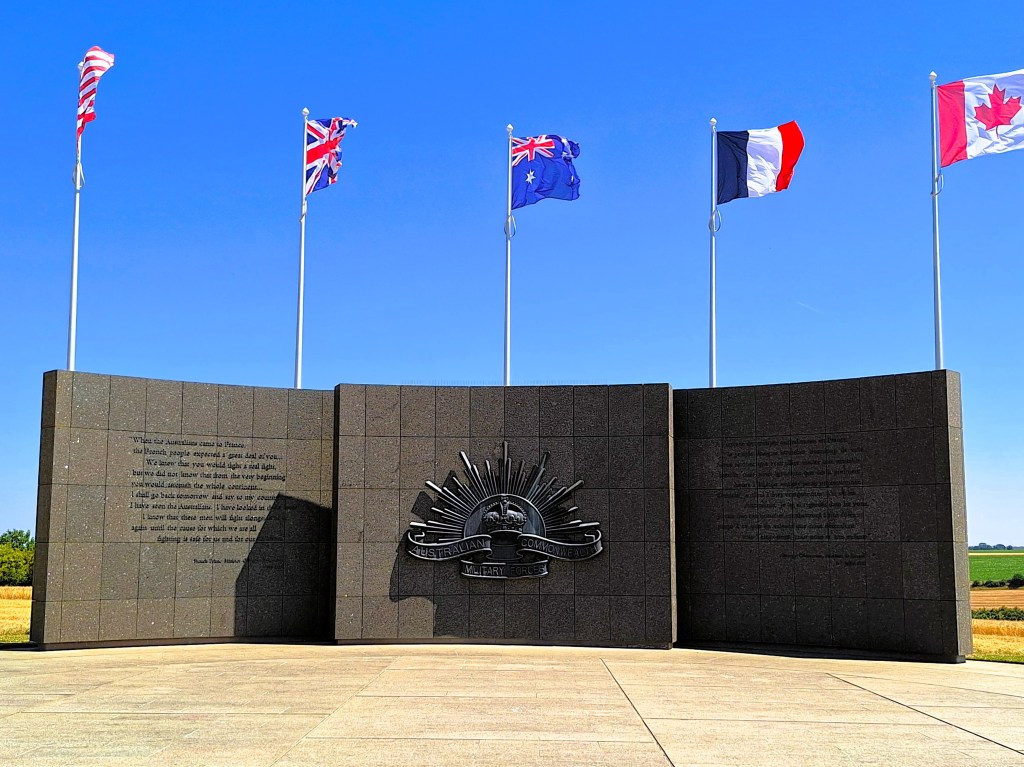
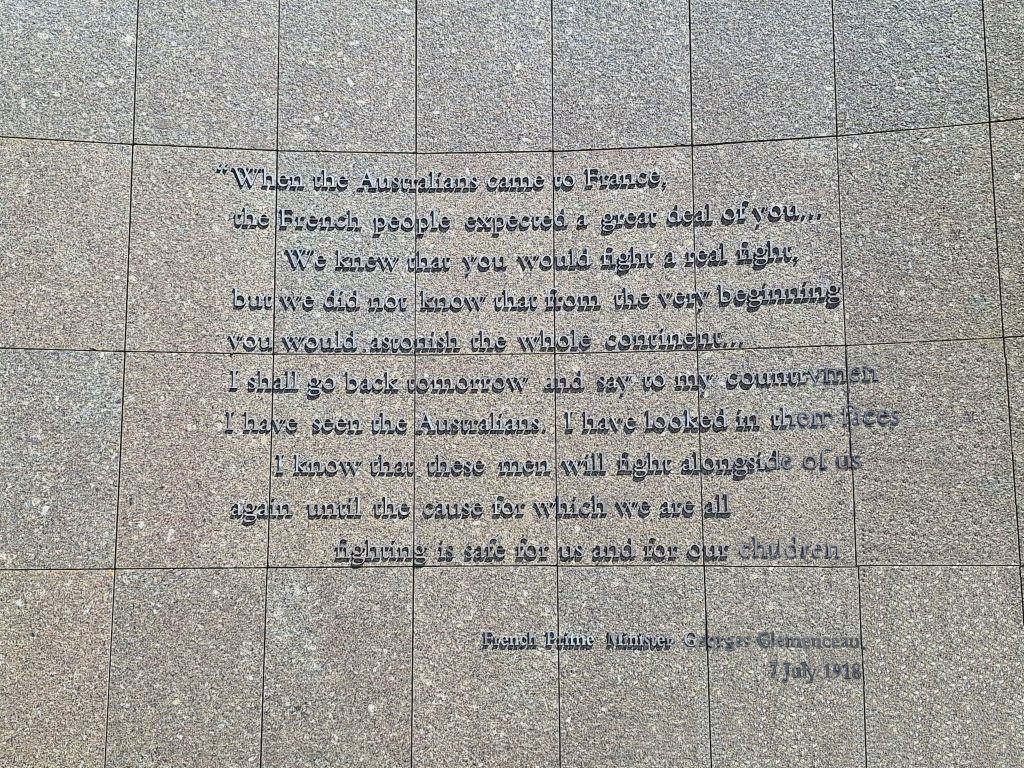
Australia Corps Memorial near Le Hamel
Quotation of French Prime Minister Georges Clemenceau on side panel of the Memorial

The Australia Corps Memorial is located at a section of German trenches, known to them as Wolfsburg, captured by the Australians early in the morning on 4 July 1918. The Australians occupied these trenches for about five weeks until they attacked from here in the great Battle of Le Hamel on 8 August 1918.
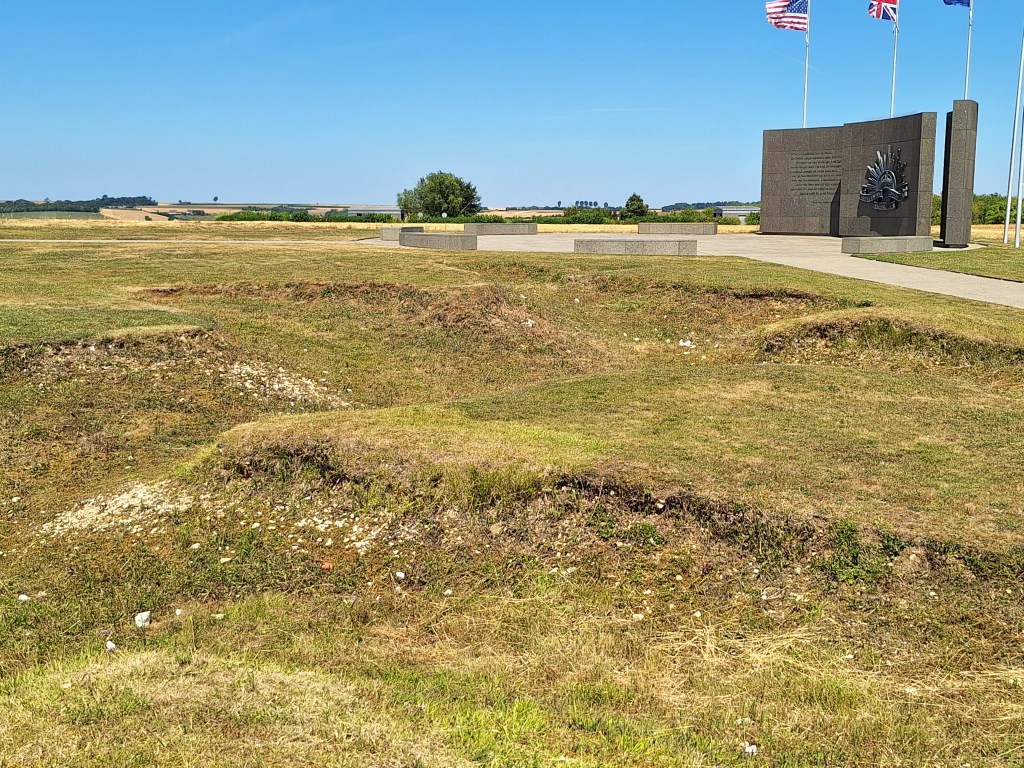
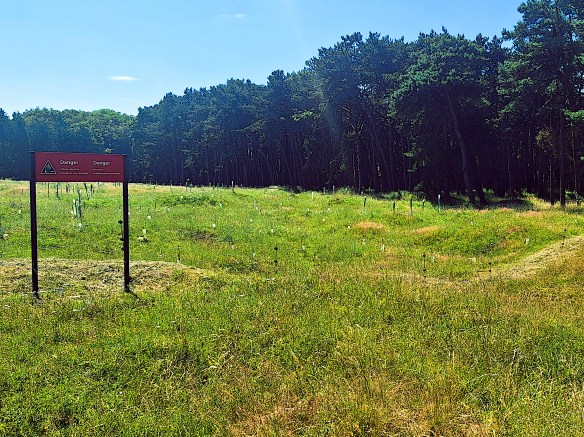
German trenches still visible near the Australia Corps Memorial

At 4:20 am on 8 August 1918, around 50,000 Commonwealth, French and American troops began a surprise assault on German lines to the east of armies. To give the newly arrived American Expeditionary Force (AEF) combat experience, the five Australian infantry brigades involved were augmented by four companies from US Army battalions. Hamel was the first time during the war that American soldiers were commanded operationally by non-American officers.

Attacking through dense fog they were well equipped with Lewis guns, trench mortars and rifle launched grenades. A creeping artillery barrage helped to shield the infantry, while enemy guns were silenced by gas and explosive shells.  Assisting the assault troops were more than 550 armoured vehicles, including new Mark 5 and fast Whippet tanks which had moved into position in secret, their engine noise disguised by aircraft flying overhead. The Germans assumed the planes were trying to give them a sleepless night but had no clue about the coming attack.
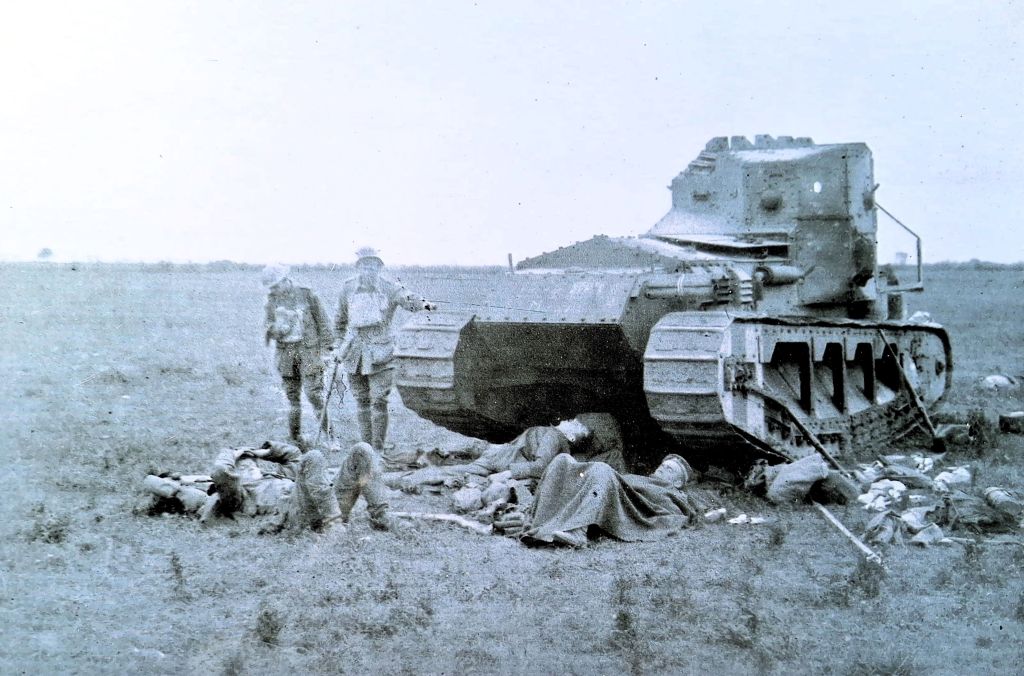
Wounded Australians of the 15th Brigade, and wounded German prisoners
sheltered beside a British Tank on August 9th, 1918.  Australian War Memorial E02880.

General Sir John Monash (1865-1931) was an Australian civil engineer who took part in the Gallipolo campaign and in May 1918 became commander of the Australia Corps, at that time the largest corps on the Western Front. Monash planned a combined campaign of infantry and armoured vehicles, including 60 combat and four supply tanks. The plan called for a creeping barrage in which the artillery barrage moves slowly in front of the advancing troops, protecting them by keeping the defenders under cover. Monash was adamant that infantry should not be sacrificed in an unprotected advance. The objectives were all achieved in 93 minutes, three minutes longer than Monash’s calculated battle time. The Battle of Le Hamel has since become famous as a model for a completely successful all-arms attack.

The Allies consolidated their new positions during the day and advanced another 300 metres during the night. In the morning of 5 August, they took another 700 German prisoners. The Germans counter-attacked at 22:00 that night supported by phosgene and mustard gas bombardments. At 2 am on 6 July, the two Australian battalions and the attached Americans counter-attacked and overwhelmed the experienced German storm-troopers with grenades and clubs. The shocked Germans were forced back, restoring the Allied line and releasing captured Australian stretcher-bearers.
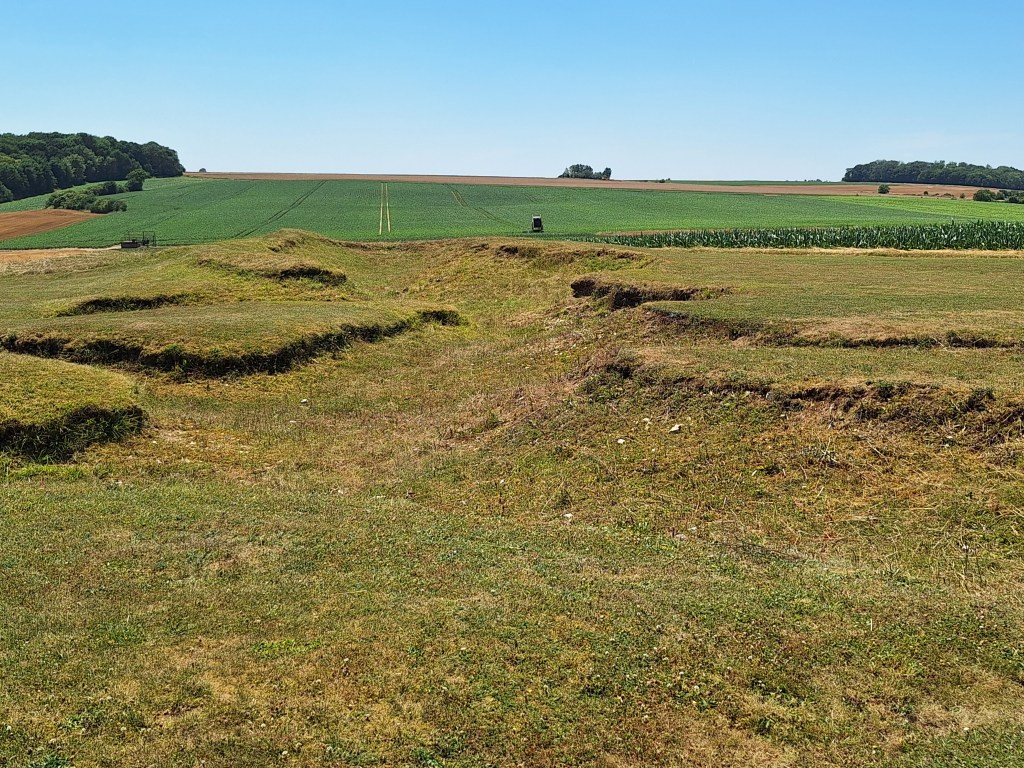
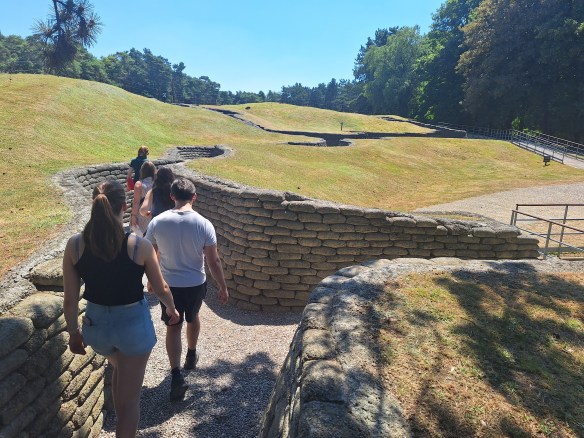
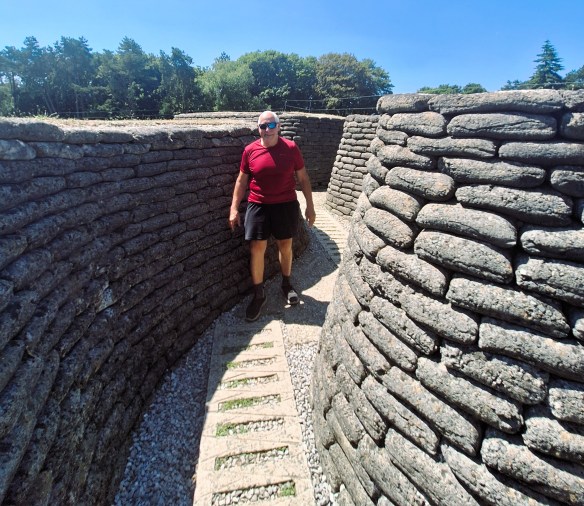
The Wolfburg trenches close to the Australia Corps Memorial

Over 4 days of fighting the Allies advanced as far as 13 kilometres in places. Some 20,000 Commonwealth soldiers were killed or wounded. The French army suffered around 24,000 casualties. Total German casualties may have been as high as 75,000, including more than 30,000 taken prisoner. Over the following weeks, a series of hard fought battles took place over the plains and uplands of the Somme, and by mid September, the Allies had recovered all the territory they had lost in March. The advance begun here did not cease until the Armistice.
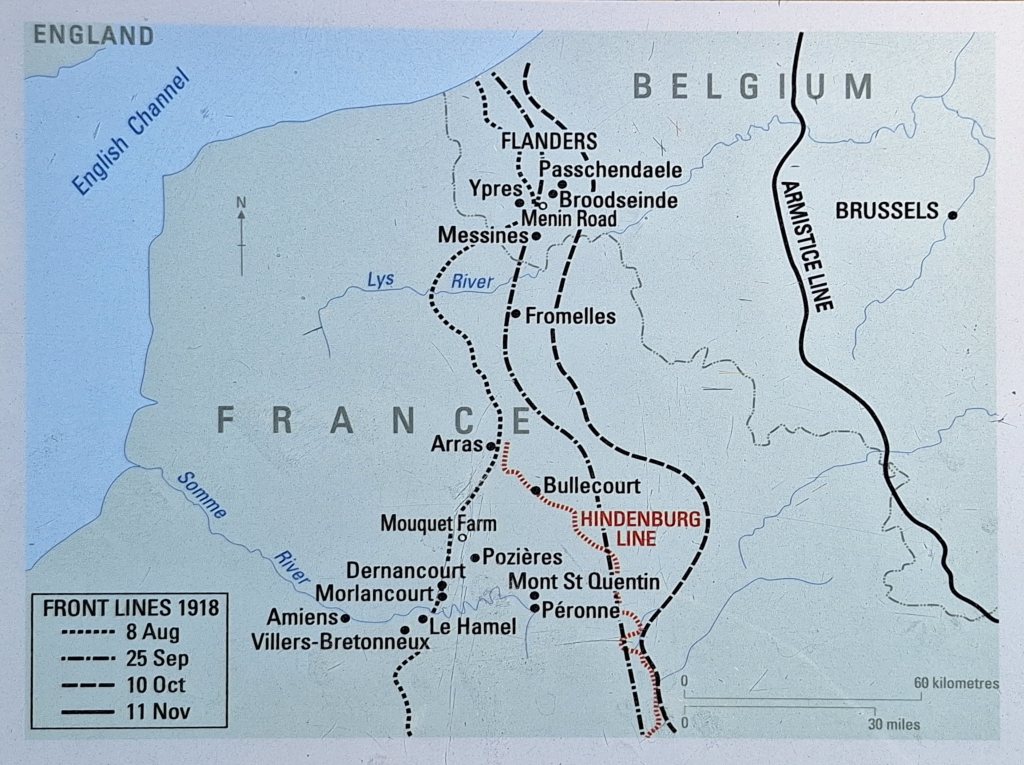
From 5 August to 12 September 1918, Will and Tom followed the fighting on the front line, from Mericourt and Raincourt to Le Hamel and on to Péronne. They slept where they could, in a field, in a trench, in sump holes. There were thousands of prisoners and booty. On 4 September, Will was at Péronne and was wounded in the leg by shrapnel but remained on duty. On 10 September they were relieved by 13th Australian Field Ambulance and marched out.

For the two days we spent on the Somme, we stayed in the centre of the Old Town of Péronne, a 100 metres from the Chateau de Péronne, now housing a major museum of the First World War. On our second day, we spent a couple of hours in the museum, well worth a visit. The next morning we headed north back to German-occupied Belgium.
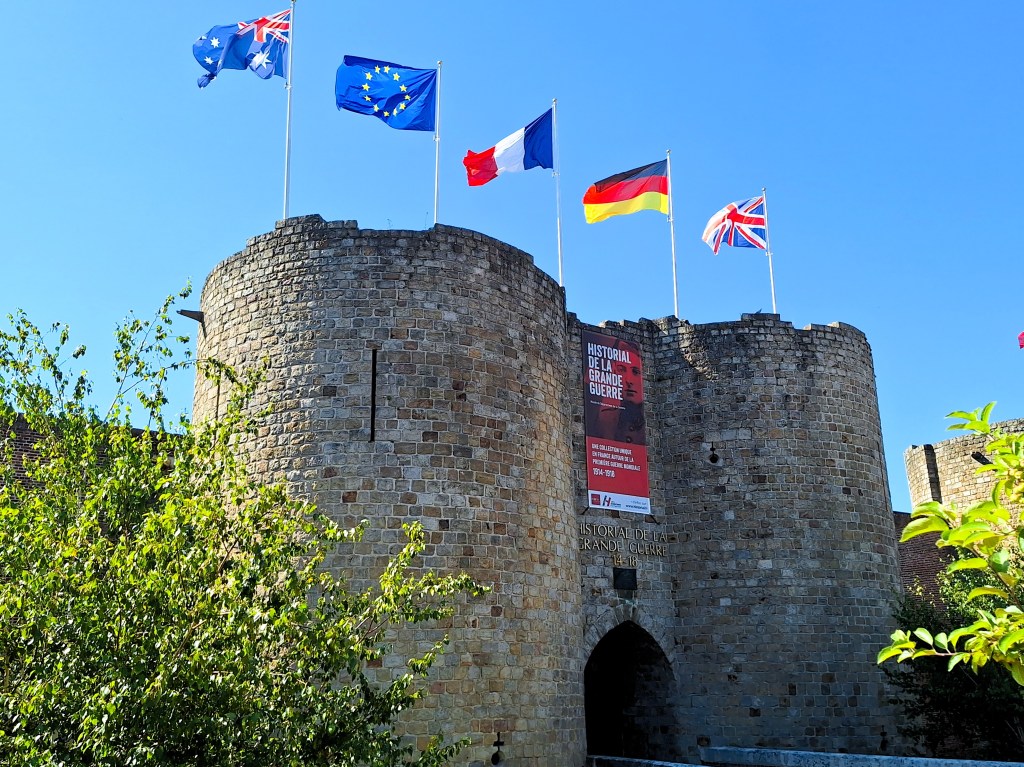
The main entrance to the Chateau de Péronne, flying the flags of the Allied nations and the EU.

On the Western Front – Part 3. Vimy Ridge and the Somme

From Flanders we headed south across the French border to the WW1 battlefields of the Somme. For my previous posts on Flanders, see here and here. The Somme offensive commenced at 7.28 am 1 July 1916 with the explosion of a massive mine detonated beneath the German front line. The Lochnagar Crater is the largest of the still extant mine craters of the Western Front.

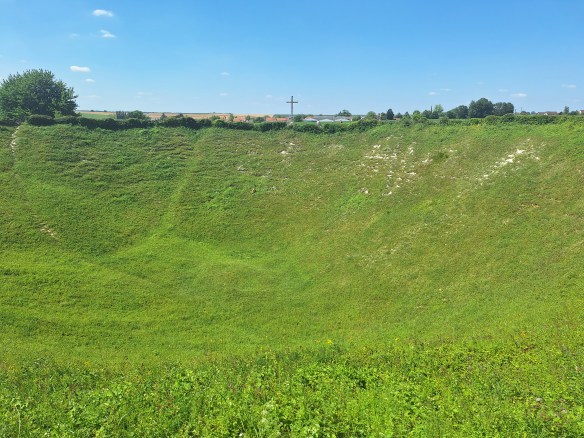
Lochnagar Crater

The Lochnagar mine was the largest of 19 mines, placed beneath the German front line to assist the British infantry advance and left a crater 21 m deep and 100 m wide, which was captured and held by British troops. While the blast itself killed relatively few Germans, the vast majority of deaths occurred during the following infantry assault.

Despite their colossal size, the Lochnagar and other mines failed sufficiently to neutralise the German defences in La Boisselle. The ruined village was meant to be captured in 20 minutes but by the end of the first day on the Somme, the British 3rd Corps divisions had suffered more than 11,000 casualties for no result.

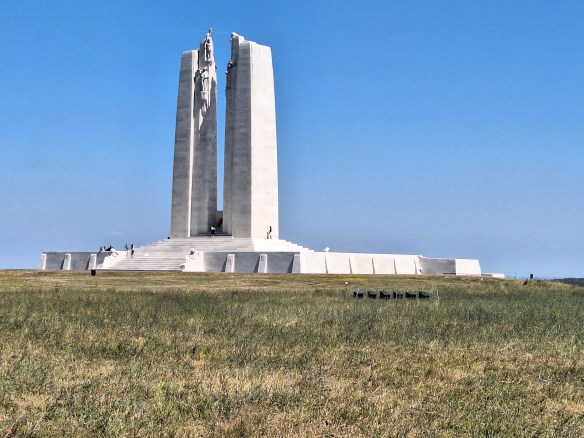
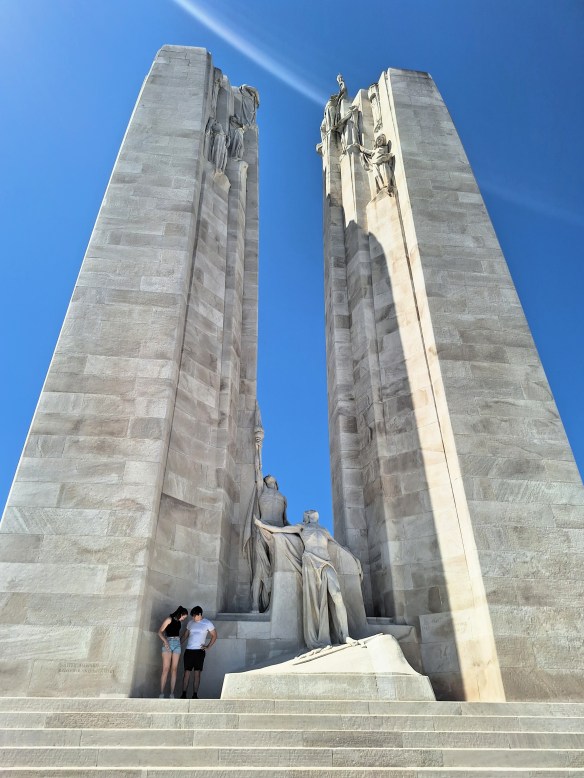
The Vimy Memorial

The spectacular Vimy Memorial sits at the highest point of Vimy Ridge, about eight kilometres northeast of Arras. It is a memorial to all Canadians who served their country in battle during the First World War, and particularly to the 60,000 who gave their lives in France. It also bears the names of 11,000 Canadian servicemen who died in France – many of them in the fight for Vimy Ridge – who have no known grave.

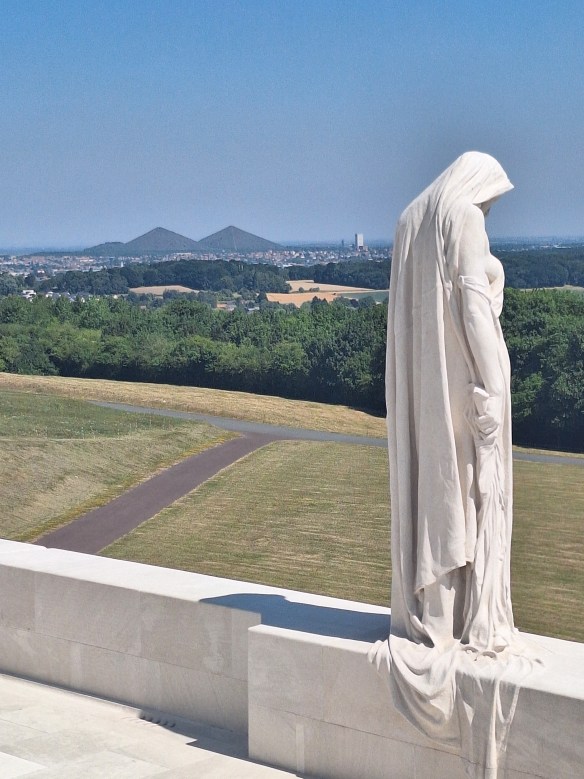
The figure of a cloaked young woman stands on top and at the centre of the front wall of the memorial and overlooks the Douai Plains. She has her head bowed, her eyes cast down, and her chin resting in one hand. The saddened figure of Canada Bereft, also known as Mother Canada, is a national personification of the young nation of Canada, mourning her dead.

Canada Bereft

The two pyramid-shaped hills in the distance are giant cone-shaped slag heaps, made of leftover rock from coal mining. When Felix saw them, he insisted we must climb them on our return trip to Belgium.

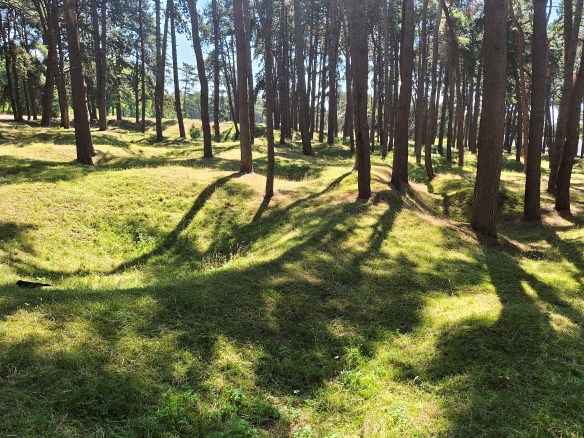
The ridge is pockmarked with mine and artillery craters.
Many undetonated shells remain in the ground, and affected areas are fenced off
with signs saying “No Entry – Undetonated explosives”

The ridge was a heavily fortified 7-kilometer hill held by the Germans. After previous French and British armies suffered around 150,000 casualties trying to take it, the Canadian Corps extensively planned their assault. They used aerial reconnaissance to construct a replica of the German trenches and bunkers, behind their front line. They trained extensively for weeks to develop an effective plan of battle. Unlike the British practice of briefing only officers on battle plans, the Canadians briefed every soldier, and they all knew what they had to do, irrespective of whether their officers were still leading them.

The Battle of Vimy Ridge (April 9–12, 1917) was one of the major battles in the Somme, where four divisions of the Canadian Corps fought together for the first time. This tactical victory against fortified German positions is considered a defining moment that forged a distinct Canadian national identity.

Part of the Canadian front-line trenches
In the German front-line trenches only about 20 m from the Canadian trenches
A machine-gun emplacement in the German trenches

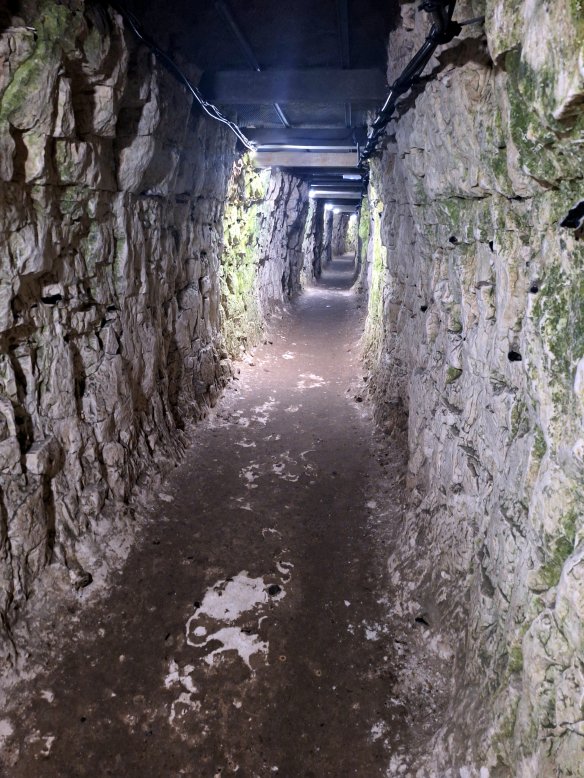
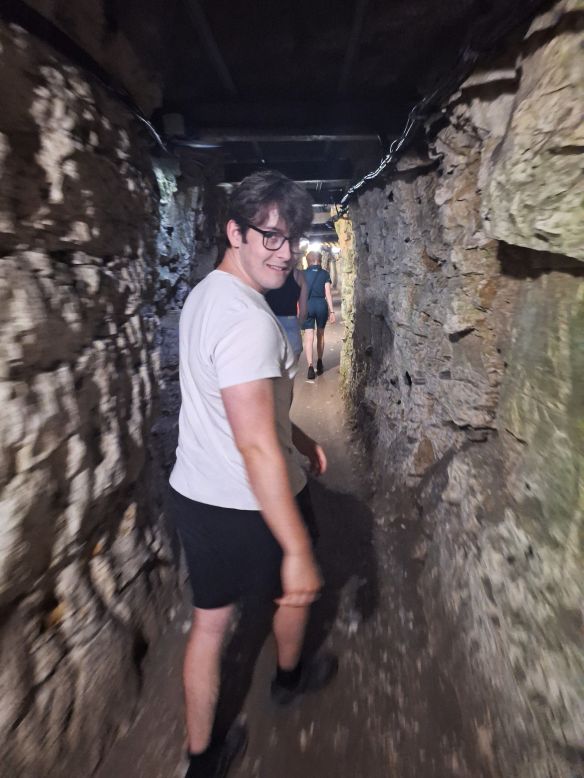
The Canadians extended a network of front-line trenches and tunnels constructed by the British. The tunnels were used to move troops, to connect underground dugouts and living quarters and for messengers to safely travel to and from the front lines. At Vimy Ridge, there were six kilometres of tunnels, and then longest tunnel was 1.6 km.

In one of the longer Canadian tunnels

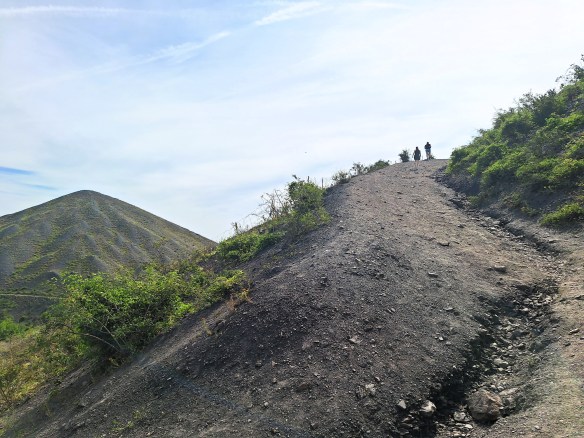
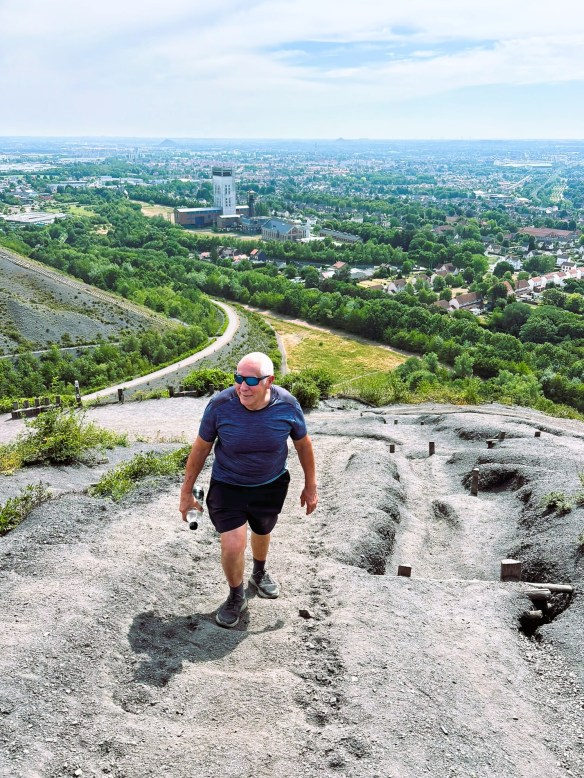
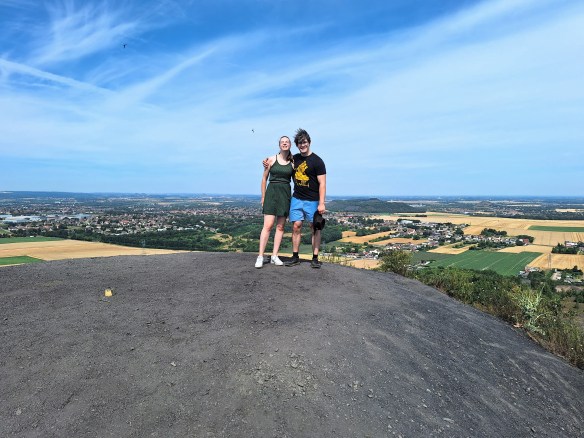
Two days later, as we headed back from the Somme to Belgium, we did a slight detour to visit the giant slag heaps of Loos-en-Gohelle, located about 12 km northwest of Vimy. These two slag heaps are the tallest artificial mountains in Europe. We climbed the highest one, to the summit 146 m above ground level. It is 2 metres taller than the second slag heap.

Ascending Europe’s tallest slag heap, second slag heap partly visible on left.
Approaching the summit.
On the summit. Slag heap tourism hits new heights in France
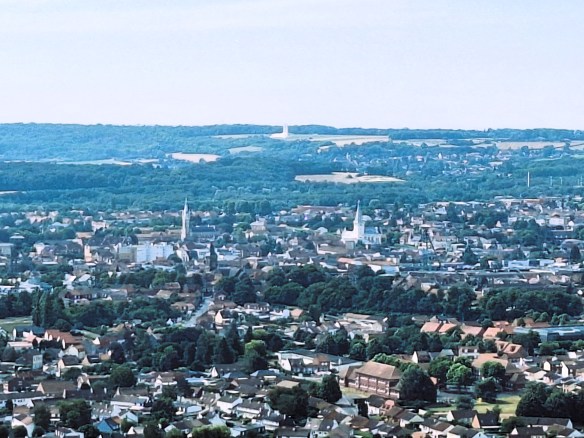
View south from the summit towards Vimy Ridge.
The Canadian Memorial is visible in the middle close to the horizon,

A visit to the West McDonnell Ranges of Central Australia

My younger son Felix and I visited relatives in Australia in July last year. In the last week of our trip, I took Felix to the “red centre” of Australia to explore some of the spectacular desert and mountain scenery. I have visited central Australia a number of times when I was younger, with trips to Alice Springs and Uluru (Ayers Rock), Katherine Gorge and the Arnhem Land Escarpment. Felix is an Australian by descent, but had never visited the centre before.

We flew from Brisbane to Alice Springs to spend ten days in the Northern Territory. We hired a four-wheel drive car for a week, and spent our first day exploring Alice Springs. We then spent a day in the West MacDonnell Ranges, driving 140 km west of Alice Springs and visiting some of the many spectacular gaps and gorges as well as areas of Aboriginal significance.

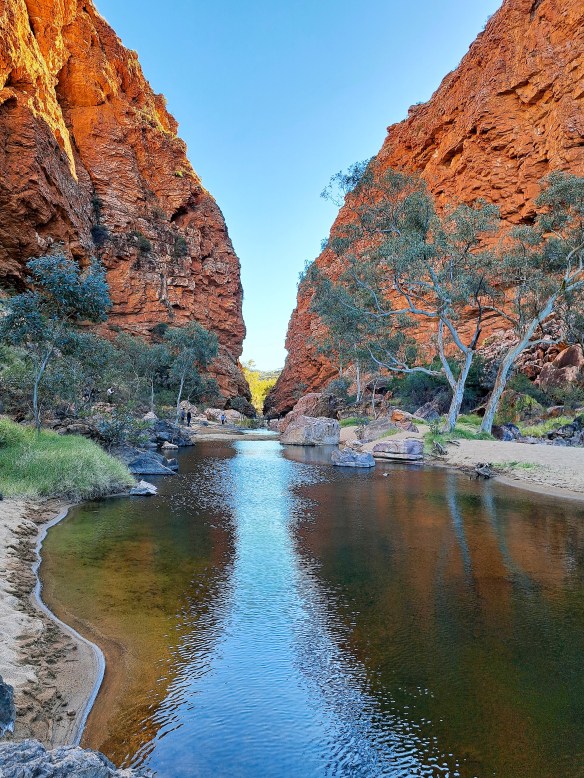
Simpson’s Gap, 24km from Alice Springs. The rock walls are home to the rare and endangered Black-footed Rock Wallaby. Felix managed to spot one when he was scrambling around.
Standley Chasn is a 25 minute walk along a natural creek bed from the road head, through acaciasm cycads and ghost gums, until the dramatic 80m sheer rockfaces of the Chasm are reached.
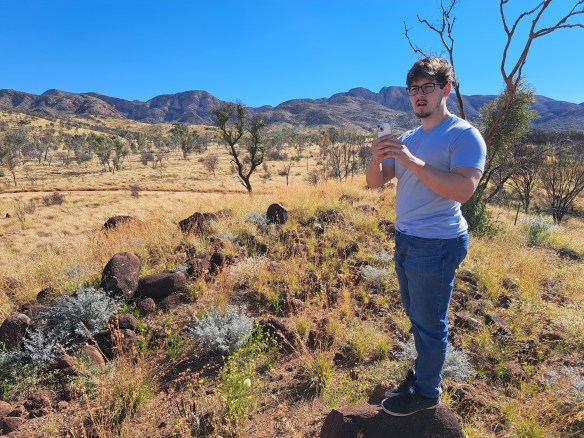
MacDonnell Ranges in the distance
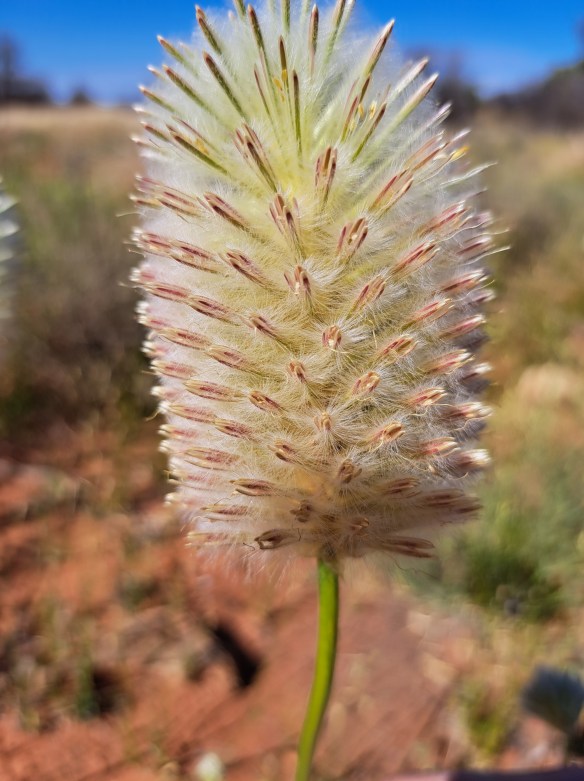
The Dryland Feather-Head (Ptilotus xerophilus) was only recognized as a separate species restricted to central and western Australian in 2019, distinct from a similar eastern Australian species.
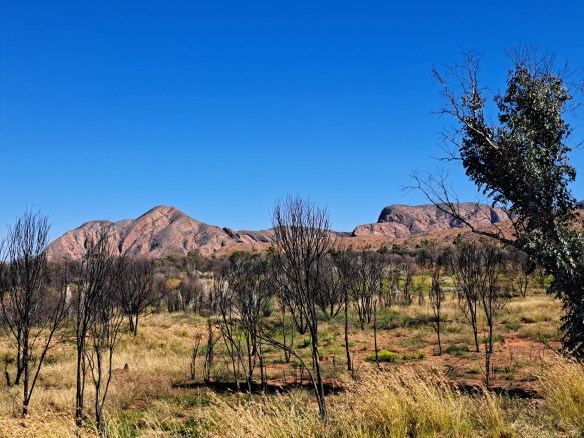
Although they rise only 400-500 metres from the surrounding mulga scrub, the highest peak in the McDonnells, Mount Giles) is Australia’s 3rd highest mountain above sea level, at 1,389m.
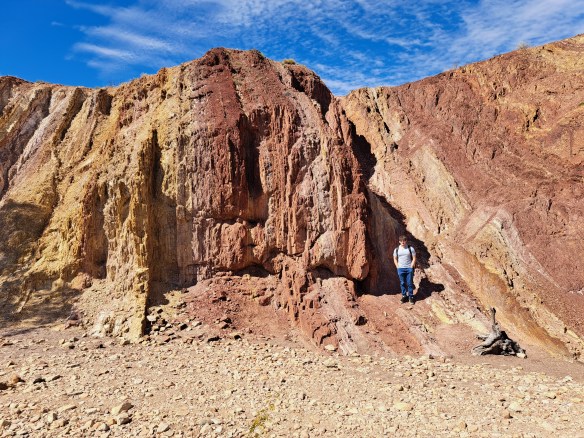
The Ochre Pits is an Aboriginal sacred site. The rock walls are covered with layers of red, yellow and white ochre.It provides material traditionally uised for ceremonies and trading.
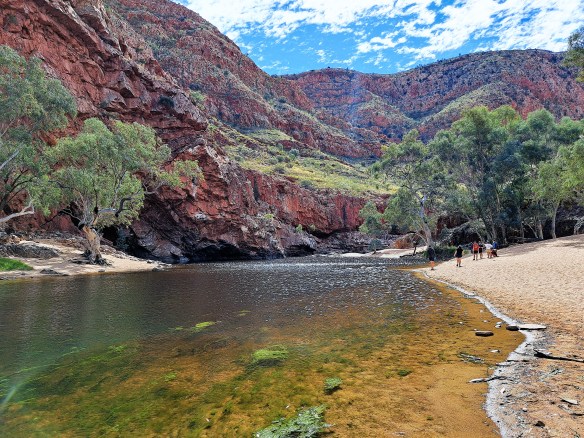
Ormiston Gorge is 136 km from Alice Springs and contains a quite large semi-permanent waterhole. A great place for a swim on a hot day.
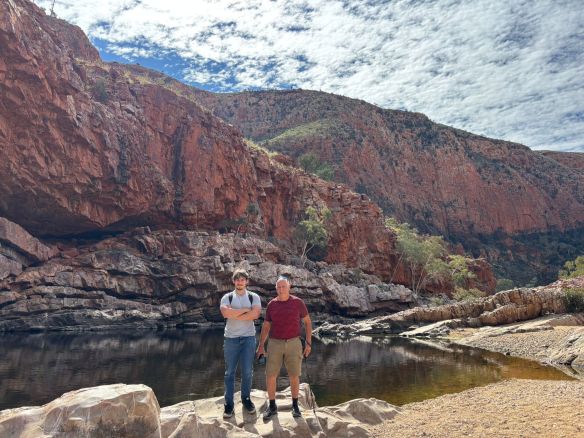
Felix and I at Ormiston Gorge

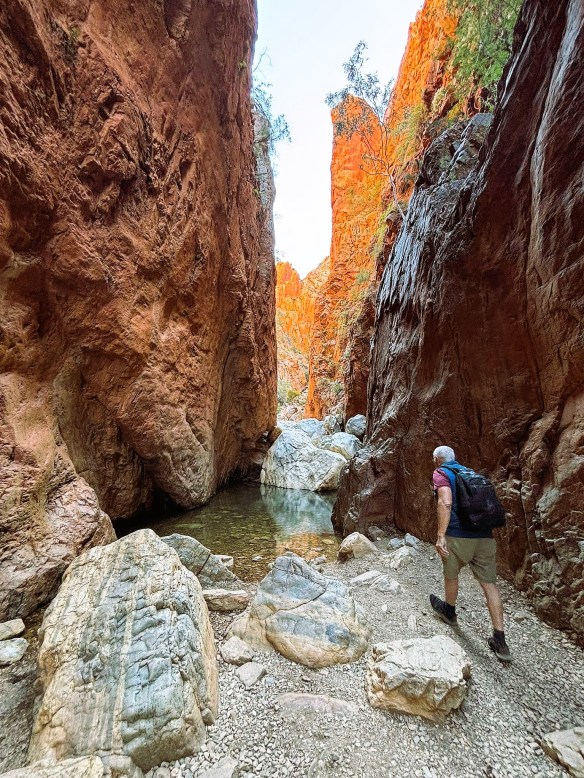
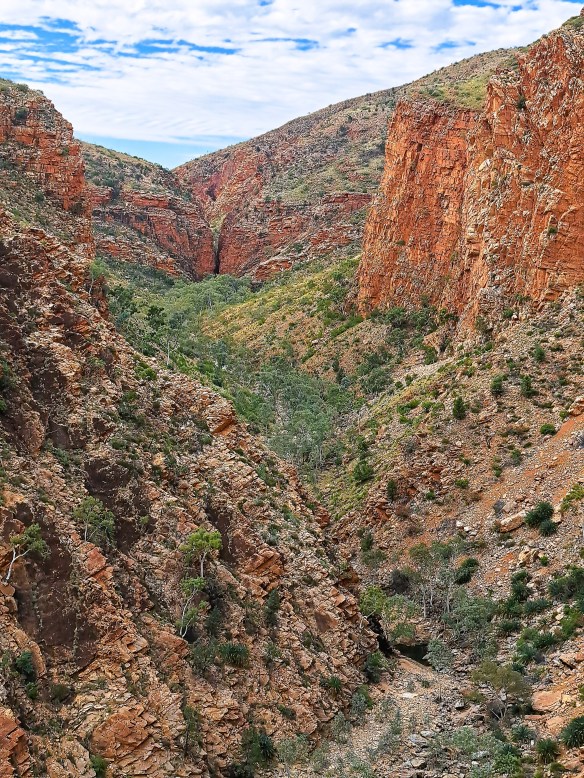
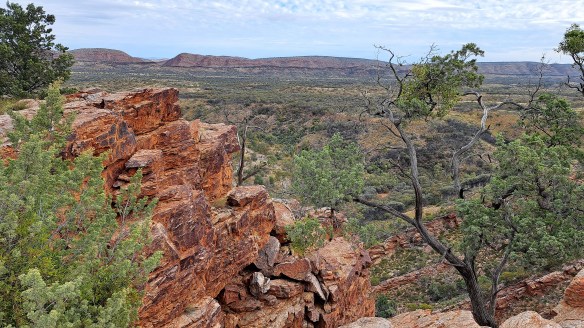
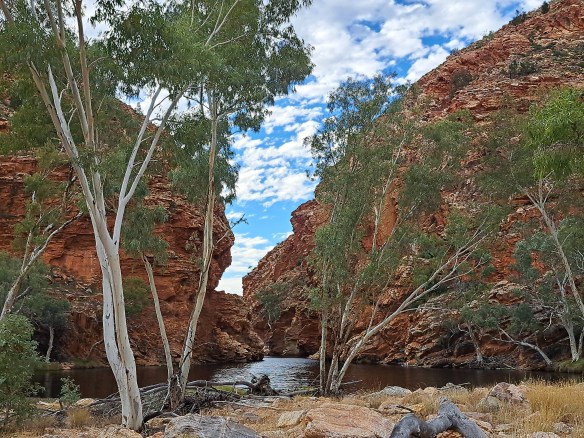
We drove a little further on from Ormiston Gorge to the Finke River crossing, then turned back to head to Alice Springs, stopping on the way at Serpentine Gorge and Ellery Creek Big Hole. I have to say, despite the spectacular beauty of the places we had already visited, I was blown away by Serpentine Gorge. We climbed a steep path to the top of the eastern wall of the gorge, and the views in all directions were stunning. Felix and I saw another rare Black-Footed Wallaby quite close to us on a rock near the rim of the cliff.

Serpentine Gorge
View south from Serpentine Gorge
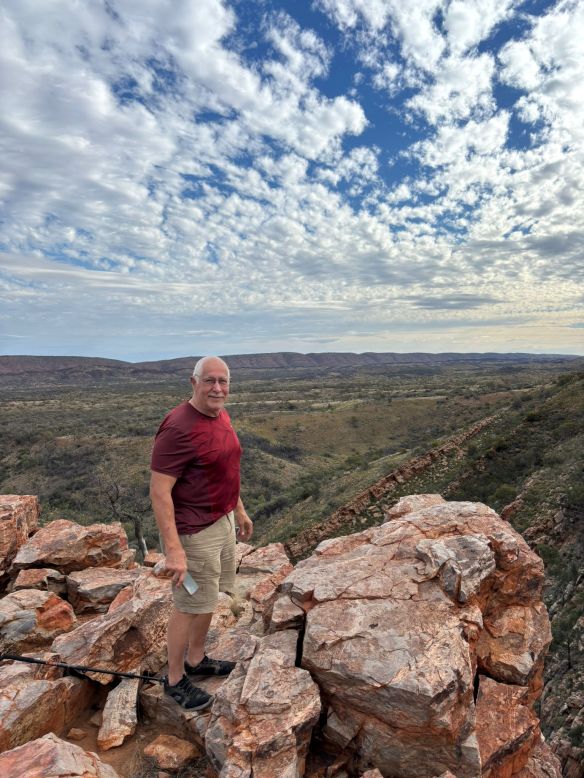
Me on the rim of the gorge, and the view towards the west.
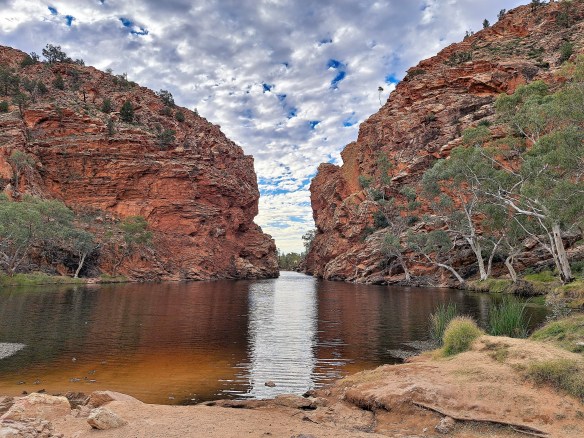
Ellery Creek Big Hole

To be continued…..as we head south west towards Kings Canyon.

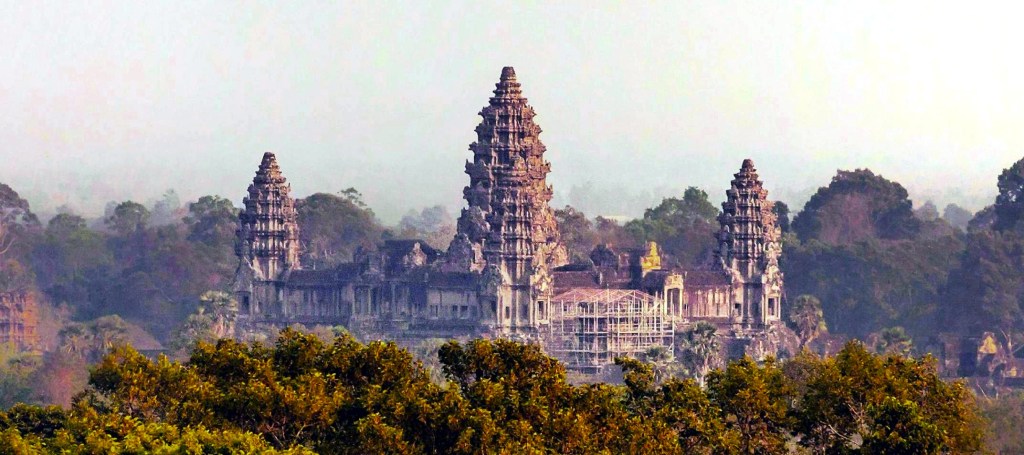
Memories of Angkor Wat – 1995

In March 1995, I spent two weeks in Cambodia and was able to make a visit to Angkor Wat. At that time, the Khmer Rouge were still active. As part of the peace process following the civil war of the 1980s, the UN-sponsored elections in 1993. The Khmer Rouge excluded itself from the peace process and maintained control of areas in northwestern Cambodia, in the provinces of Battambang and Siem Reap (where Angkor Wat was located), and neighbouring Thailand. Its forces numbered around 10,000 fighters and were able to extend Khmer Rouge control to more than half a million Cambodians, four times as many as before the peace accords. During the dry season in late 1994 and early 1995, the Khmer Rouge adopted new tactics, including the murder of civilians, the systematic destruction of civilian homes and rice fields, looting, rape and the kidnapping and murder of Westerners.

Continue reading