Just over 110 years ago my grandfather William Melrose Mathers (1893-1953) and his brother Thomas (1891-1963), enlisted in the Australian Army on 2 September 1915. Being strongly opposed to killing anyone, they managed to get assigned to the 8th Field Ambulance of the Australian Medical Corps. They spent the next three and a half years on the Western Front in France and Belgium, on the front lines and at Regimental Aid Posts (RAPs) and hospitals behind the front lines.

My older son went on a school trip to the Western Front battlefields in 2018 and visited battlefields where his great-grandfather had served as part of the Australian Field Ambulance. My younger son and his girlfriend both missed out on similar trips in 2021 due to the covid restrictions. So we went on a week-long trip to Flanders and the Somme to see some of the important sites on the Western Front. Our first stop was the Flemish city of Ypres and the battlefields nearby.
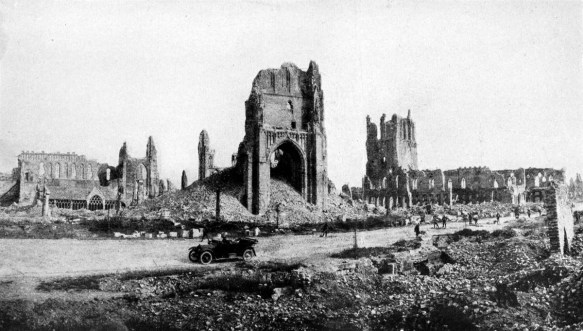
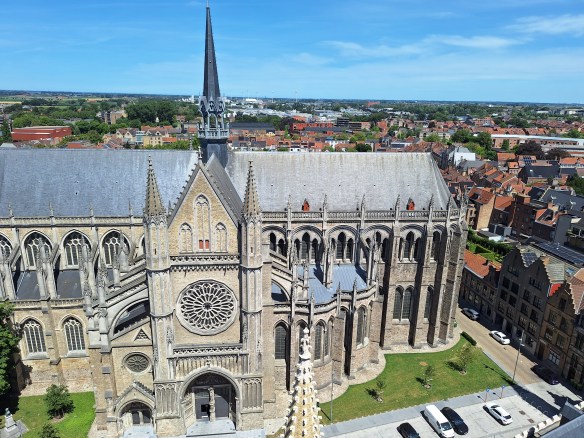
The medieval city of Ypres was completely leveled by artillery fire between 1914 and 1917. The city’s 13th-century Cloth Hall and St Martin’s Cathedral, seen in this photo, were reduced to rubble.
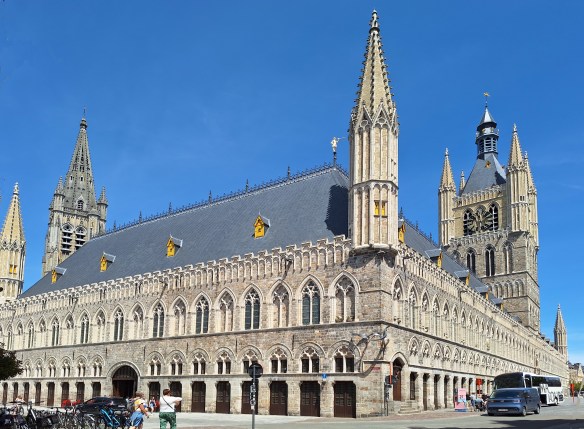
After the war, some wanted to leave the city untouched as a reminder of the destruction, but the Flemish residents decided to rebuild the city faithfully reproducing the medieval buildings, including the magnificent Cloth Hall, in this photo, which houses the Museum “In Flanders Fields”.
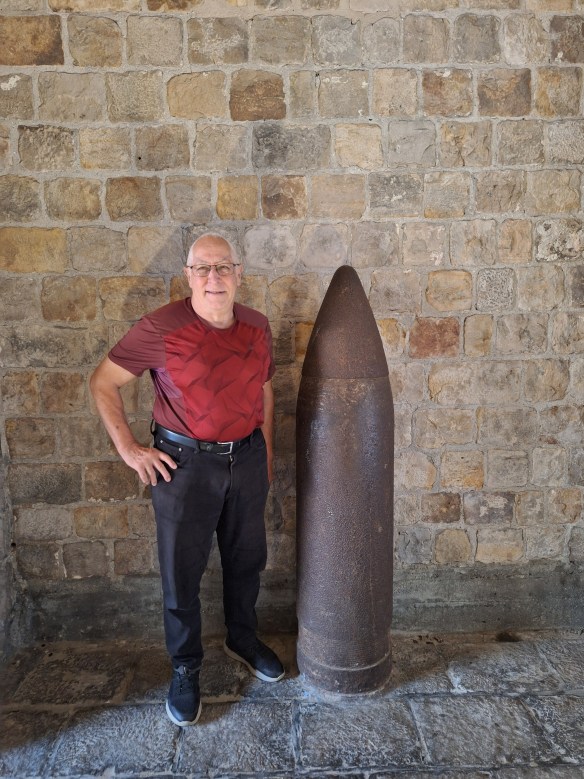
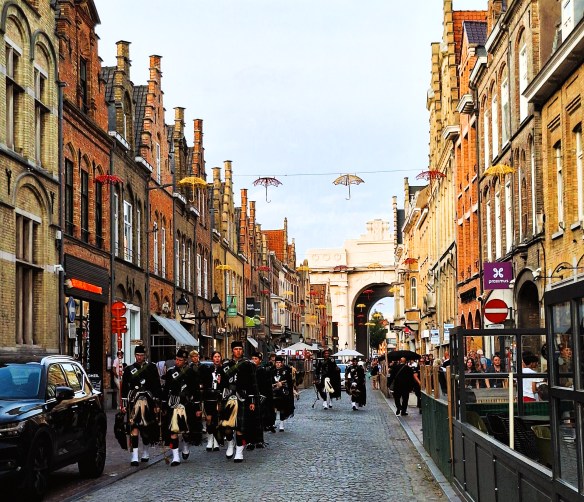
The Menin Gate is dedicated to the British and Commonwealth soldiers who were killed in the Ypres Salient of World War I and whose graves are unknown. The names are recorded on stone panels of 54,395 Commonwealth soldiers who died in the Salient but whose bodies have never been identified or found. These include the names of 6,198 Australians. They also include the names of the brothers John and William Melrose, Scottish cousins of my grandfather William Melrose Mathers. Every night at 8 pm, the Last Post is played at the Menin Gate.

The Third Battle of Ypres, also known as the Battle of Paschendaele began on 31 July 1917. Massive artillery fire on the eve of the battle was intended to destroy German positions, but failed to do so. By mid-August, the first day objectives had still not been reached. A month later, the offensive resumed. New Zealanders, Australians and South Africans replaced British trooped in the spearhead of the attack.
The 8th Field Ambulance served on the Somme until September 1917, when it moved to Ypres to support the Australians. On 20 September, Will and Tom went into the front line for 48 hours to bring out the wounded on stretchers. They had a day in a rest area before going back into the front line on 23 September at Hooge.
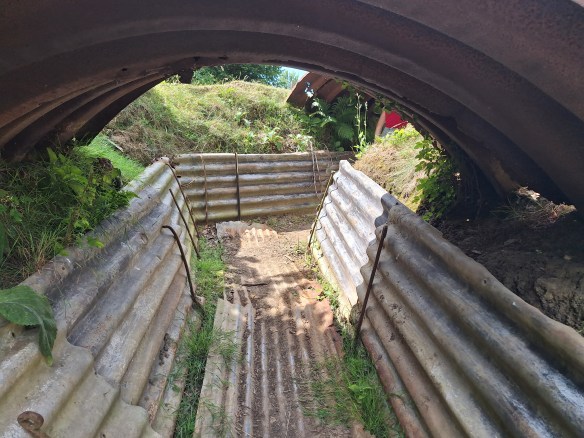
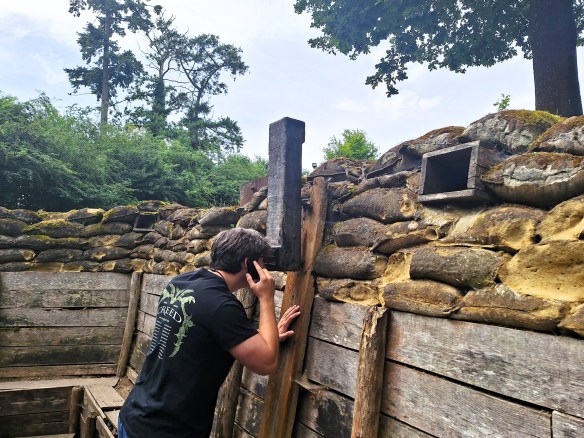
Trenches at Hooge Crater were reinforced with corrugated iron. The pre-shaped, semi-circular corrugated iron sheets used by both Allied and German forces to construct and reinforce overhead coverings were known as “Baby Elephants”.
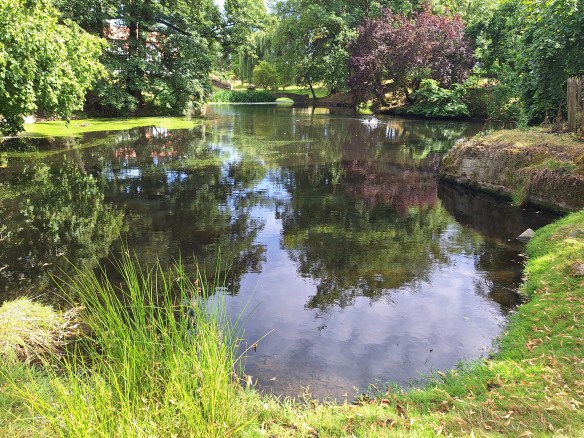
Hooge was the site of several large German mine craters. The lake in the photo below fills three German mine craters blown in June 1916 as part of their offensive against the Canadians.
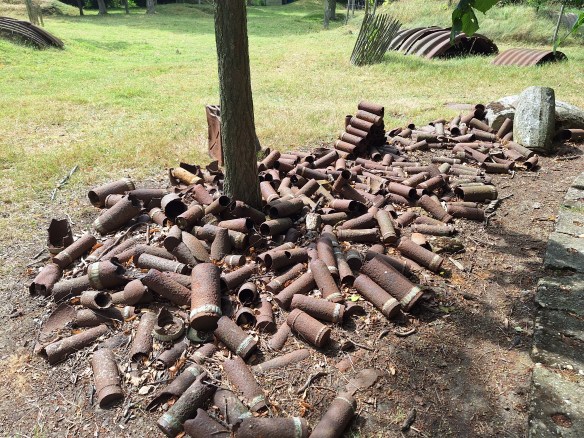
One of many piles of artillery shells. In the two weeks before the attack alone, 4.2 million shells were fired at the German positions. The shelling failed to dent the German defences, but it destroyed the landscape and its drainage. The poor state of the terrain made it hard to move the guns forward.
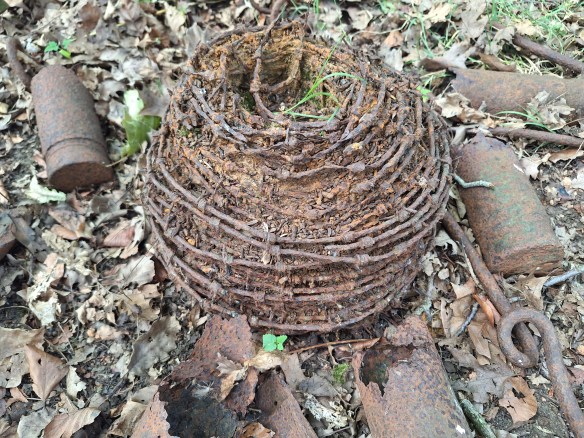
Will and Tom spent 72 hours evacuating the wounded from waterlogged trenches, dug outs and shell holes. Other members of the unit worked at the RAPs under fire. The bearers at Hooge endured heavy shell fire and the unit received many casualties.
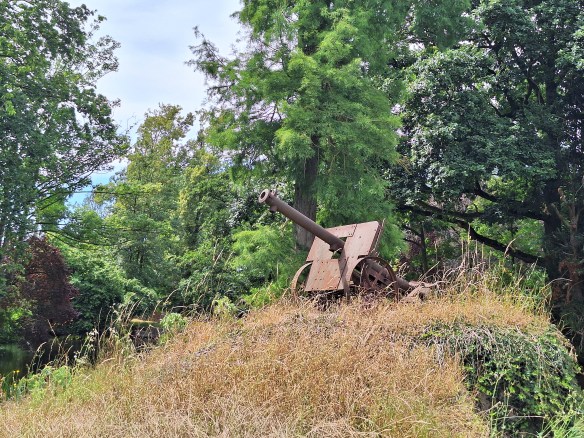
The line of low hills running east of Ypres includes Hooge, Polygon Wood and Passchendaele. The Battle of Polygon Wood (26 September to 3 October 1917) took place in woodland that had been almost totally destroyed by the huge bombardments from both sides since 16 July and the area had changed hands several times. The I Anzac Corps (under Lieutenant-General William Birdwood) conducted the main advance of about 1,200 yd (1,100 m), to complete the occupation of Polygon Wood and the south end of Zonnebeke village.
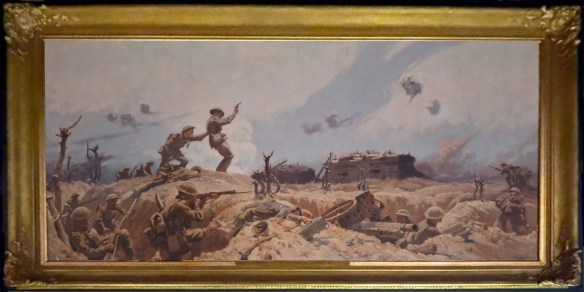

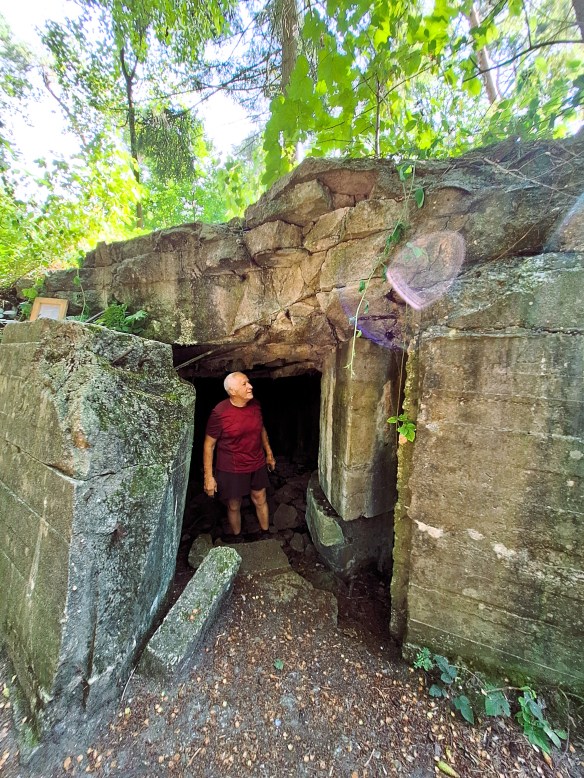
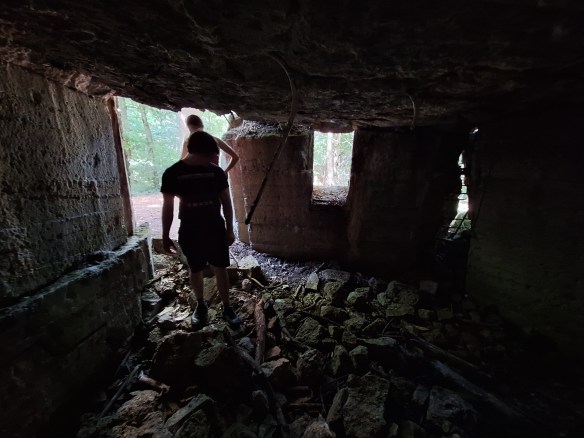
Will and Tom were gassed in Polygon Wood on 29 September 1917 and both became became sick. Will was hospitalized with gastritis for 8 days; Tom with a hernia of the groin was put on light duties.


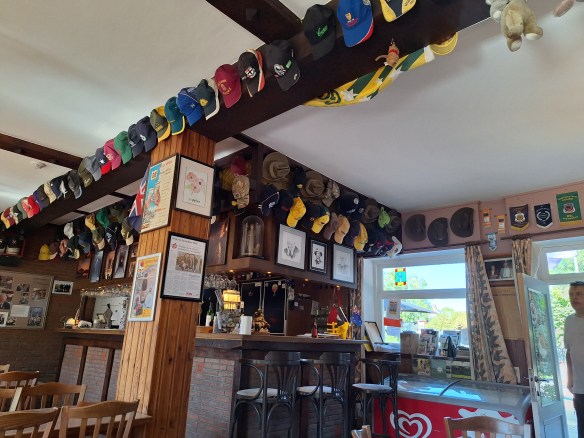
After walking through Polygon Wood with temperatures around 32 C, we found ourselves at the Anzac Rest where a refreshing beer was welcome.

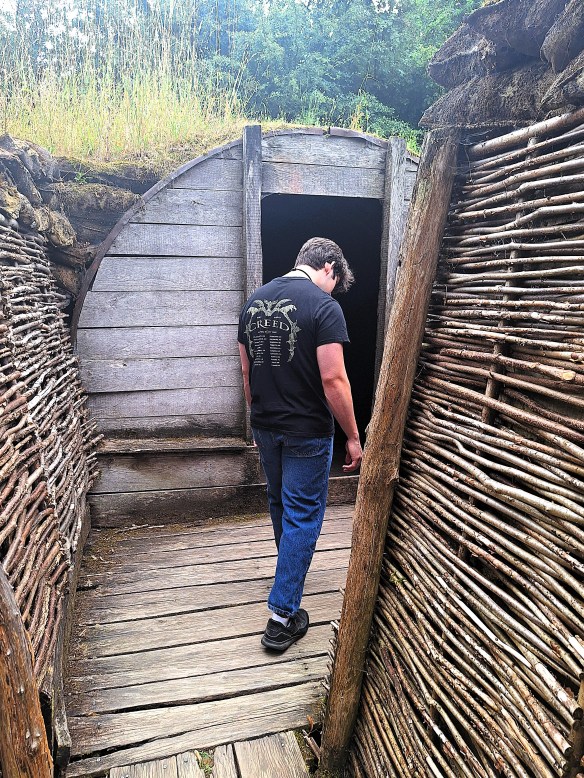

As the Battle of Passchendaele continued, more focused attacks gradually shifted the front line but the losses were huge. And the artillery bogged down in the mud. In April 1918, to reinforce lines against the massive German Spring Offensive (Operation Georgette), the British evacuated the heavily contested Passchendaele Ridge, surrendering ground that had cost thousands of lives in 1917.
The allies were back where they had been in 1914. Their well developed positions had been exchanged for a pulverised, smaller bulge where everything had to be built afresh. That captured terrain had been transformed into a moonscape and the territory gained, at just 8 kilometres, came at a high price, with an estimated 600,000 casualties, including more than 125,000 dead. Passchendaele became an international symbol of the cruelty and futility of total war.

Tyne Cot is the Largest Commonwealth wall Groves cemetery in the world. There are almost 12,000 graves and a memorial wall bears the names of 35,000 soldiers who have no known grave. Most of those commemorated here died during the Battle of Passchendaele.

In 1917, the site was completely barren except for German concrete bunkers with Machine gun nests. On 4th of October, the 40th battalion of the third Australian division broke through the position at Tyne cot. Over the following days, ANZAC troops tried in vain to advance from here towards Passchendaele. The bunkers on the site were converted to medical dressing station shortly after being taken. Those who succumbed to their injuries were buried at this site. This was the start of the cemetery.
 Mountains and rivers