From Flanders we headed south across the French border to the WW1 battlefields of the Somme. For my previous posts on Flanders, see here and here. The Somme offensive commenced at 7.28 am 1 July 1916 with the explosion of a massive mine detonated beneath the German front line. The Lochnagar Crater is the largest of the still extant mine craters of the Western Front.
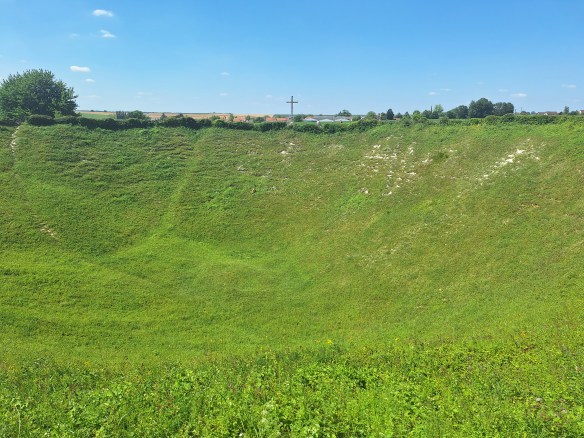
The Lochnagar mine was the largest of 19 mines, placed beneath the German front line to assist the British infantry advance and left a crater 21 m deep and 100 m wide, which was captured and held by British troops. While the blast itself killed relatively few Germans, the vast majority of deaths occurred during the following infantry assault.
Despite their colossal size, the Lochnagar and other mines failed sufficiently to neutralise the German defences in La Boisselle. The ruined village was meant to be captured in 20 minutes but by the end of the first day on the Somme, the British 3rd Corps divisions had suffered more than 11,000 casualties for no result.
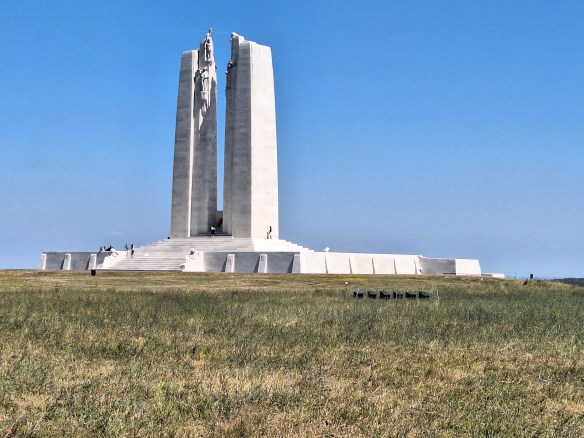
The spectacular Vimy Memorial sits at the highest point of Vimy Ridge, about eight kilometres northeast of Arras. It is a memorial to all Canadians who served their country in battle during the First World War, and particularly to the 60,000 who gave their lives in France. It also bears the names of 11,000 Canadian servicemen who died in France – many of them in the fight for Vimy Ridge – who have no known grave.
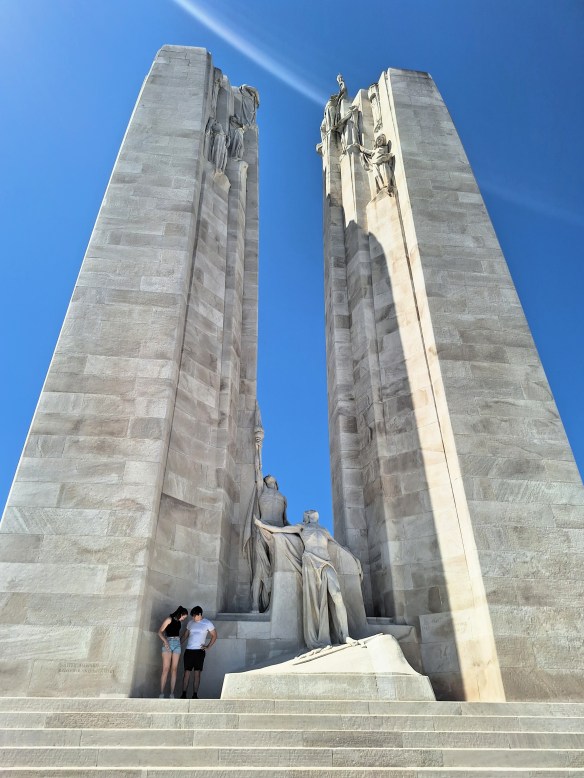
The figure of a cloaked young woman stands on top and at the centre of the front wall of the memorial and overlooks the Douai Plains. She has her head bowed, her eyes cast down, and her chin resting in one hand. The saddened figure of Canada Bereft, also known as Mother Canada, is a national personification of the young nation of Canada, mourning her dead.
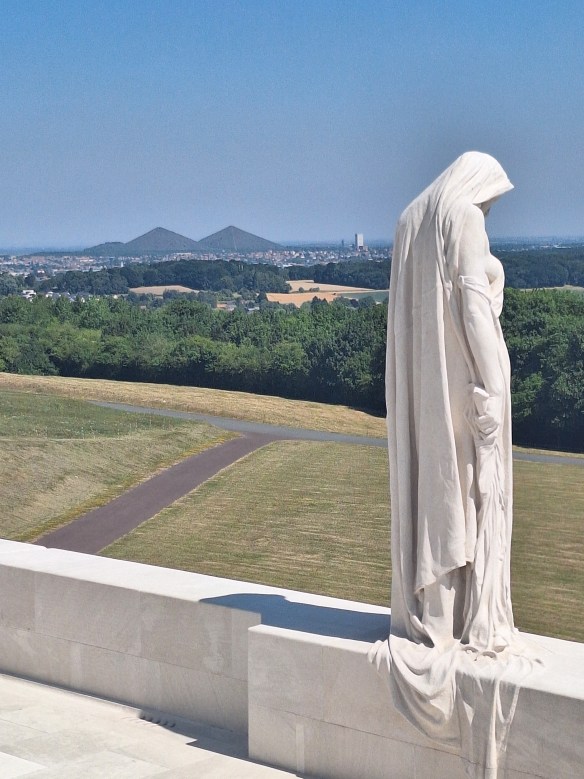
The two pyramid-shaped hills in the distance are giant cone-shaped slag heaps, made of leftover rock from coal mining. When Felix saw them, he insisted we must climb them on our return trip to Belgium.
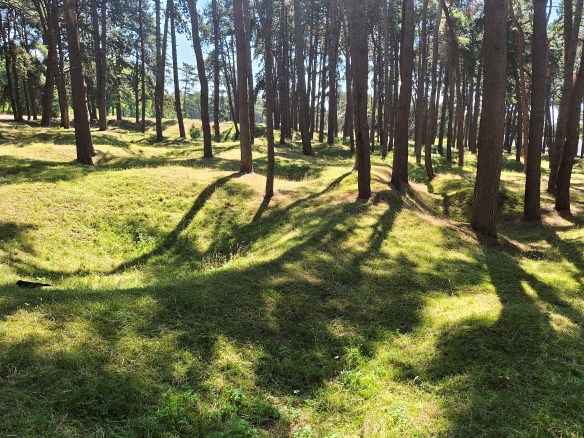
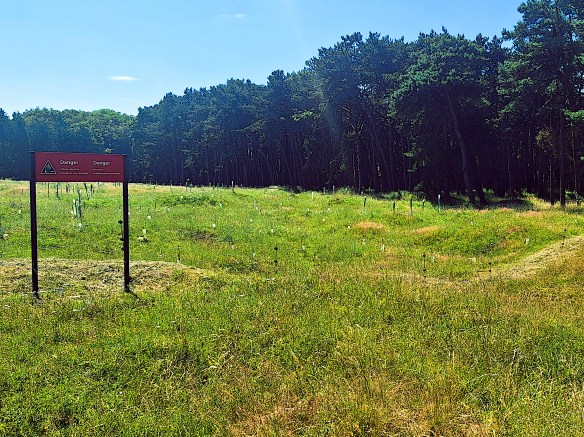
with signs saying “No Entry – Undetonated explosives”
The ridge was a heavily fortified 7-kilometer hill held by the Germans. After previous French and British armies suffered around 150,000 casualties trying to take it, the Canadian Corps extensively planned their assault. They used aerial reconnaissance to construct a replica of the German trenches and bunkers, behind their front line. They trained extensively for weeks to develop an effective plan of battle. Unlike the British practice of briefing only officers on battle plans, the Canadians briefed every soldier, and they all knew what they had to do, irrespective of whether their officers were still leading them.
The Battle of Vimy Ridge (April 9–12, 1917) was one of the major battles in the Somme, where four divisions of the Canadian Corps fought together for the first time. This tactical victory against fortified German positions is considered a defining moment that forged a distinct Canadian national identity.
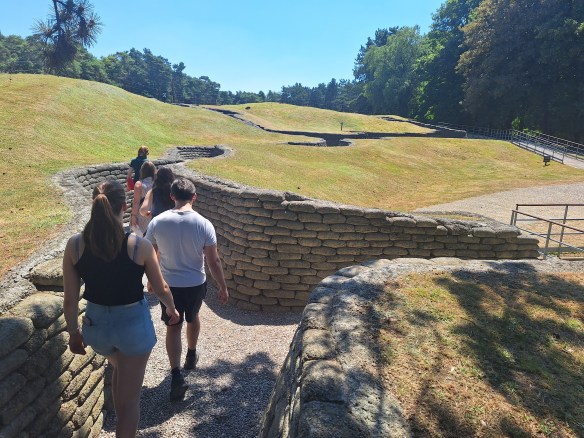
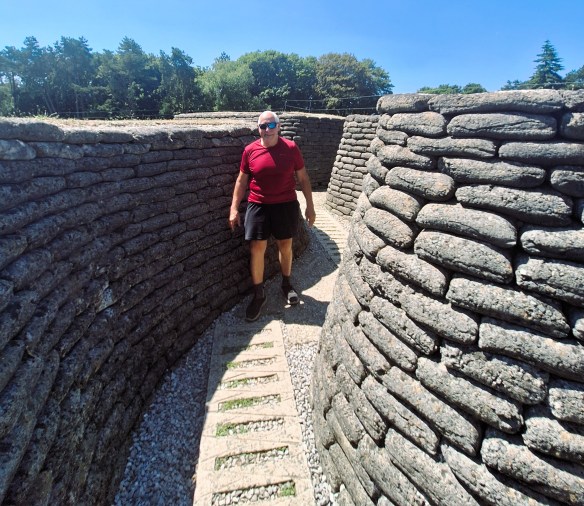
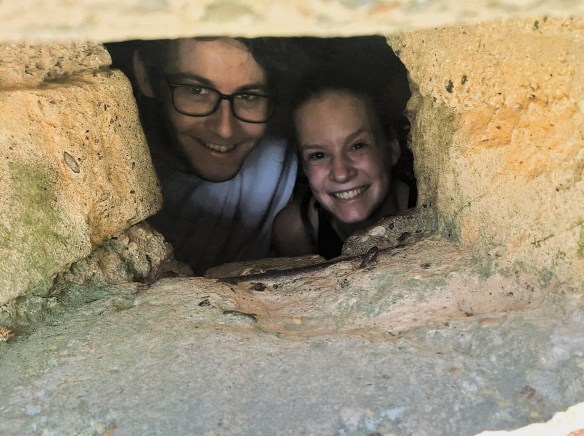
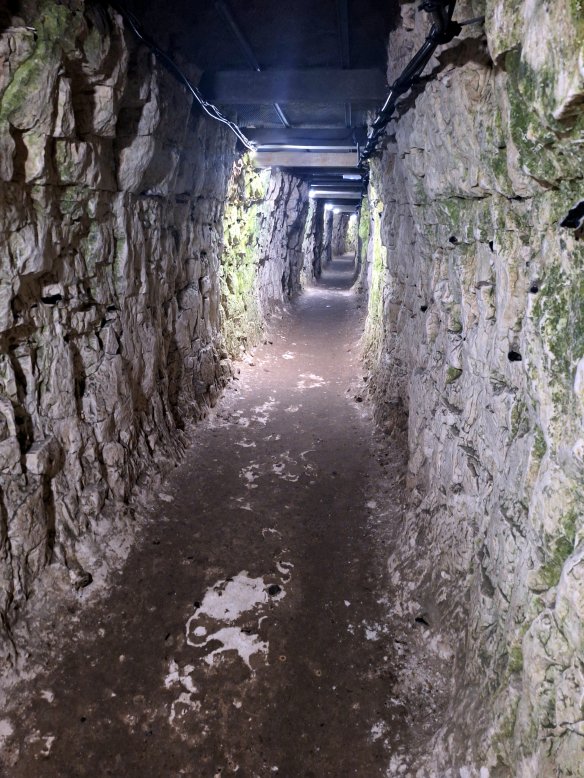
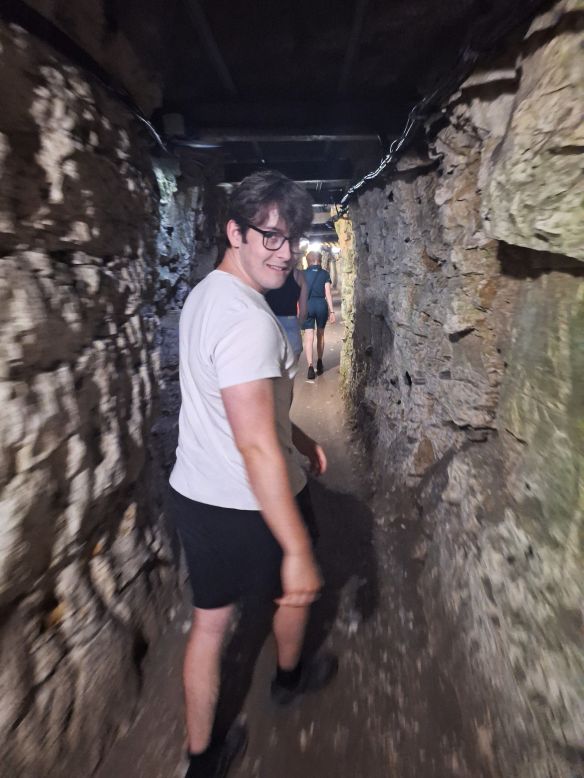
The Canadians extended a network of front-line trenches and tunnels constructed by the British. The tunnels were used to move troops, to connect underground dugouts and living quarters and for messengers to safely travel to and from the front lines. At Vimy Ridge, there were six kilometres of tunnels, and then longest tunnel was 1.6 km.
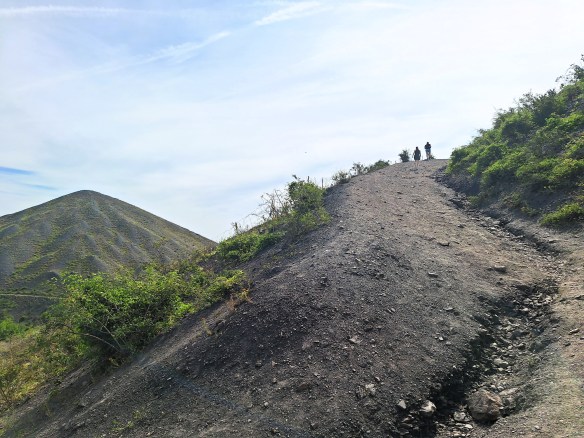
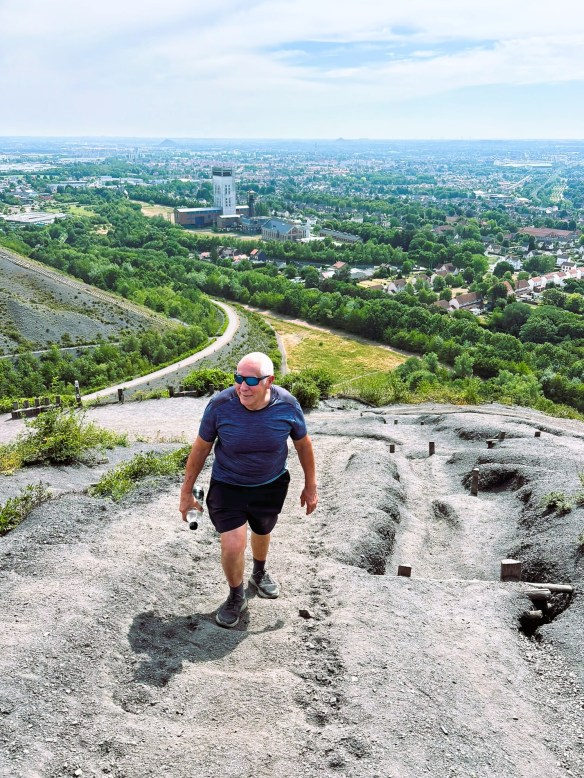
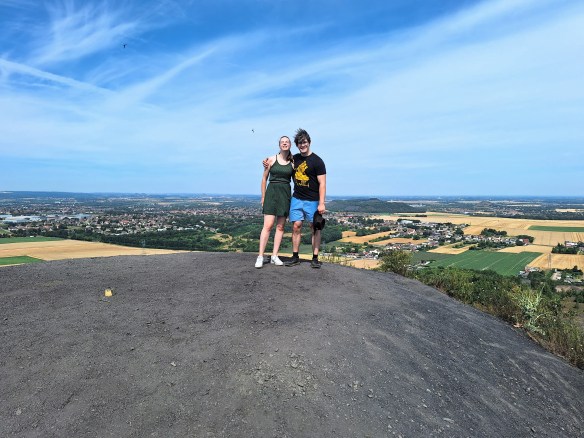
Two days later, as we headed back from the Somme to Belgium, we did a slight detour to visit the giant slag heaps of Loos-en-Gohelle, located about 12 km northwest of Vimy. These two slag heaps are the tallest artificial mountains in Europe. We climbed the highest one, to the summit 146 m above ground level. It is 2 metres taller than the second slag heap.
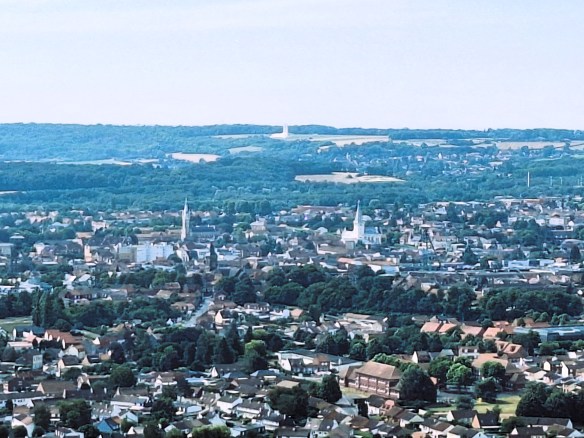
The Canadian Memorial is visible in the middle close to the horizon,

