A visit to Uluru and Kata Tjuṯa (the Olgas)

In the last two weeks of July 2025, I took my younger son to central Australia to visit for his first the iconic desert landscape and to explore some of the spectacular desert and mountain scenery. I have visited central Australia a number of times when I was younger, with trips to Alice Springs and Uluru (Ayers Rock), Katherine Gorge and the Arnhem Land Escarpment.

I have included links to previous posts about this trip and the end of this article. From Kings Canyon, we drove 330 km southwest to Uluru, formerly known as Ayers Rock, and perhaps the most famous landmark in Australia. As we headed towards Uluru, the land became extremely flat. The recent rain from the storm during the last night we were in Kings Canyon was widespread and had filled some of the shallow lakes that usually form only in the wet season.
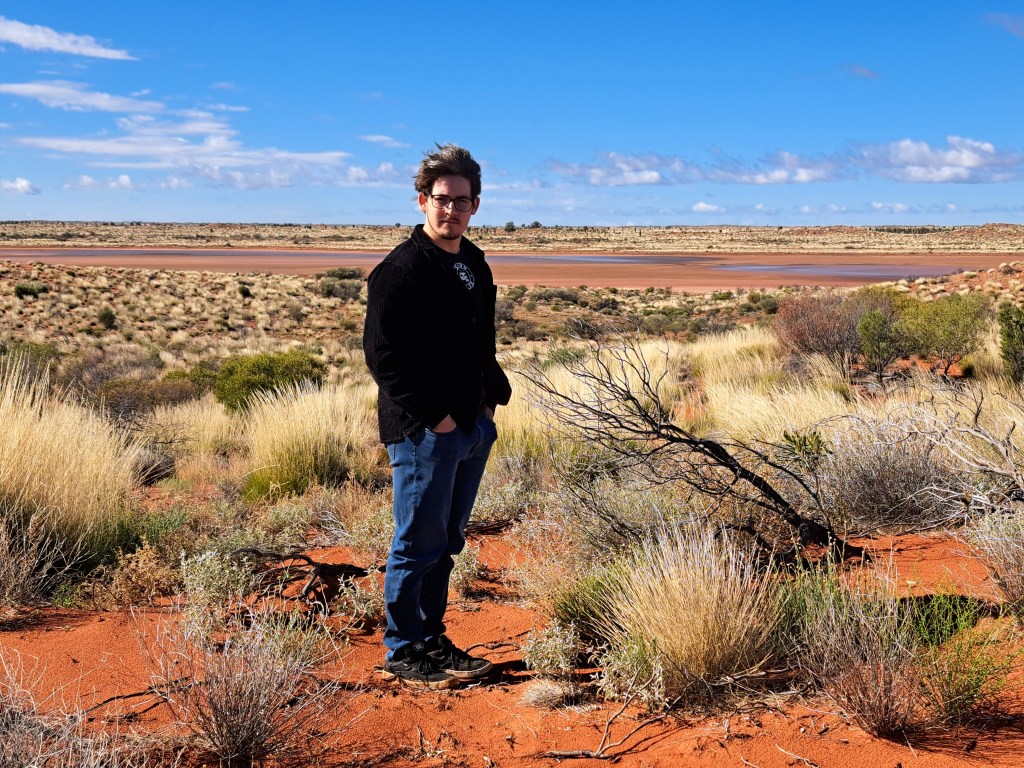
One of the shallow lakes we saw on the way to Uluru, an unusual sight in the dry season.
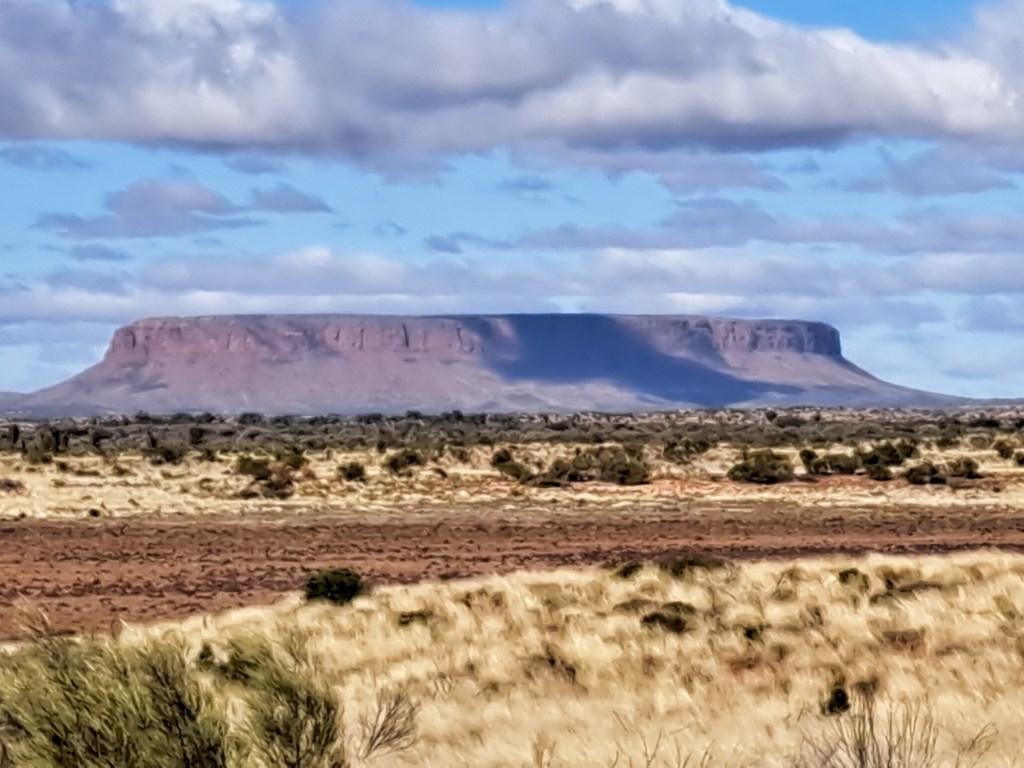
Mount Conner about 90 km before Uluru — aka Mount Fuluru because many people mistake it for Uluru.

We stayed at a tourist hotel in Yulara, a new settlement about 20 km from Uluru, built specifically to provide tourist accommodation and services, including an airport.
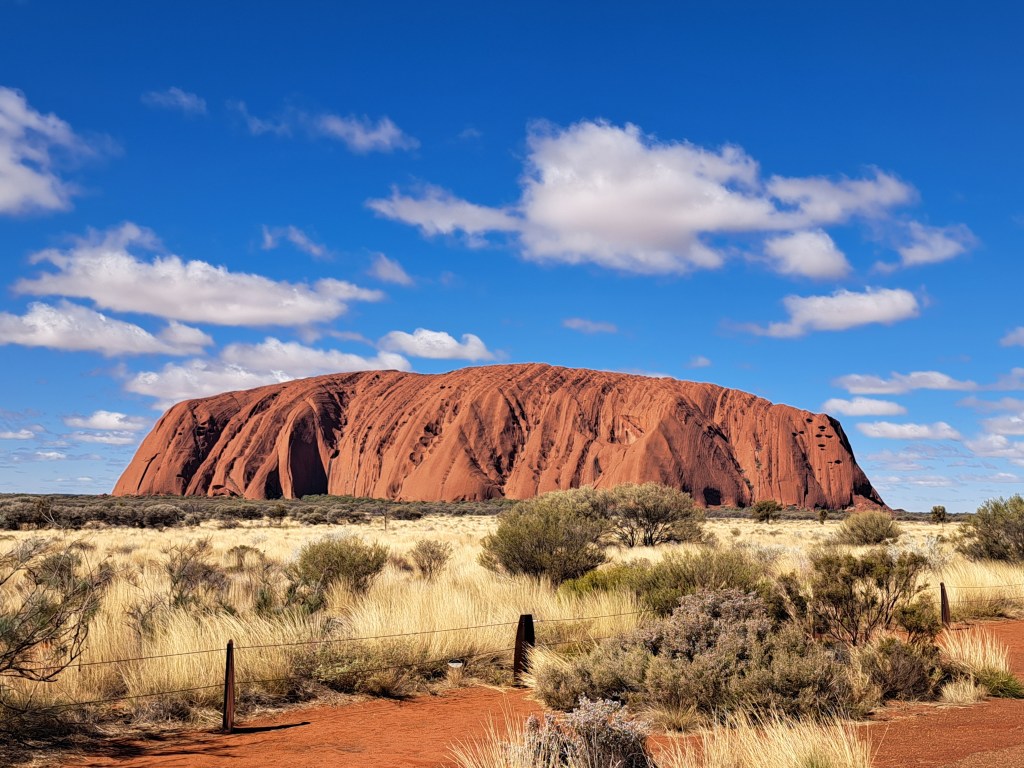
Approaching Uluru from Yulara.

This was my second visit to Uluru. The first was 45 years ago, one week before the dingo took Azaria in August 1980. That was also a memorable trip. One of my friends had found a pilot seeking to increase his flying hours, who was willing to fly the four of us from Sydney to Uluru in a light plane, all for the cost of the fuel. I think we paid a couple of hundred dollars each.

On that first trip, we slept in a cave at the base of Uluru, and the pilot slept under the wing of the aircraft. In those days, it was still possible to climb Uluru, and I climbed it before dawn the next day, to arrive at the summit just before sunrise and to see the shadow of Uluru stretching all the way to the horizon when the sun rose. My three friends were all rock climbers and had decided to do a free solo of Uluru on its other side. I waited on top till they arrived quite some time later, and they looked quite traumatized. It seems the gully they had chosen to climb ended on a steep face which was extremely exposed and pushed my friends well out of their comfort zone.

A brief anecdote. When first writing some notes about my first trip to Ayers Rock, I could not remember exactly which year the trip was, but I knew we were there the weekend before the dingo took the baby Azaria Chamberlain. The baby’s mother Lindy Chamberlain was convicted of murdering the baby, and spent three years in prison before the baby’s clothing was found in a dingo den, and she was exonerated. So I looked up this event on Wikipedia to check the date it occurred, and read the article. In the last paragraph it reported that Lindy and Michael Chamberlain had divorced after these event, Lindy remarried an American who lived in Australia, and the dingo changed its name to Sally and was adopted by a family in Florida. I went back to the article a few days later to get a screenshot for posterity, but unfortunately and eagle-eyed editor had removed the information on the dingo.
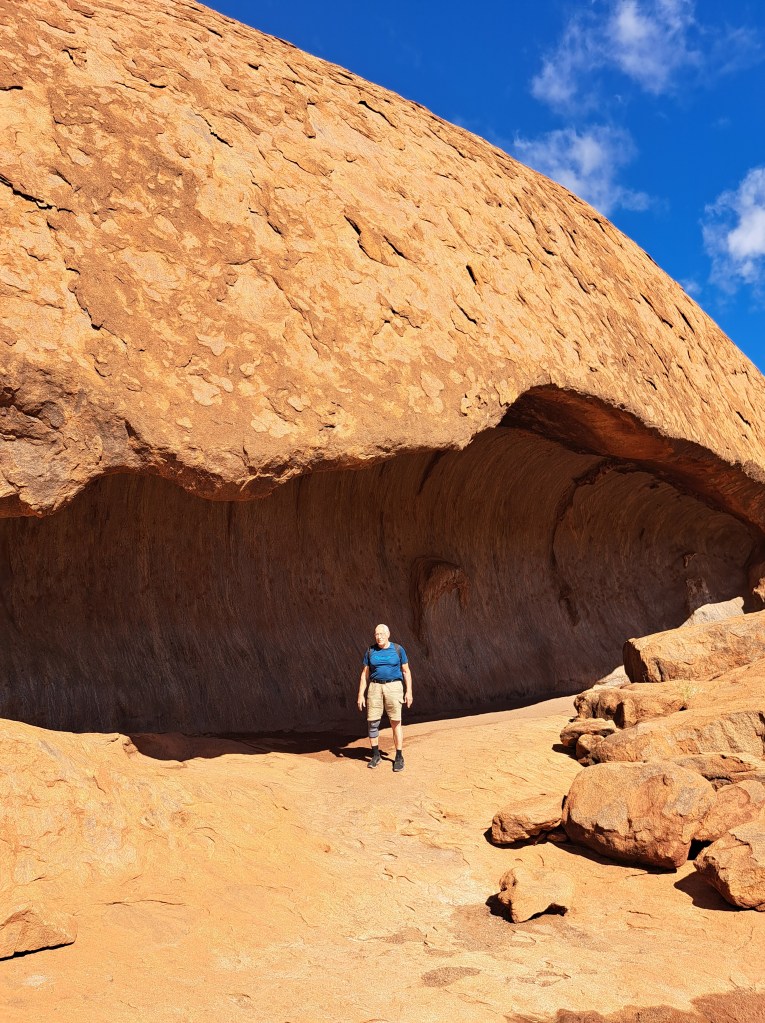
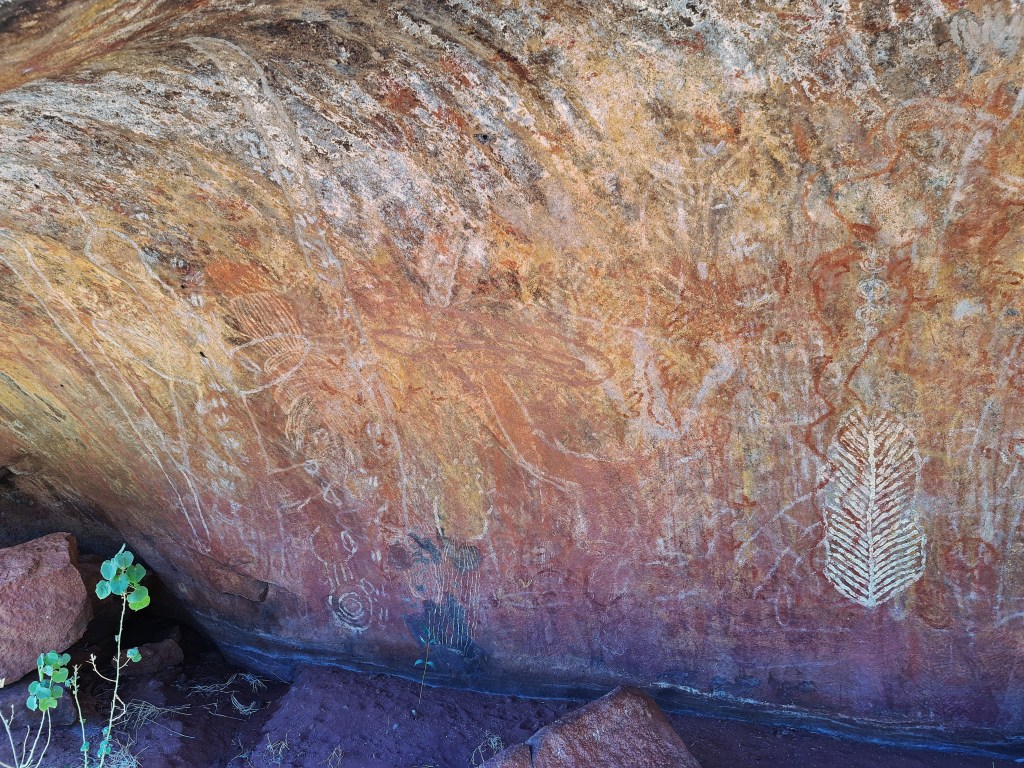
I am fairly sure that this cave at the base of Uluru is the one we slept in on my first trip to Uluru.
Aboriginal art on the wall of the cave.
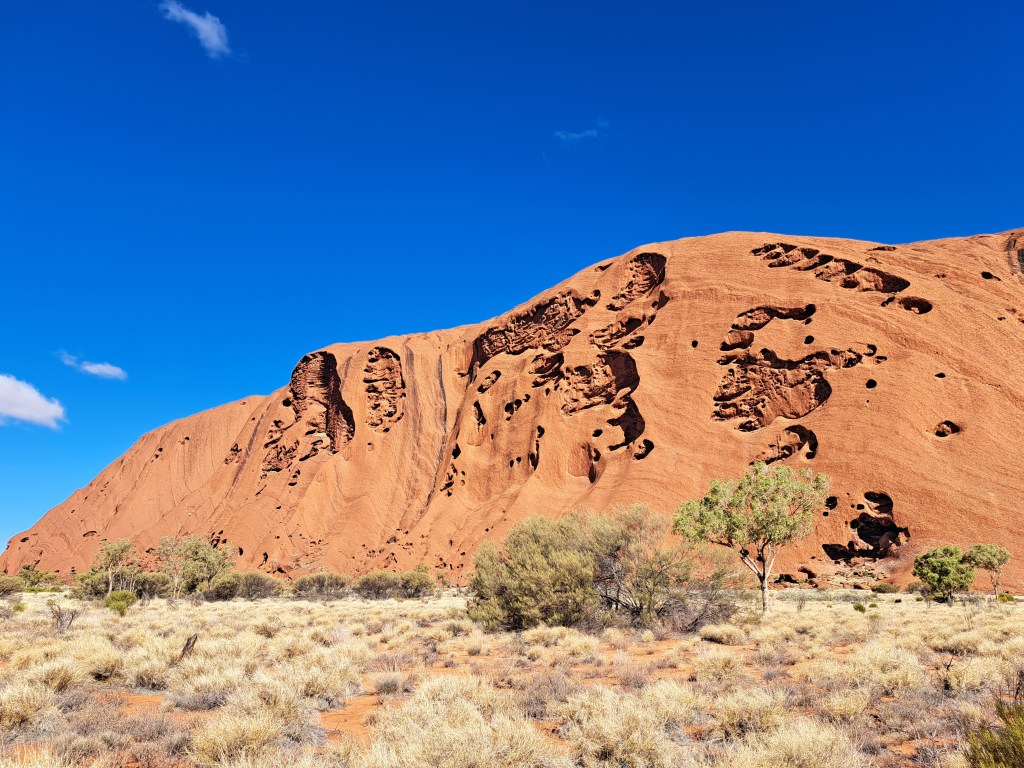
My son and I did a complete circuit around the base of Uluru, an 11 km walk.

Our last night in Kings Canyon, there was a violent storm with strong wind and heavy rain. As a result there were waterfalls all over the Rock, apparently a rare sight in the dry season.
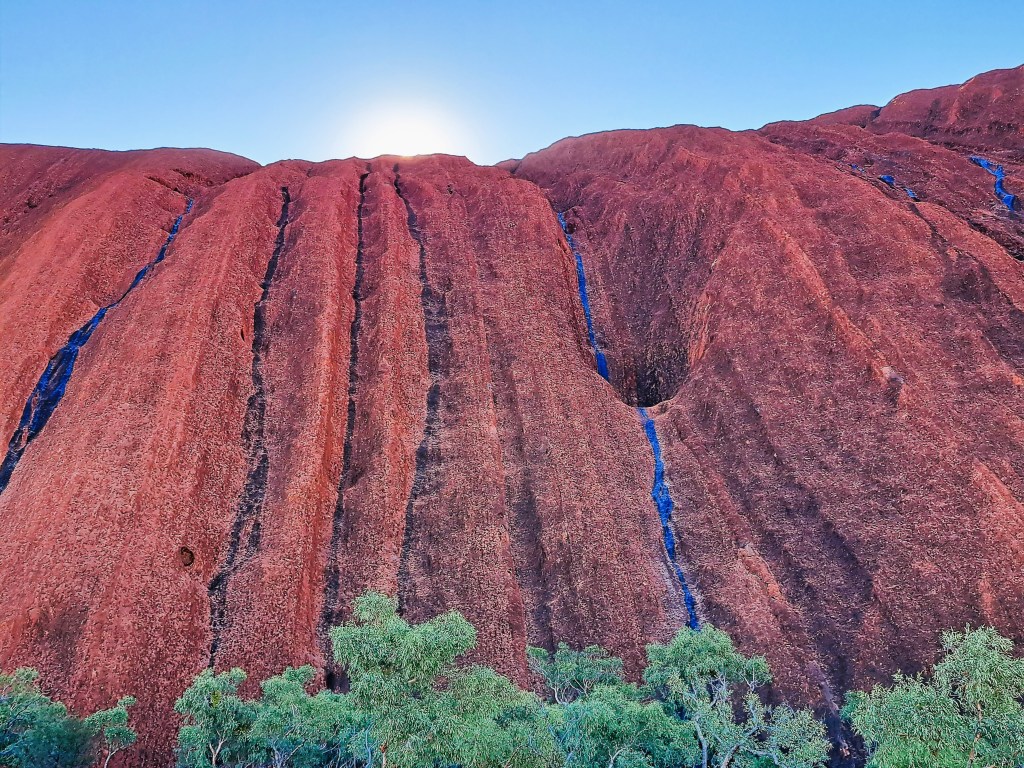
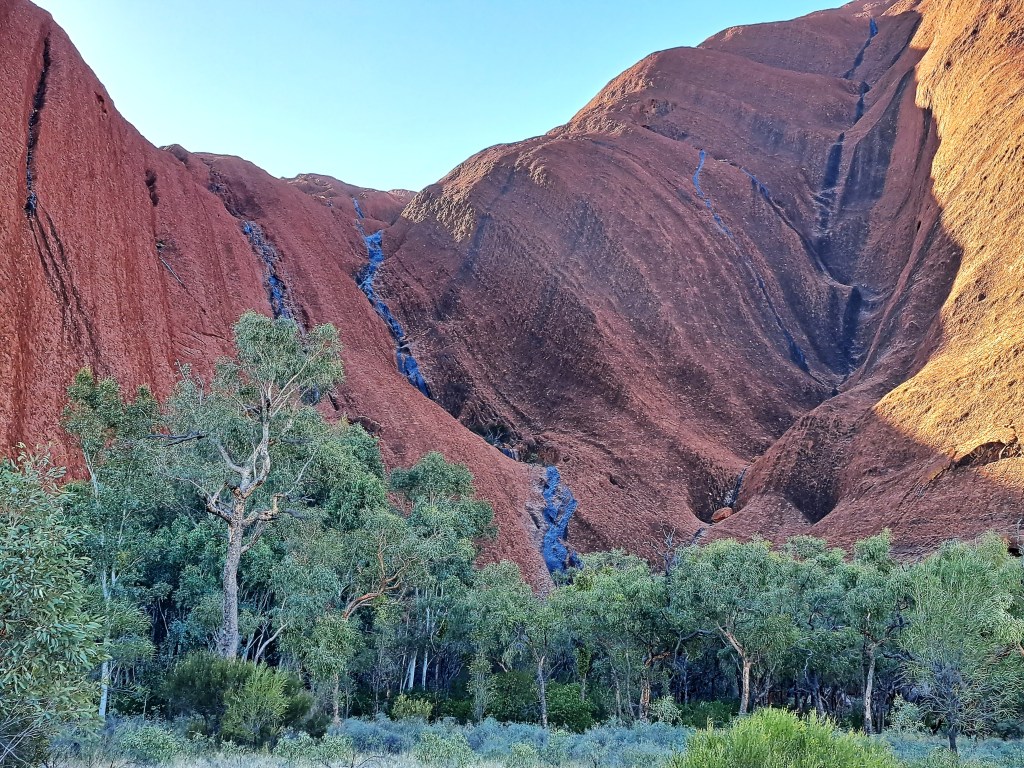
Waterfalls on the southern flanks of Uluru.

Climbing the Rock was banned in 2019. The track to the summit is still visible as a white line up the ridge that reaches the summit immediately above Felix. Back in 1980, I climbed Uluru via this route.The route was extremely steep towards the top, and there was a chain railing that climbers could use to prevent themselves slipping and falling. At least 37 people died while attempting to climb Uluru (Ayers Rock) since record-keeping began in the 1950s.
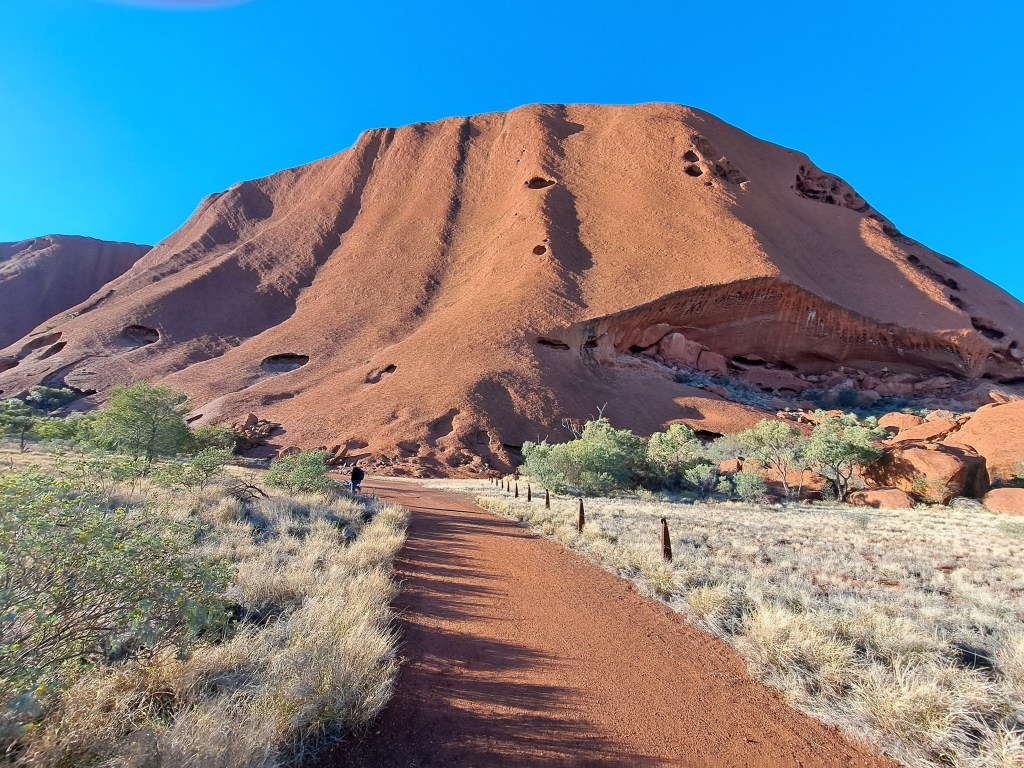
Westen end of Uluru, with the former climbing track visible as a white line of the ridge to the left of centre.

As we headed back to Yulara, the sun was getting low in the sky and turning the Rock red.
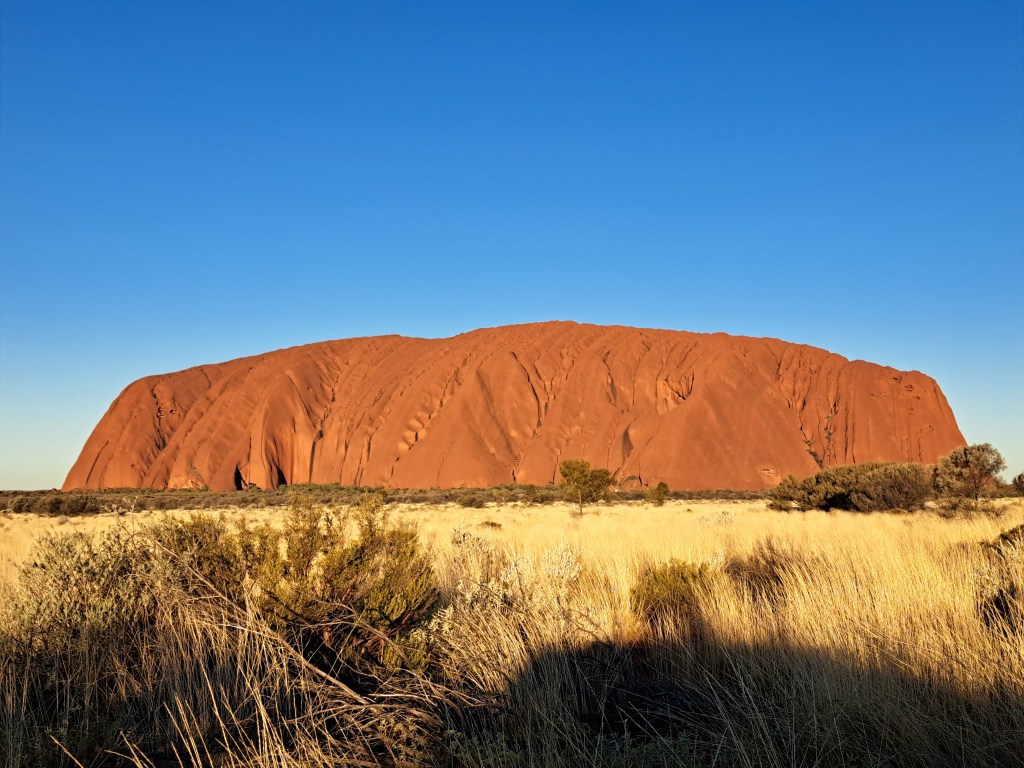
Late afternoon sun on Uluru.

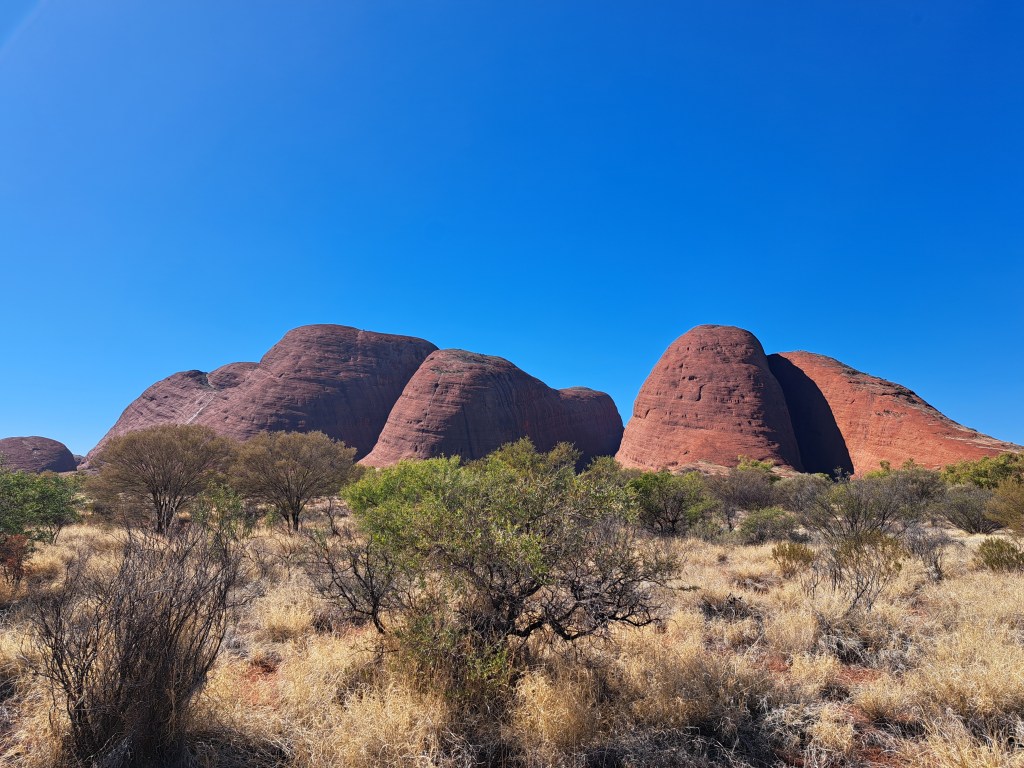
The next day we went out to Kata Tjuṯa (the Olgas), 56 km west of Uluru. This was my first land visit to them. On my first trip in 1980, the pilot had flown us out to the Olgas and we flew low over them getting superb views. I’m quite comfortable with the Aboriginal name for Ayers Rock, but I must admit I have trouble getting Kata Tjuta into my memory banks, and still think of these iconic rocks as the Olgas.
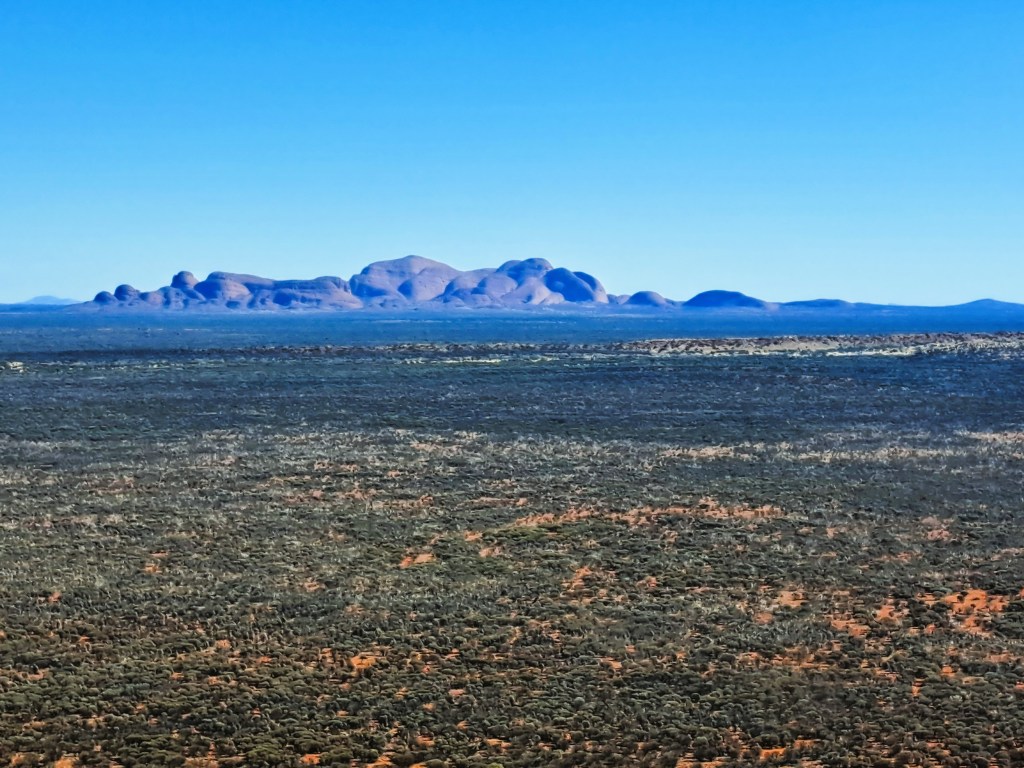
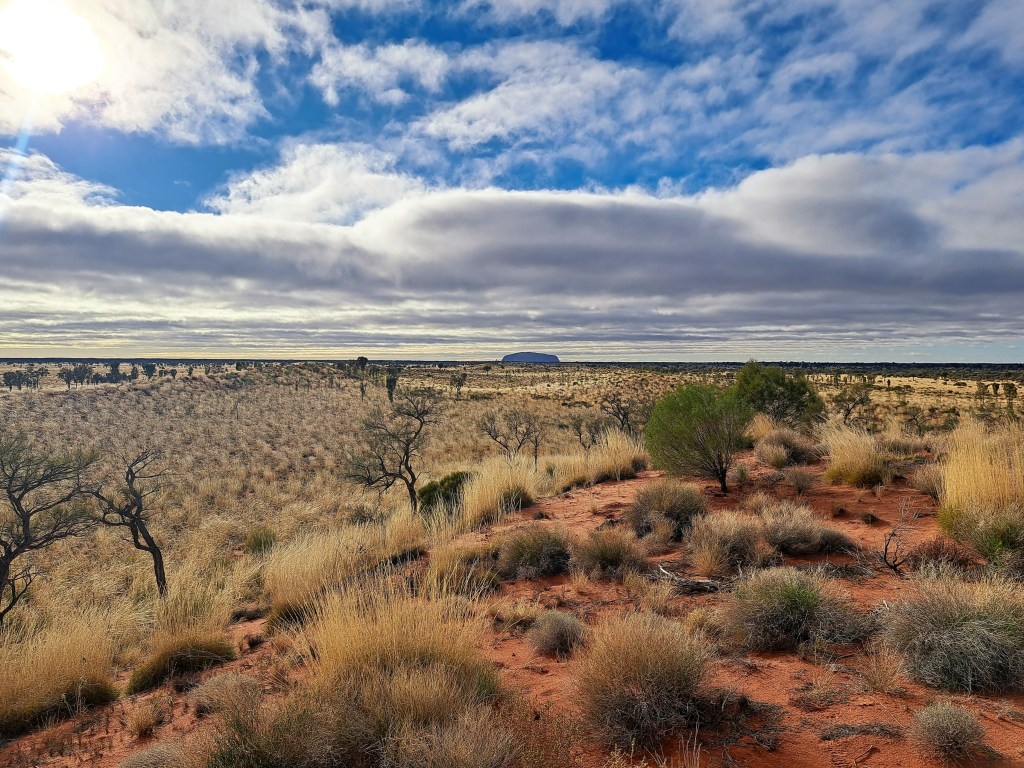
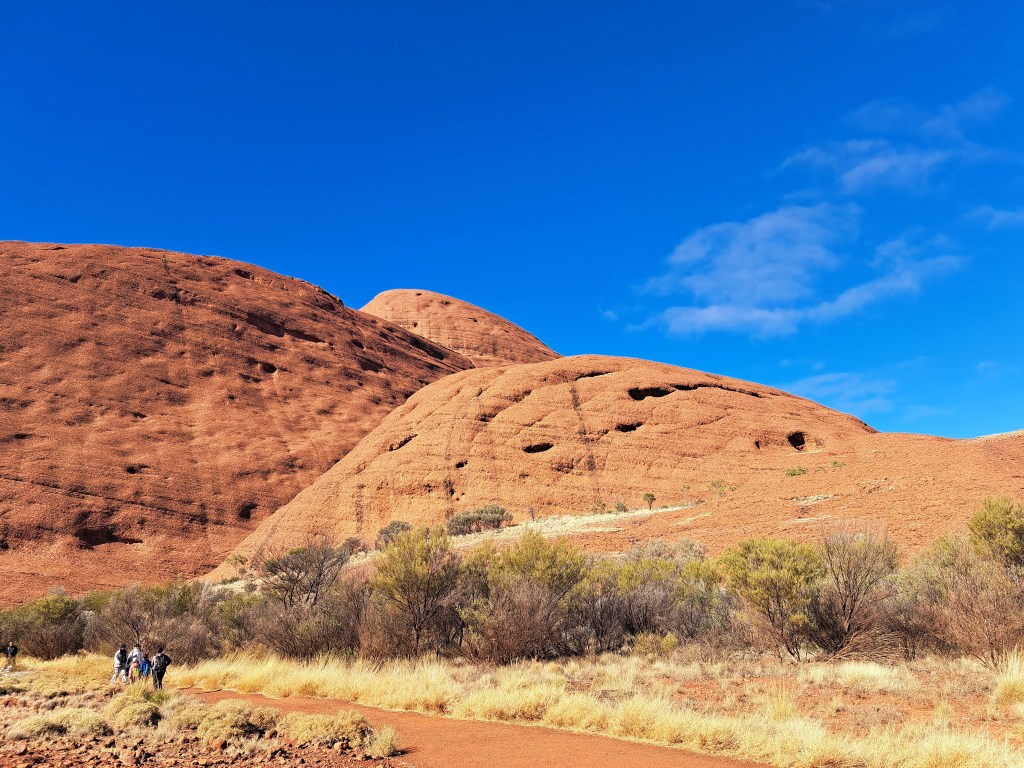
Kata Tjuṯa (the Olgas)/
Looking back to Uluru from the Olgas.
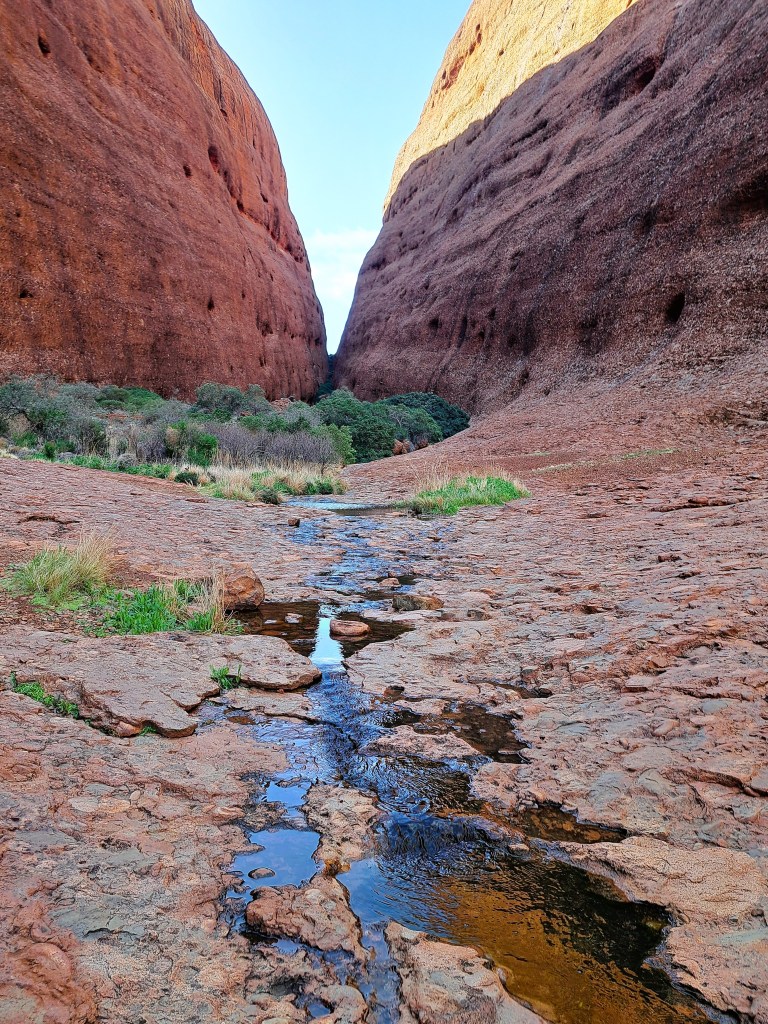
Flowing water in Walpa Gorge, with Mount Olga on the right.
Walking towards the Valley of the Winds
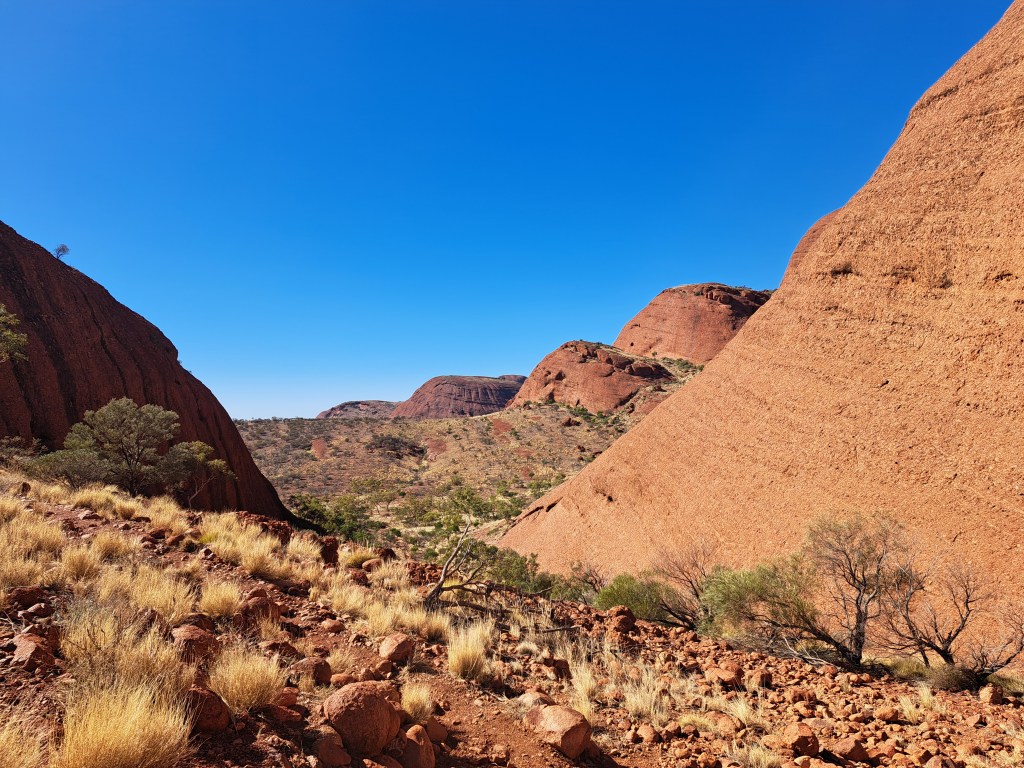
View towards the Valley of the Winds
Looking back as we leave the Olgas to head back to Yulara

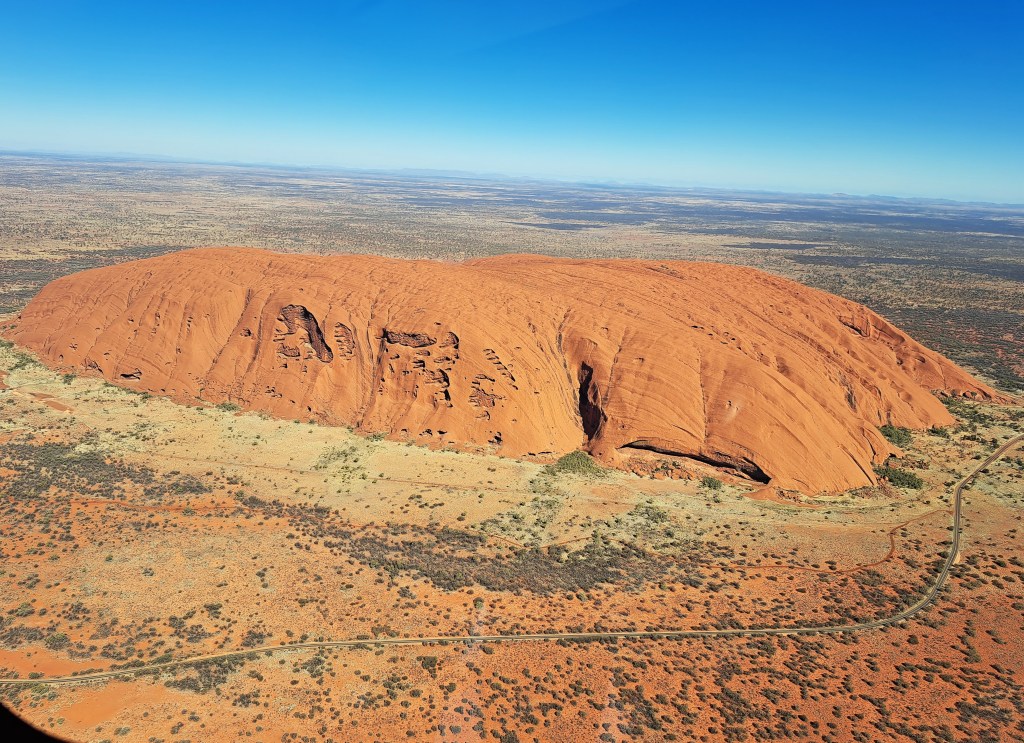
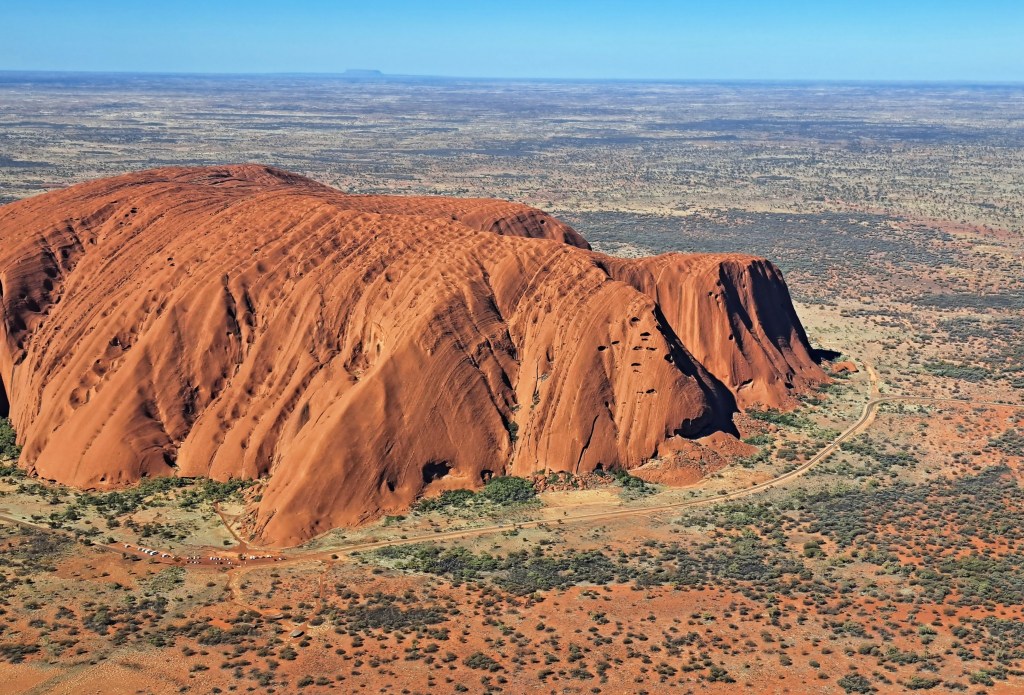
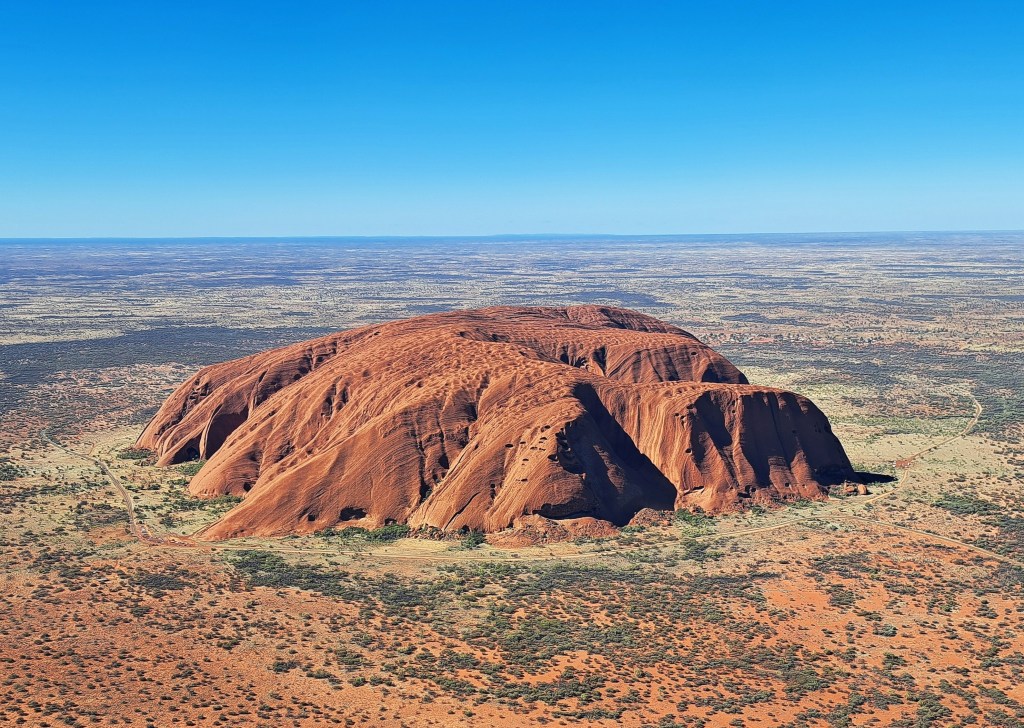
Seeing as we could not climb Uluru, we decided to do another short helicopter flight over it.
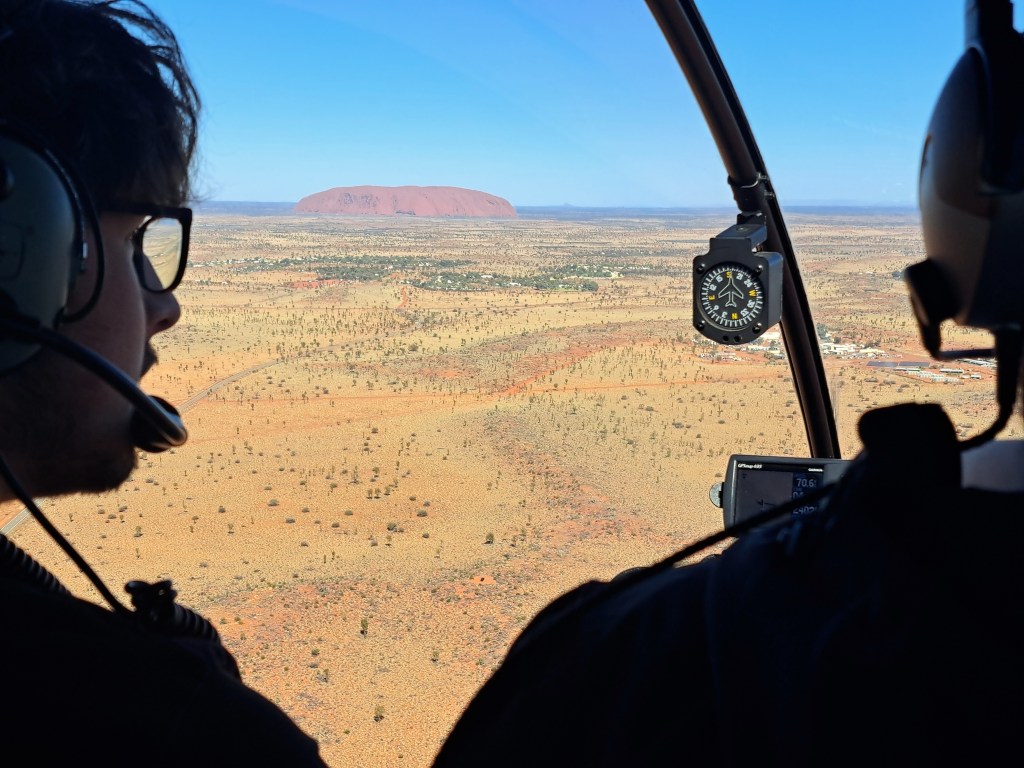
Heading towards Uluru in a small helicopter

The next day we drove from Uluru to Darwin, a 500 km trip. And spent two days in Darwin, a fascinating city well worth visiting. In the 1990s, I had been collaborating with the Northern Territory Health Department on a joint project and visited Darwin a number of times, so already was quite familiar with it. However, these two days we were able to delve into the history of Darwin, and particularly its experience of being attacked by the Japanese during World War II.  Perhaps I will do another post on that sometime.

Here are links to earlier posts on our explorations of central Australia in 2025.

A visit to Kings Canyon in central Australia Part 2
A visit to Kings Canyon in central Australia Part 1

A visit to the West MacDonnell Ranges of central Australia

A visit to Kings Canyon in Central Australia – Part 2
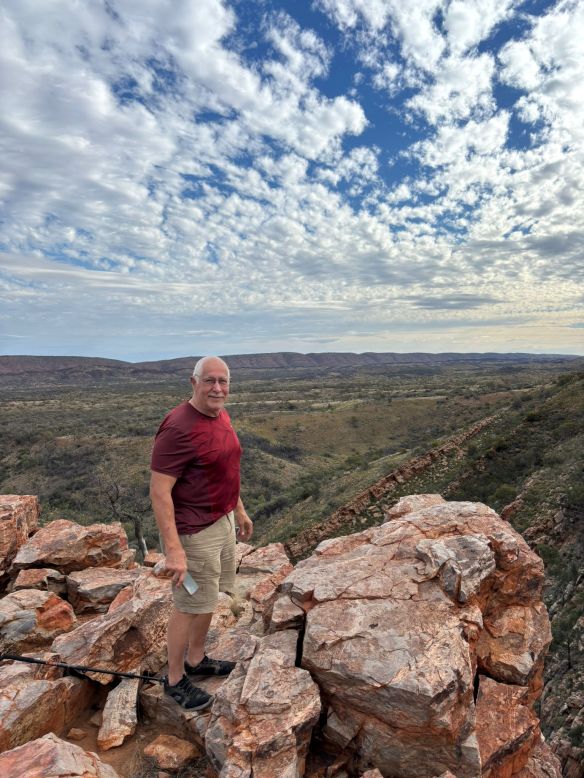
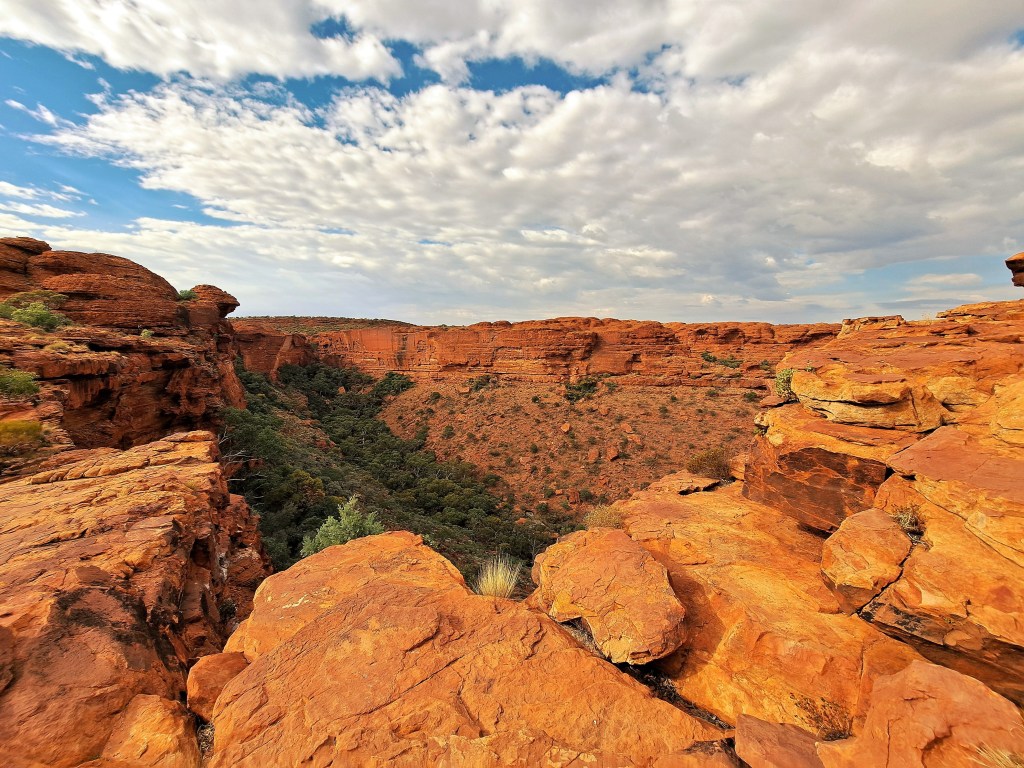
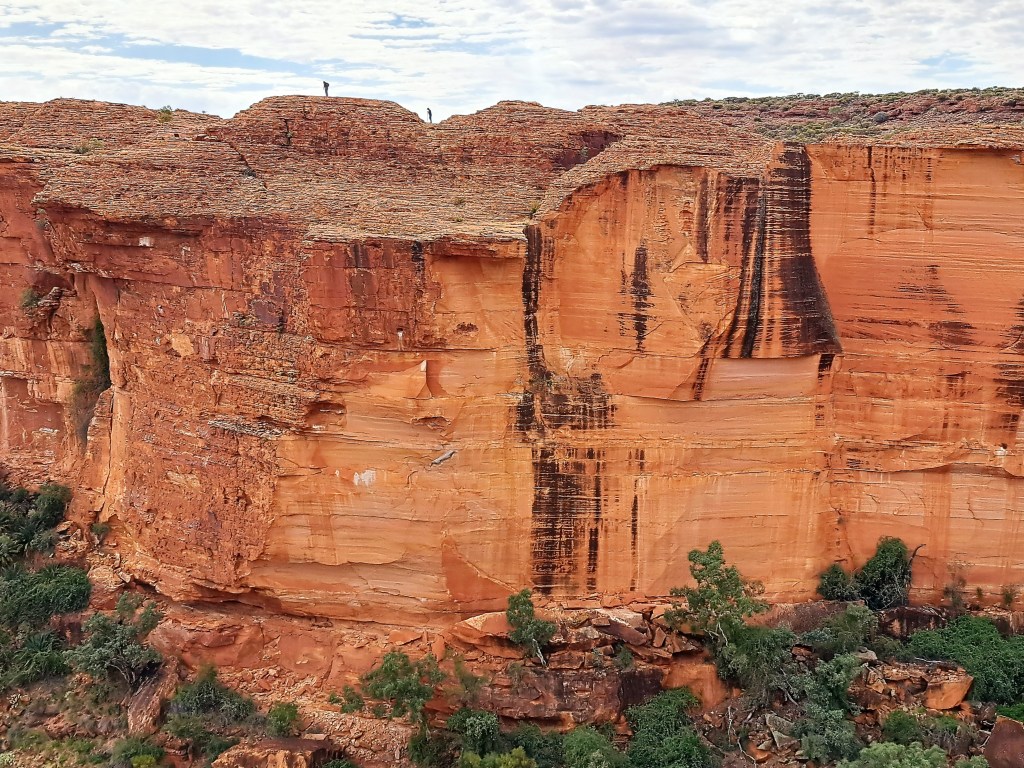
Kings Canyon is located about halfway between Alice Springs and Uluru, by road its about 470 km from Alice. The canyon has been cut 100 m deep into the layered sandstone and shale over a period of 400 million years, creating one the most spectacular landscapes in central Australia. We climbed 500 steps to the western canyon rim, then walked through the dome-like sandstone formations of the “Lost City”, crossing over to the other side of the canyon at a waterhole known as the Garden of Eden, before returning along the eastern rim of the canyon and back down to the bottom of the gorge.

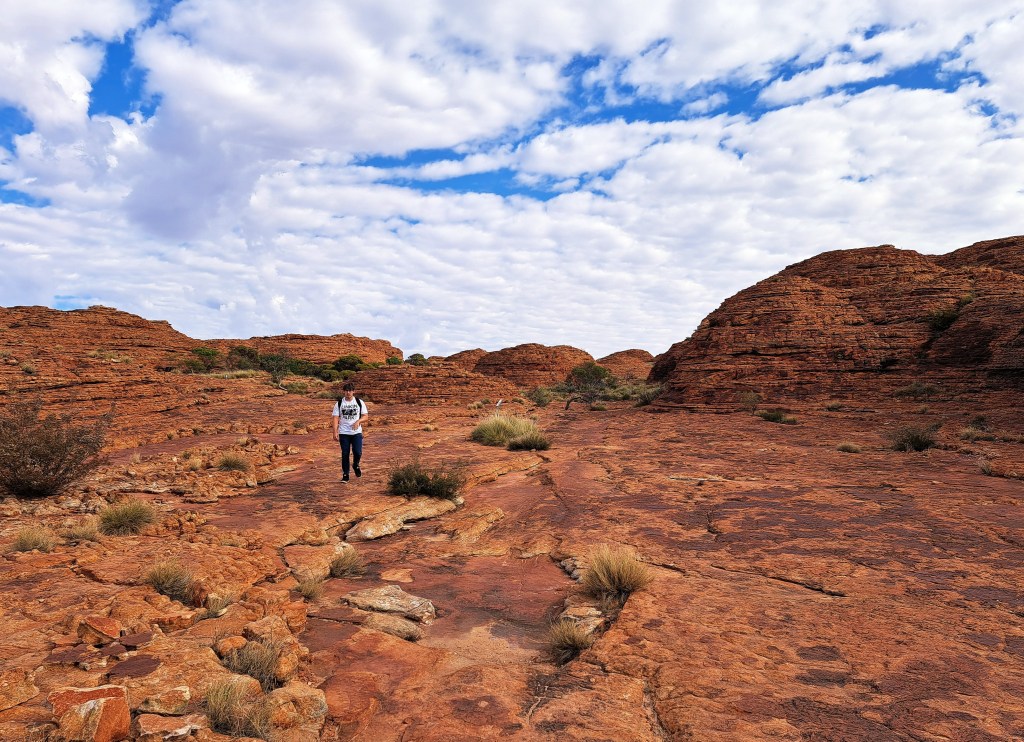
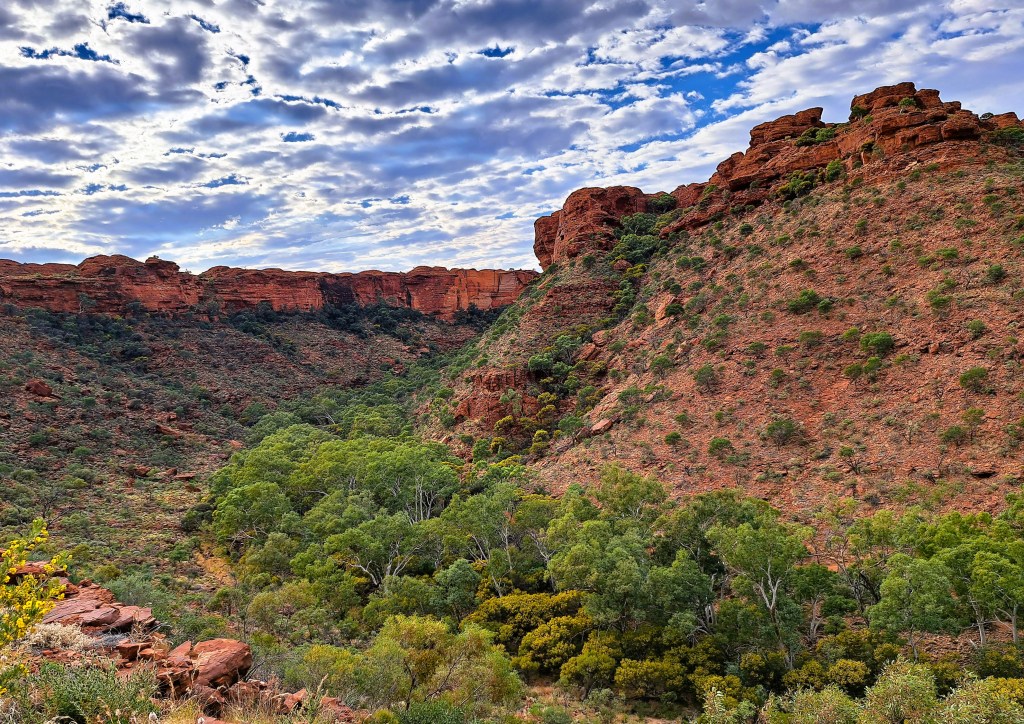
Looking towards Kings Canyon
Nearing the northern rim of the Canyon
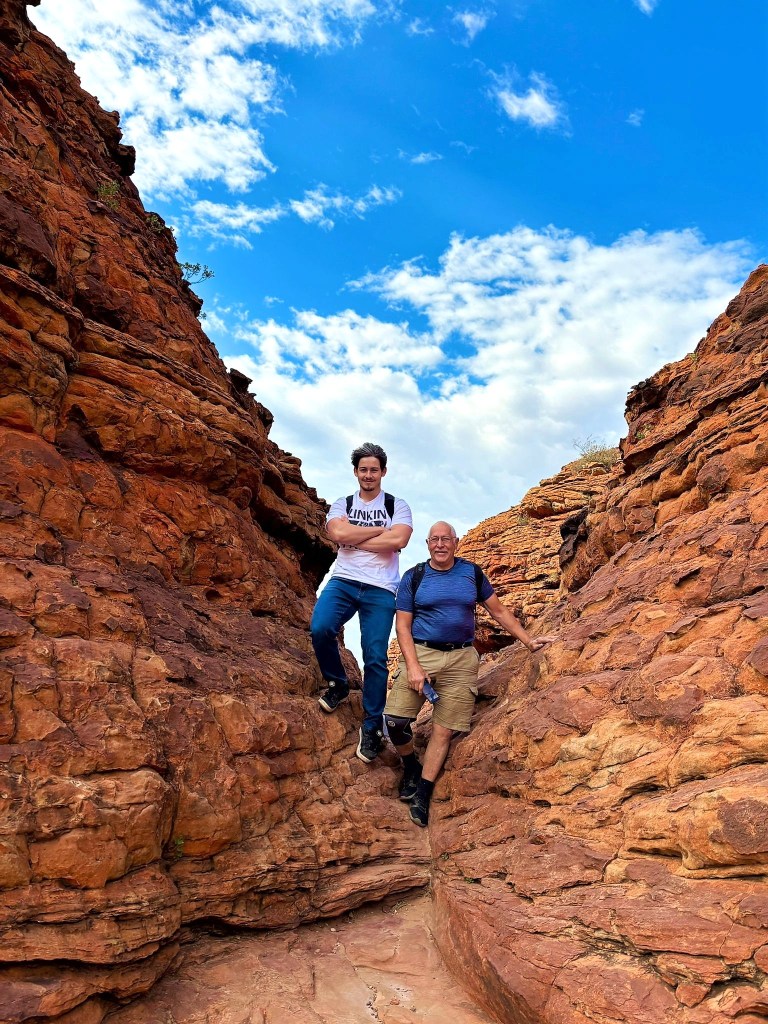
Felix and Colin
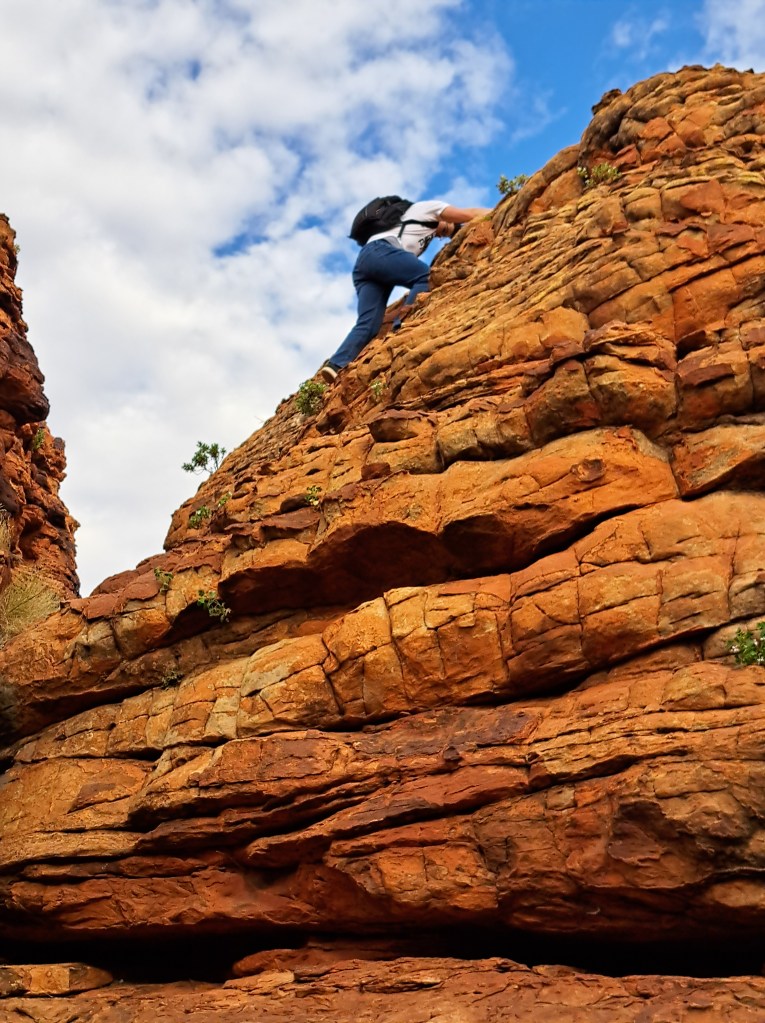
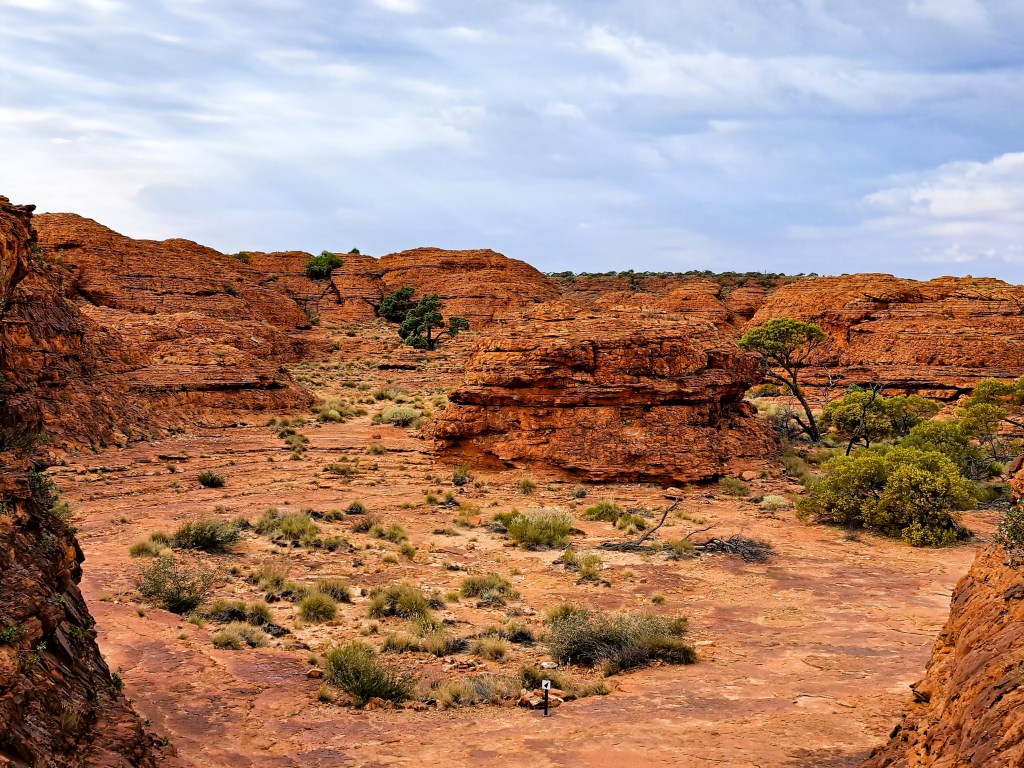
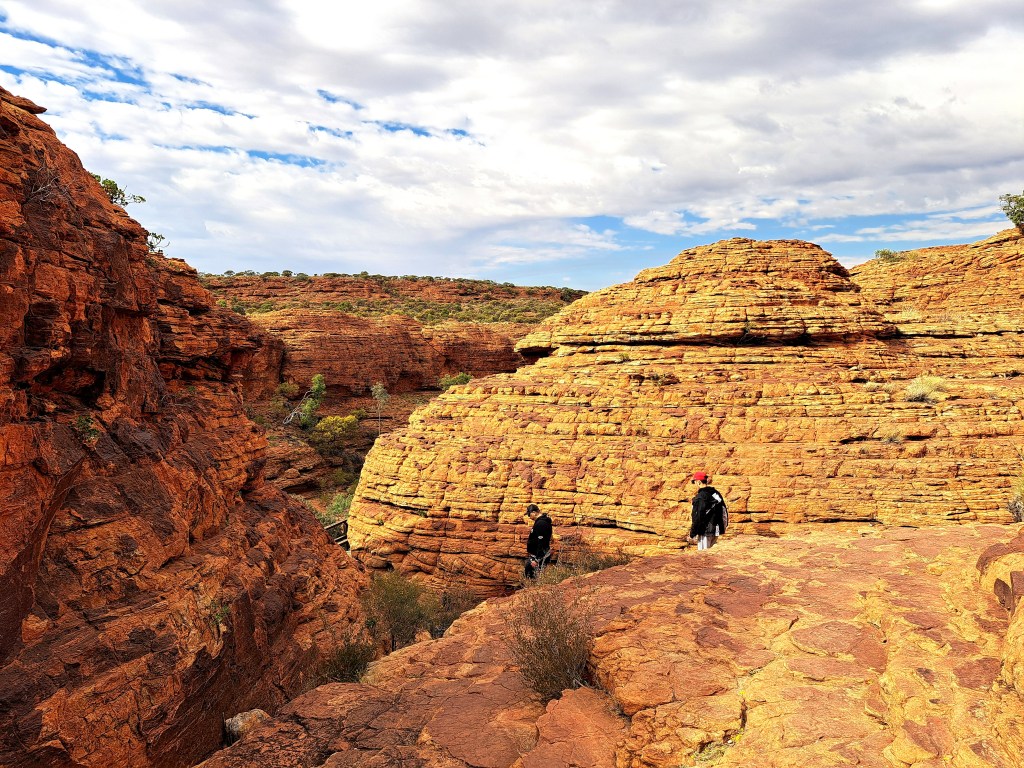
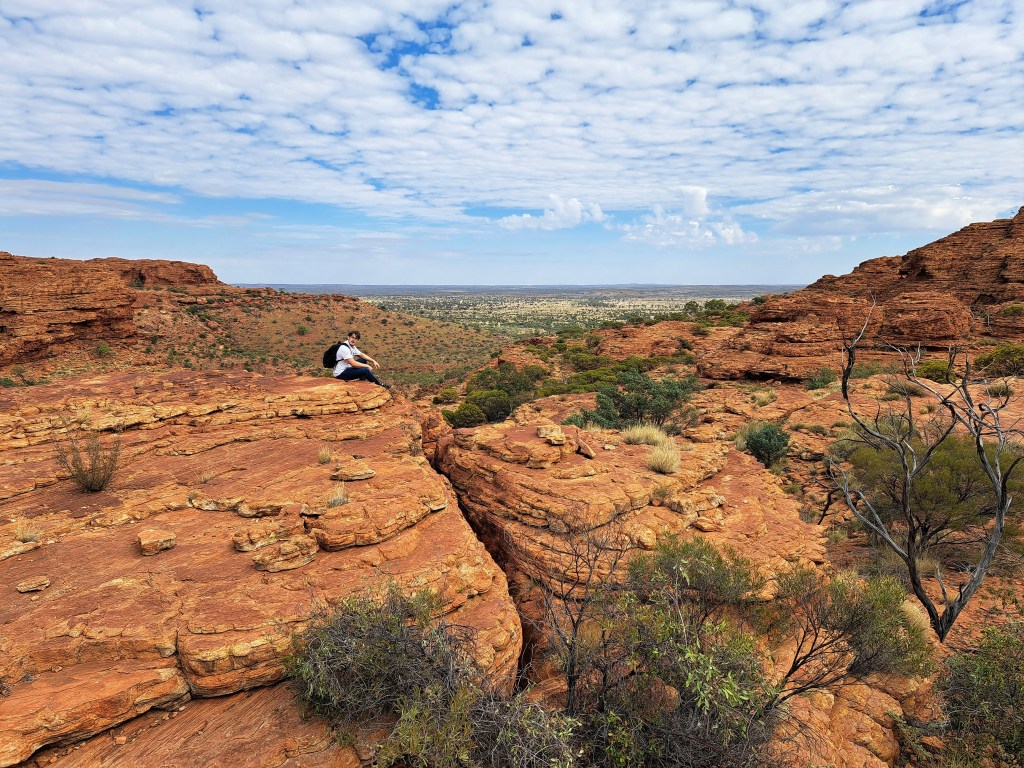
In the Lost City
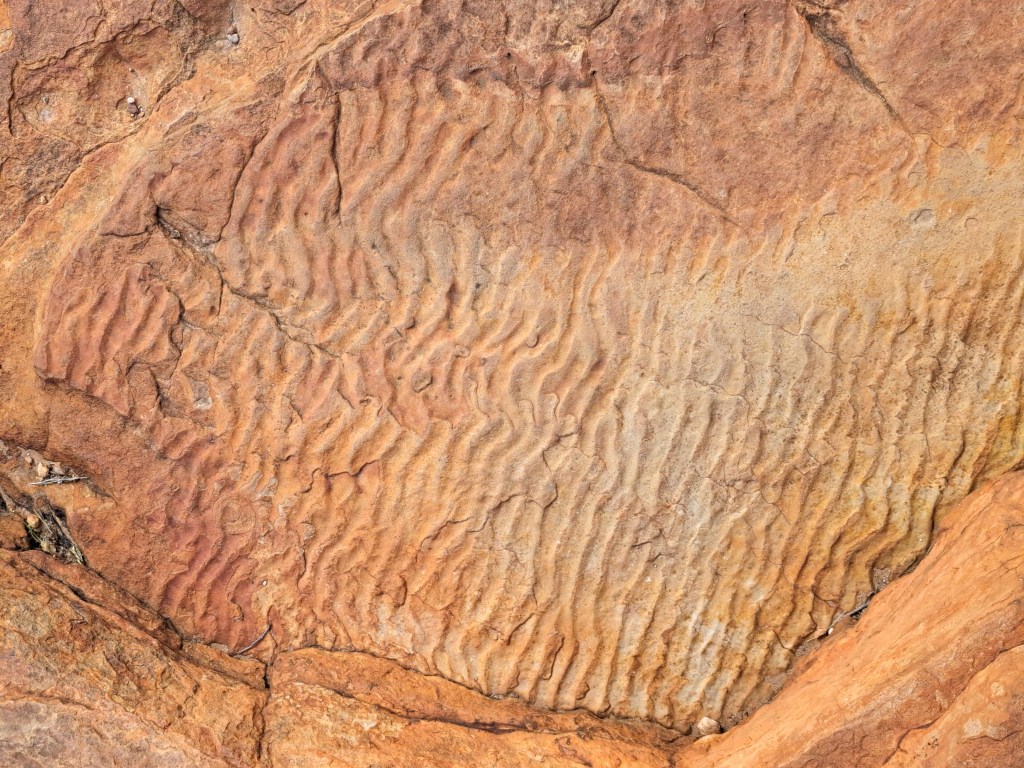
These ripples in the sandstone were formed in the shallow
waters of a long extinct sea 400 million years ago.
Felix in the Lost City
Starting the descent into the canyon to the “Garden of Eden”
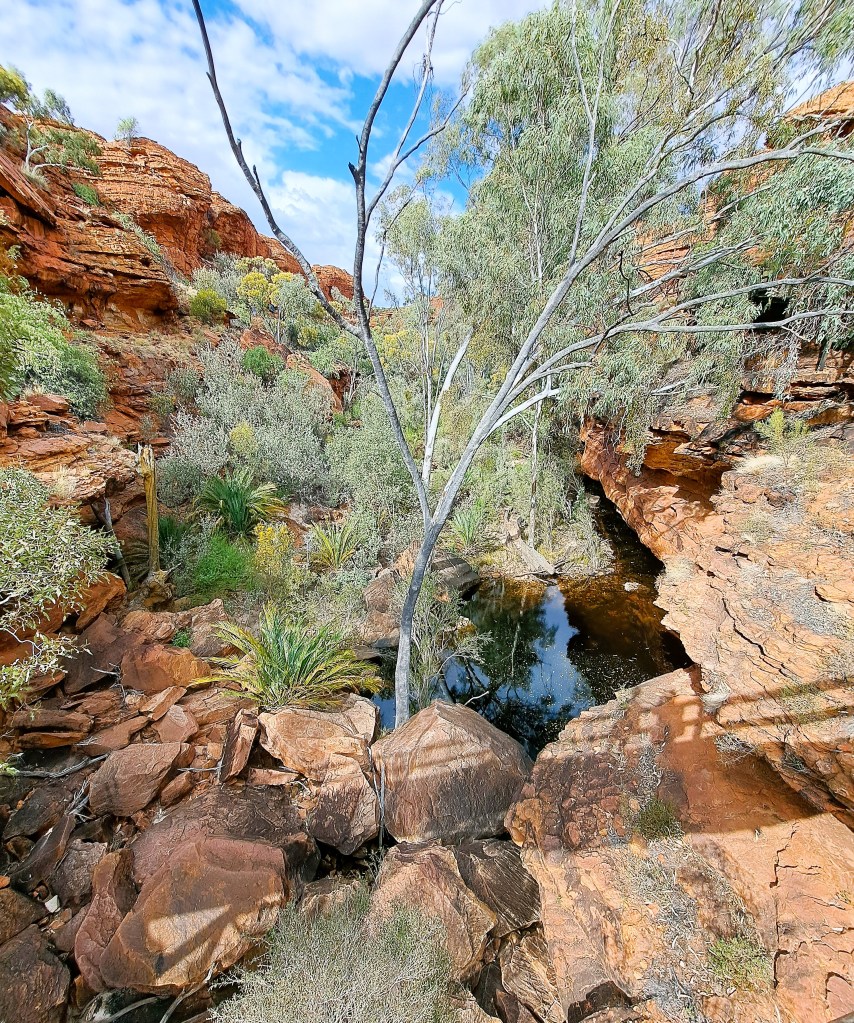
Garden of Eden
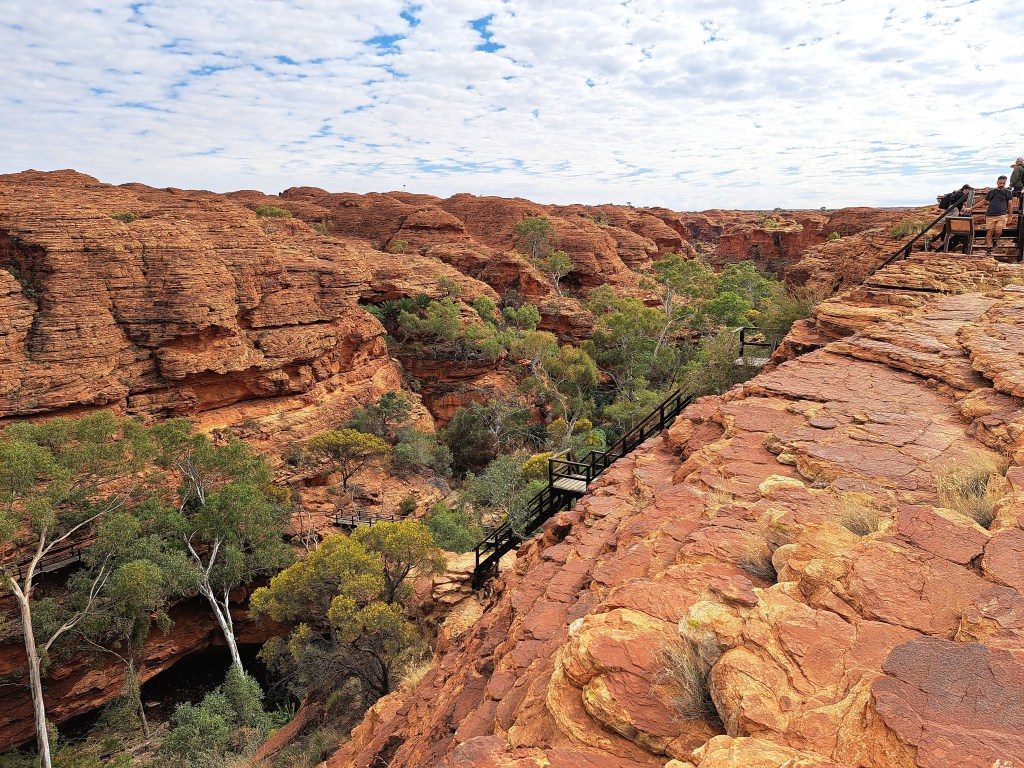
Stairs ascend to the southern rim of the canyon from the Garden of Eden
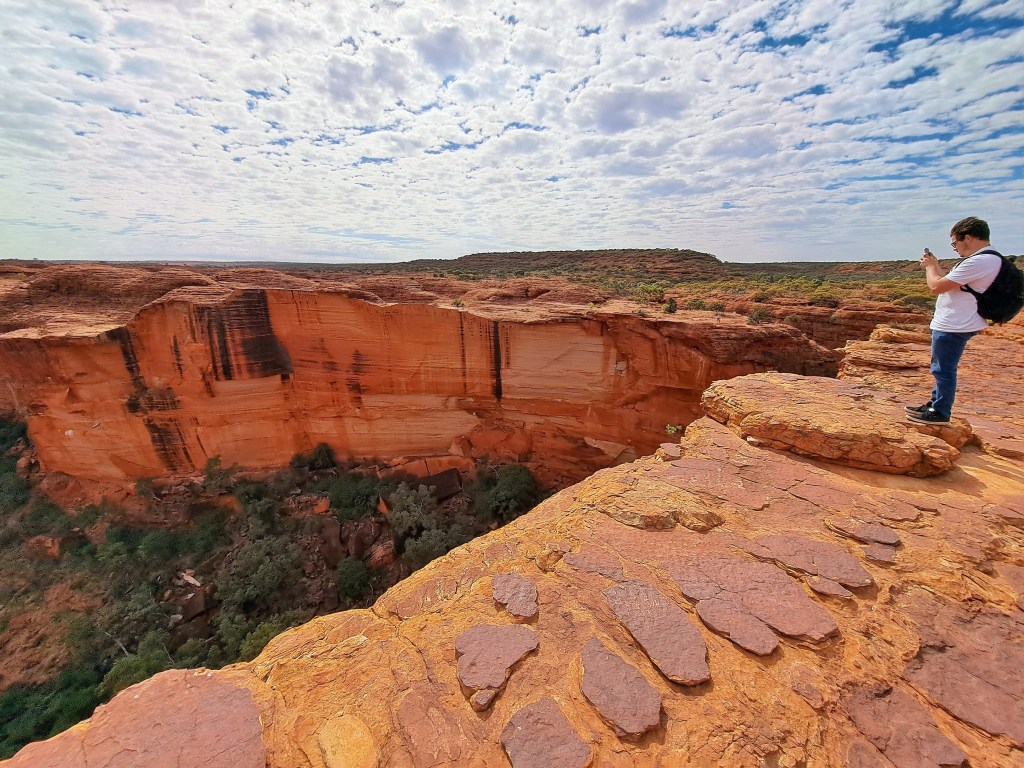
On the southern rim
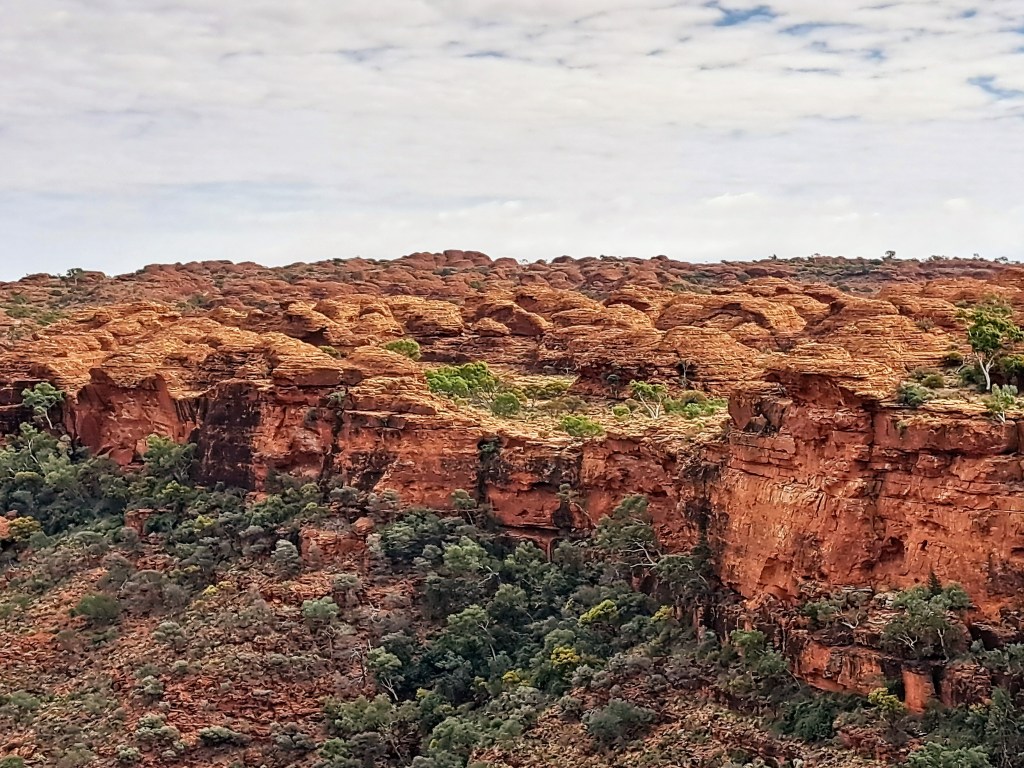
Looking across the canyon to the Lost City
The start of the descent back to Kings Creek

We descended to the Kings Creek level and drove back to Kings Creek Station for the night, before heading towards Uluru (Ayers Rock) the next day.

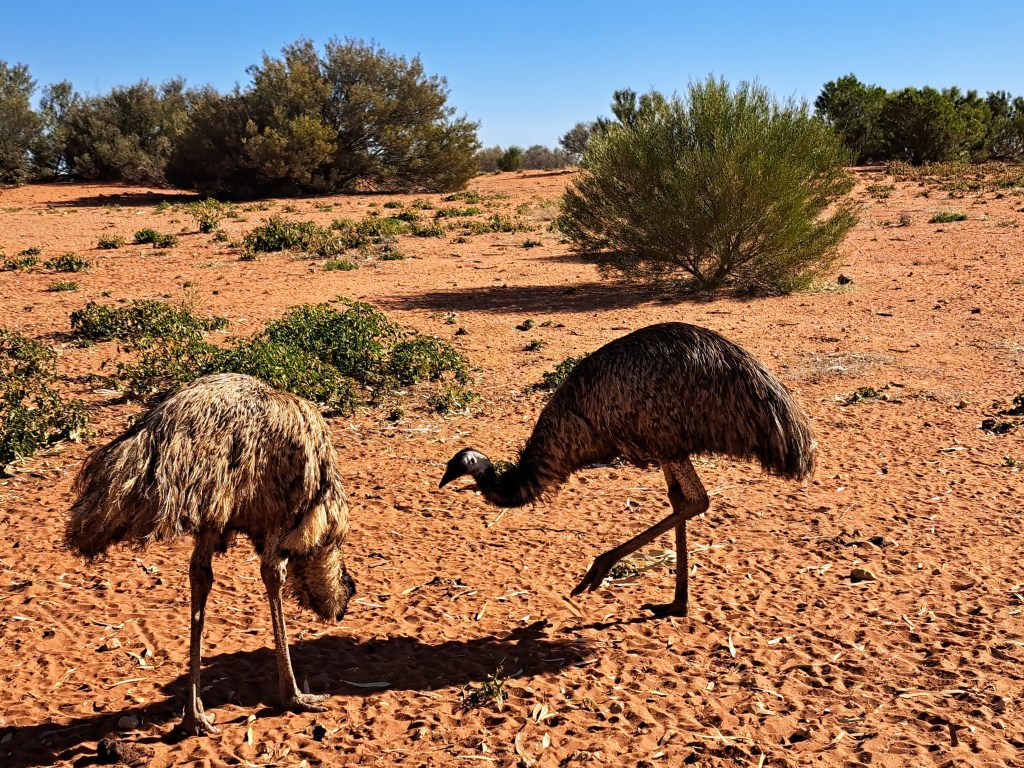
Emus near Kings Creek Station
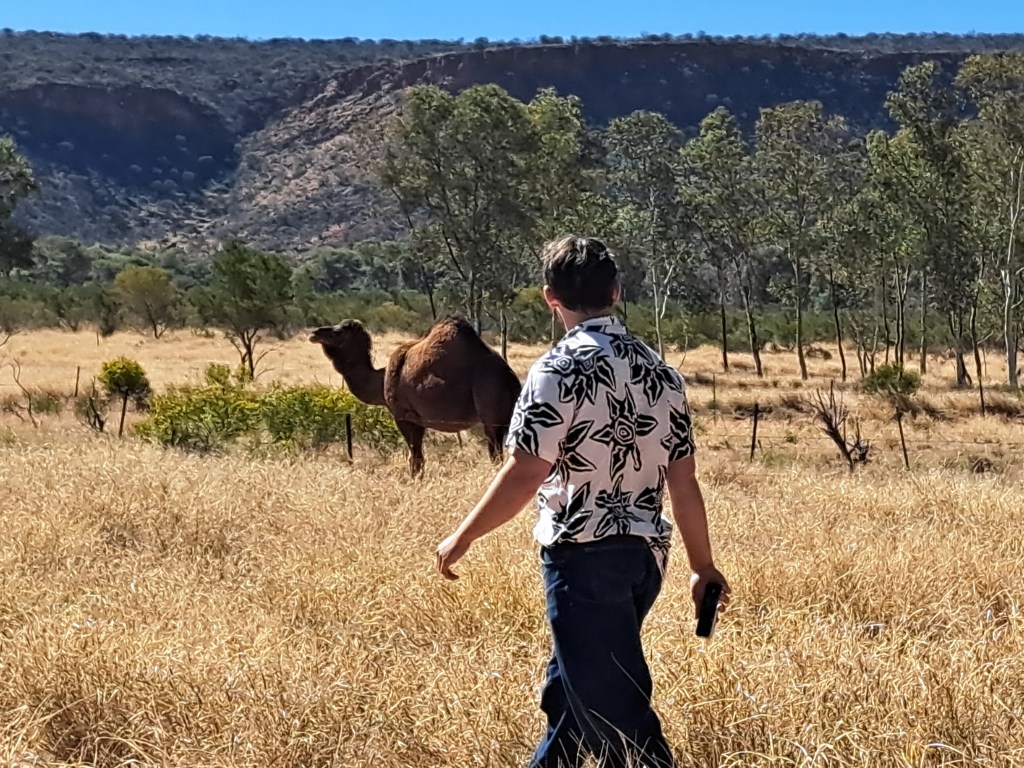
There were also several camels grazing near the station
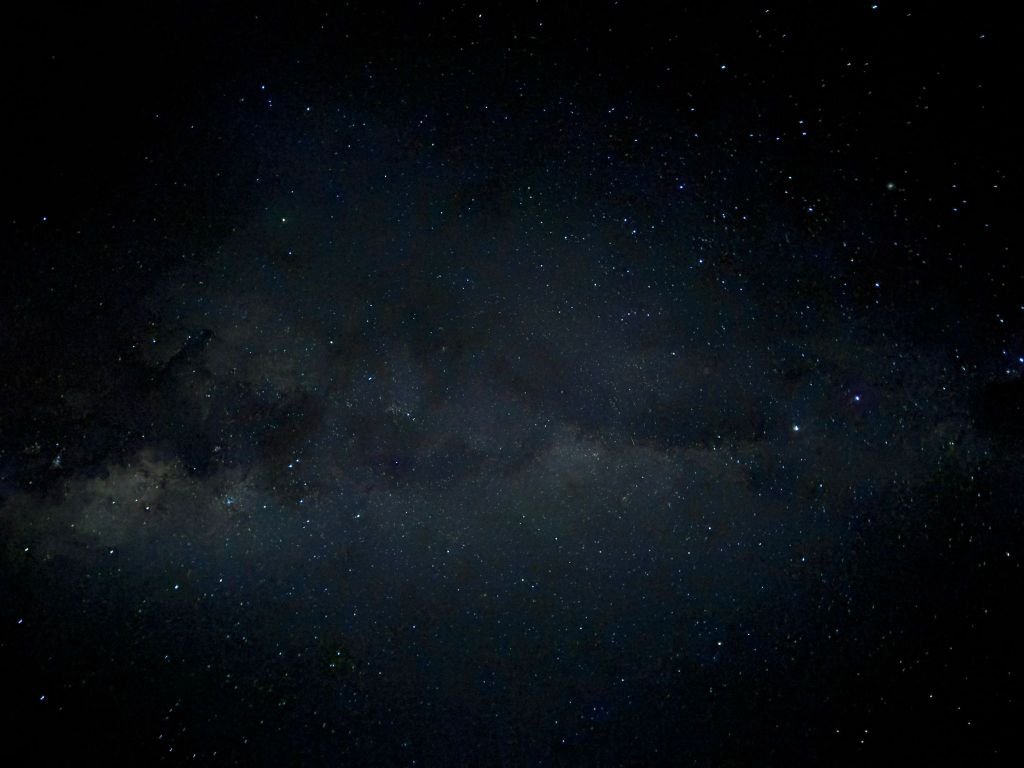
There was no light pollution in the desert at night and the stars were spectacular. Felix took this photo of the Milky Way with his iphone, handheld with a 10 second exposure.

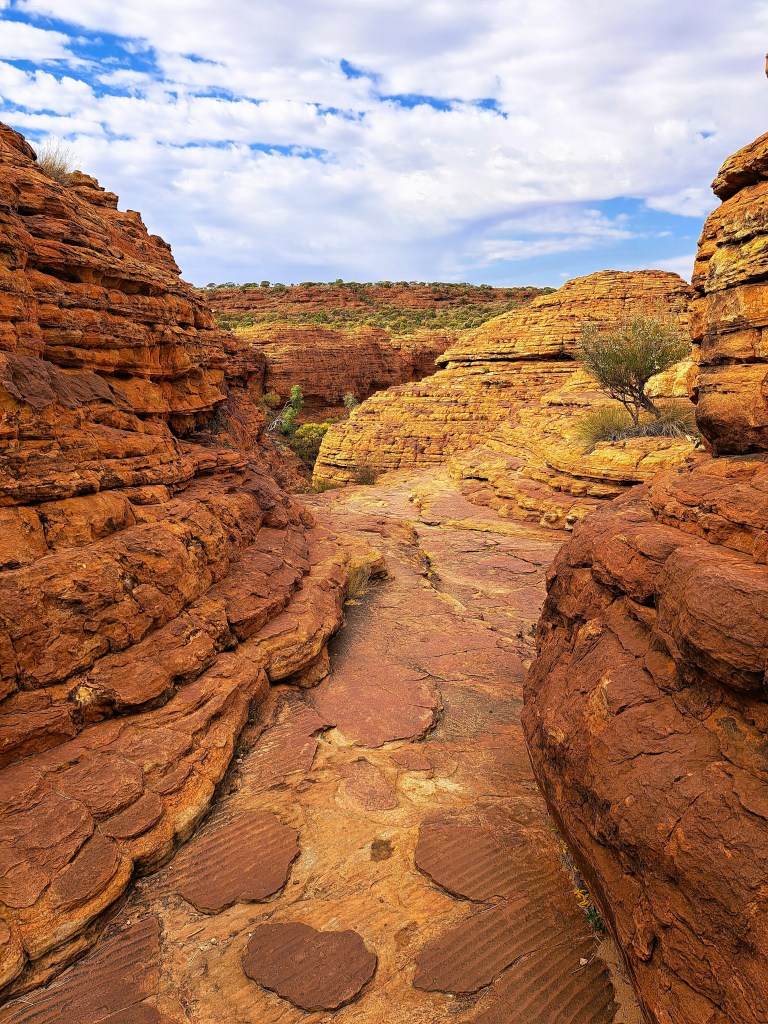
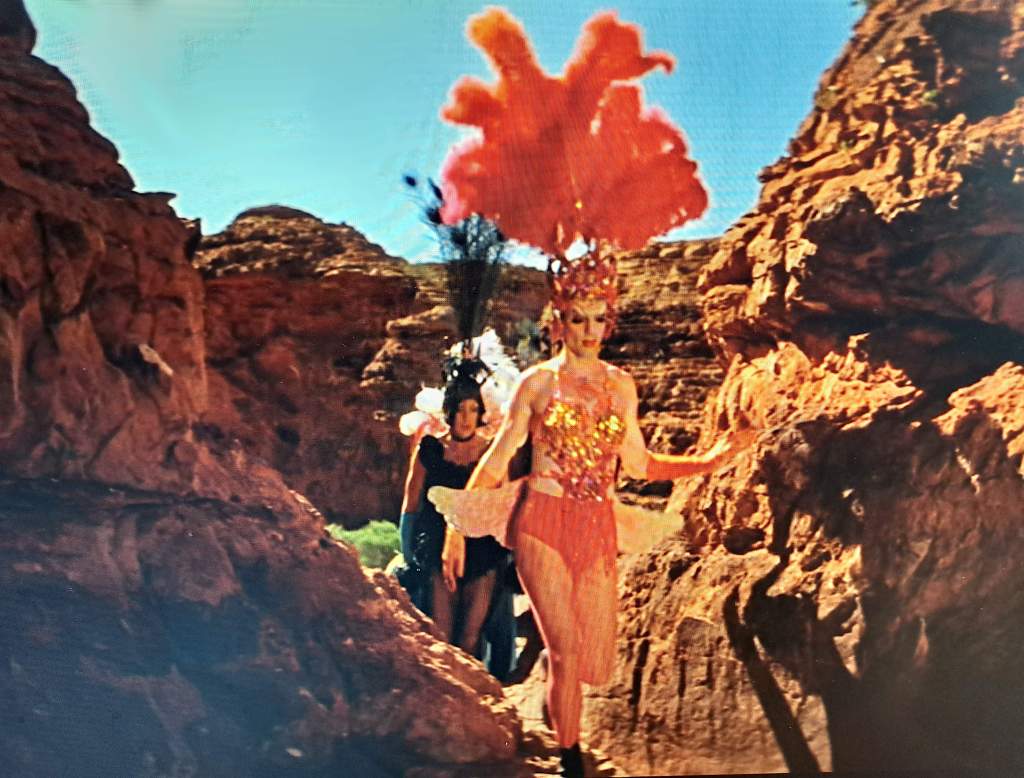
When we returned to Switzerland, I told Felix we needed to watch The Adventures of Priscilla Queen of the Desert, a great 1994 Australian movie in which two drag queens and a transgender woman travel through outback Australia and visit some of the places we had just seen. So we both watched it and realized that the climactic scene where drag queens Tick, Felicia, and Bernadette climb to the a cliff and gaze across the landscape was filmed at Kings Canyon and we recognized the path they climbed to the top of Kings Canyon. We even walked through the narrow chasm in the photo below from the movie. Its now known as “Priscilla’s Crack.”

The drag queens in Priscilla’s Crack 31 years ago. The lead character in red is played by Hugo Weaving, who went on the play Elrond in The Lord of the Rings movies.

In the penultimate scene of the film, the trio stand triumphant on top of Kings Canyon’s south wall; they’ve survived not only the hike, but the existential threat of bringing Sydney’s drag culture to the outback. The grandeur of the 400-million-year-old landscape in the sweeping panorama only magnifies the accomplishment. “It never ends, does it? All that space,” Terence Stamp’s character, Bernadette, remarks.

A visit to Kings Canyon in Central Australia – Part 1

After visiting the West McDonnell Ranges (see previous post), we headed for Kings Canyon, which I had not visited before. Kings Canyon is located about halfway between Alice Springs and Uluru, by road its about 470 km from Alice. The canyon has been cut 100 m deep into the layered sandstone and shale over a period of 400 million years, creating one the most spectacular landscapes in central Australia.

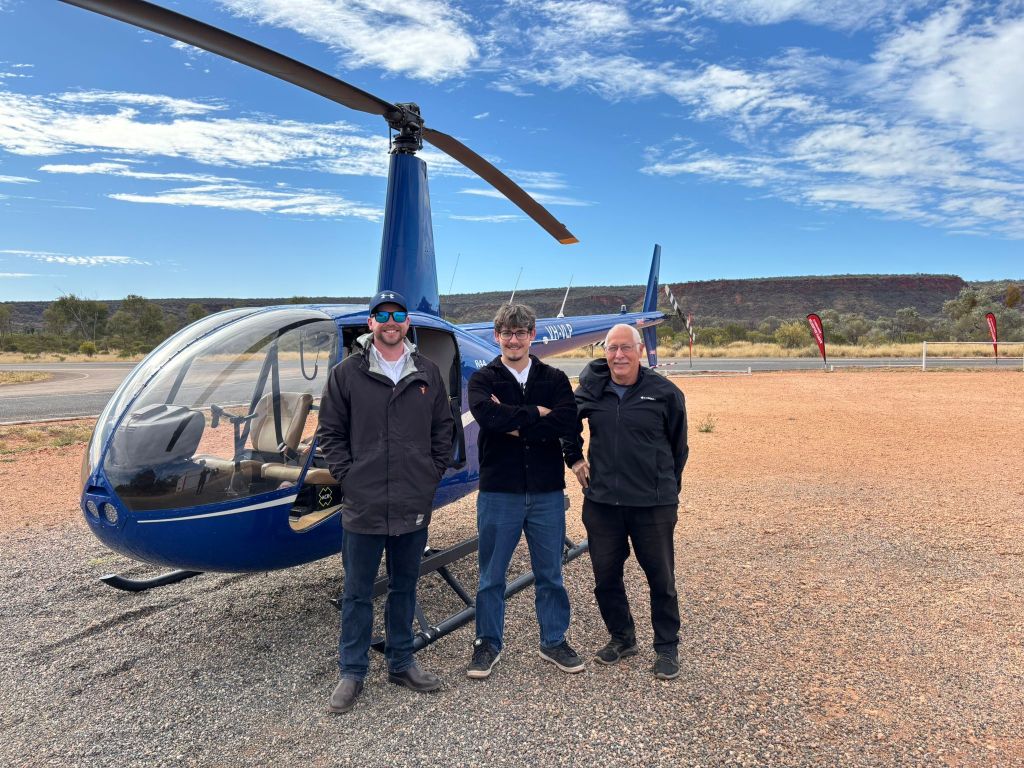
We had booked a tent for two nights at Kings Creek Station, about 36 km before Kings Canyon. When we got there, we discovered that they had a small helicopter, and arranged to take a flight over Kings Canyon. This was Felix’s first time in a helicopter, and it was the smallest I had ever been in. The pilot took the doors off it so we could have unobstructed views.

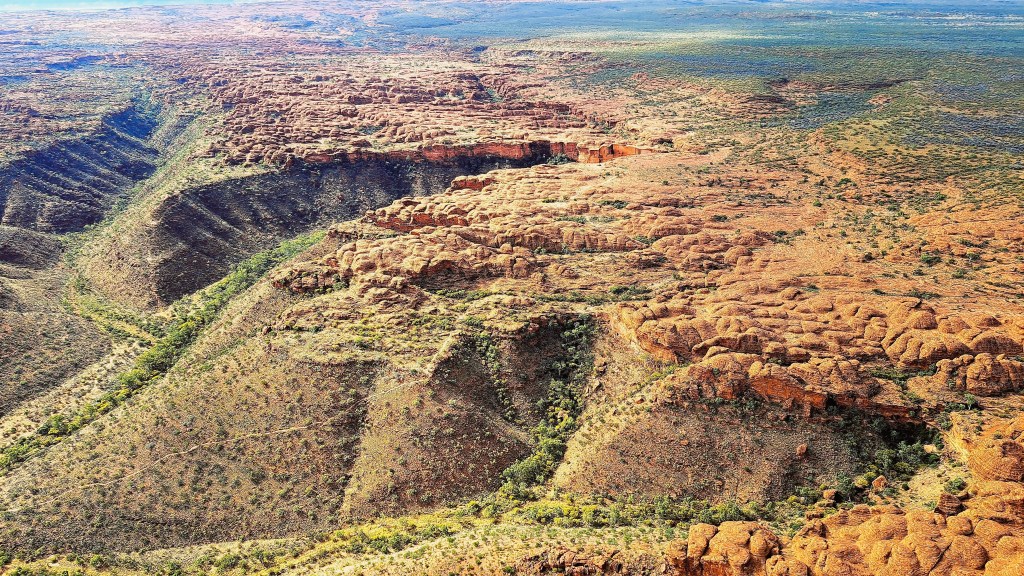
Below is a short video and a few photos from the air. The views were spectacular. It was extremely windy in the open helicopter as we were flying at 180 km/hr and there were strong cross-winds. It was quite exhilarating to be flying with the wind buffeting us and essentially just a framework of metal around us open to the sky around us and the ground below.

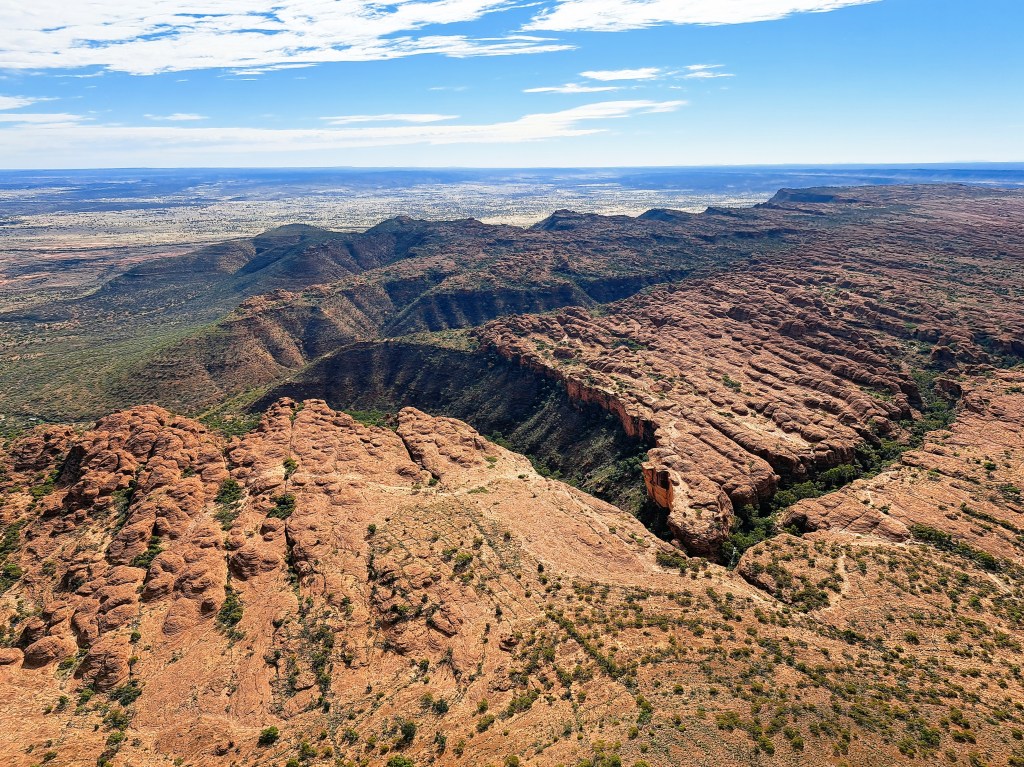
Kings Canyon

A visit to the West McDonnell Ranges of Central Australia

My younger son Felix and I visited relatives in Australia in July last year. In the last week of our trip, I took Felix to the “red centre” of Australia to explore some of the spectacular desert and mountain scenery. I have visited central Australia a number of times when I was younger, with trips to Alice Springs and Uluru (Ayers Rock), Katherine Gorge and the Arnhem Land Escarpment. Felix is an Australian by descent, but had never visited the centre before.

We flew from Brisbane to Alice Springs to spend ten days in the Northern Territory. We hired a four-wheel drive car for a week, and spent our first day exploring Alice Springs. We then spent a day in the West MacDonnell Ranges, driving 140 km west of Alice Springs and visiting some of the many spectacular gaps and gorges as well as areas of Aboriginal significance.

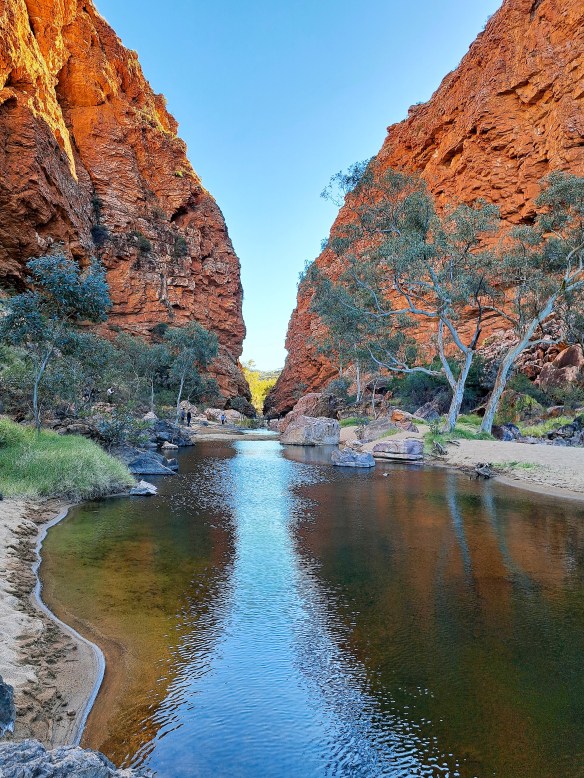
Simpson’s Gap, 24km from Alice Springs. The rock walls are home to the rare and endangered Black-footed Rock Wallaby. Felix managed to spot one when he was scrambling around.
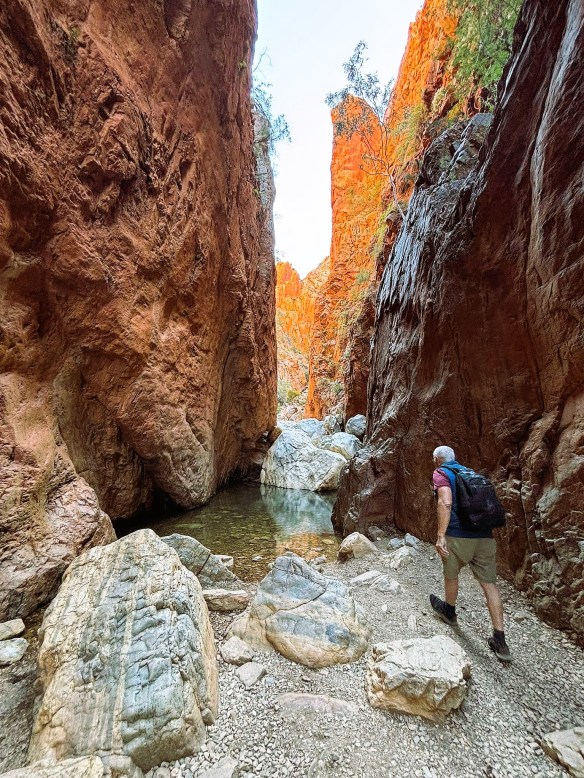
Standley Chasn is a 25 minute walk along a natural creek bed from the road head, through acaciasm cycads and ghost gums, until the dramatic 80m sheer rockfaces of the Chasm are reached.
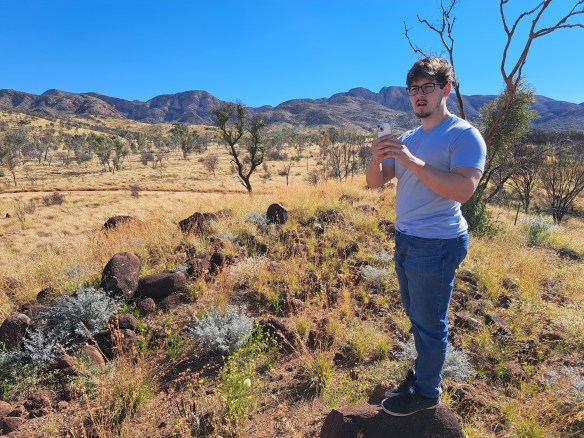
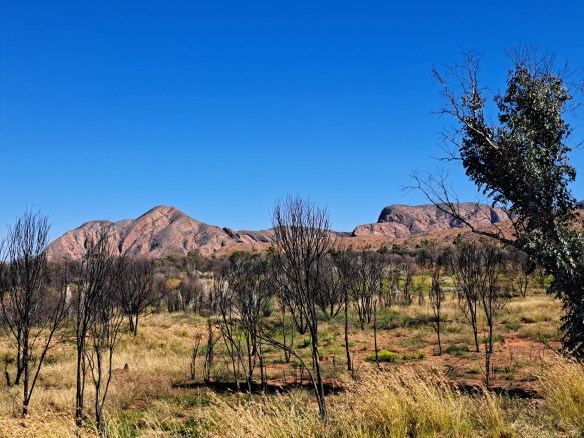
MacDonnell Ranges in the distance
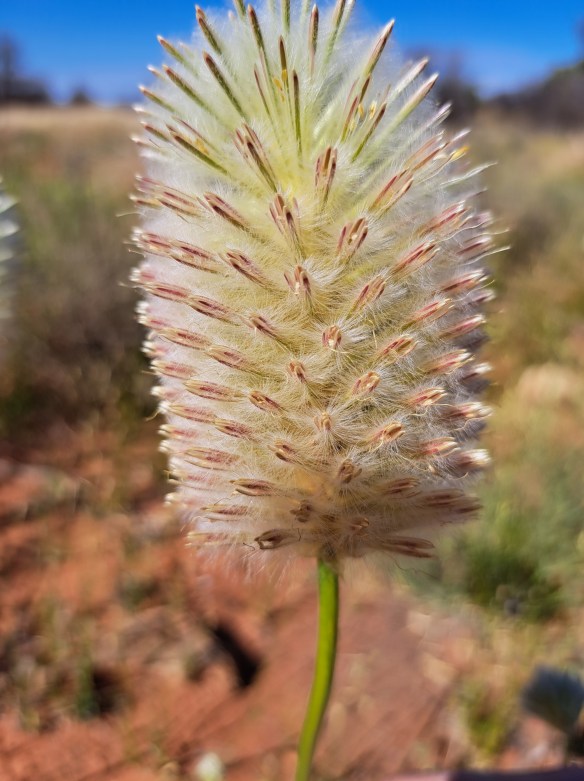
The Dryland Feather-Head (Ptilotus xerophilus) was only recognized as a separate species restricted to central and western Australian in 2019, distinct from a similar eastern Australian species.
Although they rise only 400-500 metres from the surrounding mulga scrub, the highest peak in the McDonnells, Mount Giles) is Australia’s 3rd highest mountain above sea level, at 1,389m.
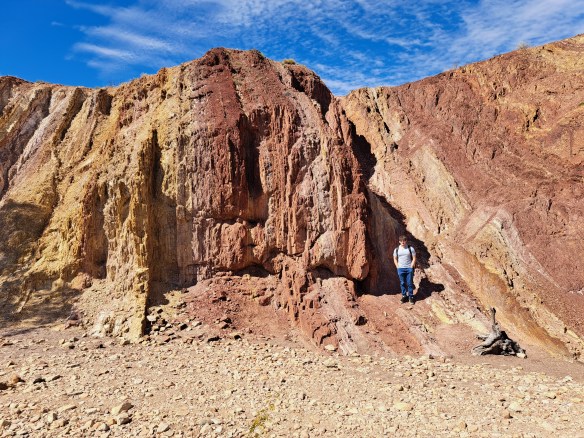
The Ochre Pits is an Aboriginal sacred site. The rock walls are covered with layers of red, yellow and white ochre.It provides material traditionally uised for ceremonies and trading.
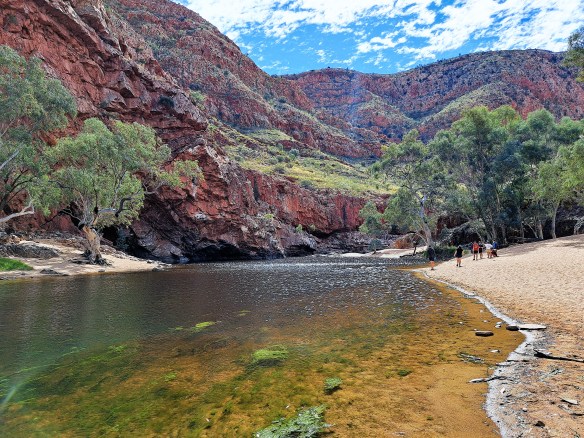
Ormiston Gorge is 136 km from Alice Springs and contains a quite large semi-permanent waterhole. A great place for a swim on a hot day.
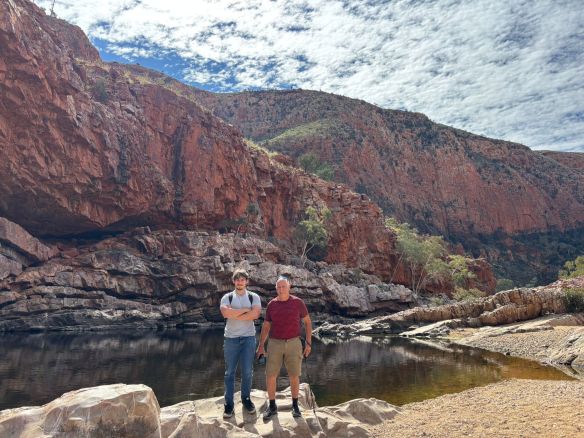
Felix and I at Ormiston Gorge

We drove a little further on from Ormiston Gorge to the Finke River crossing, then turned back to head to Alice Springs, stopping on the way at Serpentine Gorge and Ellery Creek Big Hole. I have to say, despite the spectacular beauty of the places we had already visited, I was blown away by Serpentine Gorge. We climbed a steep path to the top of the eastern wall of the gorge, and the views in all directions were stunning. Felix and I saw another rare Black-Footed Wallaby quite close to us on a rock near the rim of the cliff.

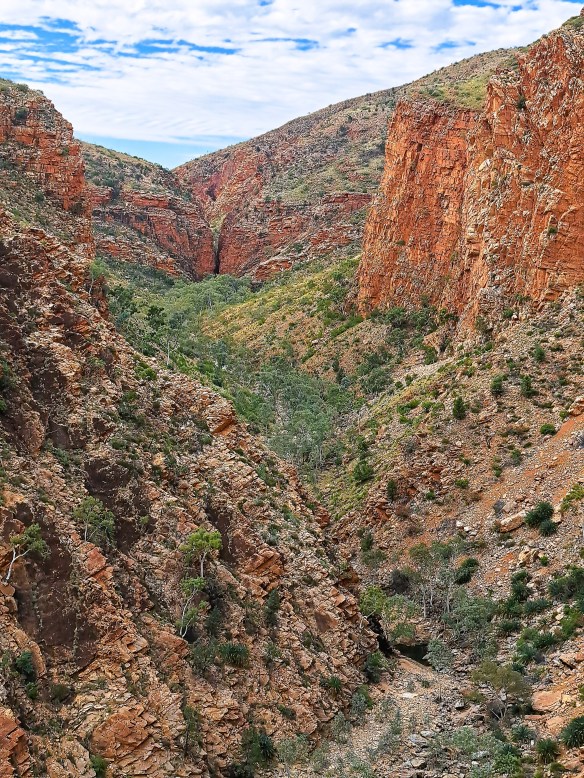
Serpentine Gorge
View south from Serpentine Gorge
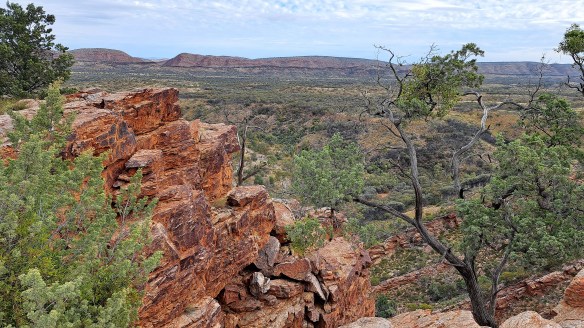
Me on the rim of the gorge, and the view towards the west.
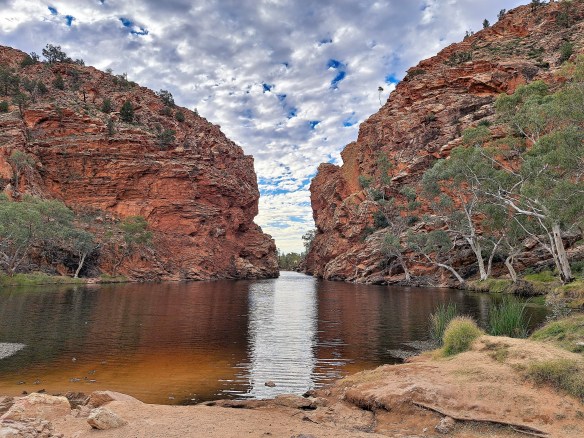
Ellery Creek Big Hole

To be continued…..as we head south west towards Kings Canyon.

Skiing in the French Alps

I spent the first week of January at Les Gets in the French Alps during the unseasonal spring weather. No snow and no lifts running. We drove 20 minutes further up the valley to ski on two-week old heavy wet snow at Avoriaz, and a couple of days it was even raining on the snow. A taste of what global warming has in store for us.

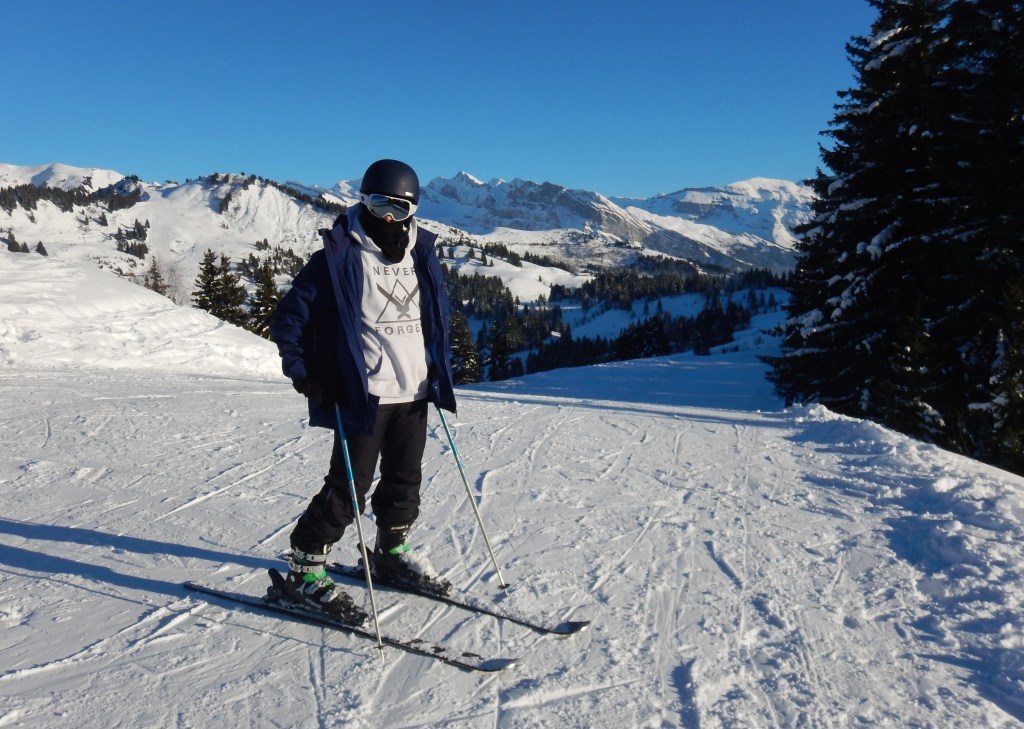
Over the last week, it has snowed heavily on the mountains around Geneva, and in Geneva itself. So my younger son and I went up to Les Gets for the day and had a wonderful day skiing on fairly fresh snow in brilliant sunshine. The temperature was about -6 C when we got there about 9.30 am and rose to a little above zero in the middle of the day in the sunshine. Here are some photos.

My son is ready for a day skiing
Continue reading

Near Death Experiences – Part 2
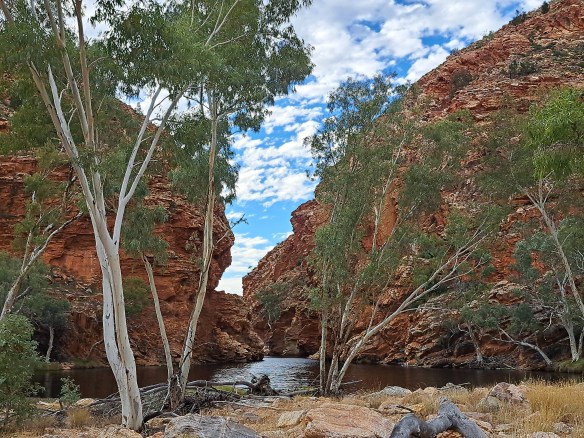
In my first post on near-death experiences (NDE), I recalled two incidents where I was knocked unconscious and would never have known if I had died (which was by no means unlikely). The following two incidents are quite different. In both cases I fell off a cliff and was fully conscious till I hit the ground below.

Continue reading

Christmas skiing in the Swiss Alps

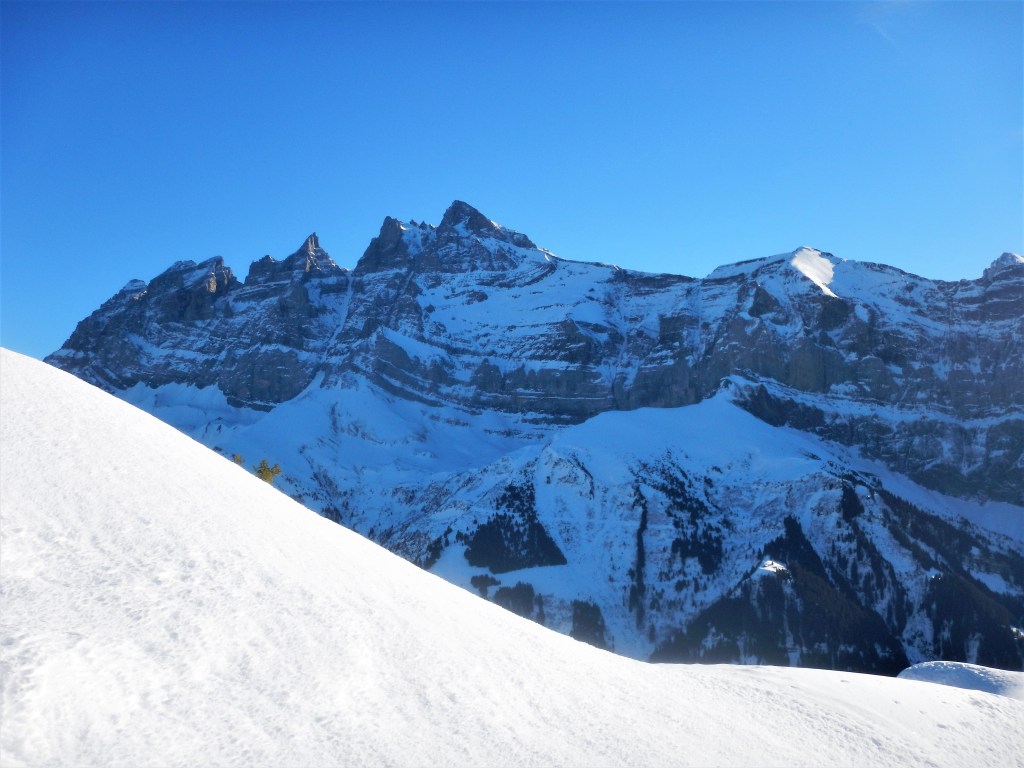
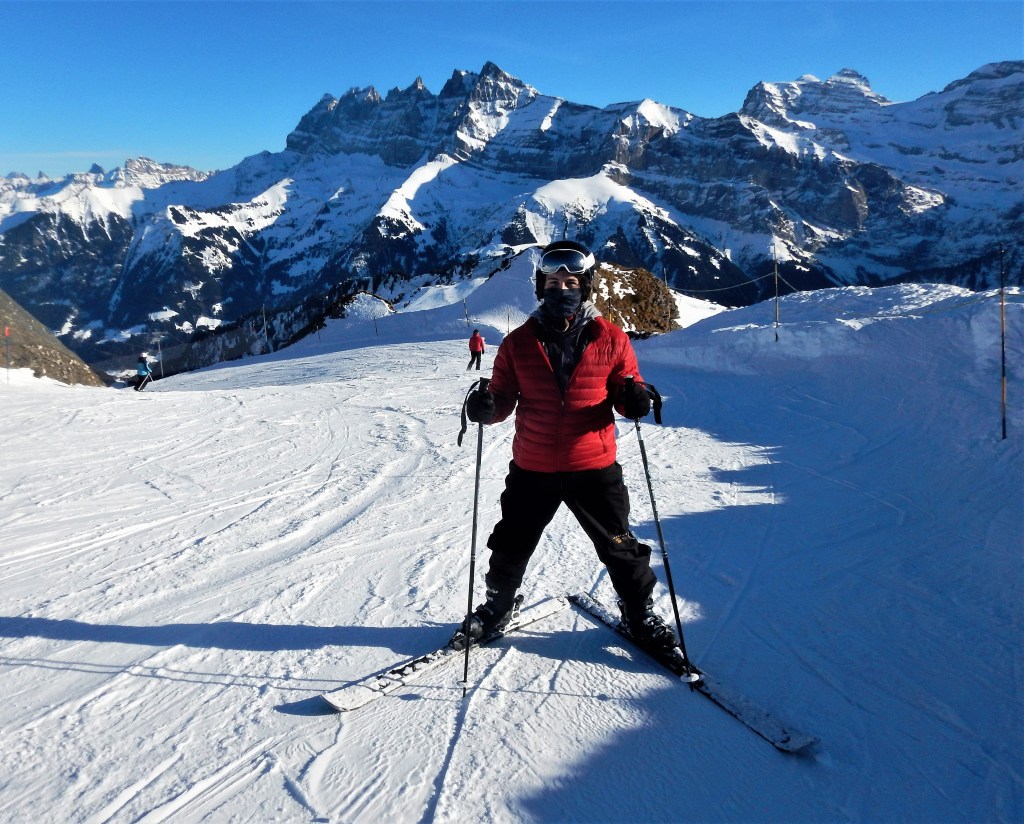
A couple of days before Christmas, my younger son invited me to join him for a day skiing in the Swiss Alps.  Champéry lies in a side valley of the Rhone valley under the Dents du Midi (“Teeth of Noon”) mountain range. I’d last skied there years ago (see earlier post). At less than a day’s notice, I rang the hotel he was staying at and booked a room for the night. The hotels and the ski slopes were half empty because of the Covid travel bans, particularly for the many British who had planned ski holidays in Switzerland and nearby France.

Les Dents du Midi (Teeth of the Noon)
My son at around 2000 m with the Dents du Midi behind him.
Continue reading

Conquest of the Wall of Death

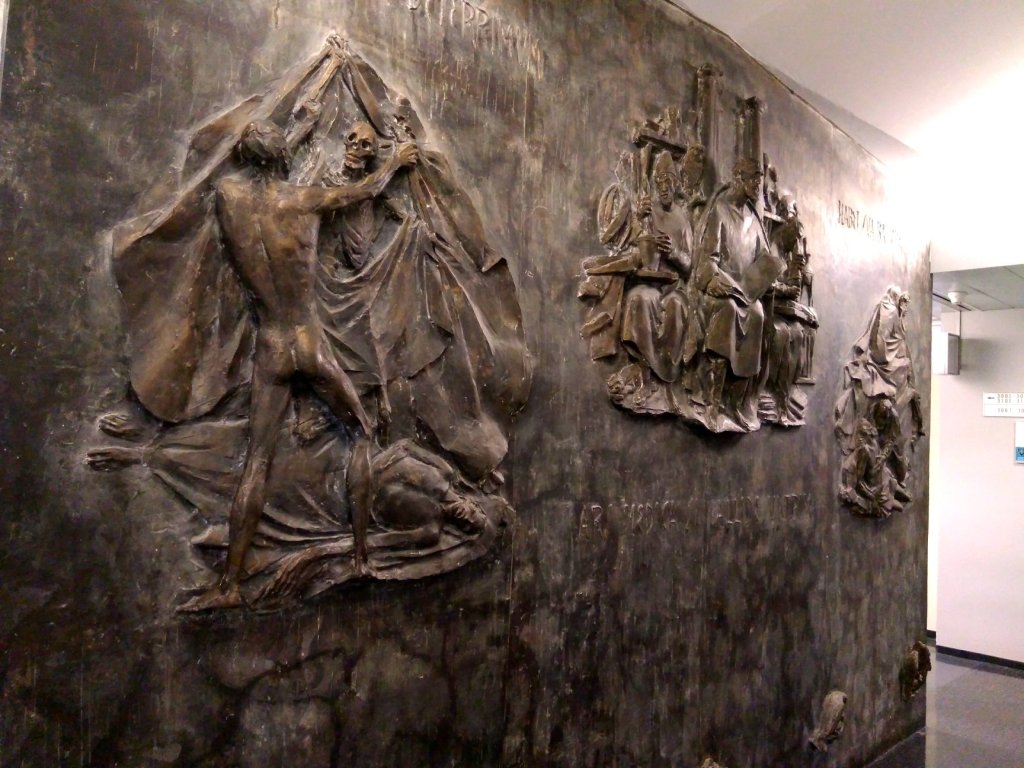
Not far down the corridor from my office in WHO was a floor-to-ceiling bronze relief sculpture showing the struggle of Man against Death. It was a gift to WHO from the Vatican in 1966, and was located very appropriately, given that a major focus of my unit was to monitor trends and improvements in death rates and their causes.

The floor to ceiling sculpture occupies the wall of a corridor joining the two main office corridors on the 3rd floor of the WHO Headquarters in Geneva.It is approximately 5 metres wide and 3.5 metres tall.
Continue reading

New Year skiing in the Swiss Alps

Switzerland has kept its ski resorts open while all neighbouring countries closed. Hardly surprising that 4,200 British skiers turned up for the Christmas-New Year period just after the new faster spreading covid-19 virus took British new cases through the roof at exponential speed. The Swiss then imposed a retrospective quarantine on the British visitors after they arrived, and almost all of them snuck out during the night and left. Left a lot of anti-British feeling behind.

I and my boys are of like mind that it would be madness to go to one of the major resorts like Verbier, where many British go. Likely the people there are now incubating new infections. But my neighbours packed their car and head up to Verbier today, confident the virus left with the British. I’ve spent a number of New Years at Verbier, particularly back in the noughties (2000-2009) during part of which I rented a studio apartment in Verbier so I could go up for weekends and longer holidays whenever I wanted. Here are some photos from those days.

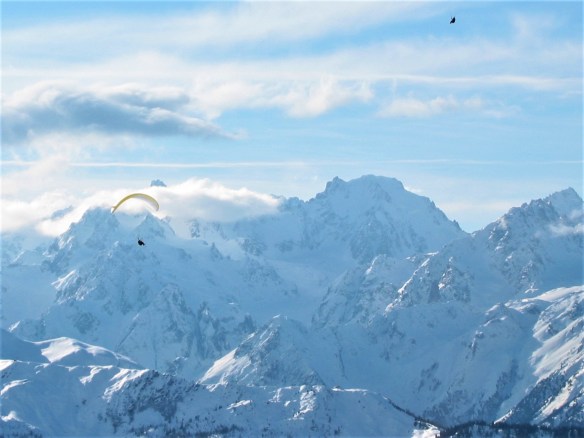
Two parapenters fly above the mountains at Verbier

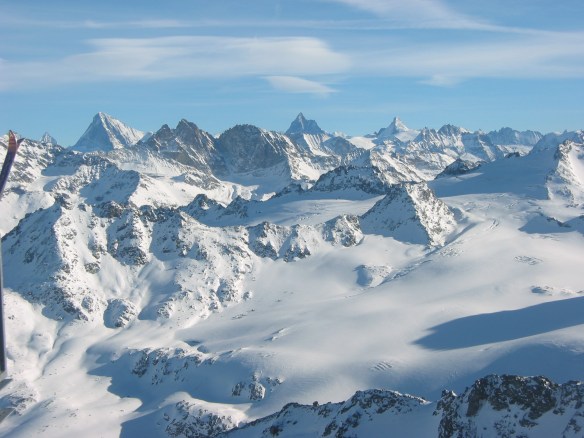
View from the top of Mont Fort (3330 m). The three peaks on the horizon from l.to.r are Dent Blanche (4356 m), Matterhorn (4478 m in niddle) and Dent d’Hérens (4171 m)

Continue reading

Christmas skiing in the Swiss Alps

Switzerland has angered neighboring countries by keeping the ski slopes open this winter, despite the risks associated with skiing and the coronavirus pandemic. However, national and cantonal restrictions apply, and Les Portes du Soleil where the boys and I have often skied has set a quota for the numbers of skiers allowed on the slopes. I’ve decided to avoid the ski resorts this winter, at least until the covid situation improves or we have been vaccinated.

Its snowing here on Christmas Day in Geneva, though not quite enough to ski on. I’ve  been skiing around the Christmas-New Year period quite a few of the years I’ve been in Geneva. Here are a few photos from two Christmas’s spent at Arosa in northeast Switzerland in 2001, 2005 and 2007. Good times.

Below left: looking down the Hörnli Express to the village of Arosa. Right: Hörnli 2511m.


Enjoying the winter sun on the piste in December 2001

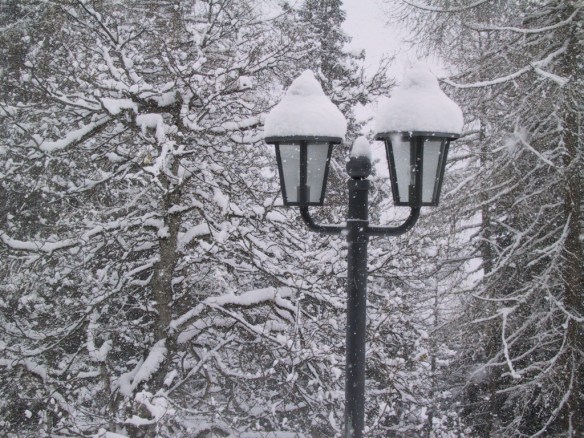
Lamp post in the forest near our hotel. I think I must have gone out through the wardrobe.

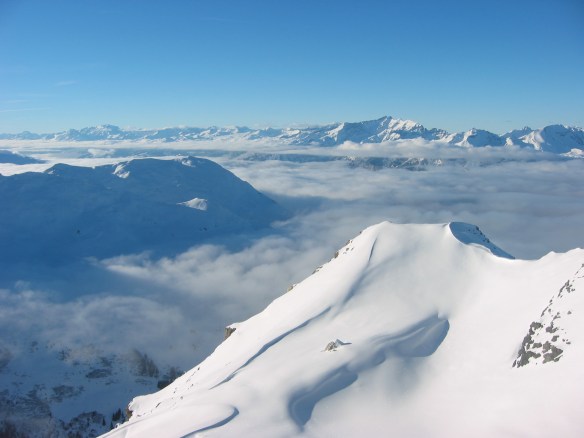
View from the summit of Weisshorn (2653 m).

Continue reading