On the Western Front – Part 4. Villers-Bretonneux and Péronne

This is my fourth post on the World War I battlefields where my grandfather Will Mathers (1893-1953) served from 1916 to1918. See here, here, here, and here for previous posts.

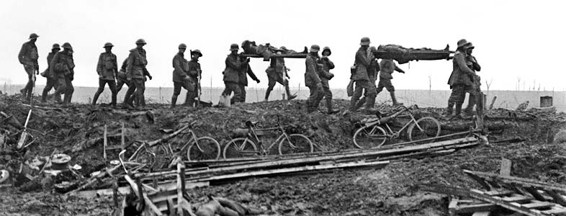
After Flanders, Tom and Will spent December 2017 until March 2018 well behind the front lines near Boulogne-sur-mer in the Pas-de-Calais. They were sent to the front at Villers-Bretonneux in late March 1918.
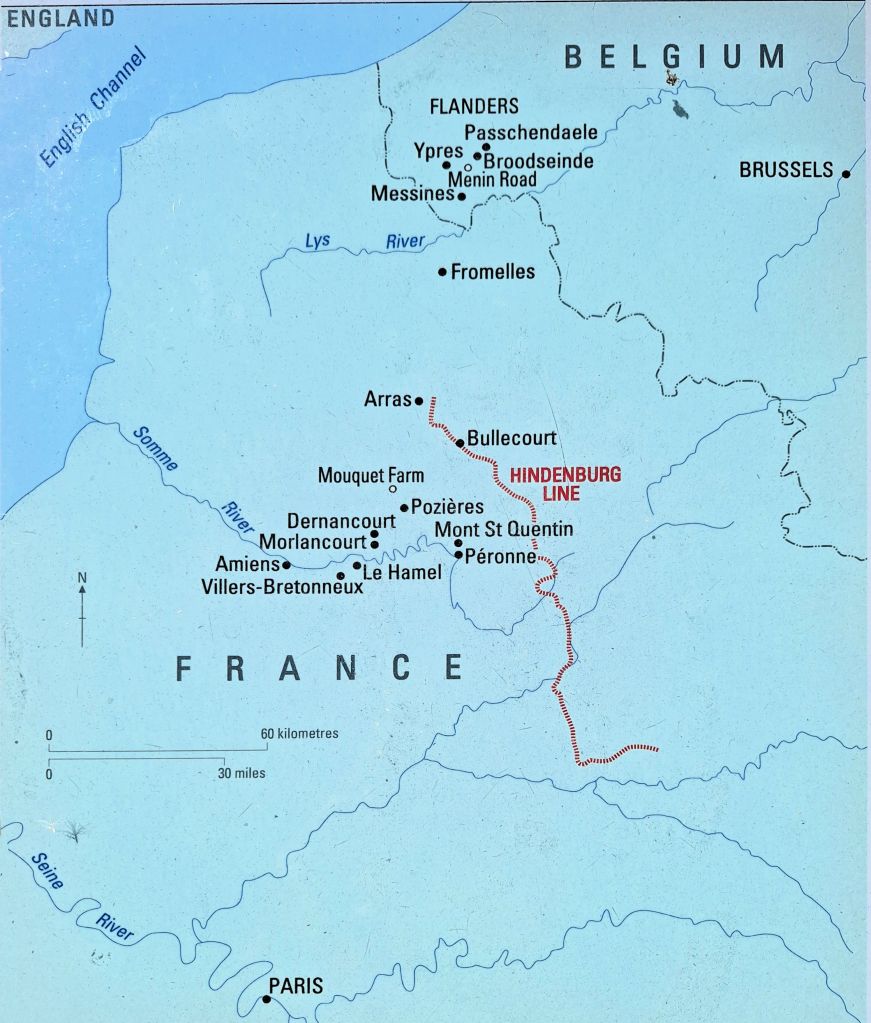
The Western Front – Flanders and the Somme.
The Germans pushed the front line to Le Hamel and Villers-Bretonneux in March-April 1918

On 21 March 1918, the Germans launched an offensive against Allied forces around the Somme. Within two weeks they had advanced around 65 km, but were halted at Villers-Bretonneux by British and Australian troops on 4 and 5 April 1918. On 24 April, a renewed German attack captured the town, but that night the 13th and 15th Australian Brigades counter attacked from the north and south, driving the Germans from the town and nearby woodland. These battles were fought across the ground on which the Villers-Bretonneux Military Cemetery now stands.
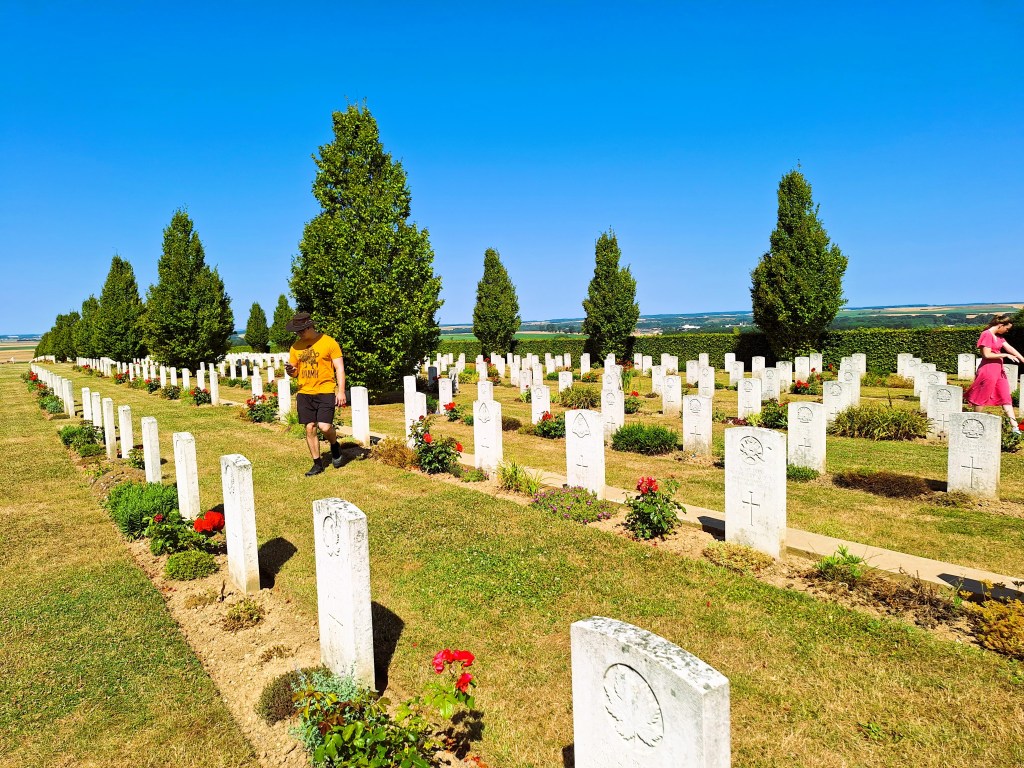
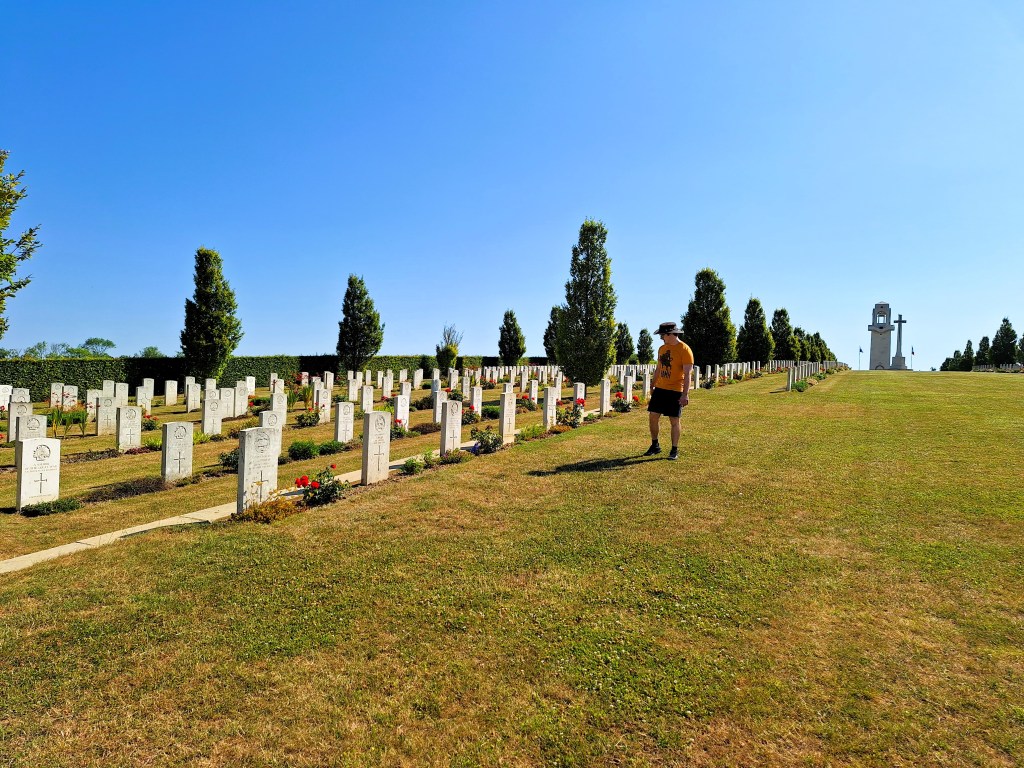
Villers-Bretonneux Military Cemetery
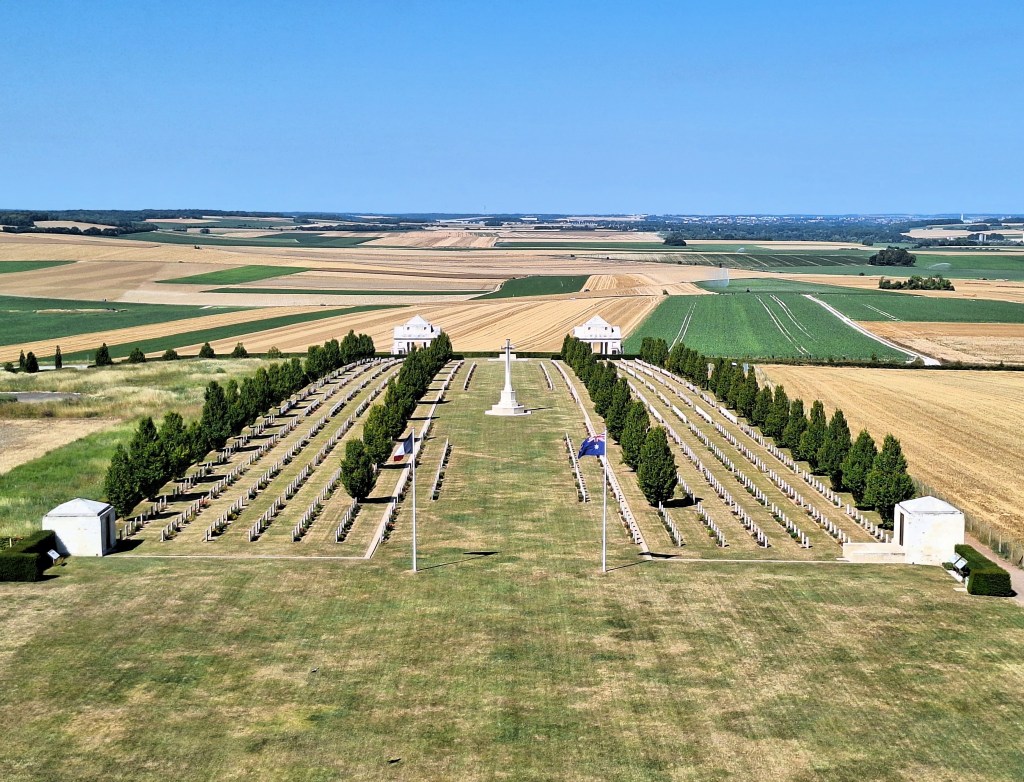
Villers-Bretonneux Military Cemetery with the Australian National Memorial in the background

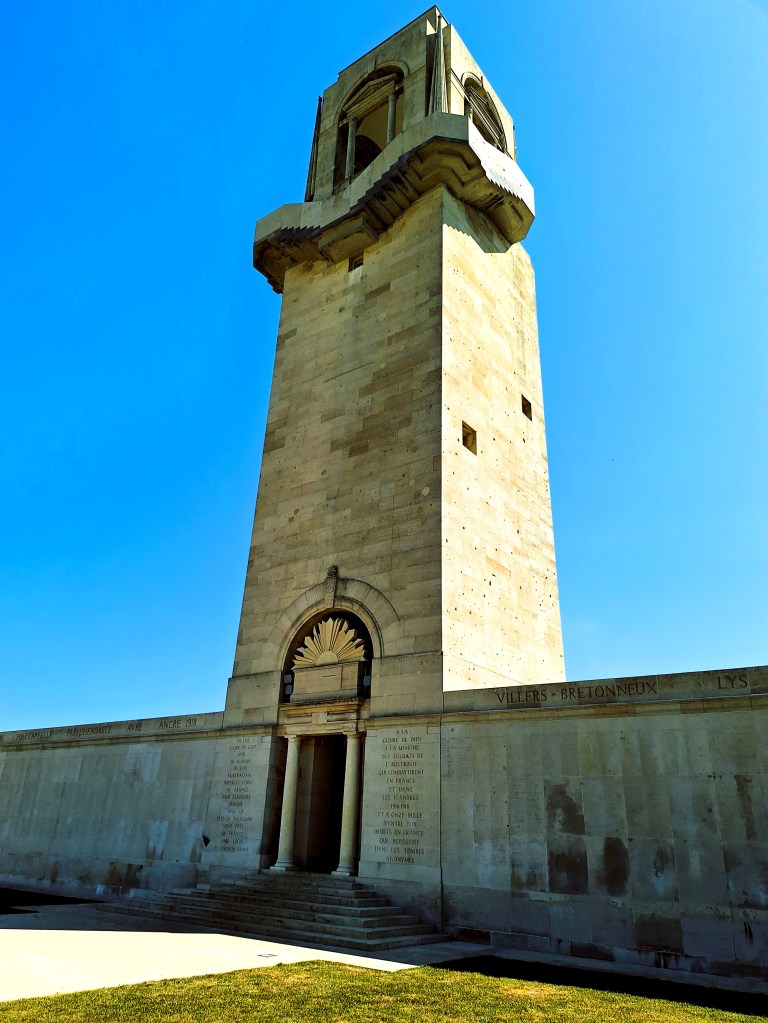
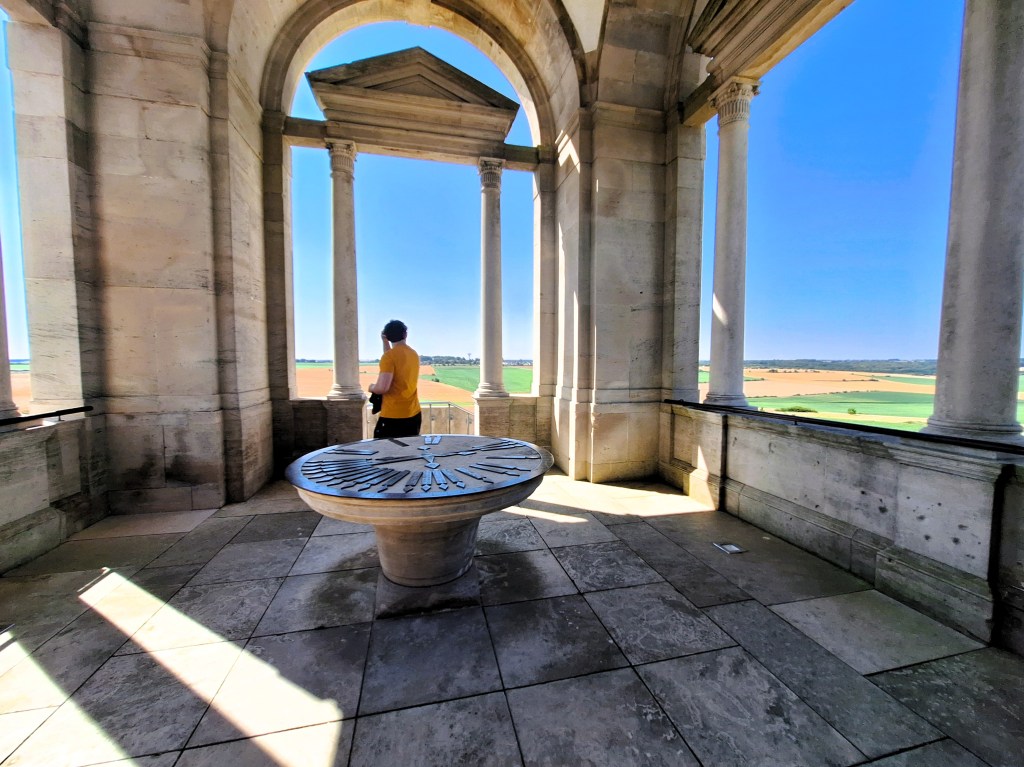
The Cemetery contains more than 2100 graves of Commonwealth servicemen of the First World War, of whom more than 600 remain unidentified. At the back of the cemetery is the Australian National Memorial, which honours the Australian soldiers who served in France and Belgium. It consists of a central tower, with spectacular views of the surrounding countryside, flanked by wing walls commemorating the 10,796 Australian who died in France and who have no known grave. Along the upper edges of the Memorial, the battle honours of major engagements involving Australian troops in France and Belgium are inscribed.
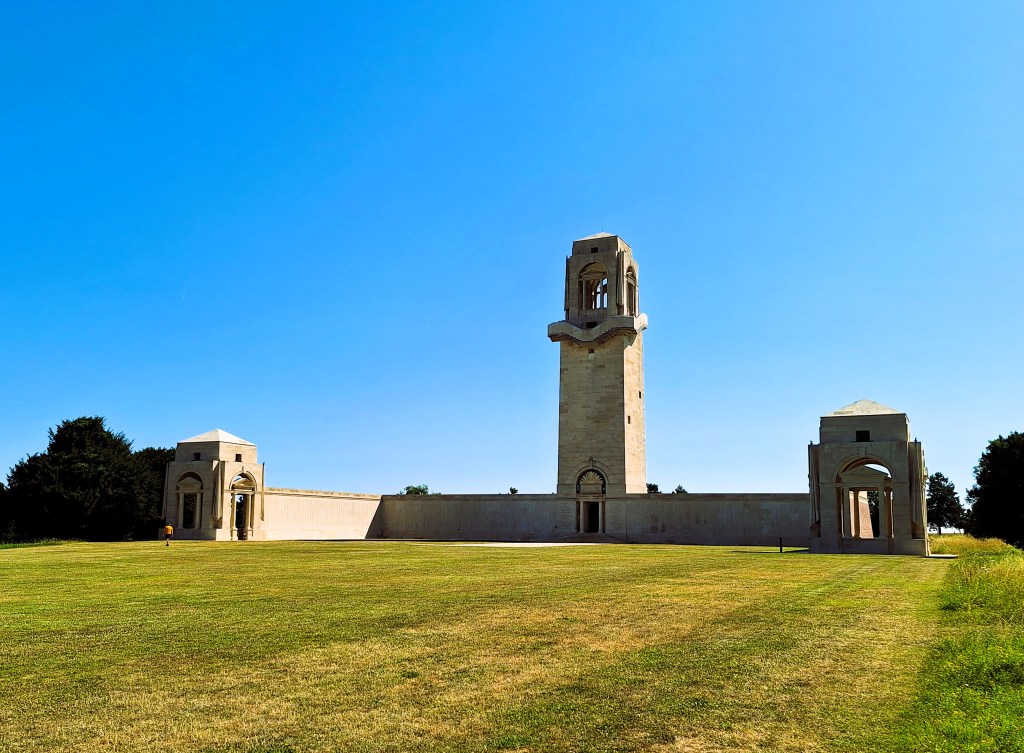
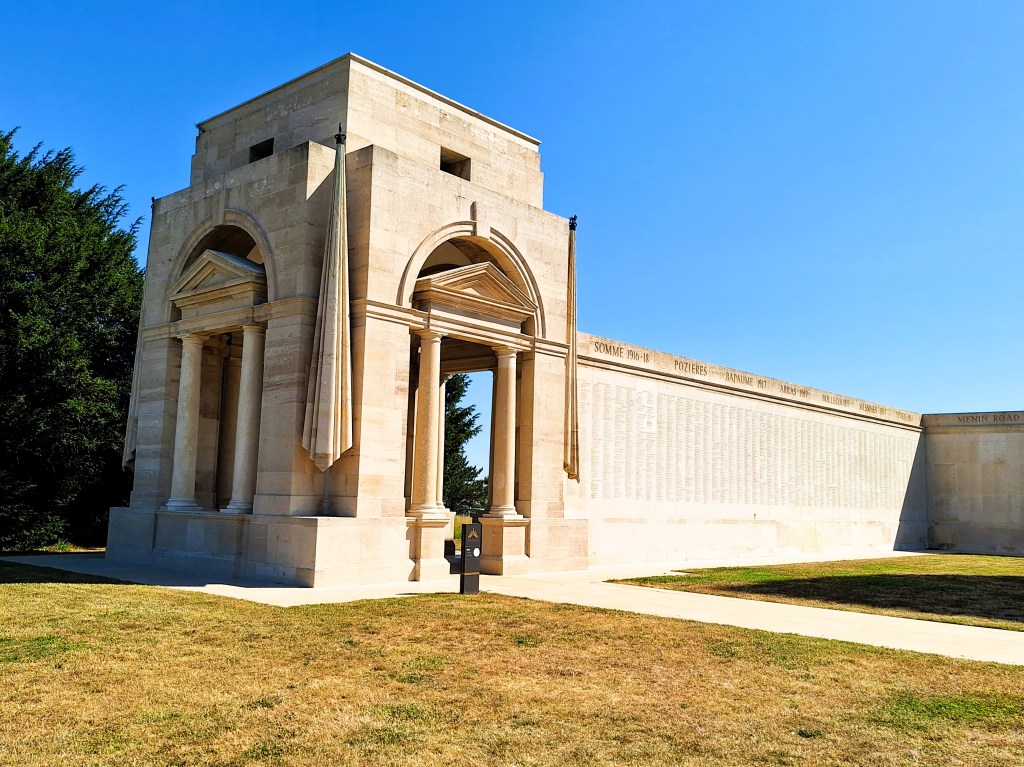
The Australian National Memorial at Villers-Bretonneux
The central tower of the Australian National Memorial
The view west over the Cemetery from the top of the Australian National Memorial tower.
The view south towards Villers-Bretonneux from the Memorial Tower
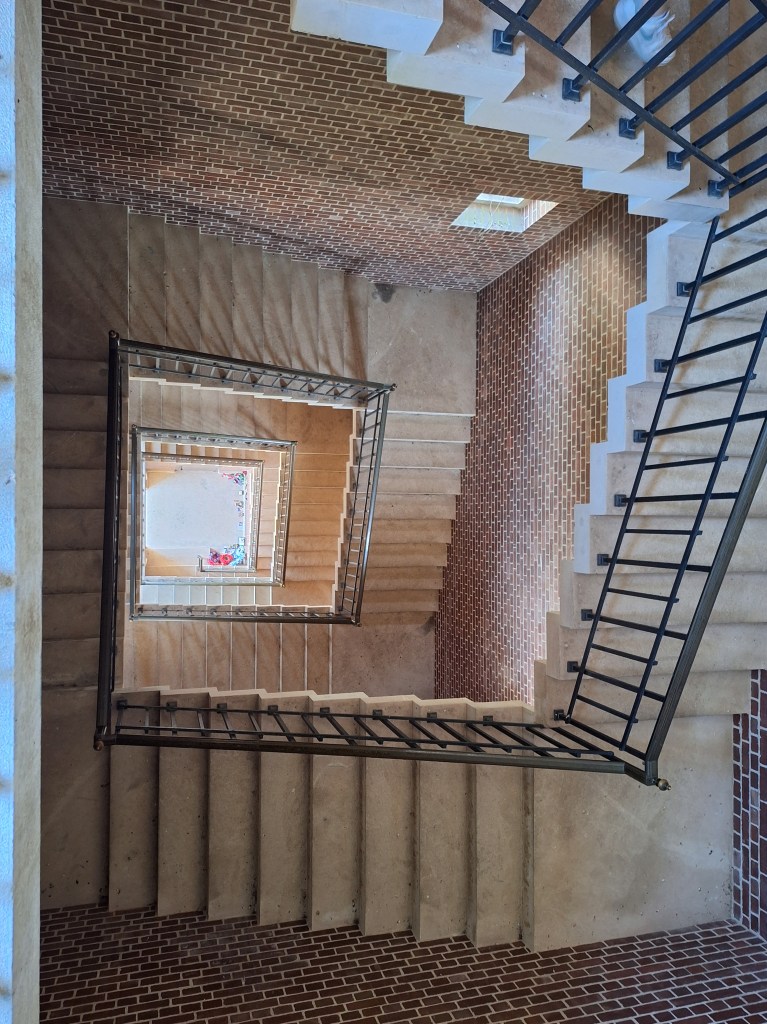
Looking down the Tower staircase

On 21 April, 1918 the 8th Australian Field Ambulance, including Will and Tom, were sent to relieve the 15th Australian Field Ambulance at Hamelet, a village a few kilometres north-east of Villers-Bretonneux. The German air ace Baron von Richthofen (the Red Baron) was shot down nearby on that day. The field where he crashed is across the road from the Australia Corps Memorial (see further below).

The Red Baron was the top German air ice of the First World War. With some 80 victories to his name, he shot down more aircraft in the war than any other pilot. His name re refers to his red Fokker triplane. His squadron was known as the Flying Circus, many decades later inspiring the name Monty Python’s Flying Circus. On the morning of 21st of April 1918, the red Baron was pursuing a British aircraft, and had another Canadian aircraft on his tail. He flew extremely low and was killed by machine gun fire from the 24th Australian Machine Gun Company.
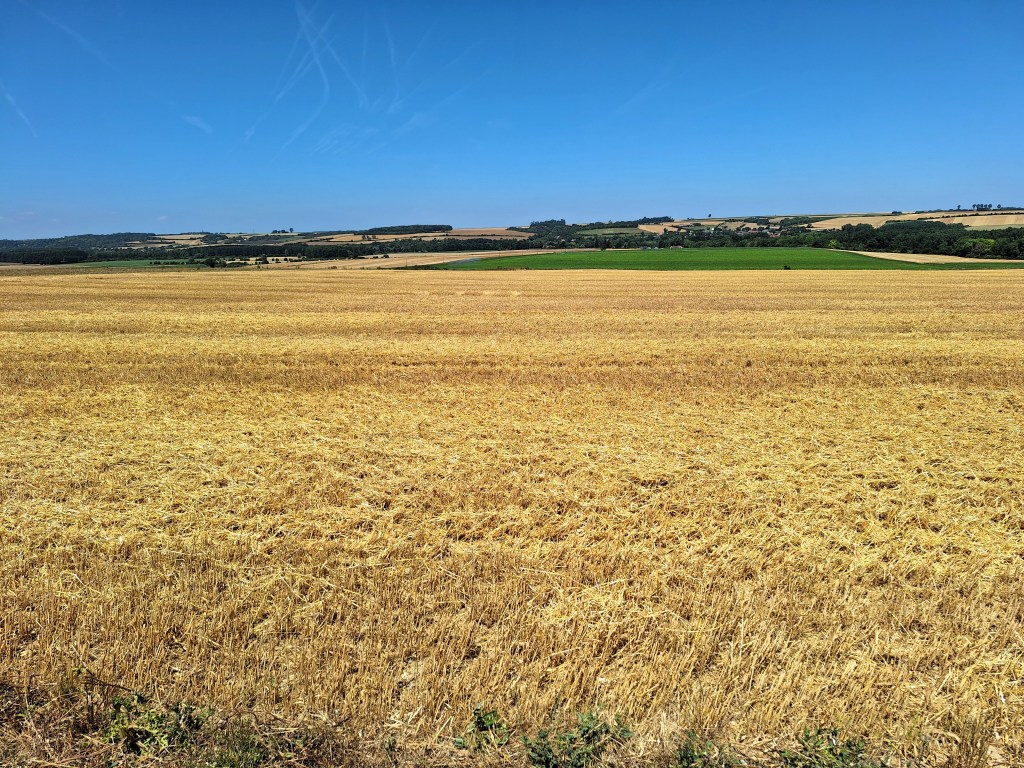
The field where the Red Baron was shot down, seen from the Australia Corps Memorial

Two days later, Will and Tom were both gassed on the battlefield, and Will and Tom were gassed a second time on 30 April, suffering gas burns all over their bodies. After a couple of weeks to recover, they manned an aid post at Villers-Betonneux, carrying men back to the post from the front line under heavy shelling.

The Australia Corps Memorial is on a slight rise to the east of the village of Le Hamel. The memorial honours all those who served with the AIF in France and Belgium and bears the names of nearly 11,000 of their number who fell in France and have known no one grave. Around 3800 of those named here were killed during the battle of the Somme in July and August 1916. Another further 2800 fell in April and May 1917 at Bullecourt (Battle of the Hindenburg Line) and more than 2100 were lost in 1918 in the Battle of Le Hamel.
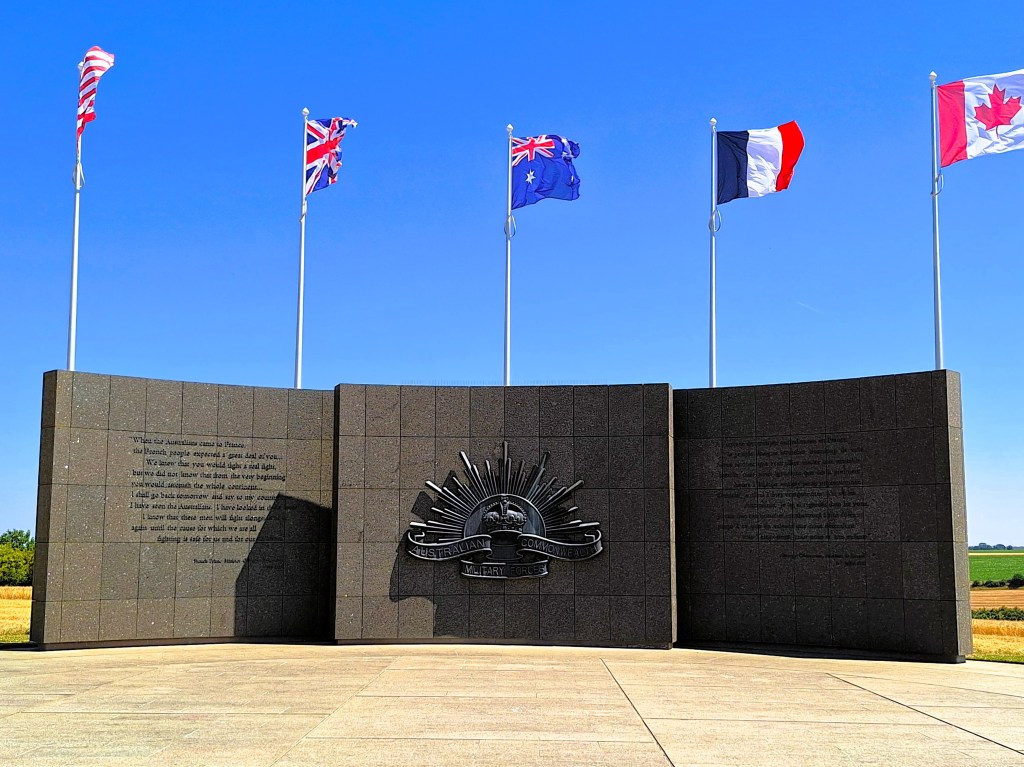
Australia Corps Memorial near Le Hamel
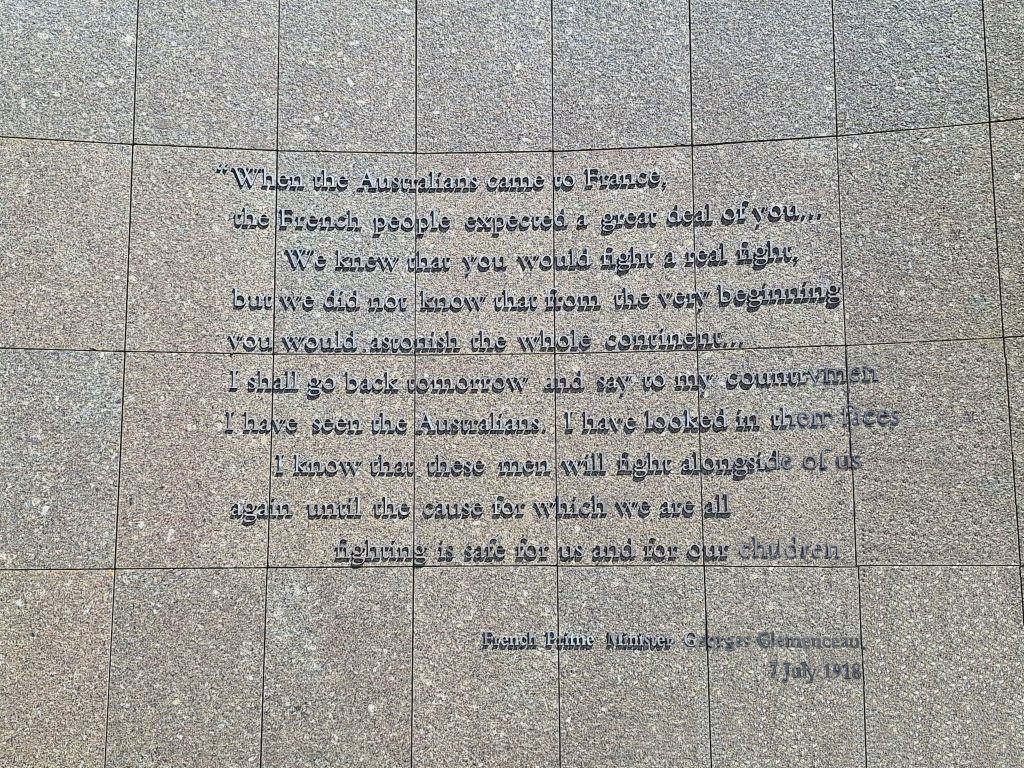
Quotation of French Prime Minister Georges Clemenceau on side panel of the Memorial

The Australia Corps Memorial is located at a section of German trenches, known to them as Wolfsburg, captured by the Australians early in the morning on 4 July 1918. The Australians occupied these trenches for about five weeks until they attacked from here in the great Battle of Le Hamel on 8 August 1918.
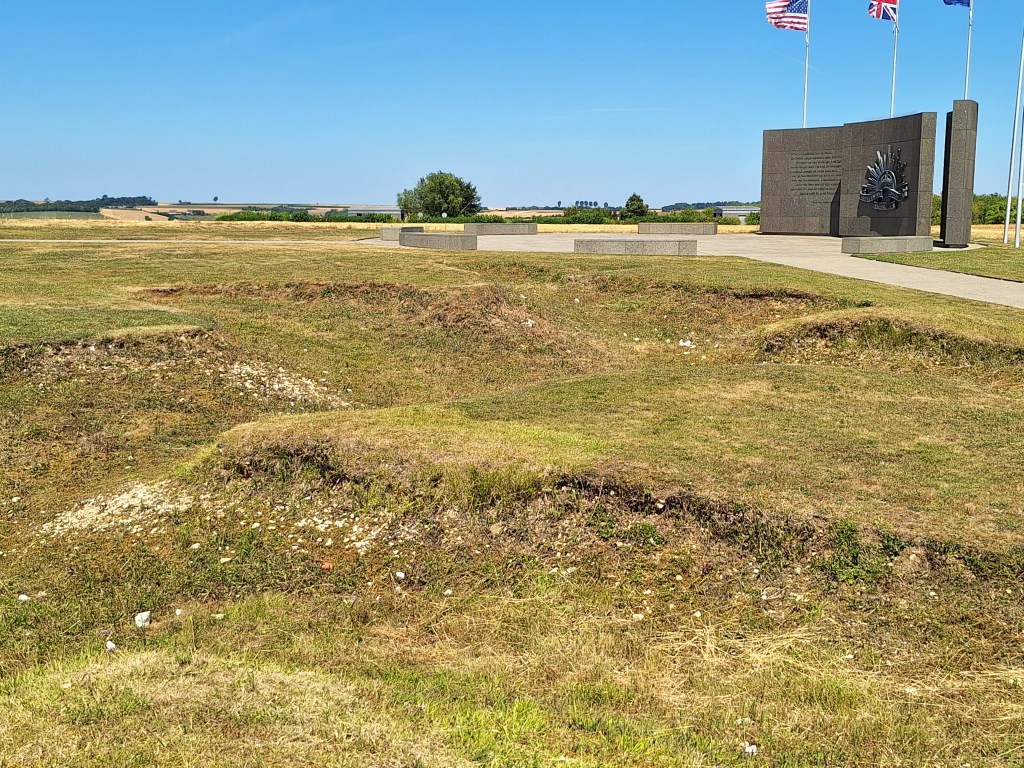
German trenches still visible near the Australia Corps Memorial

At 4:20 am on 8 August 1918, around 50,000 Commonwealth, French and American troops began a surprise assault on German lines to the east of armies. To give the newly arrived American Expeditionary Force (AEF) combat experience, the five Australian infantry brigades involved were augmented by four companies from US Army battalions. Hamel was the first time during the war that American soldiers were commanded operationally by non-American officers.

Attacking through dense fog they were well equipped with Lewis guns, trench mortars and rifle launched grenades. A creeping artillery barrage helped to shield the infantry, while enemy guns were silenced by gas and explosive shells.  Assisting the assault troops were more than 550 armoured vehicles, including new Mark 5 and fast Whippet tanks which had moved into position in secret, their engine noise disguised by aircraft flying overhead. The Germans assumed the planes were trying to give them a sleepless night but had no clue about the coming attack.
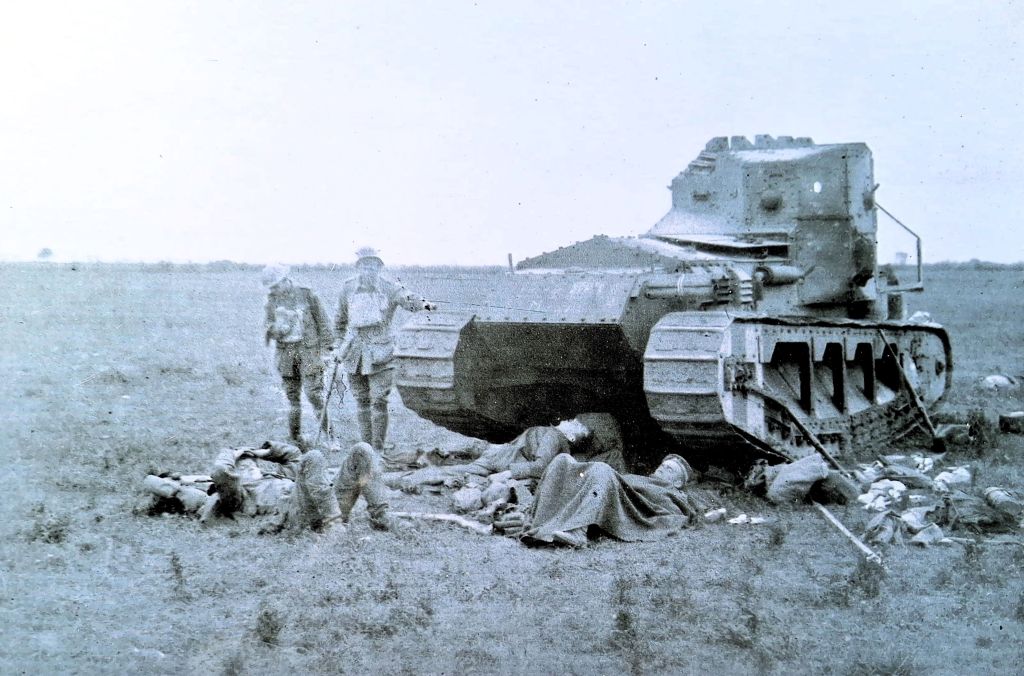
Wounded Australians of the 15th Brigade, and wounded German prisoners
sheltered beside a British Tank on August 9th, 1918.  Australian War Memorial E02880.

General Sir John Monash (1865-1931) was an Australian civil engineer who took part in the Gallipolo campaign and in May 1918 became commander of the Australia Corps, at that time the largest corps on the Western Front. Monash planned a combined campaign of infantry and armoured vehicles, including 60 combat and four supply tanks. The plan called for a creeping barrage in which the artillery barrage moves slowly in front of the advancing troops, protecting them by keeping the defenders under cover. Monash was adamant that infantry should not be sacrificed in an unprotected advance. The objectives were all achieved in 93 minutes, three minutes longer than Monash’s calculated battle time. The Battle of Le Hamel has since become famous as a model for a completely successful all-arms attack.

The Allies consolidated their new positions during the day and advanced another 300 metres during the night. In the morning of 5 August, they took another 700 German prisoners. The Germans counter-attacked at 22:00 that night supported by phosgene and mustard gas bombardments. At 2 am on 6 July, the two Australian battalions and the attached Americans counter-attacked and overwhelmed the experienced German storm-troopers with grenades and clubs. The shocked Germans were forced back, restoring the Allied line and releasing captured Australian stretcher-bearers.
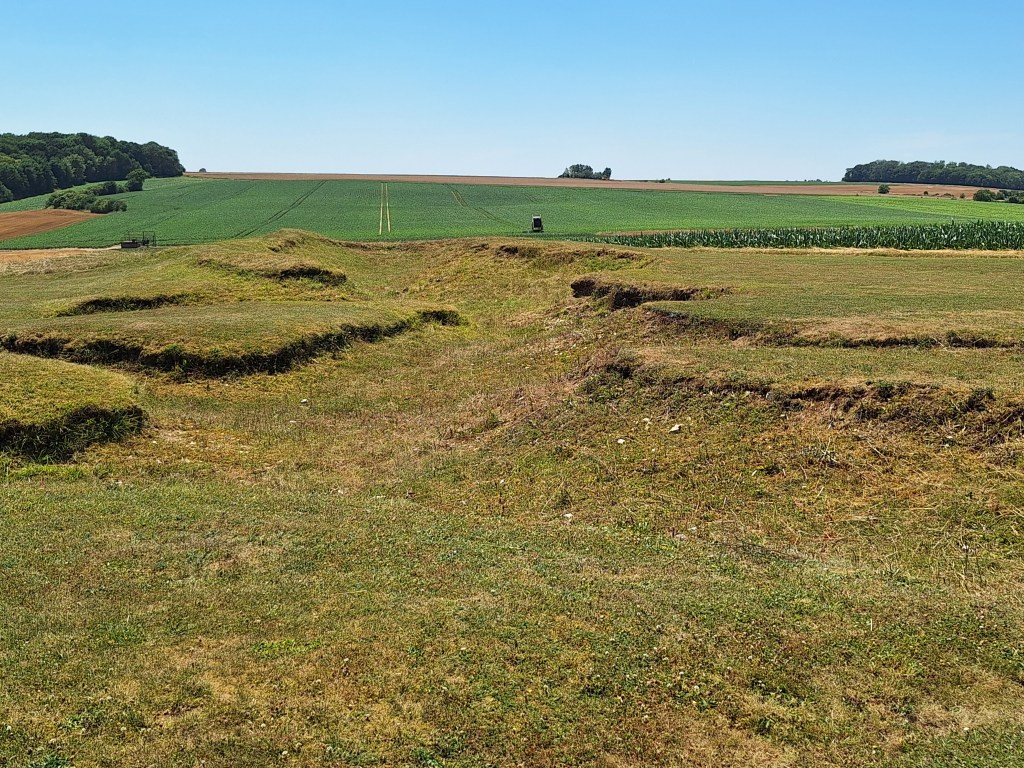
The Wolfburg trenches close to the Australia Corps Memorial

Over 4 days of fighting the Allies advanced as far as 13 kilometres in places. Some 20,000 Commonwealth soldiers were killed or wounded. The French army suffered around 24,000 casualties. Total German casualties may have been as high as 75,000, including more than 30,000 taken prisoner. Over the following weeks, a series of hard fought battles took place over the plains and uplands of the Somme, and by mid September, the Allies had recovered all the territory they had lost in March. The advance begun here did not cease until the Armistice.
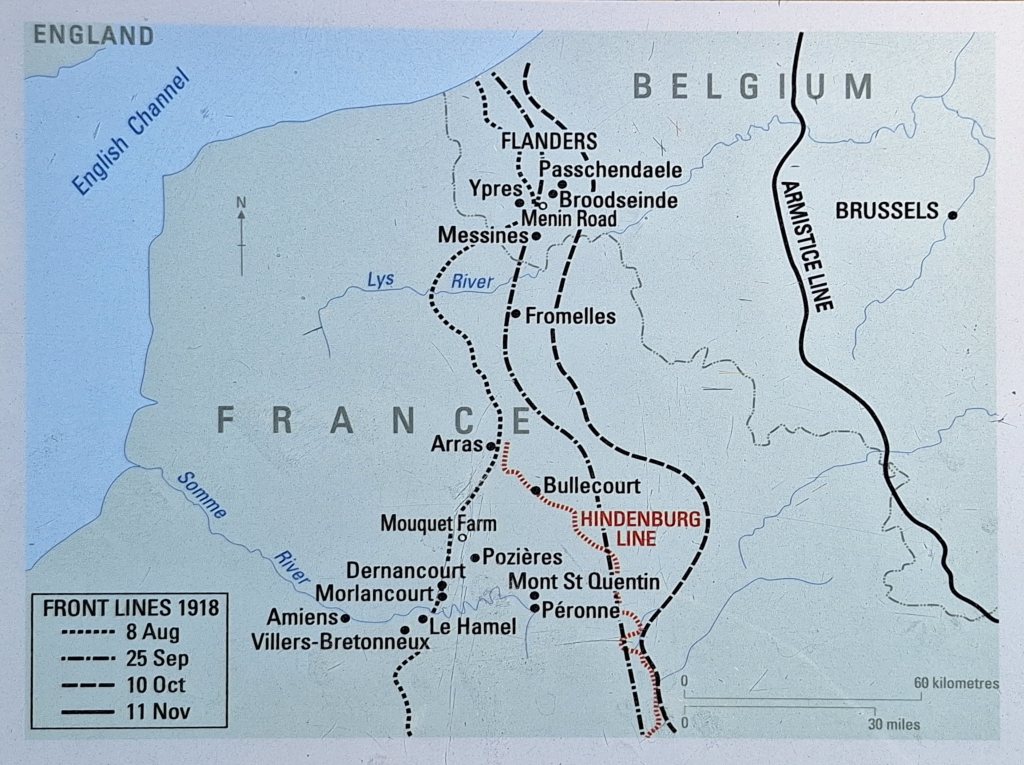
From 5 August to 12 September 1918, Will and Tom followed the fighting on the front line, from Mericourt and Raincourt to Le Hamel and on to Péronne. They slept where they could, in a field, in a trench, in sump holes. There were thousands of prisoners and booty. On 4 September, Will was at Péronne and was wounded in the leg by shrapnel but remained on duty. On 10 September they were relieved by 13th Australian Field Ambulance and marched out.

For the two days we spent on the Somme, we stayed in the centre of the Old Town of Péronne, a 100 metres from the Chateau de Péronne, now housing a major museum of the First World War. On our second day, we spent a couple of hours in the museum, well worth a visit. The next morning we headed north back to German-occupied Belgium.
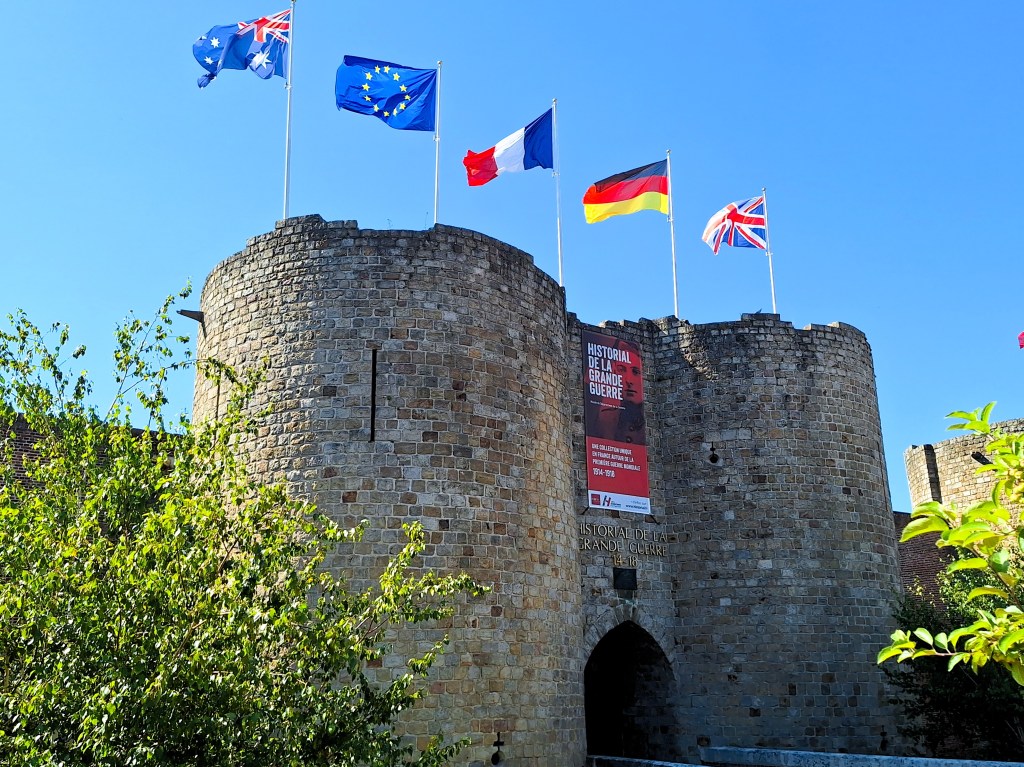
The main entrance to the Chateau de Péronne, flying the flags of the Allied nations and the EU.

Christmas skiing in the Swiss Alps

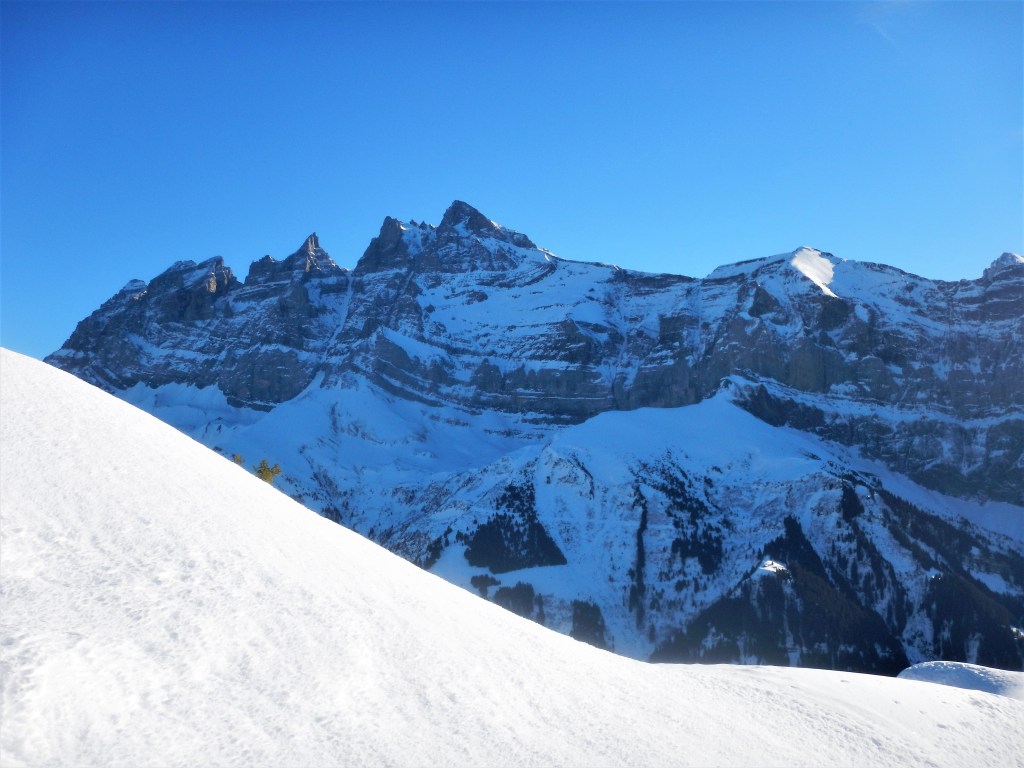
A couple of days before Christmas, my younger son invited me to join him for a day skiing in the Swiss Alps.  Champéry lies in a side valley of the Rhone valley under the Dents du Midi (“Teeth of Noon”) mountain range. I’d last skied there years ago (see earlier post). At less than a day’s notice, I rang the hotel he was staying at and booked a room for the night. The hotels and the ski slopes were half empty because of the Covid travel bans, particularly for the many British who had planned ski holidays in Switzerland and nearby France.

Les Dents du Midi (Teeth of the Noon)
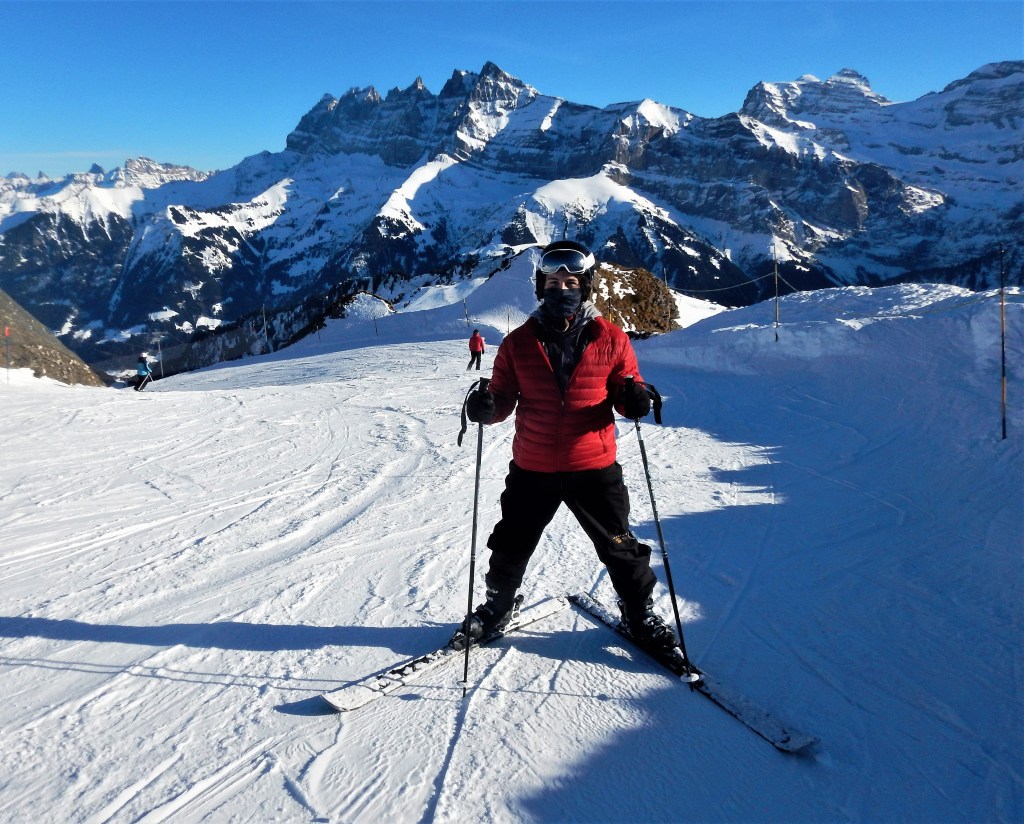
My son at around 2000 m with the Dents du Midi behind him.
Continue reading

Skiing in the French Alps

I have just spent a week skiing in the French Alps with my younger son. We stayed in a chalet above the village of Les Gets in Les Portes du Soleil ski doman (the Gates of the Sun). Normally the snow is down to the village, but this February is the warmest I have experienced since I have lived in Geneva and the snow did not extend much lower than our chalet. Fortunately it snowed quite a bit after we arrived, and there was plenty of fresh powder for skiing. And enough to ski back to our chalet at the end of the day.

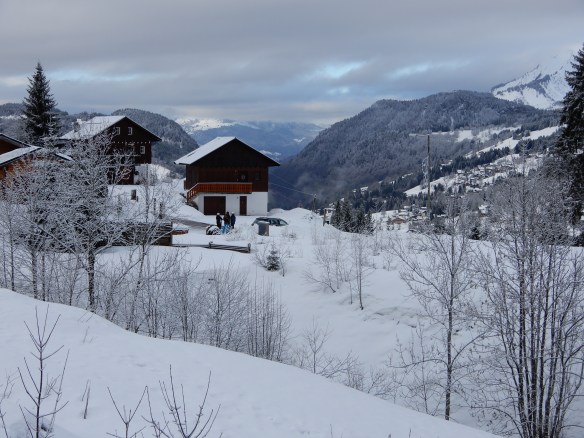
View from our chalet

Continue reading

Skiing from Switzerland to France and back

I have recently been cleaning up old external drives that I’ve used over the years for backups and found a folder of photographs from a 2003 ski trip to Champèry. Champéry lies in a side valley of the Rhone valley under the Dents du Midi (“Teeth of Midday”) mountain range. Some of the photos really capture the beauty of skiing in this region, which is part of the Portes du Soleil (The Doors of the Sun). So I decided to put them up in this post. The Portes du Soleil is one of Europe’s two largest ski areas, around 1000 square kilometres, with 13 interconnected ski resorts and around 650 km of marked pistes, and includes Les Gets where we skied in February this year.

Looking down towards Champéry lying under the Dents du Midi on the other side of the valley

Continuing to head upwards from where the above photo was taken will bring you to the ridgeline which marks the Swiss border with France. Later in the day I skied down the other side into France and ended up in the Morzine valley, where I caught a chairlift back up to the top.

Continue reading

Skiing in the French Alps

Schools in Geneva have a one-week mid-term break in February, and the ski slopes are normally crowded. I took my boys for a week skiing in the French Alps at Les Gets, which is a little over 60 kilometres from Geneva, in the direction of Chamonix. The slopes were even more crowded as usual, as it was also the British mid-term break, and Les Gets is a popular destination.

Looking towards Mont Blanc from Mont Chéry.

The village of Les Gets, visible in the valley below my younger son in the photo above, is relatively low at 1,170m above sea level, and the highest points accessible on ski are at around 2000 m. The photo above was taken near the summit of Mont Chéry at around 1,800 m. In the distance to the south-east Mont Blanc (4,810 m) is visible on the horizon. I stood on its summit in 2010 (Mont Blanc), 3000 metres higher than where I and my son are now standing. Below is another photo taken using the zoom lens.

Continue reading

Méribel mountain views

Some photos of the French Alps from the Saulire on the mountain ridge between Méribel and Courcheval. The Saulire is at 2738m and has spectacular views of the surrounding mountains, including Mont Blanc in the distance 63 km away. And then a thousand metre descent which made for great skiiing.

Looking west over the Méribel valley towards Val Torens

Continue reading

A week skiing at Méribel

We went to Méribel in February for a week skiing. It is a resort in the French Alps about halfway between Grenoble and the Italian border. Last winter was not a great year for snow, but it snowed heavily just before we arrived and there was lots of fresh powder. The entire week until the last day was clear blue skies.

At 2275 m on the Col des Lozes between Méribel and Coucheval

Continue reading

Parapente flight from France to Switzerland

Yannick has combined parapente (paragliding) with alpine climbing and has a tandem harness. He told me he could arrange two more pilots and my boys and I could do a flight over Mont Salève, in neighbouring France near Geneva. The boys were very excited, my older boy had been lobbying for several years to do a parapente flight. And Yannick is very experienced and I know he does not take risks. So around the end of August, off we went. All three of us launched from the grassy slope on top of the Salève out over the cliffs. I cruised around the cliffs and above them. Saw the boys from time to time, though they ended up going up to around 1700 m altitude, much higher than me. Guess I am a bit heavier.

Below is a short 2:30 video of my flight. In the second half of this video, I flew the wing for a while, then Herve did some acrobatics before we landed back in Switzerland.

Mont Pelvoux

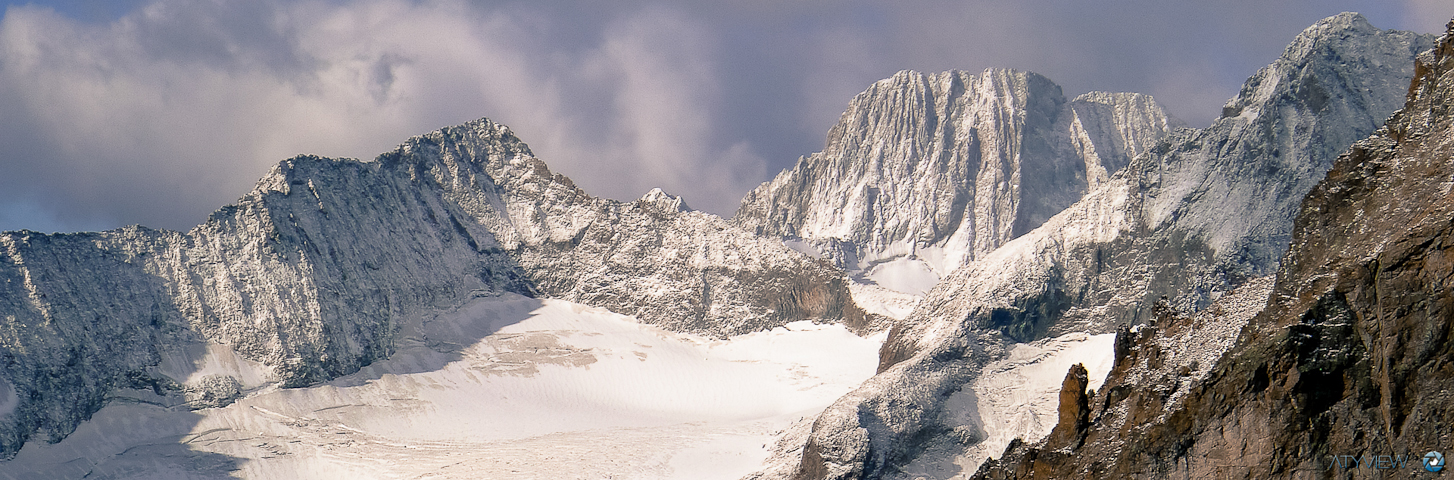
Les Ecrins

I was cleaning up my photo files, and came across these photos from a trip in September 2012 to Les Ecrins, the southernmost part of the French alps, about 100 km south of Grenoble. There are a number of peaks over 4000m but our objective was to climb Mont Pelvoux, just below 4000m at 3946 m (12,946 ft). Bad weather in the Swiss Alps had led us to flee southwards looking for better weather. There was heavy rain all the way to Briancon, so we stayed down in the valley for the first night rather than climb to Refuge de Pelvoux in the rain. But that meant a big day the next day with a 2700 m climb to Pelvoux. We left at 3.30 am, amd climbed the 1200 m to Refuge de Pelvoux in about 3 hours, arriving just as the sun was rising. Continue reading

Ascent of Mont Blanc, September 2010

On a clear day, I can see Mont Blanc on the skyline from my office window, and many is the day in winter where I watch the sun rise almost directly over the summit. Mont Blanc looms over the skyline in many places around Geneva and the “frontalier” France to the west. So I had long had an ambition to climb Mont Blanc, the highest peak in (Western) Europe at 4808m, and succeeded on my first attempt in September 2010.

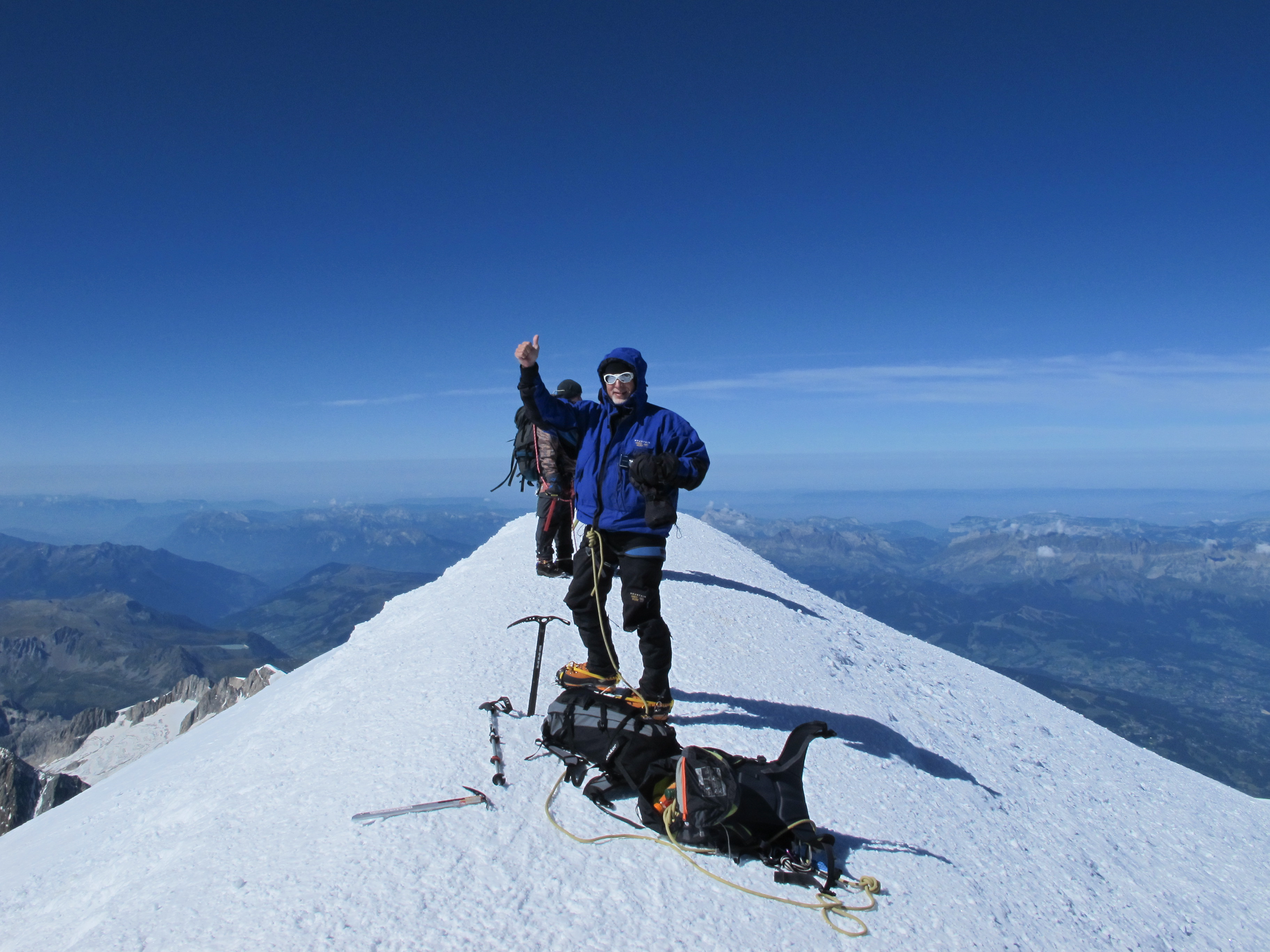
On the summit of Mont Blanc (4808 m), Sunday morning at 11.30 am. And somewhat surprised I made it!

On the summit of Mont Blanc (4808 m), Sunday morning at 11.30 am. And somewhat surprised I made it!

Continue reading