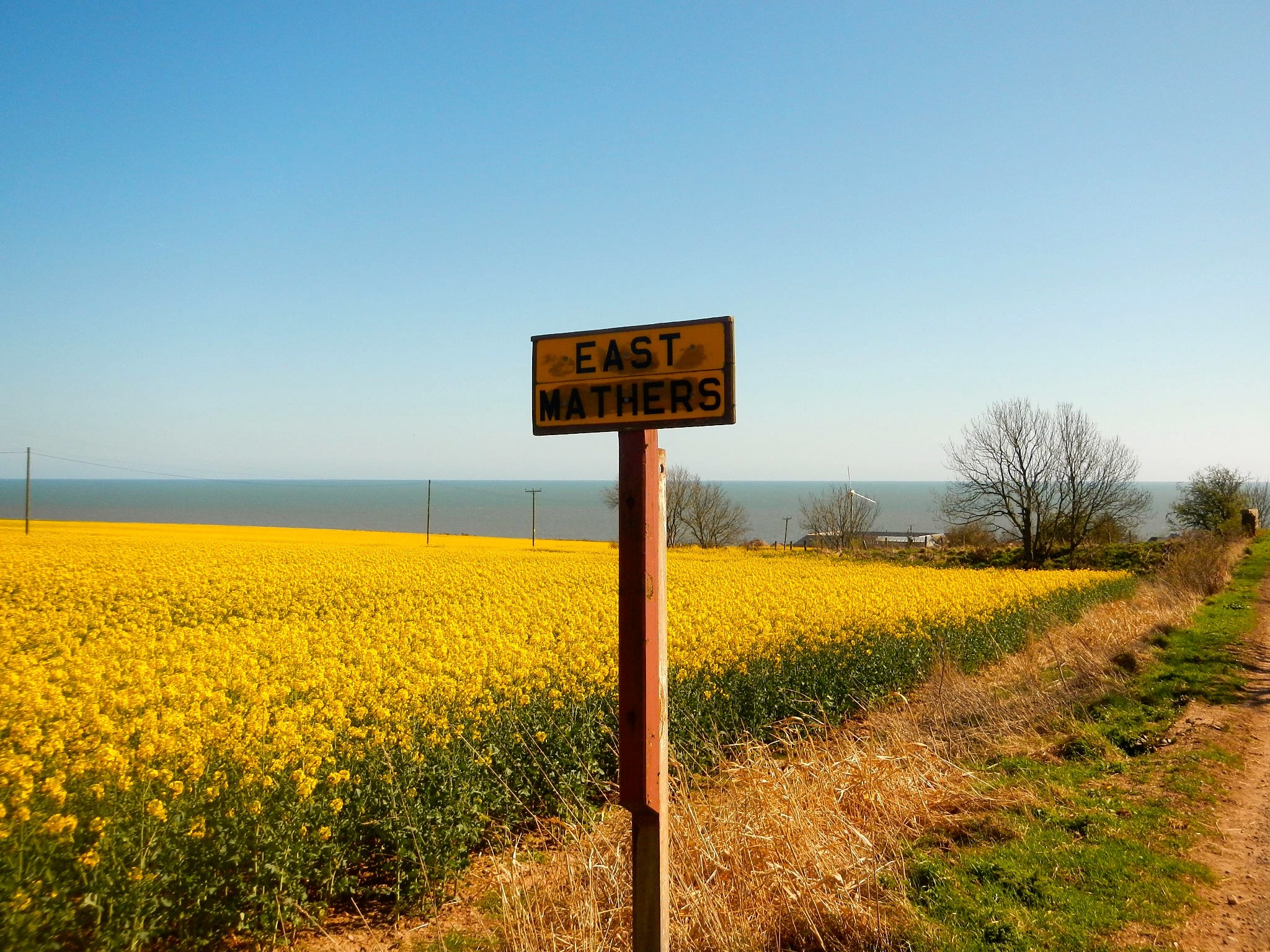
According to some researchers, the Scottish name Mathers originates from a place name on the east coast of Scotland, a place name associated with the Clan Barclay. The Barclay lairds of Mathers took the title “laird of Mathers” or equivalently “Second of Mathers” etc, and some Mathers claim that this is the origin of the Mathers surname, and by implication, that the Mathers descend from the early Barclays of Mathers. There are certainly quite a number of people called Mathers who lived in this area in the nineteenth century, but its more than likely that they took their name from the place rather than by descent from the Barclays. But I won’t let that stop me from claiming a cannibal laird as an ancestor – see my earlier post https://mountainsrivers.com/2014/01/20/my-cannibal-ancestors/
Category Archives: Origins
Maternal ancestors: Bronze age, iron age, Roman Britain
This post has been superceded by a new post my-maternal-ancestors-from-eve-via-ice-age-europe-to-victorian-england which contains latest information from a recent more detailed analysis of my mtDNA together with revised and updated dates and locations of haplogroup founders.
This is the last of a series of posts on my deep maternal ancestors, identified through analysis of mitochondrial DNA (mtDNA) which is passed only from the mother to the child and so provides a trail of maternal ancestors identifiable through the mutations accumulated in the mtDNA. In this post I summarize the “recent” maternal ancestors who lived through the beginnings of agriculture in Britain, the British bronze age, the British iron age, the Roman occupation, and post-Roman Britain.
Two brand new uncles, a new aunt, and a flock of cousins in a pear tree
What did I give Mum for Christmas 2013? Two brand new uncles, a new aunt, and a flock of cousins in a pear tree!
Mum never knew her maternal grandfather as he disappeared from the scene after the birth of his last child in 1905, and the family has never known what happened to him. He was an American born in Boston and in the early 2000s I hired a researcher in Boston who found almost no information except some indication that his mother existed and was a widow in Boston around 1905.
Last Christmas while visiting Mum and my sister, I decided to spend a little time searching the web yet again for some clues about him. And I was stunned to discover a marriage certificate for him in Sydney to another woman and then to discover he had a daughter and two sons who in turn had children, my Mum’s new cousins. And they seemed to have lived in the same suburb of Sydney as my Mum’s parents. So my grandmother may easily have bumped into her half-brothers and sisters in the shops. What’s more, he described himself as a bachelor on his second marriage certificate, so he was almost certainly a bigamist. My sister found this quite entertaining http://irenewaters19.com/2014/01/18/weekly-photo-challenge-families/.
The ice age paintings of the Grotte de Niaux
One of my deep maternal ancestors, Una, probably lived in the Basque region or perhaps a little further north around 12,000 years ago, which would make her my great*780th grandmother (give or take a few generations). She may well have been part of the Magdalenian culture in the foothills of the Pyrenees who produced the stunning cave paintings at sites such as Roc-de Sers, Lascaux, and Niaux. I have visited the Grotte de Niaux twice, once in 1992 and again in 2011. It is one of the few caves with Paleolithic paintings that can still be visited.
Maternal ancestors: ice age Europe and Britain
This post has been superceded by a new post my-maternal-ancestors-from-eve-via-ice-age-europe-to-victorian-england which contains latest information from a recent more detailed analysis of my mtDNA together with revised and updated dates and locations of haplogroup founders.
In my previous post on my deep maternal ancestors (https://mountainsrivers.com/2014/02/16/deep-maternal-ancestors-out-of-africa-into-ice-age-europe/) I summarized the “grandmothers” who contributed specific mutations to my mtDNA that allow me to trace them (and approximately when and where they lived) all the way back to Mitochondrial Eve, the most recent common maternal ancestor of all living humans. These women were real and specific individuals, and Sykes and others have given the older ones specific names (usually starting with the letter of the haplogroup they founded). I have followed this by giving names to the founders of the subgroups to which I belong. In this post, I give a brief biography of each of these ancestral grandmothers, starting with Mitochondrial Eve, placing them in evolutionary, geographic, and climatic context. Continue reading
Deep maternal ancestors: out of Africa into ice age Europe
This post has been superceded by a new post my-maternal-ancestors-from-eve-via-ice-age-europe-to-victorian-england which contains latest information from a recent more detailed analysis of my mtDNA together with revised and updated dates and locations of haplogroup founders.
I have only been able to trace my maternal ancestors back to my great-great-grandmother, Amelia Buckmaster, who was born in 1809 in Hounslow, Middlesex, England and who died in 1892 in Wallingford, Berkshire, England. I recently had my mitochondrial DNA tested (see an earlier post for more on mtDNA) and the results indicated that my mtDNA haplogroup is U. I did some research on the specific mutations identified in my mtDNA and identified my subgroup more specifically as U5a1a1.This means that I now know quite a lot about specific maternal ancestors and where and when they lived, all the way back to Mitochondrial Eve who lived in Africa 192,400 years ago.
Mitochrondral Eve: the deep maternal ancestor of us all
Mitochondrial Eve is the name given to the matrilineal most recent common ancestor (MRCA) of modern humans. In other words, she was the woman from whom all living humans today descend, on their mother’s side, and through the mothers of those mothers and so on, back until all lines converge on one person. Mitochondrial Eve is estimated to have lived around 192,400 years ago ago in southern Africa (which makes her approximately my great*9,650th grandmother). Continue reading
Origins — the fascination of ancestors — recent, ancient, extreme
I have had an interest in the history of my family since childhood, when I wrote a short history of the Mathers family that drew heavily on documents and recollections of family members, particularly those of a great-uncle and great-aunt born in Scotland in the 19th century. When I discovered Tolkien’s Lord of the Rings trilogy as a teenager, I was fascinated by the genealogical charts in the Appendices to the Lord of the Rings. For some reason, I find the tracing of connections to a larger history deeply satisfying. Over the last ten years, I returned to researching my ancestry using the powerful tools offered by the Internet, with access to databases and historical records that I would not have dreamed possible before.
My cannibal ancestors
The tale of how a Scottish Mathers killed and ate one of his enemies was discovered by my father when he was reading a Scottish novel from his Uncle John’s library (John Melrose Mathers 1889-1975). He took great delight in the idea that the medieval Scottish ancestors of the Mathers family had been cannibals.
Southern roots
An interesting site full of stories. The following from a friend I used to work with in Geneva, a few years ago now.
