
My experience at a psychedelic retreat

I was in high school during the 1960s and psychedelics were illegal by the time I started university in 1971. Although I was fascinated by writings on psychedelics by Aldous Huxley, Alan Watts and others, and the experiences recounted by various friends, my fear of adverse outcomes led me to avoid trying LSD when the opportunity presented.
In 2019, I read several accounts of people who had attended legal psychedelic retreats in the Netherlands and elsewhere seeking to facilitate personal development. I also read Michael Pollan’s best-selling book on the current psychedelic renaissance, Changing Your Mind. I was searching for new priorities and purposes in life after divorce and retirement. Maybe a psychedelic retreat could provide some clarity?
So I decided to attend a psychedelic retreat and this is an account of my experiences. They led in an altogether unexpected direction and led to the resolution of repressed trauma that I had been unaware of.
Legal retreats in the Netherlands
The Netherlands fully legalized the psilocybin-containing truffle form of magic mushrooms in 2019 and a number of organizations started to provide psychedelic retreats designed to facilitate personal growth, emotional breakthroughs and spiritual development. There is growing evidence for the transformative potential of a well-prepared psychedelic experience in a safe and supportive environment (see for example Madsen et al 2020, Aday et al. 2020, Kettner et al. 2021). . A new wave of research is also finding that psychedelics can offer significant therapeutic benefits for people suffering with depression, trauma or addiction (see here and here).
The Synthesis retreat centre in Amsterdam has been running 3 day retreats since April 2018. After speaking to several retreat facilitators at Synthesis, I decided to enrol for their first five-day retreat in October 2019. This would include two psilocybin ceremonies on the second and fourth day. Before enrolment, I undertook an interview and a health screening process, similar to that being used in clinical studies of psilocybin.
I also accepted an invitation to participate in a research study being carried out by the Centre for Psychedelic Research at Imperial College London to investigate changes in wellbeing associated with the retreat process. This involved answering questionnaires at six different points in time; before, during and after attending the retreat, as well as wearing a bracelet during the retreat days to monitor various physiological variables.
Synthesis puts a strong emphasis on preparation before the retreat, support from facilitators during the retreat, and integration of the experience and its lessons into daily life after the retreat. The three-week preparation phase included weekly group Zoom calls and preparatory activities including journaling, meditation and the development of three intentions for the retreat. These intentions play a crucial role as the expectations of the psychedelic voyager usually have a strong influence on what is experienced. My two main intentions were: to reach closure on the end of my marriage, and to clarity on my goals and priorities in retirement. My third intention was more of a wishful hope that I would experience the ego-dissolution that psilocybin can cause, and that I had previously experienced several times when practicing Zen meditation.
The first day at the retreat – flight instructions
The retreat was held in a converted church in near Amsterdam, now decorated in a mix of Buddhist and shamanic symbolism. There were around ten of us, together with five guides. We came from Europe, UK and North America and ranged in age from around twenty up to me in my sixties. Most of us had not had any previous experience with psilocybin.
Each of us was paired with an individual guide who would help us prepare for and integrate our psychedelic experience. My guide emphasised the importance of being open to the experience and not resisting it. He recommended that I work on this in the breathwork sessions later that day and the next morning.
The guides also gave us “flight instructions”: advice on the process, what to expect, and what to do if the experience became uncomfortable. They emphasised the importance of our three intentions in creating expectations that would influence psychedelic experience and maximize its potential benefits. We were given a mantra “Trust, let go and be open” to use when we recognized that we were resisting. The first ceremony would be a medium dose of psilocybin followed during the second ceremony by a deeper dive if requested.
First ceremony
The second day started with silent meditation and then a guided breathwork session to further prepare us for the afternoon ahead. The breathwork surprised me by releasing some quite strong emotions, resulting in tears and bodily shaking, and I used the mantra to stay open to the experience.
After a light lunch, we prepared the truffle tea. We ground up truffles and ginger, then added boiling water to make a ginger tea. Mattresses were arranged in a large circle in the ceremony room, each with pillows and a gravity blanket. When everyone was settled on their mattresses, we were served our truffle tea. I drank it all and then ate all the ground truffles left in the cup. I put on my blindfold mask, lay down on my back and covered myself with the gravity blanket as music from a curated playlist started to play. I was to lie there for the next five hours, apart from one trip to the toilet.
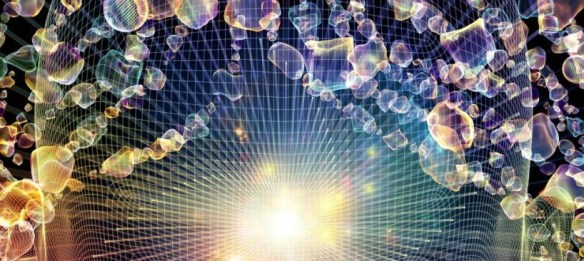
After maybe 15 or 20 minutes, I started to notice light and patterns. As I looked more closely these would break up and extend into intricate moving geometrical patterns or distinctive rainbow bands of colours shimmering and rippling. Every time I looked at something it would expand into fractals, or geometric patterns of immense detail and dynamics. I could drill down into these dynamic patterns and every level would expand.
And then my mind was totally caught up in the music. The music was much more than sound, it was colour, emotions, patterns, and very real and very solid. I experienced tones or chords as solid objects, that changed and grew with the music, building dynamic structures.
As the afternoon went on, the music and the visual patterns became less distracting. I started to get visions and to experience changes in my sense of self. I saw my parents and I was a child. I experienced myself as other people and even as four separate people.
I rummaged through the traumas of my life, revisiting periods when I was with my first wife and now-estranged daughters. I also revisited periods in my second long-term relationship. I re-experienced the love that I felt at those times, as well as the grief and sadness at the failures of those relationships. Curiously, the end of my most recent marriage did not come up.
When eventually I surfaced from my inner voyage and took the mask off, I looked at my hand. It looked gaunt and wrinkled and was going black and blue as I looked at it. When I went to the toilet and looked in the mirror, I saw an old man, a stranger, looking back at me.
I went back to the mat and kept drifting in and out of a meditative state, seeing difficult times in my life as if watching a movie, and still avoiding feelings. Towards evening, I went outside in the wind and watched the leaves and trees against the sky. I was cold but invigorated and feeling somewhat more open and connected.
Uncovering repressed feelings about my estranged daughters
On the third day of the retreat, I had a one-on-one session with my guide to understand and integrate the previous day’s experience, and to discuss strategies and intentions for the next day’s ceremony.
I was surprised that my trip had not focused on recent issues, but on the trauma and grief dating from the estrangement of my two daughters twenty years previously. I separated from my first wife in 1992 when my daughters were five and nearly eight. We divorced the following year and reached an agreement under which I had the girls about one-third of the time over the next seven years.
When I told my ex-wife in 1999 that I was going to work for a UN organization in Geneva for a year, she and my daughters refused any further contact. I have not seen them again since late 1999. Despite my close relationship with the girls, she convinced them that I was seeking to avoid my child support obligations. My efforts to show that I was not avoiding child support or seeking to avoid it were fruitless.
I was close to my daughters until they cut off contact, and the estrangement was hard for me to accept. I found a psychologist in Geneva and saw him for two or three years, reaching a point where I felt I had come to an acceptance of the situation and dealt with the grief and loss.
More recently I started counselling with another therapist about current issues and some of the emotions around the estrangement of the girls came up again. She spent time helping me to address that, and I thought I had reached acceptance of the situation and was no longer troubled by it.
Lying in bed falling asleep after the first ceremony, I became aware of the presence of buried feelings about my daughters’ estrangement. It felt as though they were encased in thick armour, like a spherical steel container. During the next day and night, I was always aware these encased feelings. It seemed like they were partly buried and partly protruding into my consciousness.
I very much wanted to get rid of this armour, to release whatever was inside. If I was ever going to explore what was buried deep inside my mind, this might just be the best place to do it. I determined to take advantage of the higher dose of truffles planned for the second ceremony to do this.
Second ceremony
We prepared the tea starting at 12 noon, this time with a higher dose of truffles. Almost immediately I was engrossed by extraordinarily intricate dynamic mandalas of bright lights, crystals, diamonds, endlessly unfolding, filling all space. I went deep into this space and was floating in front of an enormous spaceship. I felt I had a huge crushing weight on my chest and found that I stopped breathing unless I consciously took breaths. For a while I was worried that I would die if I forgot to breathe. Then I realized that I had guides sitting beside me and a medic nearby. They would notice if I wasn’t breathing, so I relaxed and stopped worrying.
The deep black space then transformed into an extraordinarily beautiful kaleidoscopic space filled with endlessly changing crystalline lights and colours. This went on so long that I started to worry. I wanted to go deeper and get past the light show to “important” stuff. I became very restless and repeatedly pulled off my blindfold.
My guide asked if I wanted more truffles and I said yes. After taking a second dose, about half the amount of the first, I put my mask and headphones back on. Now the music dominated and took me with it, and I started resenting it. I realized I was resisting, and said to myself several times “It’s me, don’t blame the music”. I then had a series of quite intense visionary experiences which became increasingly emotional. Some of these involved dramatic changes in the sense of self. I did not resist but leaned into the uncomfortable emotions that arose.
I saw my girls as they were when they were last with me. I experienced an intense feeling of loss and grief. Over and over, I said to myself “I miss you” as the feeling intensified. And at some point, I let go of the young girls and experienced the presence of my daughters as adults now. The grief transformed into love and I started crying and shaking.
One of the guides had noticed how overwhelmed with emotion I was, and sat next to me and held my hand, and his simple presence reassured me and encouraged me to open to my feelings.
After some time, I had an extended vision of the evolution of the universe, the earth, life, my ancestors and my place in the chain of life with my children following. And I saw myself getting very old and dying. I did not experience the dying itself but did experience that I was gone and that life goes on. And how crucial love is to that journey.
I was the last one left in the room by the time evening came. And still in an altered state. People came back into the room for a final closing and sharing circle. I was still there. Hadn’t left the room for close to 8 hours, apart from 2 trips to the toilet. On my second trip to the toilet, I looked in the mirror. Unlike in the first ceremony this time I saw a strong and healthy man looking back at me.
Integration
On the last day of the retreat I had another one-on-one session with my guide. I realized I had suppressed the feelings of loss, probably a decade ago, because they were too painful and had genuinely thought that I had accepted the situation. But in reality I was still caught up in the need to get the girls to realize they have been misled about me. Letting go of that need freed me from the anger and resentment I had been stuck in. My guide advised me to practice connecting with the deepest parts of myself and experience and express my love for all my children. That love is unconditional and does not depend on what the girls might believe. I don’t need to demand a response and the armour is gone.
We had weekly group video sessions over the next three weeks with the Synthesis guides to support and guide the integration process.
Two years later
After the retreat, I wrote letters to my daughters. I enclosed documentation of the child support payments made over the years. They can examine the facts if they want to. I no longer worry about what they might believe about me. I continue to write to them from time to time, so they know about my life and that I think about them and am open to communication.
I was somewhat disappointed that I did not have a profound no-self experience at the retreat or come home with clarity on what I wanted to do in retirement. It was not until around ten months later, when I volunteered to participate in a research study on the association of positive outcomes with psilocybin-induced experiences, that I realized that I had indeed had an extraordinary outcome, though not one I had anticipated. The pain and trauma that I had repressed, and did not know was still there, has now been replaced by openly experienced love accompanied by some sadness. Two psilocybin journeys in a supportive environment with appropriate integration has made a profound and long-lasting change, a change that I was not able to achieve through several years of psychological counselling. I feel like I’ve taken a very heavy weight off my mind and that has been incredibly liberating.
Research has shown that psychedelics have the capacity not only to retrieve past traumas, but to simultaneously dampen an overactive emotional response when it is relived. Even so, I doubt I would have had the courage to press through the resistance and repression if I had taken psilocybin on my own. My confidence that I was in safe surroundings with expert guides to assist if I got into difficulties allowed me to drop my resistance and surrender to the experience.
I have spent some time thinking about whether to share this deeply personal experience but decided it might be helpful to others to document my experience of the potential of psychedelics to resolve past traumas and issues.






 The restrictions during the second wave of covid-19 have been less severe in Geneva than during the first wave, although France has closed my nearby border until mid-December and instituted strict lockdown again. However, I went to a bakery the other day and saw a notice that said people aged 65 and over were asked not to leave home. I had been keeping pretty much at home in any case, and one of the things I decided to do in this period was to see whether I could achieve WILD, ie. wake-induced lucid dreaming. I’ve previously had success with DILD (dream-induced lucid dreaming) which is the best known technique and involves becoming aware you are dreaming while you are in a dream. WILD involves transitioning directly from the hypnagogic state into the dream state while maintaining awareness throughout.
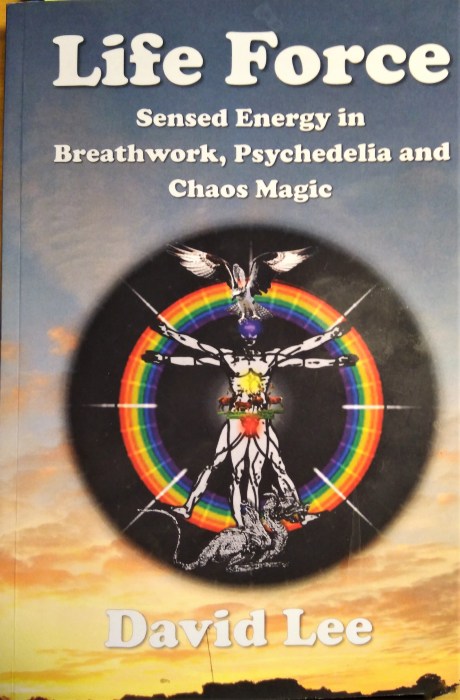 discussing their various purposes and effects, and the relationships between them. This is interesting enough, but his approach to understanding breathwork completely changed my experience of it. He describes the book as an exploration of “sensed energy” and schemes of belief that work best for experiencing, cultivating and manipulating these subtle sensations. In particular, he frames breathwork in terms of the arousal and relaxation of sensed energy.
 Mountains and rivers