The Wide Sky

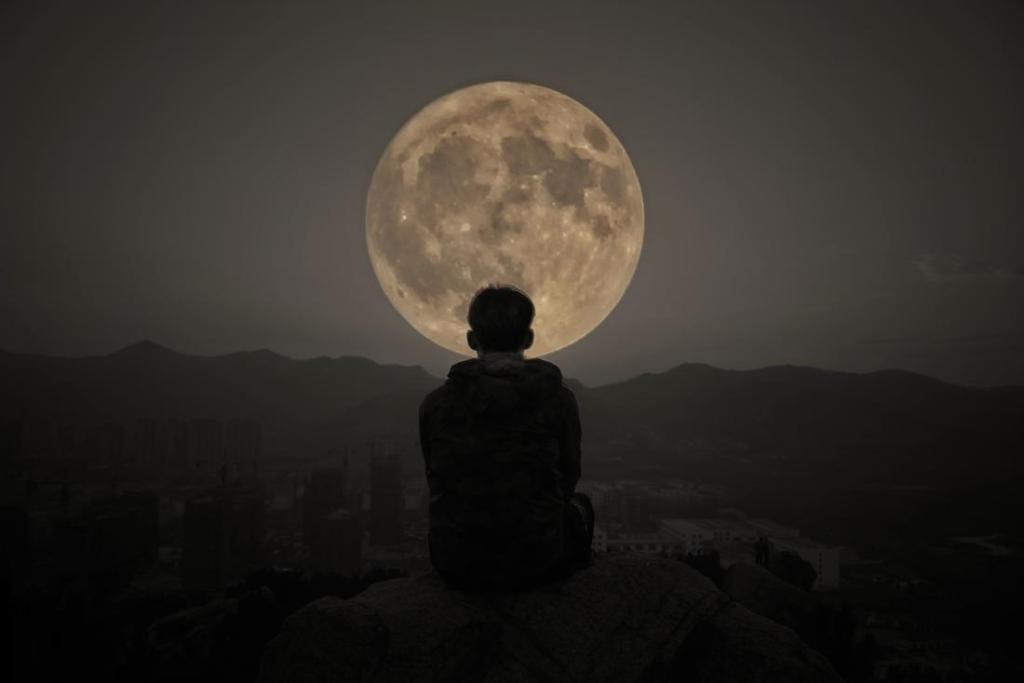
Let me not spend my life
lamenting the world’s sorrows
for above
in the wide sky
the moon shines pure

ukiyo to mo
omoi-tōsaji
oshikaeshi
tsuki no sumikeru
hisakata no sora

— Saigyo

I came across this poem quite by accident.  But it really struck home, as I’ve been spending too much time thinking about the state of the world right now. The human race appears to be quite incapable of working together to address the existential crises of the pandemic, global heating and species extinctions, and overpopulation, as well as the rejection of reason and science dramatically exacerbating these potentially soluble crises.  Humans have not reacted to these crises in general by pulling together, given that collective action can indeed address and ameliorate, if not completely address, them. But ratherhave retreated back into tribes who blame the “other” for all their problems. It is indeed difficult sometimes to remember the moon shining pure in the wide sky.

Saigyō was the Buddhist name of Fujiwara no Norikiyo (1118–1190), a Japanese Buddhist monk-poet. He is regarded as one of the greatest masters of the tanka (a traditional Japanese poetic form). He influenced many later Japanese poets, particularly the haiku master Basho.

Saigyo was born into a branch of the Fujiwara clan, the most powerful family in Japan in the early 12th century. As a young man he joined the Hokumen Guards who served at the retired Emperor’s palace. Despite a seemingly assured future, he decided at the age of 23 to “turn from the world” and become a reclusive wandering Buddhist monk. He spent the rest of his life in alternating periods of travel and seclusion with occasional periodic returns to the capital at Kyoto to participate in imperial ceremonies. During this period, the second half of the 12th century, Japan was wracked by civil war

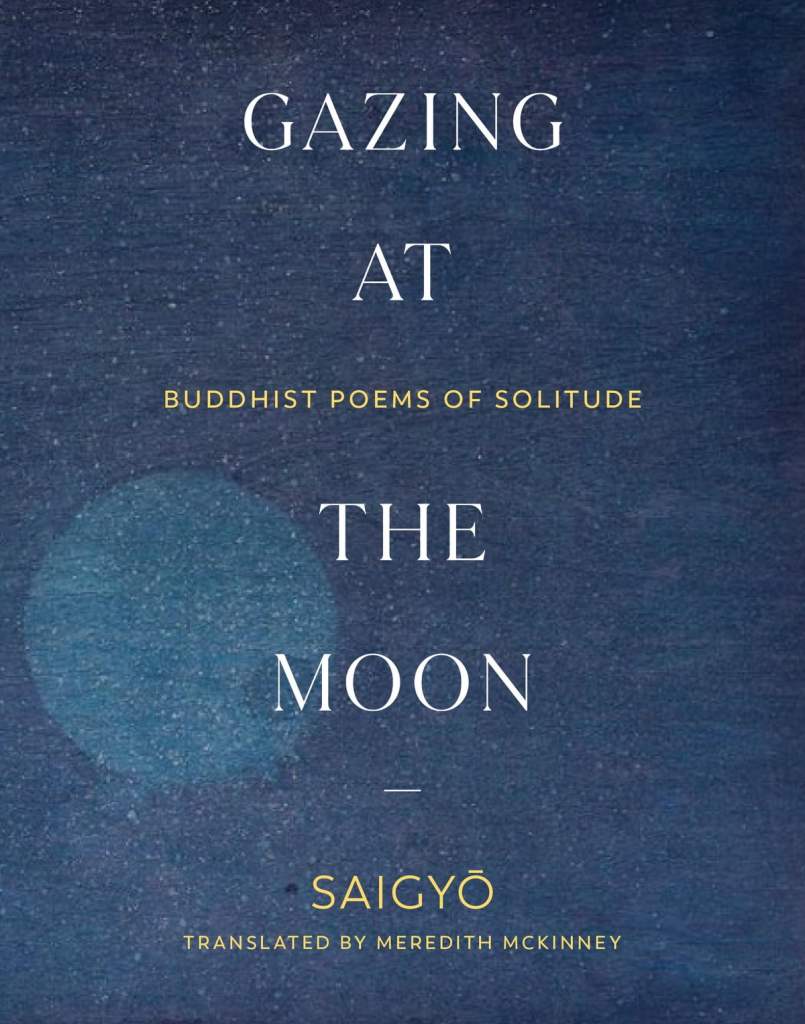
The translation of the poem above is by Meredith McKinney, who has published a selection of over 100 poems by Saigyo in the collection Gazing at the Moon: Buddhist Poems of Solitude (September 2021). The poems selected focus on Saigyo’s story of Buddhist awakening, reclusion, seeking, enlightenment and death. I can highly recommend this collection, which embodies the Japanese aesthetic of mono no aware — to be moved by sorrow in witnessing the ephemeral world.

Meredith McKinney is an award-winning translator of classical and modern Japanese literature, who lived and taught for around 20 years in Japan. She returned to Australia in 1998 and now lives near the small town of Braidwood, not far from Canberra where I lived until early 2000. I was interested to learn a little more about her, and was surprised to find out that she is the daughter of Judith Wright (1915-2000), one of Australia’s greatest poets and an activist for the environment and indigenous rights. For the last three decades of her life, Wright lived near Braidwood. She became completely deaf in 1992 after progressively losing her hearing since early adulthood.

How psilocybin uncovered repressed trauma and healed my pain

My experience at a psychedelic retreat

I was in high school during the 1960s and psychedelics were illegal by the time I started university in 1971. Although I was fascinated by writings on psychedelics by Aldous Huxley, Alan Watts and others, and the experiences recounted by various friends, my fear of adverse outcomes led me to avoid trying LSD when the opportunity presented.

In 2019, I read several accounts of people who had attended legal psychedelic retreats in the Netherlands and elsewhere seeking to facilitate personal development. I also read Michael Pollan’s best-selling book on the current psychedelic renaissance, Changing Your Mind. I was searching for new priorities and purposes in life after divorce and retirement. Maybe a psychedelic retreat could provide some clarity?

So I decided to attend a psychedelic retreat and this is an account of my experiences. They led in an altogether unexpected direction and led to the resolution of repressed trauma that I had been unaware of.

The Netherlands fully legalized the psilocybin-containing truffle form of magic mushrooms in 2019 and a number of organizations started to provide psychedelic retreats designed to facilitate personal growth, emotional breakthroughs and spiritual development. There is growing evidence for the transformative potential of a well-prepared psychedelic experience in a safe and supportive environment (see for example Madsen et al 2020, Aday et al. 2020, Kettner et al. 2021). . A new wave of research is also finding that psychedelics can offer significant therapeutic benefits for people suffering with depression, trauma or addiction (see here and here).

The Synthesis retreat centre in Amsterdam has been running 3 day retreats since April 2018. After speaking to several retreat facilitators at Synthesis, I decided to enrol for their first five-day retreat in October 2019. This would include two psilocybin ceremonies on the second and fourth day. Before enrolment, I undertook an interview and a health screening process, similar to that being used in clinical studies of psilocybin.

I also accepted an invitation to participate in a research study being carried out by the Centre for Psychedelic Research at Imperial College London to investigate changes in wellbeing associated with the retreat process. This involved answering questionnaires at six different points in time; before, during and after attending the retreat, as well as wearing a bracelet during the retreat days to monitor various physiological variables.

Synthesis puts a strong emphasis on preparation before the retreat, support from facilitators during the retreat, and integration of the experience and its lessons into daily life after the retreat. The three-week preparation phase included weekly group Zoom calls and preparatory activities including journaling, meditation and the development of three intentions for the retreat. These intentions play a crucial role as the expectations of the psychedelic voyager usually have a strong influence on what is experienced. My two main intentions were: to reach closure on the end of my marriage, and to clarity on my goals and priorities in retirement. My third intention was more of a wishful hope that I would experience the ego-dissolution that psilocybin can cause, and that I had previously experienced several times when practicing Zen meditation.

The first day at the retreat – flight instructions

The retreat was held in a converted church in near Amsterdam, now decorated in a mix of Buddhist and shamanic symbolism. There were around ten of us, together with five guides. We came from Europe, UK and North America and ranged in age from around twenty up to me in my sixties. Most of us had not had any previous experience with psilocybin.

Each of us was paired with an individual guide who would help us prepare for and integrate our psychedelic experience. My guide emphasised the importance of being open to the experience and not resisting it. He recommended that I work on this in the breathwork sessions later that day and the next morning.

The guides also gave us “flight instructions”: advice on the process, what to expect, and what to do if the experience became uncomfortable. They emphasised the importance of our three intentions in creating expectations that would influence psychedelic experience and maximize its potential benefits. We were given a mantra “Trust, let go and be open” to use when we recognized that we were resisting. The first ceremony would be a medium dose of psilocybin followed during the second ceremony by a deeper dive if requested.

First ceremony

The second day started with silent meditation and then a guided breathwork session to further prepare us for the afternoon ahead. The breathwork surprised me by releasing some quite strong emotions, resulting in tears and bodily shaking, and I used the mantra to stay open to the experience.

After a light lunch, we prepared the truffle tea. We ground up truffles and ginger, then added boiling water to make a ginger tea. Mattresses were arranged in a large circle in the ceremony room, each with pillows and a gravity blanket. When everyone was settled on their mattresses, we were served our truffle tea. I drank it all and then ate all the ground truffles left in the cup. I put on my blindfold mask, lay down on my back and covered myself with the gravity blanket as music from a curated playlist started to play. I was to lie there for the next five hours, apart from one trip to the toilet.

After maybe 15 or 20 minutes, I started to notice light and patterns. As I looked more closely these would break up and extend into intricate moving geometrical patterns or distinctive rainbow bands of colours shimmering and rippling. Every time I looked at something it would expand into fractals, or geometric patterns of immense detail and dynamics. I could drill down into these dynamic patterns and every level would expand.

And then my mind was totally caught up in the music. The music was much more than sound, it was colour, emotions, patterns, and very real and very solid. I experienced tones or chords as solid objects, that changed and grew with the music, building dynamic structures.

As the afternoon went on, the music and the visual patterns became less distracting. I started to get visions and to experience changes in my sense of self. I saw my parents and I was a child. I experienced myself as other people and even as four separate people.

I rummaged through the traumas of my life, revisiting periods when I was with my first wife and now-estranged daughters. I also revisited periods in my second long-term relationship. I re-experienced the love that I felt at those times, as well as the grief and sadness at the failures of those relationships. Curiously, the end of my most recent marriage did not come up.

When eventually I surfaced from my inner voyage and took the mask off, I looked at my hand. It looked gaunt and wrinkled and was going black and blue as I looked at it. When I went to the toilet and looked in the mirror, I saw an old man, a stranger, looking back at me.

I went back to the mat and kept drifting in and out of a meditative state, seeing difficult times in my life as if watching a movie, and still avoiding feelings. Towards evening, I went outside in the wind and watched the leaves and trees against the sky. I was cold but invigorated and feeling somewhat more open and connected.

Uncovering repressed feelings about my estranged daughters

On the third day of the retreat, I had a one-on-one session with my guide to understand and integrate the previous day’s experience, and to discuss strategies and intentions for the next day’s ceremony.

I was surprised that my trip had not focused on recent issues, but on the trauma and grief dating from the estrangement of my two daughters twenty years previously. I separated from my first wife in 1992 when my daughters were five and nearly eight. We divorced the following year and reached an agreement under which I had the girls about one-third of the time over the next seven years.

When I told my ex-wife in 1999 that I was going to work for a UN organization in Geneva for a year, she and my daughters refused any further contact. I have not seen them again since late 1999. Despite my close relationship with the girls, she convinced them that I was seeking to avoid my child support obligations. My efforts to show that I was not avoiding child support or seeking to avoid it were fruitless.

I was close to my daughters until they cut off contact, and the estrangement was hard for me to accept. I found a psychologist in Geneva and saw him for two or three years, reaching a point where I felt I had come to an acceptance of the situation and dealt with the grief and loss.

More recently I started counselling with another therapist about current issues and some of the emotions around the estrangement of the girls came up again. She spent time helping me to address that, and I thought I had reached acceptance of the situation and was no longer troubled by it.

Lying in bed falling asleep after the first ceremony, I became aware of the presence of buried feelings about my daughters’ estrangement. It felt as though they were encased in thick armour, like a spherical steel container. During the next day and night, I was always aware these encased feelings. It seemed like they were partly buried and partly protruding into my consciousness.

I very much wanted to get rid of this armour, to release whatever was inside. If I was ever going to explore what was buried deep inside my mind, this might just be the best place to do it. I determined to take advantage of the higher dose of truffles planned for the second ceremony to do this.

Second ceremony

We prepared the tea starting at 12 noon, this time with a higher dose of truffles. Almost immediately I was engrossed by extraordinarily intricate dynamic mandalas of bright lights, crystals, diamonds, endlessly unfolding, filling all space. I went deep into this space and was floating in front of an enormous spaceship. I felt I had a huge crushing weight on my chest and found that I stopped breathing unless I consciously took breaths. For a while I was worried that I would die if I forgot to breathe. Then I realized that I had guides sitting beside me and a medic nearby. They would notice if I wasn’t breathing, so I relaxed and stopped worrying.

The deep black space then transformed into an extraordinarily beautiful kaleidoscopic space filled with endlessly changing crystalline lights and colours. This went on so long that I started to worry. I wanted to go deeper and get past the light show to “important” stuff. I became very restless and repeatedly pulled off my blindfold.

My guide asked if I wanted more truffles and I said yes. After taking a second dose, about half the amount of the first, I put my mask and headphones back on. Now the music dominated and took me with it, and I started resenting it. I realized I was resisting, and said to myself several times “It’s me, don’t blame the music”. I then had a series of quite intense visionary experiences which became increasingly emotional. Some of these involved dramatic changes in the sense of self. I did not resist but leaned into the uncomfortable emotions that arose.

I saw my girls as they were when they were last with me. I experienced an intense feeling of loss and grief. Over and over, I said to myself “I miss you” as the feeling intensified. And at some point, I let go of the young girls and experienced the presence of my daughters as adults now. The grief transformed into love and I started crying and shaking.

One of the guides had noticed how overwhelmed with emotion I was, and sat next to me and held my hand, and his simple presence reassured me and encouraged me to open to my feelings.

After some time, I had an extended vision of the evolution of the universe, the earth, life, my ancestors and my place in the chain of life with my children following. And I saw myself getting very old and dying. I did not experience the dying itself but did experience that I was gone and that life goes on. And how crucial love is to that journey.

I was the last one left in the room by the time evening came. And still in an altered state. People came back into the room for a final closing and sharing circle. I was still there. Hadn’t left the room for close to 8 hours, apart from 2 trips to the toilet. On my second trip to the toilet, I looked in the mirror. Unlike in the first ceremony this time I saw a strong and healthy man looking back at me.

Integration

On the last day of the retreat I had another one-on-one session with my guide. I realized I had suppressed the feelings of loss, probably a decade ago, because they were too painful and had genuinely thought that I had accepted the situation. But in reality I was still caught up in the need to get the girls to realize they have been misled about me. Letting go of that need freed me from the anger and resentment I had been stuck in. My guide advised me to practice connecting with the deepest parts of myself and experience and express my love for all my children. That love is unconditional and does not depend on what the girls might believe. I don’t need to demand a response and the armour is gone.

We had weekly group video sessions over the next three weeks with the Synthesis guides to support and guide the integration process.

Two years later

After the retreat, I wrote letters to my daughters. I enclosed documentation of the child support payments made over the years. They can examine the facts if they want to. I no longer worry about what they might believe about me. I continue to write to them from time to time, so they know about my life and that I think about them and am open to communication.

I was somewhat disappointed that I did not have a profound no-self experience at the retreat or come home with clarity on what I wanted to do in retirement. It was not until around ten months later, when I volunteered to participate in a research study on the association of positive outcomes with psilocybin-induced experiences, that I realized that I had indeed had an extraordinary outcome, though not one I had anticipated. The pain and trauma that I had repressed, and did not know was still there, has now been replaced by openly experienced love accompanied by some sadness. Two psilocybin journeys in a supportive environment with appropriate integration has made a profound and long-lasting change, a change that I was not able to achieve through several years of psychological counselling. I feel like I’ve taken a very heavy weight off my mind and that has been incredibly liberating.

Research has shown that psychedelics have the capacity not only to retrieve past traumas, but to simultaneously dampen an overactive emotional response when it is relived. Even so, I doubt I would have had the courage to press through the resistance and repression if I had taken psilocybin on my own. My confidence that I was in safe surroundings with expert guides to assist if I got into difficulties allowed me to drop my resistance and surrender to the experience.

I have spent some time thinking about whether to share this deeply personal experience but decided it might be helpful to others to document my experience of the potential of psychedelics to resolve past traumas and issues.

Near-Death Experiences – Part 1

I’ve had a number of near-death experiences over the years. Almost all of these were the result of sheer stupidity doing risky things. I recently read an account by someone who survived having seen certain death approaching. That and other recent circumstances have got me thinking about my own experiences and meditating on death and dying more generally.

In this post I remember two incidents in which I was knocked unconscious and would never have known about it if I had died. These experiences had a far greater impact on me and my feelings about death and dying than any of the incidents where I realized that death was a probable outcome.

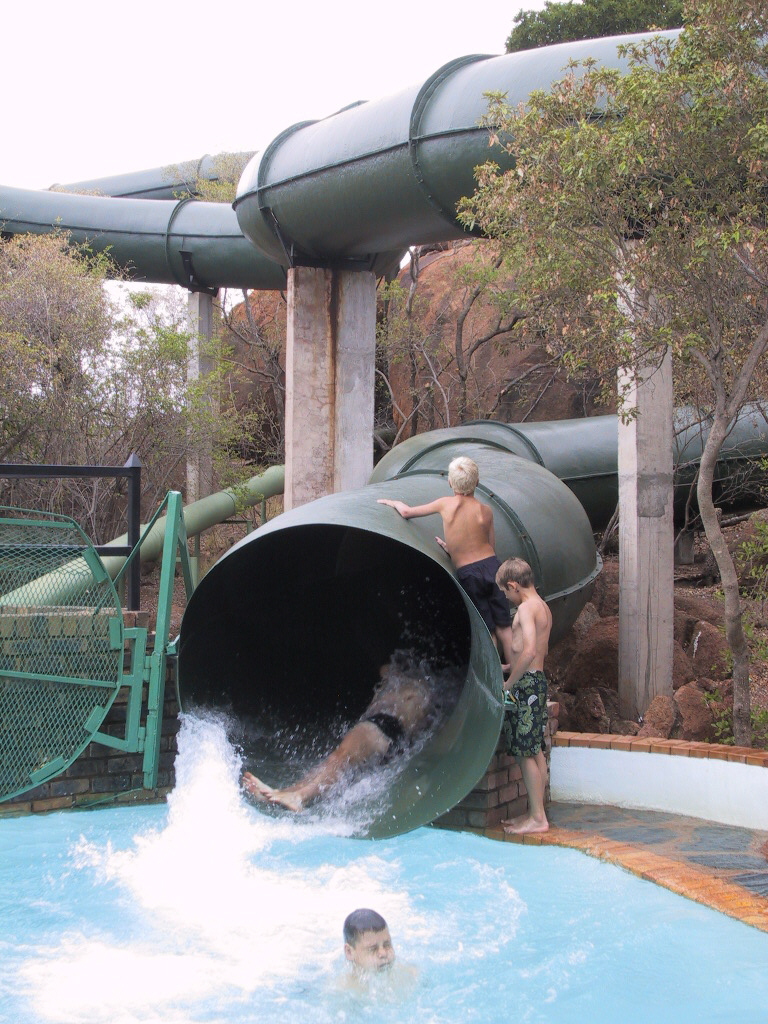
The water slide in question

In the early 2000s, I was in South Africa for three weeks as one of the staff for a WHO global training course. The course was being held in a small game park and resort, which was closed to general visitors. There was a water slide which was also closed, but several of us persuaded the staff to open it one lunch time for us. The water slide was a fully enclosed tube with water running through it which ended over a small swimming pool about 2 metres deep. My friend J and I were the first two there and each did a slide down the tube. I sat up in the tube and found there was too much friction so that I went down quite slowly.

For my second slide, I lay down completely flat in the tube. I do now remember the initial moments, going quite fast and bouncing around in the tube. I must have hit my head on the side of the tube on the way down because I was unconscious when I entered the water and went to the bottom of the pool.

J had gone down before me and was already walking back up the path to the top of the slide. Halfway up he looked back and saw me lying on the bottom of the pool. He initially thought I was clowning around and kept walking. But when he looked back again, I was still in the bottom of the pool. He ran back down to pull me out of the water. I was bleeding heavily from a cut over one eye, and he told me later he thought my skull was broken and my brains were coming out.  I regained consciousness a few minutes later, I don’t know whether he did resuscitation or I started breathing on my own. I asked him what happened and where was I. When he told me we were in South Africa, I was astonished. I had no memory of going to South Africa or any idea why I would be there. I was as astonished as if someone had just told me I was in Siberia.  I knew who I was and who J was, but I had no memory of anything that had happened in the last few weeks.

An ambulance came, and I was taken to the nearest town with a hospital, where they took X-rays of my head and neck. And debated for some time whether the signs of fractures in my neck vertebrae were new or old (they were old). I was fitted with a neck brace and they stitched up the split skin over one eye. My amnesia gradually disappeared over a period of a day or so, until eventually I could remember the initial part of going down the slide and starting to oscillate. But the actual blow to the head and the aftermath before I came to has remained a blank.

After the accident

It was an existential shock to realize that if I had not been pulled out, but drowned, I would never have known. I would not have known I was about to die. Amnesia meant my mind was a blank in the minutes leading up to possible death. It was profoundly disturbing to realize it was entirely possible I would die without ever knowing about it. And it continues to be a realization that I keep revisiting.

I also realized that the state of being dead is nothing to fear. I experienced “not being there” in any form and its nothing at all to be afraid off. You don’t exist, and there is nothing to experience the not existing.

The second experience occurred a couple of years later in Geneva. I had left work to ride to the gym on my bicycle. I was riding in the bus lane on a road which went down a long slope from the World Health Organization. I was riding quite fast and became worried that a bus might be coming up behind me. I looked back and in doing so steered the bike into the gutter. I hit the gutter at speed and went over the front handlebars. 

That is the last memory I have until I suddenly became aware that I was on my bicycle and covered in blood. I was bleeding quite profusely from skin loss on legs and arms and riding in heavy traffic. I had no idea where I was at all but knew from my injuries that I must have been in some sort of accident. I got off the bike and rang my wife on my mobile. I explained I had been in an accident and had no idea where I was. She told me to go to the nearest street corner and tell her the names of the streets. I did that and it turned out I was near the main train station about three and a half kilometres from where the accident occurred.

She came and got me and took me to the hospital, where they diagnosed concussion (duhh!), cleaned and bandaged my wounds, and kept me overnight under observation. When I returned to work and told colleagues what had happened, one of them told me he had seen me on my bicycle riding in the traffic and had not noticed anything unusual. Apparently I am capable of riding in traffic while unconscious. Or perhaps conscious but without any memory-retention ability. I could easily have ridden in front of a car and been killed. As with the first experience, if that had happened I would never have known.

I guess death was a more certain possible outcome for the South African experience. If my friend had not seen me on the bottom of the pool and got me out in time, I would have almost certainly died. This was a much more traumatic experience (after the event) than other “near-death” experiences where I was conscious and realized I was likely to die. I’ll write about them in a later post.

I recently read a blog post by Nathan Hohipua in which he argues that it is impossible to (truly) imagine our deaths, and that the only possible attitude towards death is one of anxiety. He claims that “The light of consciousness cannot really, truly imagine its own extinction” and concludes that “Anxiety is the only possible response to death because it’s just what it is to contemplate something that literally can’t be contemplated because it is the end of all possibility of contemplation.

I think he is wrong in generalizing his own inability to imagine the state of being dead to others. In the waterslide accident, I truly feel that I came back from an experience identical to that of being dead. No memory, no awareness, no experience, nothing. If I had not come back, I would never have known it. That realization has been profoundly disturbing. But the state of being dead? I experienced “not being there” in any form and its nothing at all to be afraid off. You don’t exist, and there is nothing to experience the not existing. I may be missing something, but I don’t have any problem accepting that there will be a future point after which I simply don’t exist. Its exactly the same as before the point in time at which I started to exist (some time after conception).  I have not existed for billions of years and I will also not exist for billions more.

The process of gradually losing function and experiencing pain and possibly loss of mental functioning, whether through ageing or illness, that is a completely different issue. And something that does worry me. I am working on accepting and letting go of the mental drama about it. And eventually when needed, do some contingency planning and prepare a living will. Nathan Hohipua says that if someone tells you they have completely accepted their death, they are deceiving themselves. That likely is true in some cases. And might be true if you are referring to the process leading up to the point of death. But completely untrue for me, if you are referring to the state of being dead. I’ve experienced it, and its nothing to be afraid of.

Breath: the new science of a lost art —- a review

In two earlier posts about breathwork (here and here), I described my experiences with Wim Hof breathwork and transformational breathwork. More recently I have done a three-day holotropic breathwork retreat and a workshop on transformational breathwork, which gave me the chance to experience a range of breathing techniques.

A friend recommended I read Breath: the new science of a lost art, by James Nestor. Published in 2020, this book became a New York Times bestseller. It describes Nestor’s 10-year journey exploring various forms of breathwork and the scientific research about them.

The first half of the book examines breathing methods for improving health. Nestor focuses extensively on nose breathing versus mouth breathing and on various “under-breathing” techniques which are said to make dramatic differences to chronic lung conditions such as asthma and emphysema, as well as promoting general good health and increased endurance and athletic performance. Nestor spends some time discussing his experiment in solely mouth-breathing for two weeks (his nostrils were physically blocked for the duration) followed by two weeks of solely nose breathing. He taped his lips shut at night so he would not mouth-breath while asleep.  He took extensive measurements of physiological indicators and other factors, such as time spent snoring. Mouth breathing resulted in substantially worse health and mental states, as well as higher blood pressure and heart rates. Nose breathing resulted in dramatic improvements. He also reviews a lot of research and ancient knowledge supporting these conclusions.

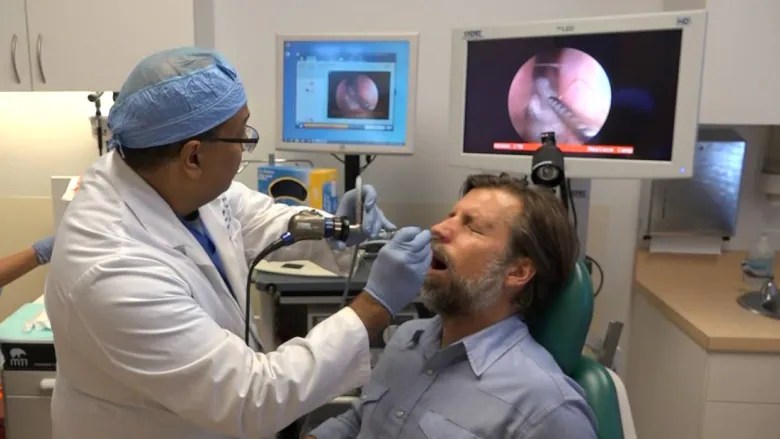
James Nestor having his nasal passages examined

This half of the book was fascinating, and I’ll certainly experiment with some of the techniques. Although he warned that breathing methods will not cure cancer or make an embolism go away, this part of the book still reminded me of books I’ve read where the author claims their diet, exercise, or whatever, will cure all your health problems and turn you into a high-functioning human.

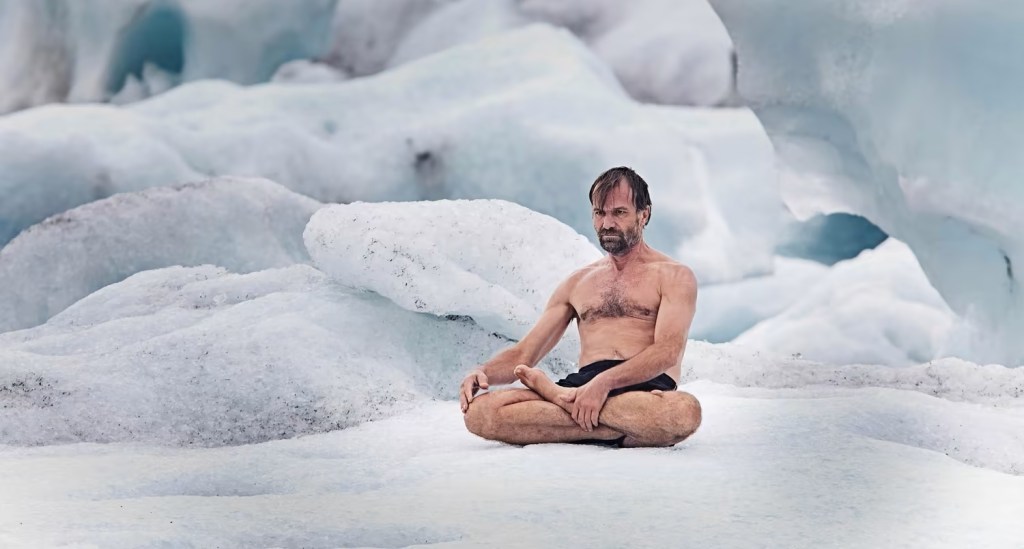
Wim Hof, the Iceman

The second part of the book looked at breathing techniques which are more extreme and claimed to be radically transformative. These include various forms of breathwork which affect the autonomous nervous system and can improve immune system function and the ability to withstand extreme cold. Wim Hof breathwork is a well-known form of this and Nestor spends quite some time reviewing studies of it, and investigating the biological mechanisms involved.  He does practice some Wim Hof breathwork with an instructor, but as far as I could tell, did not actually include cold exposure training.  He much more briefly discusses holotropic breathwork and his discussions with Stan Grof and other holotropic breathwork instructors.  He did one holotropic breathwork session early in his exploration of breathing methods and did not experience much at all. He is dismissive of other participants who had dramatic experiences, noting that their breathing did not appear much more intense than his and that their experience came on very quickly. He largely dismisses the effects of holotropic breathwork as psychosomatic (due to set or setting rather than the breathing technique).

I was disappointed in the inadequacy of his approach to understanding it. My experience is that the results of holotropic and other forms of breathwork is very dependent on your willingness to open to rather than resist the experience (yes, set is important). To a greater extent than in psychedelic drug trips, the holotropic breather is largely in control the intensity of the experience. In my first transformational breathing session, I held back from allowing the bodily energy and emotions full expression due to embarrassment, but later I found that I would very rapidly start to experience powerful emotions and bodily energy in a breathwork session.  Nestor’s description struck me as that of someone who had held back in their first and only holotropic session.

A third type of breathwork covered in the second part of the book involves drastically increasing the concentration of carbon dioxide in the air breathed. Normal outdoor air concentration of CO2 is around 0.04% and carbon dioxide therapy involves breathing a mixture of 15-35% CO2 with normal air. Although blood oxygen levels do not change significantly, the very high concentration of CO2 induces an intense fear of not being able to take another breath and arises from chemoreceptors in the brainstem. It is a much more primitive and uncontrollable biological reaction than fear mediated by the amygdala. I recently met someone who told me he had purchased a cylinder of CO2 and was experimenting with breathing mixtures involving around 7% CO2.  He claimed that this invoked a very intense fear of death which enabled him to break through to deep unconscious fears and address them. At the time I had not read this book and thought he was a nutcase. Nestor claims that this form of conscious breathwork (a much more intense version of breath-holding practice) allows the practitioner to develop much greater chemoreceptor flexibility and tolerance. In effect, it vaccinates the practitioner against excessive stress responses to events in their life. Hmm, its an extremely unpleasant experience, and I think I will pass.

James Nestor breathing high concentration of carbon dioxide

While I was disappointed at Nestor’s lack of interest in exploring holotropic and related forms of transformational breathwork, I did learn a lot and enjoyed reading the book overall. I can see why it was a bestseller in the pandemic period, when no doubt many people were stuck in lockdown with time to experiment. Anyway, I’m heading to the bathroom now to shave off my moustache so I can tape my mouth shut tonight.

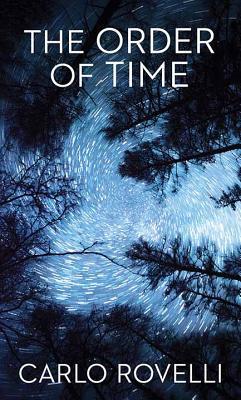
The Order of Time – Carlo Rovelli

When I studied physics at university in the 1970s, I became interested in the nature of time, particularly in light (pun intended) of its role in both special and general relativity.  I also read The Direction of Time by Hans Reichenbach (1891-1953) regarded as the leading empiricist philosopher of the 20th century, as well as other philosophers and writers.  Later, in the 1990s I became a student of Zen Buddhism with Hogen Yamahata, who emphasised that the only reality is what is experienced here-now. This certainly describes my experience of time but is also fundamentally at odds with the usual understanding of the implications of modern physics. 

So I read Carlo Rovelli’s fourth book The Order of Time (2018) with great interest.  Unusually for a physicist he gives an accessible and very readable overview of the main findings of physics but also discusses the human experience of time and tries to integrate our common experience with the insights of modern physics. See here for my previous review of his first book Anaximander.

It’s a short book and is written for a lay audience, written in a very readable and accessible way. Its been criticized by some for not having enough hard science exposition and too much speculative stuff, particularly in the third section. However, I thoroughly enjoyed the mix and wholeheartedly recommend it if you are at all interested in the nature of time.

Rovelli opens with the claim that the nature of time is perhaps the greatest remaining mystery.  I’m inclined to think that consciousness and the fundamental constituents of reality are equally great mysteries, and indeed these may all be interrelated. The introductory chapter identifies a number of key questions about time:

  • Does the universe unfold into the future, as time flows?  Does in fact time “flow”?
  • Does the past, present and future all exist in the block universe of relativity, with our consciousness or perhaps the “present moment” moving through the blocks?
  • Why do we remember the past and not the future? Put another way, why does time flow only in one direction, when the fundamental equations of physics have no preferred time direction?
  • Is time a fundamental property of the universe in which events play out, or is time an emergent property, perhaps emerging only at a certain scale or degree of complexity?

The rest of the book is divided into three parts. In the first part, Rovelli summarizes the understanding of time in modern physics, and how this is radically at odds with our normal perceptions of time. Special and general relativity have conclusively shown that there is not a single universal time. Time passes at different rates at different places (faster where gravity is lower) and at for observers travelling at different speeds (slower when velocity is greater).  Additionally, there is no longer a single universal “now”. Between the past and the present there is an expanded “now” in which different observers will see events occurring with different time differences and possibly in a different order. The direction of time, the difference between past and future, does not exist in the elementary equations of the world and appears only in the second law of thermodynamics (entropy of a closed system can only increase or stay the same).

The second part, The World Without Time, delves into the fundamental nature of reality, drawing on Rovelli’s own field of research, loop quantum gravity in a shorter section. He argues that the fundamental constituents of reality are events (interactions) not things, and that space and time are emergent properties from these interactions. This is controversial, quantum loop gravity is but one of a number of contenders for the ’Theory of Everything’. There are physicists such as Lee Smolin (The Singular Universe and the Reality of Time) who have argued the opposite: that time is indeed a fundamental property of the universe. And more, like Sean Carrol, who conclude that neither he nor anyone else has a clue whether time is fundamental or emergent.

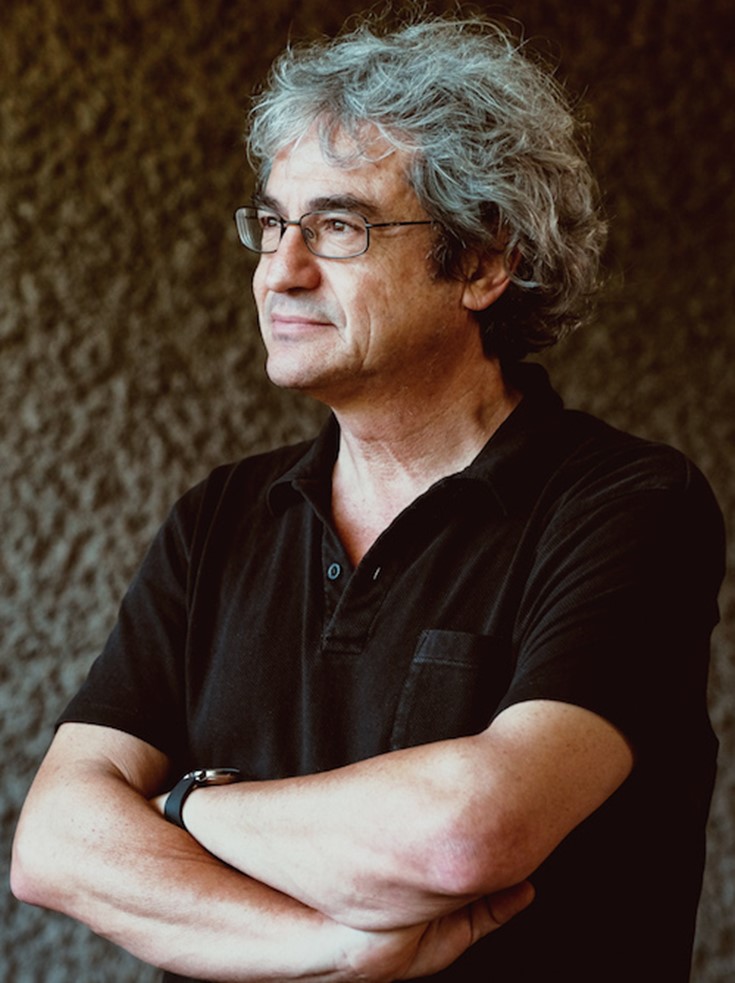
Carlo Rovelli

The third and final part attempts identify the sources of time and to understand how the non-universal time of relativity and the non-time of fundamental physics are consistent with our experience of time: “Somehow our time must emerge around us, at least for us and at our scale.” This to me was the most interesting and inspiring part of the book, though there are many reviewers on Amazon and Goodreads who really did not like it. Rovelli is up-front about the speculative nature of his “possible” answer. He is not sure it is the right answer, but it’s the one that he finds the most compelling and he doesn’t think there any better ones.

As have many before him, Rovelli locates the arrow of time in the second law of thermodynamics, that entropy can never decrease. Entropy is a macroscopic property of systems and essentially associated with the number of microscopic configurations that are consistent with the “blurred” macroscopic view. Rovelli repeatedly uses the idea of “blurring” to explain the emergence of time at the macroscopic level. You have to read him to (possibly) understand it. He also identifies another potential source of temporal ordering in the quantum uncertainty principle; that the values of variables such as speed and position depend on the ordering of their measurement. He then states that Alain Connes has shown that the emergent thermal time and quantum time are aspects of the same phenomenon. Time emerges from our ignorance of the microscopic details of the world.

Although I studied statistical mechanics, I never understood until reading Rovelli that entropy was a relative quantity, determined not only by the state of a system but also by the set of macroscopic variable with which it is observed. Rovelli addresses the issue of why the universe started in a low entropy state (allowing the emergence of time) by suggesting that the universe has pockets of high and low entropy by chance, and necessarily it is only in the regions with low entropy that time can emerge so that life is possible, together with evolution, thought and memories of past times. He is arguing an astonishing variant of the weak anthropic principle, namely, that the flow of time is not a characteristic of the universe as a whole but necessarily associated with local region(s) in which entropy is initially low. This suggested to me that perhaps there might be sentient life forms evolve in local regions of the universe which are not in initial low entropy state according to the macro-variables by which we and other earthly life interact with reality, but may be low entropy for life forms which interact via a different set of macro-variables.

Rovelli goes on to speculate that the emergence of time may have more to do with us than with the cosmos per se. Is this dangerously close to putting humans back at the centre of the universe? He then discusses how causality also is a result of the fact that entropy increases. This is what allows past events to leave traces in the present, and that we remember the past but not the future. Evolution has designed our brains to use the traces to predict the future. Causality, memory, history all emerge from the fact that our universe was in a particular state of low entropy in the past. That particularity is relative, dependent on the set of macroscopic variables with which we interact with the world.

And in the final chapters of the book, Rovelli turns to us, and the role we play with respect to time. This for me was the most fascinating and inspiring part of the book. Rovelli argues that humans (and the rest of the biosphere) have been hard-wired by evolution to accept and use the concept of time. The changing interactions are real, but the time in which all this seems to occur is a manifestation of the human (and probably animal) mind, which has evolved to make use of the memory traces of the past to predict the future. The movement is real, the changing is real, but the time in which all of this seems to occur is nothing more than a manifestation of human (possibly animal) mind and the illusion, in turn, is supported by the entropy generated in the functioning of our brains.

From his discussion of the three sources of time, he draws a number of conclusions about the implications for us:

  • The self is not an enduring entity, but an emergent construct of the brain and memory, time is the source of our sense of identity.
  • Reality is made up of processes or interactions not things. Things are impermanent.
  • Being is suffering because we are in time, impermanent. “What causes us to suffer is not in the past or the future: it is here, now, in our memory, in our expectations. We long for timelessness, we endure the passing of time: we suffer time. Time is suffering.”

Rovelli explicitly notes how these are also some of the key insights of Buddhism: suffering, no-self, emptiness and impermanence. Rovelli here is NOT doing what people like Fritjof Capra and many new age gurus do: to use the strangeness of reality at quantum level as a justification for believing in macroscopic-level things like telepathy or clairvoyance.  Rather, he is arguing that his understanding of time is consistent with what I consider some of the most important insights of Buddhism. I have also realized that the lack of a universal present moment is not inconsistent with the Zen insight that only the present exists. My teacher Hogen-san has always used the phrase “here- now” to describe our only reality, not just “now”. So there is no conflict with the time of relativity.

While Rovelli addresses my key questions about the nature of time, I am not convinced of all his arguments and explanations, or even that I fully understand them. But it is an immensely thought-provoking read, and I will read it again and hopefully my brain will hold off hurting long enough for me to clarify my own thoughts and speculations on the nature of time.  In the meantime, I have been paying attention to the present moment as much as I can during my daily zazen, trying to simply experience here-now without thoughts about the past or speculations about the future.

Competing at the SDFPF Powerlifting Championship 2021

Last weekend, I competed at the Swiss Drug Free Powerlifting Championship 2021, held in Basel on 25 September. This was my first national powerlifting competition since competing in the last SDFPF Championship in February 2019. The 2020 Championship was cancelled due to the Covid-19 pandemic.

During the pandemic I managed to lose around 10 kg bodyweight and competed this year in the 82.5 – 90 kg category at a body weight of 87.3 kg, almost 10 kg lighter than my weight of 96.5 kg in 2019. Despite my efforts to improve my squat and ensure that I squatted below parallel, I discovered by filming my squats in the week leading up to competition that I was only getting clearly below parallel around 50% of the time.

I opened my squat attempts conservatively at 90 kg, and succeeded in getting a below-parallel valid lift. However, I was disappointed to fail the next two attempts at 100 kg with inadequate depth.

For the other two lifts, I exceeded my anticipated results with a 100 kg bench press and 190 kg deadlift. These were both new Swiss records for the under 90 kg Master M6 age category (65-69 years), as was my powerlifting total of 380 kg. Below are short videos of the deadlift and bench press.

Continue reading

The trap bar deadlift

The conventional deadlift is done using a standard 20 kg barbell in powerlifting. Trap bars have a hexagonal shape which you stand in (which is why they’re sometimes called “hex bars”) with sleeves on the end that let you load weight, and they have handles on either side that allow you to grip the bar with a neutral grip.

During my 8-week wave cycling program for the squat, I had also been using the trap bar to do some deadlifting once a week during the last half of the program. Prior to that, I was doing Romanian deadlifts at about 60% of my conventional deadlift 1 rep max to work on improving hamstring strength. After I tested my squat 1-rep max, I also decided to see whether I could lift more than my current 1 rep max of 210 kg. The video below shows me setting a new personal best at 220 kg, and I felt I still had a little more in the tank.

Continue reading

Definitions of God and the Motte-and-Bailey fallacy

Recently, I got involved in an online discussion about whether spirituality was compatible with atheism (see previous post Atheism and Spirituality) and foolishly did not clarify what the term “god” referred to. But it was clear from the general context that those arguing atheism was incompatible with spirituality were assuming spirituality required belief in God and were using a concept of God (singular) largely consistent with the standard Christian God who is conceived of as an eternal being who created the universe and life, and who is both transcendent (wholly independent of the material universe) and involved in the world.

Continue reading

Improving my squat using wave cycling

After a week skiing in February 2015, my knees became inflamed and painful and I had trouble walking up and down stairs. I found that deadlifts improved my knee function and started powerlifting training for deadlifts and bench press. For the first months, I avoided the squat completely, and only gradually started to squat with relatively light weights around 50-60 kg. In the last couple of years, I’ve discovered that my knees are fine with squatting with good technique to parallel or below. I still have trouble getting below parallel with heavy weight on the back but am working on improving mobility. In my last pre-pandemic competition in December 2019, I squatted 107.5 kg with depth that was only just below parallel and one of the judges told me afterwards he thought they had been lenient in judging depth. This was substantially behind my deadlift at 190 kg. Most powerlifters have squat somewhat less than they can powerlift, but the difference is on average only around 20% and is narrower at 15% at the elite level (see here for averages based on over 7 million lifts).

So I decided to focus over the last 8 weeks on improving my squat, to do only a minimal amount of deadlifting, and no bench press (instead to rehabilitate an AC joint injury). I had been reading Pavel Tsatsouline’s book Beyond Bodybuilding: Muscle and Strength Training Secrets for The Renaissance Man and decided to do the 8 week wave cycling program that he describes on page 80 of the Kindle edition.  Here is how it worked for my squat:

Continue reading

Atheism and Spirituality

Late last year I volunteered to participate in a research study on psilocybin-occasioned mystical experiences.  I completed an online survey and later was interviewed by the principal researcher in a more than hour long semi-structured zoom interview. In the survey, I had answered a question on religious affiliation with “Atheist”. During the interview, the interviewer expressed surprise that I practiced Zen meditation as she equated atheism with a materialist philosophy.  I in turn was surprised at her assuming that a spiritual practice implied a belief in God or gods, particularly as my practice was to a large extent within a Zen Buddhist context, which does not treat the historical Buddha as a god or invoke concepts of gods.

I refined my thoughts on this topic in several online discussions, where I found both religious believers and some other atheists were very hostile to the idea that an atheist could have a spiritual practice. And I noticed that some of the atheists who did say they were spiritual, defined “spiritual” in terms of experiences like the enjoyment of a sunset or a moving piece of music, or the feeling of being part of nature.  

Continue reading