Boodie and theosophy in Australia

My great-aunt Boodie (Florence Teasdale Smith) was born around 1892 in Melbourne and was descended from Irish quakers and an Indian Maharajah (see ancestral-tales-a-theosophist-a-thief-and-an-indian-princess).

Boodie and her mother were theosophists, and Boodie was a vegetarian who never ate meat. She was involved in funding the construction of an amphitheatre at Balmoral to watch for the coming of Krishnamurti. Another family recollection was that “her money bought a house in Balmoral for the theosophists”. This note gives a brief overview of theosophy in Australia and sheds some light on the “house” and amphitheatre in Mosman.

OLYMPUS DIGITAL CAMERA

Florence Teasdale Smith (Boodie)

Continue reading

Brainwave entrainment

The basic idea of brainwave entrainment is to use an external periodic stimulus to cause wave1brainwave frequencies to fall into step with it at a frequency corresponding to the intended brain-state (for example, to induce sleep or meditative states). There is good evidence that the human brain has a tendency to change its dominant EEG frequency towards the frequency of a dominant external stimulus. Such a stimulus may be aural, as in the case of binaural or monaural beats and isochronic tones,or light (visual), or a combination of the two with a mind machine.

Continue reading

Priceless advice

The next time you lose heart and you can’t bear to experience what you’re feeling, you might recall this instruction: change the way you see it and lean in. Instead of blaming our discomfort on outer circumstances or on our own weakness, we can choose to stay present and awake to our experience, not rejecting it, not grasping it, not buying the stories that we relentlessly tell ourselves. This is priceless advice that addresses the true cause of suffering—yours, mine, and that of all living beings.

Taking the Leap by Pema Chödrön, page 55

This is how things are; what is to be done about them?

It is not profitable to spend time on such questions as whether there was ever a beginning to the succession of universes that have been arising and reaching their end for innumerable aeons, or why sentient beings must revolve endlessly from life to life in this sad realm of samsara. What is needed is to direct one’s attention to the present, thinking: “This is how things are; what is to be done about them?

Bodhisattva of Compassion: The Mystical Tradition of Kuan Yin by John Blofeld, page 88

Zen practice in Japan

My main Zen teacher in the 1990s was Hogen Yamahata, known as Hogen-san to his students, who travelled regularly from Japan to conduct sesshin, and in the late 1990s started to spend more of his time in Australia. I was planning a visit to Japan in 1995 and hoped to visit Hogen-san at his temple, Chogen-ji, near Mt Fuji. Apart from the fact that I found out he was actually visiting Australia at the time I planned to go to Japan, his long-term student Peter Thompson advised me that Hogen-san’s temple was only a small family temple with one or two students at most. and that it would be better for me to visit Bukkokuji, where Hogen-san had trained with his main teacher, Harada Tangen Roshisama. So in 1995, I went to Bukkokuji and spent a week training with Roshisama.

00779_n_10af2g2zzb0779

The entrance to Bukkokuji, a Zen monastery in Obama, Japan.

Continue reading

The night the universe sang to me

I had tried kava some years ago when I was in Fiji at a holiday resort. There was a bowl of what looked like (and tasted like) muddy tea. I had a cup of it, and did not notice anything much. So when Irene told me that the Vanuatu kava was much stronger, and the locals said that the kava in Fiji was more like dishwater, I decided I should try the local stuff while I was on Tanna. Continue reading

Zen practice in Australia

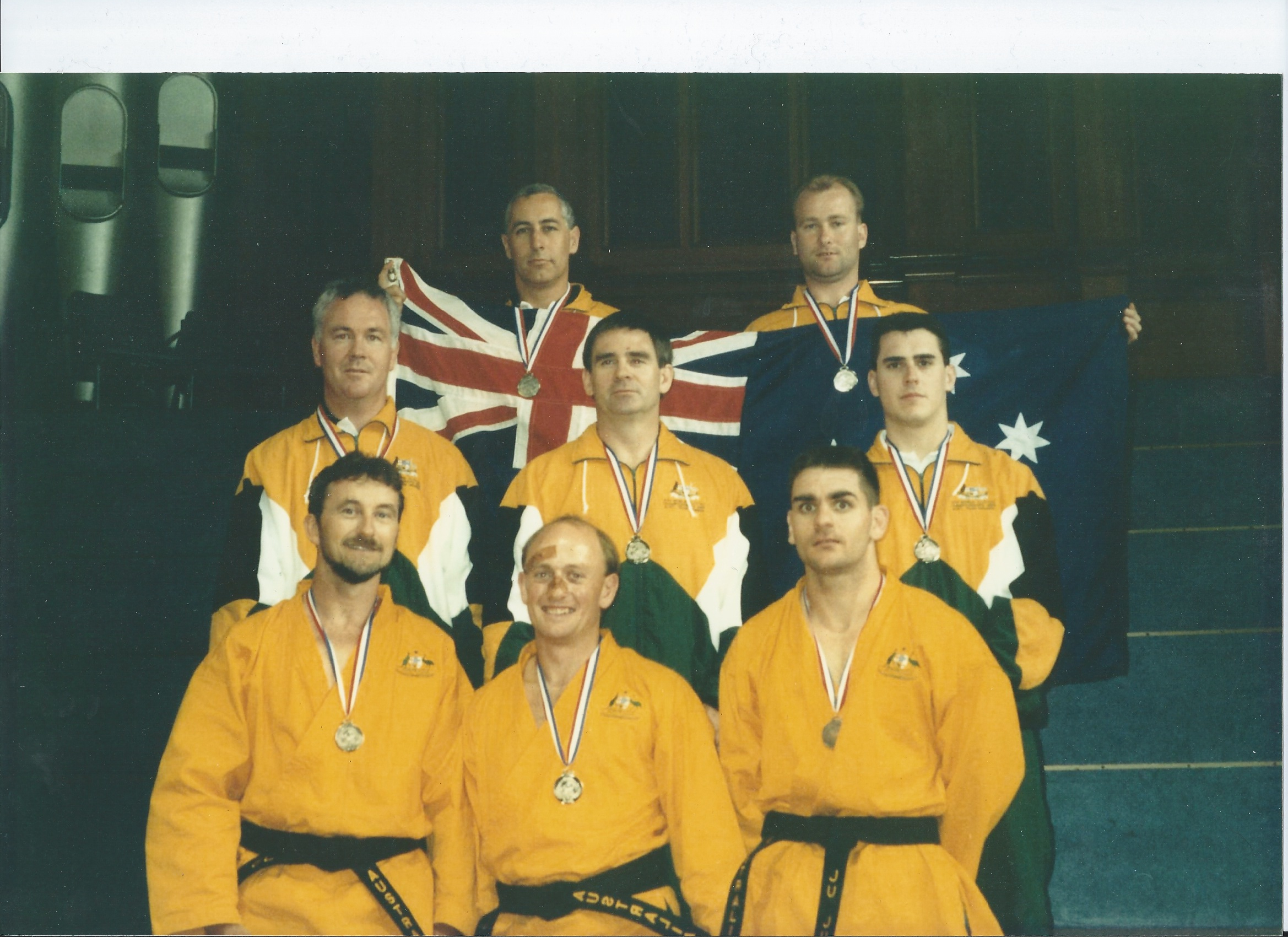
I started practicing Zen with the Canberra Zen Group in 1992 following my separation from my first wife. I had become interested in Zen practice as part of my jujutsu training at black belt level. My jujutsu teacher had been exploring some of the inner (mind, spirit) aspects of budo with his yudansha students, and from around 1989 I had started to sit zazen fairly regularly at home.

The Canberra Zen Group met for zazen several times a week at a Vietnamese Buddhist temple in the north of Canberra, and were also affiliated with the Sydney Zen Group who have a zendo in Annandale, where I used to live, and also have a retreat centre at Gorricks Run, a remote valley in the Northern Blue Mountains.

In 1993 I attended my first sesshin (7 day silent retreat) at Gorricks Run where the teacher was John Tarrant Roshi, the first Australian to be authorized to teach Zen. Tarrant Roshi had been a long-time student of Robert Aitken Roshi, one of the most influential figures in the transmission of Zen to the West.

Continue reading