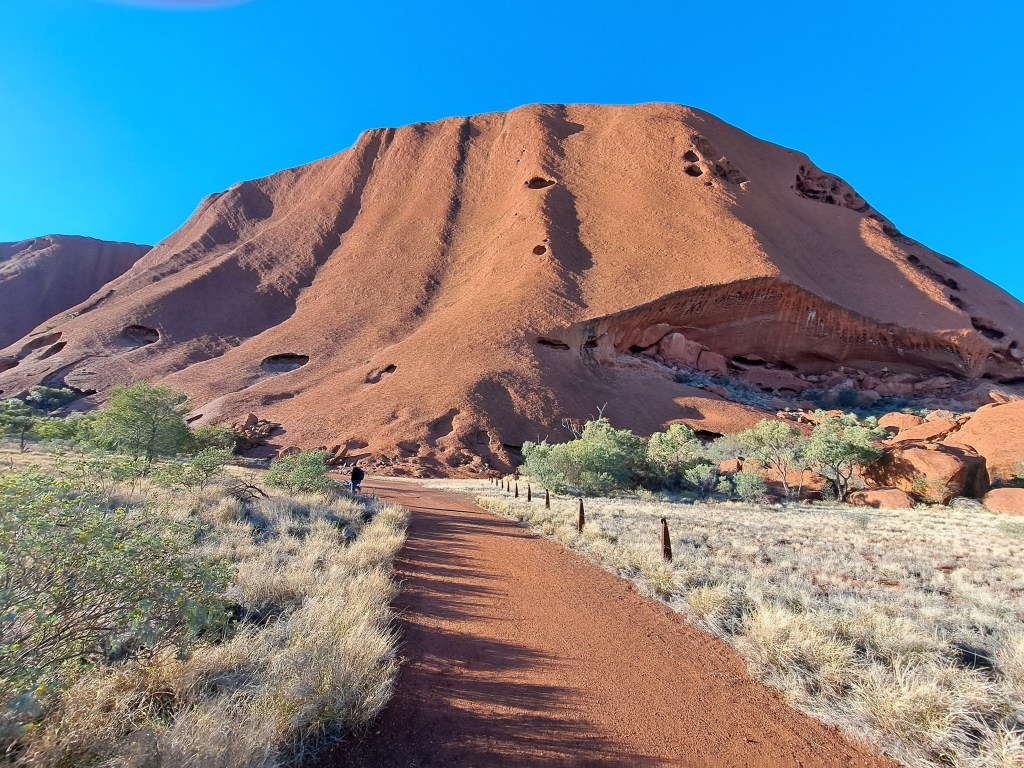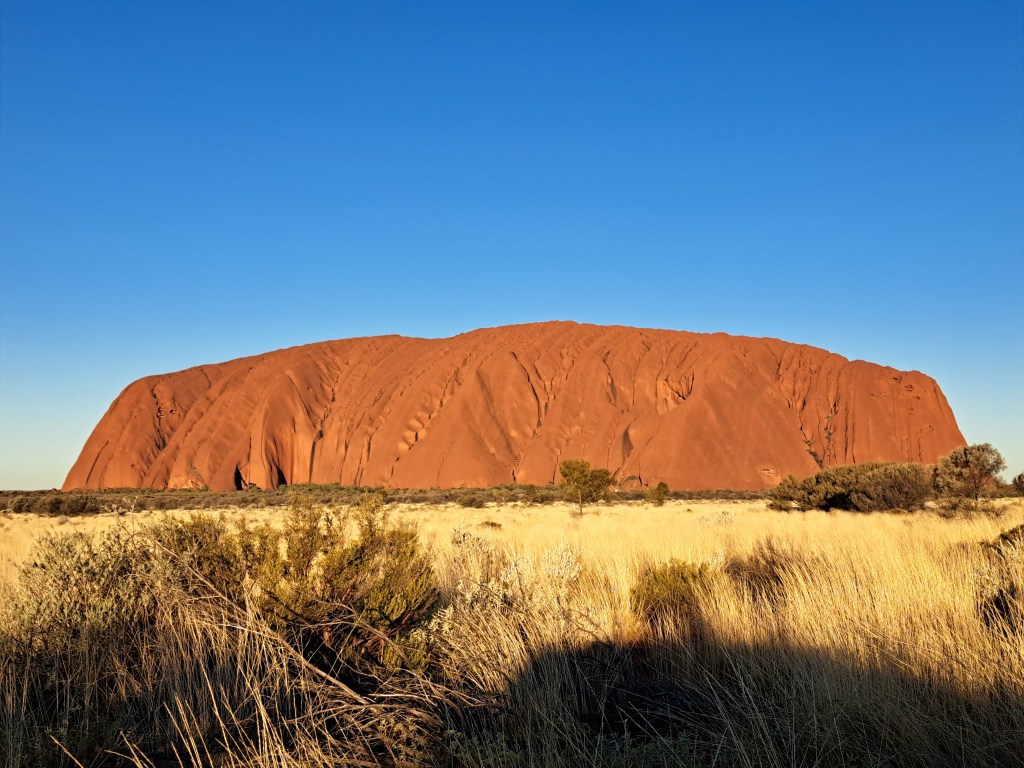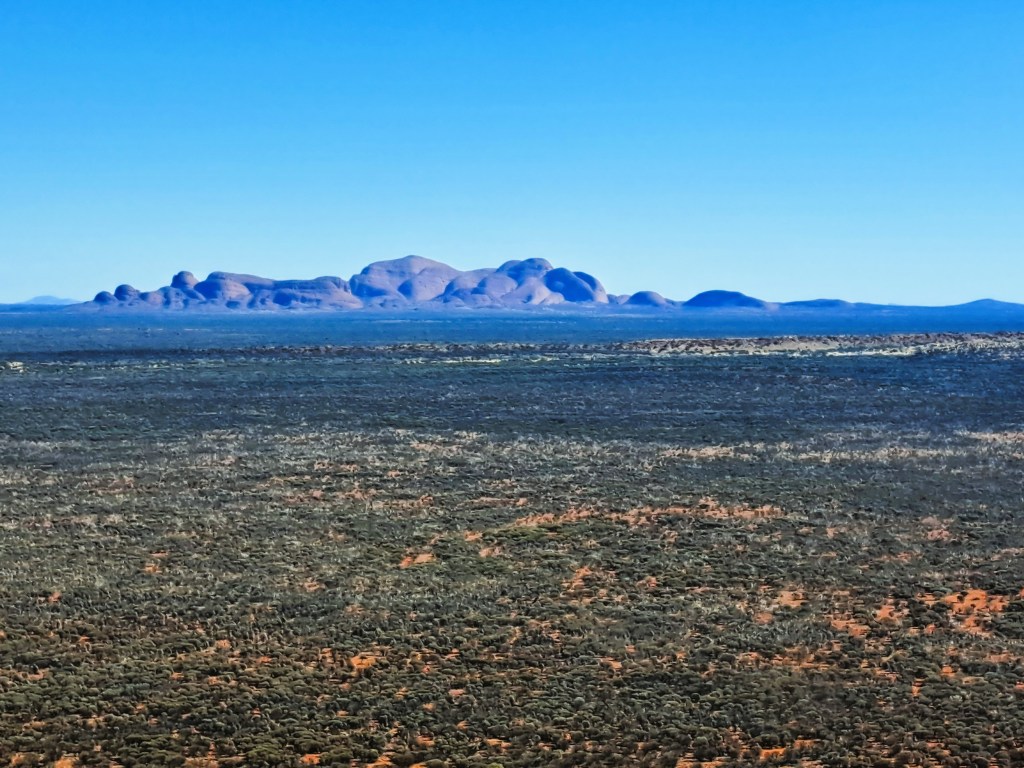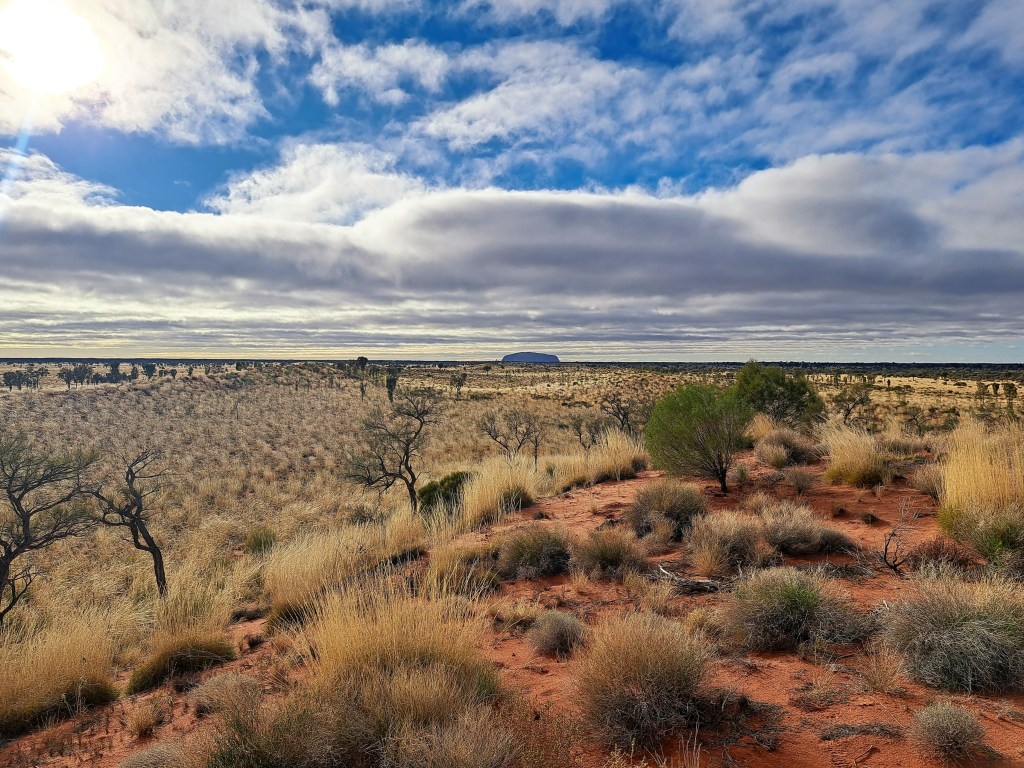
A visit to the West McDonnell Ranges of Central Australia

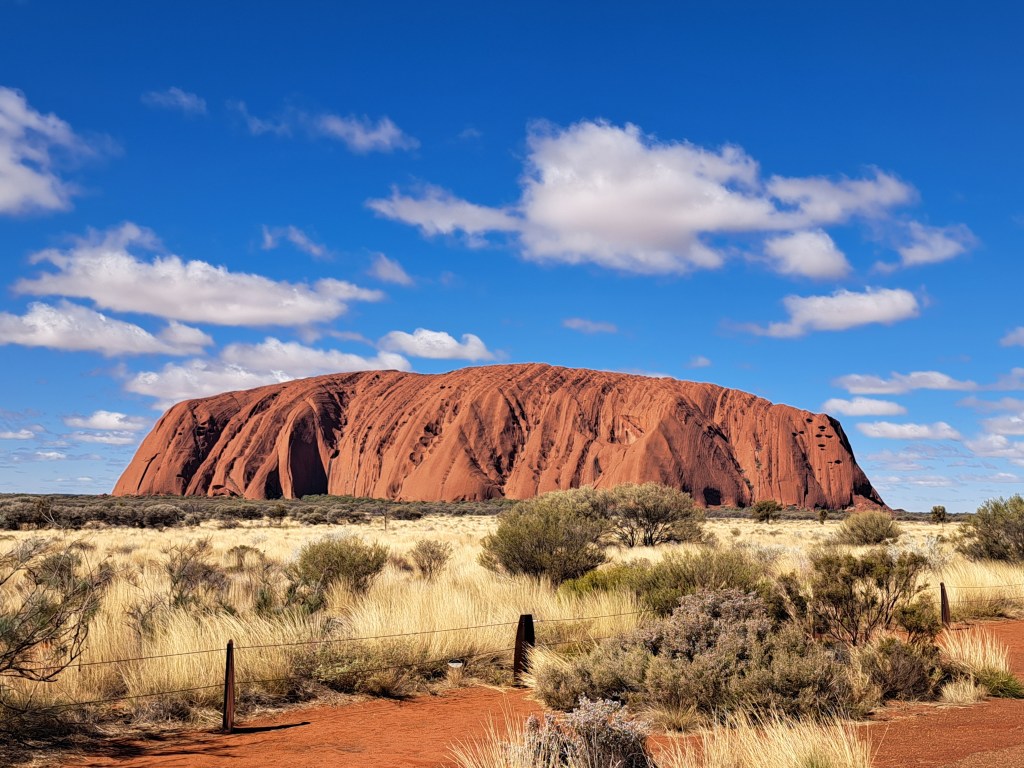
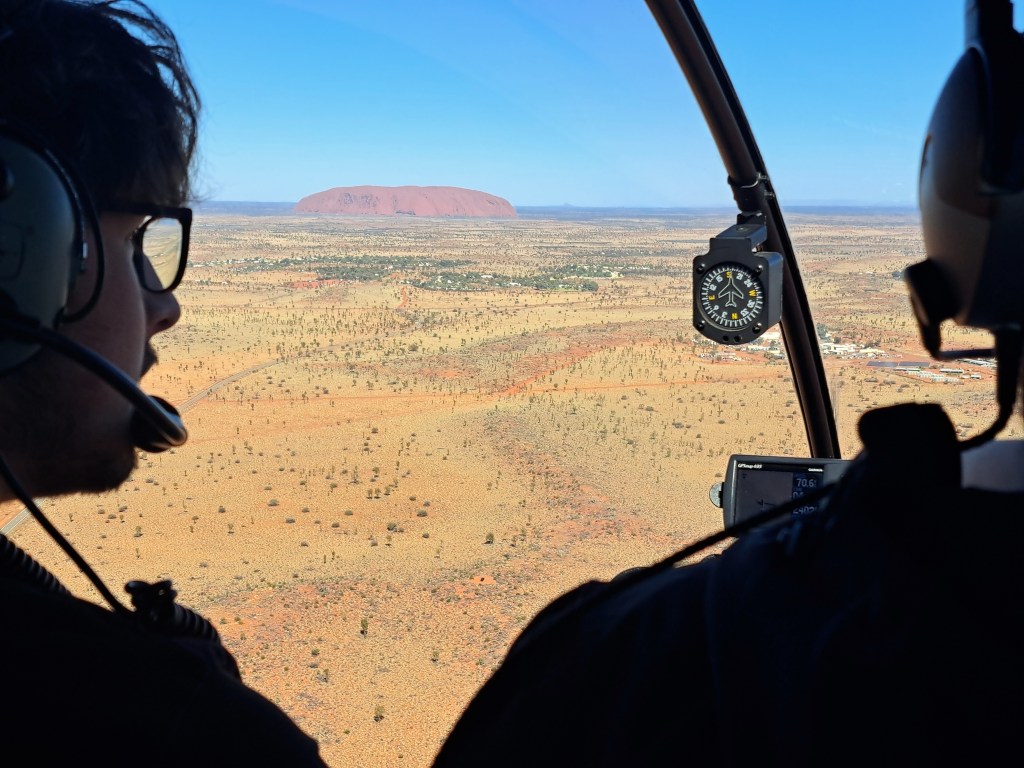
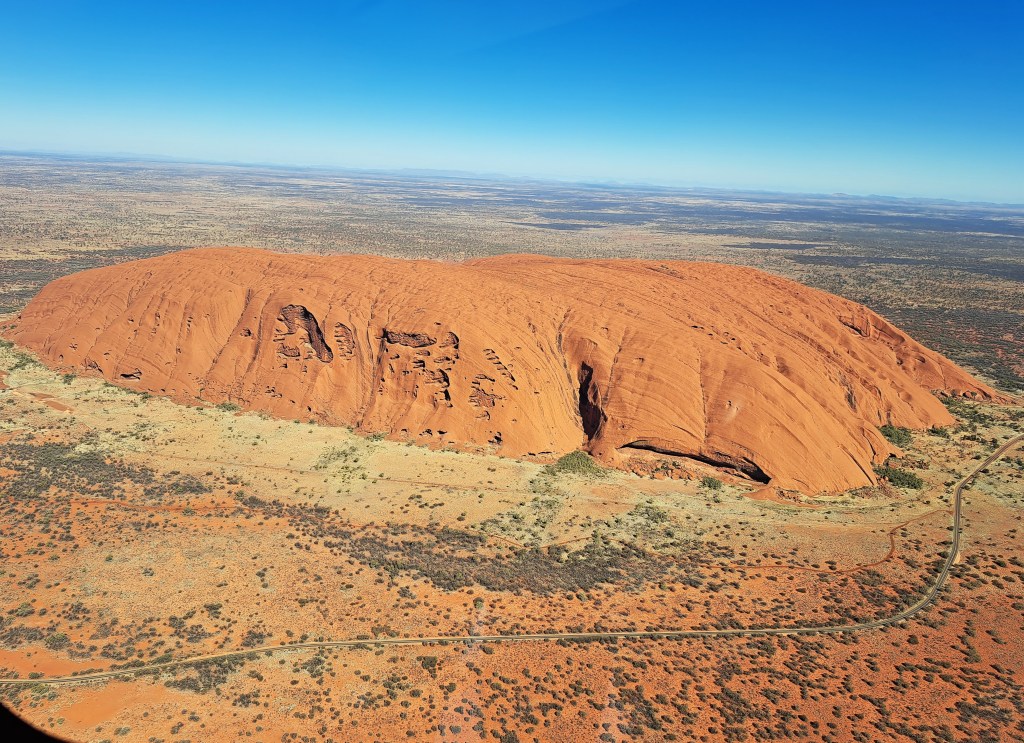
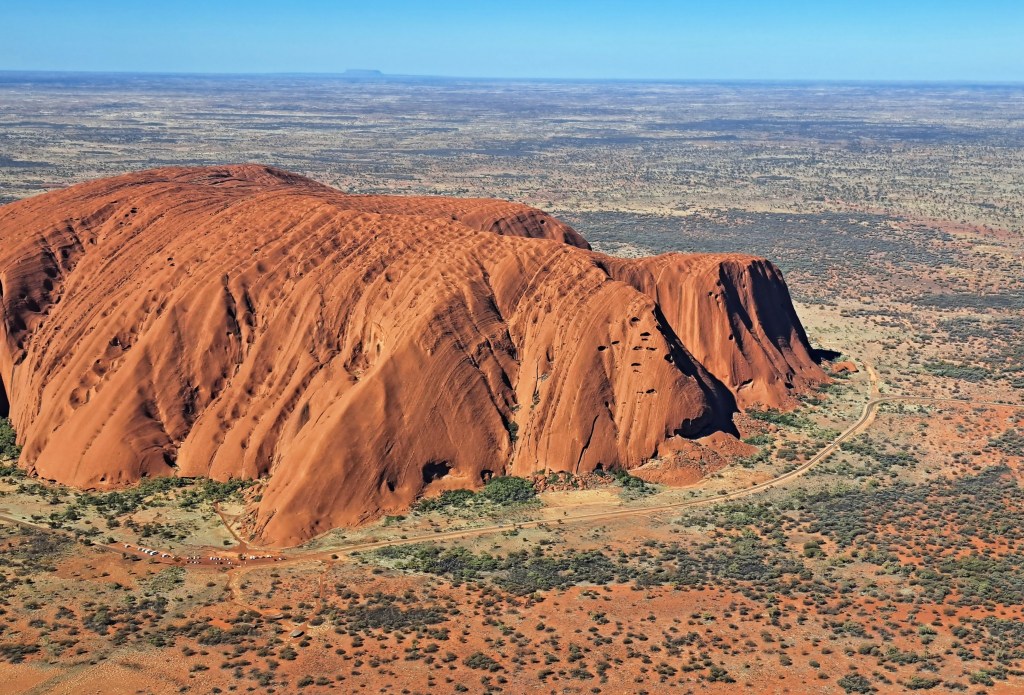
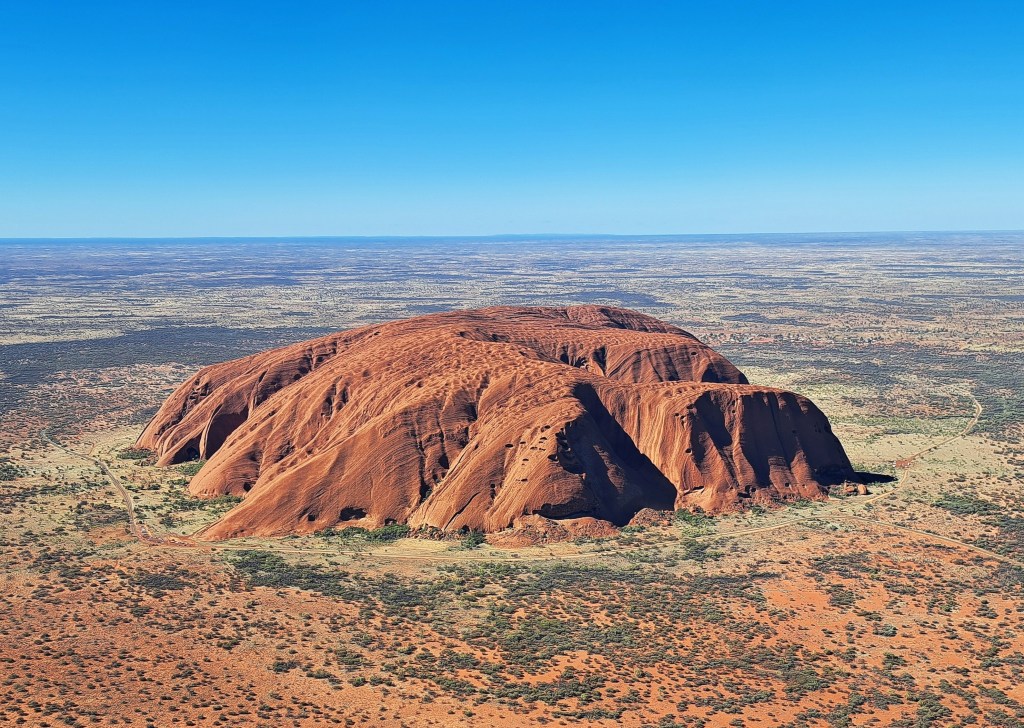
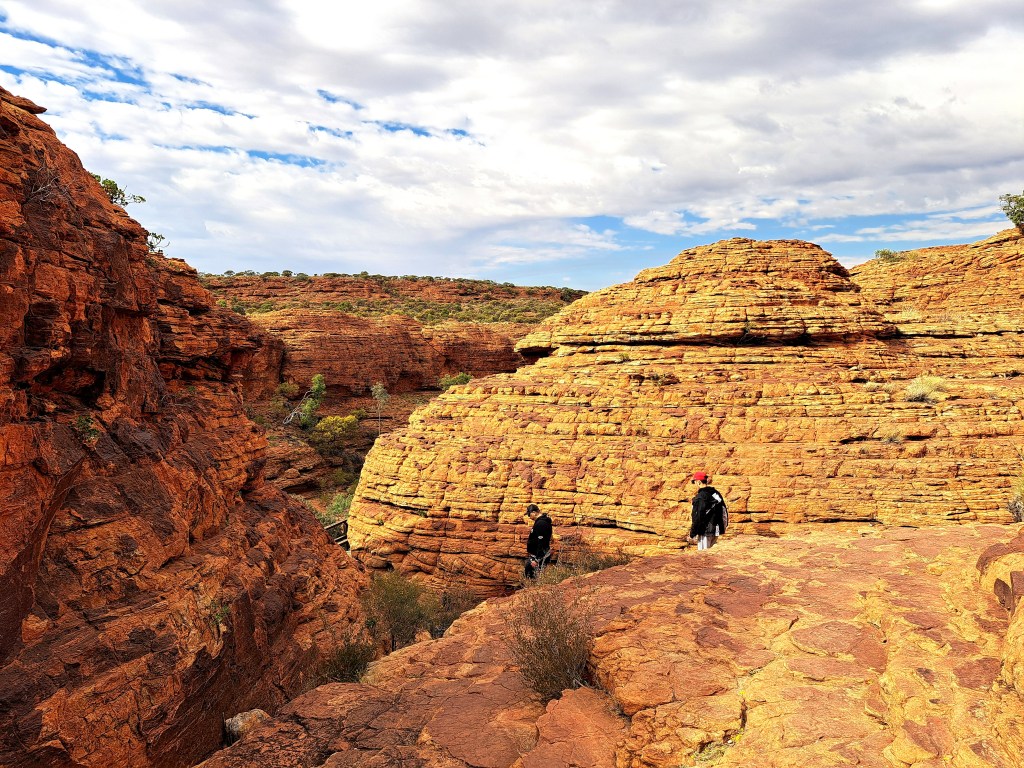
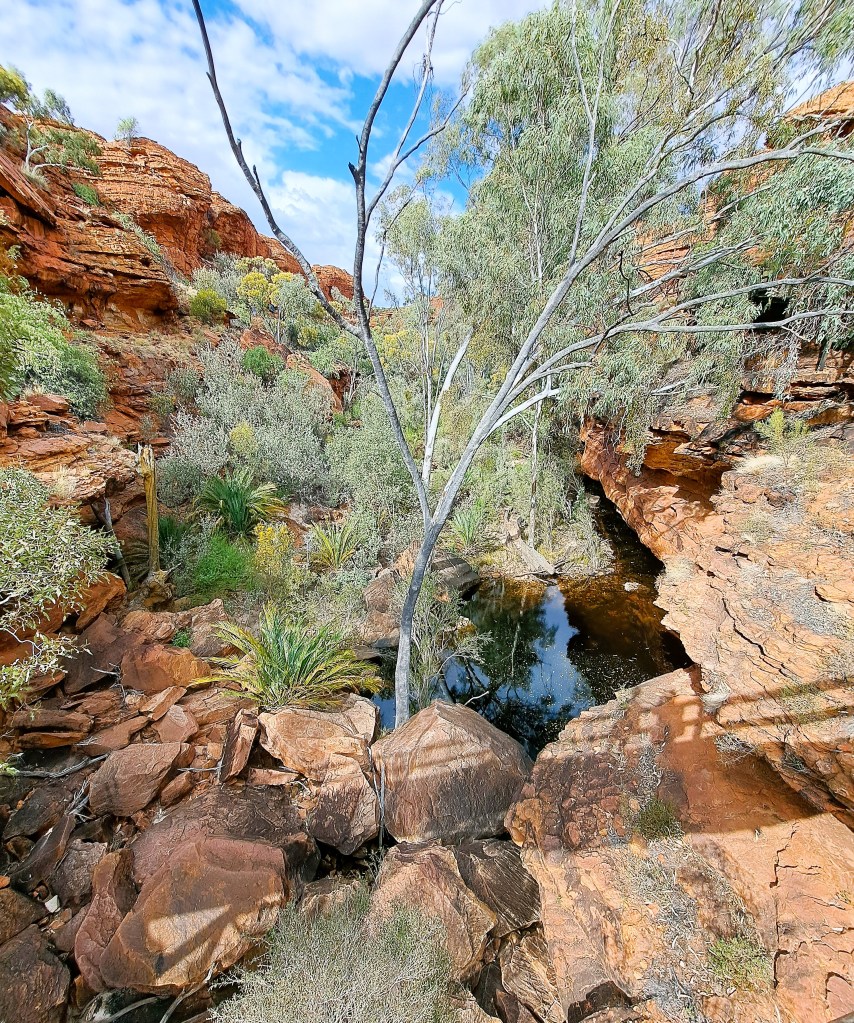
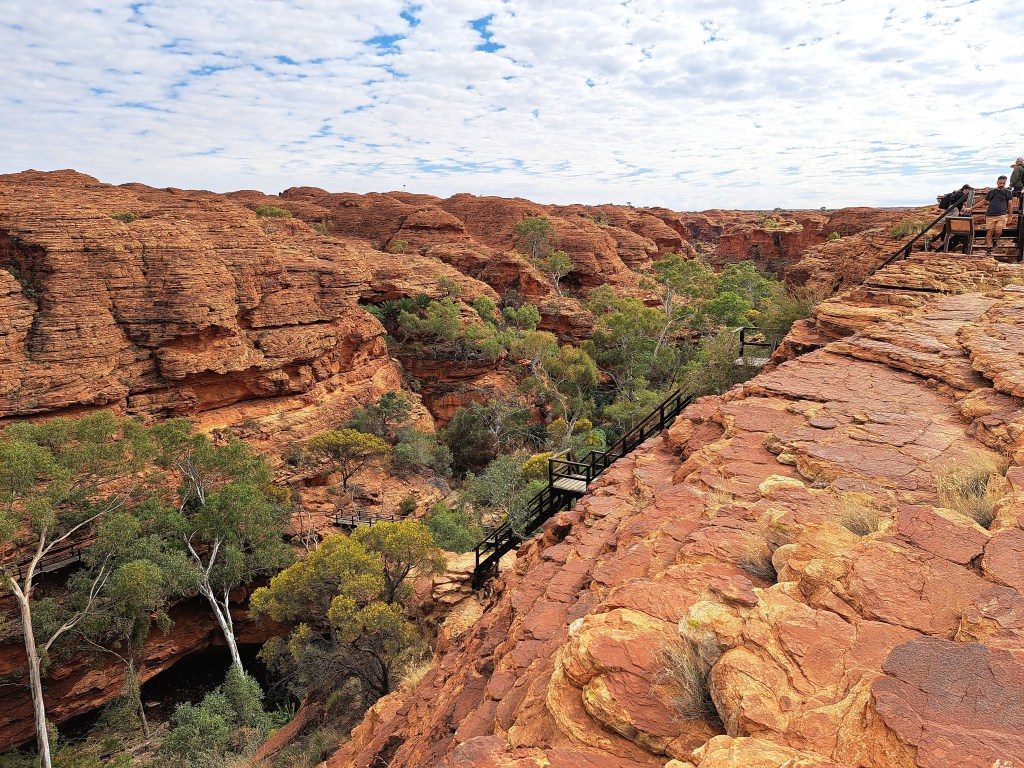
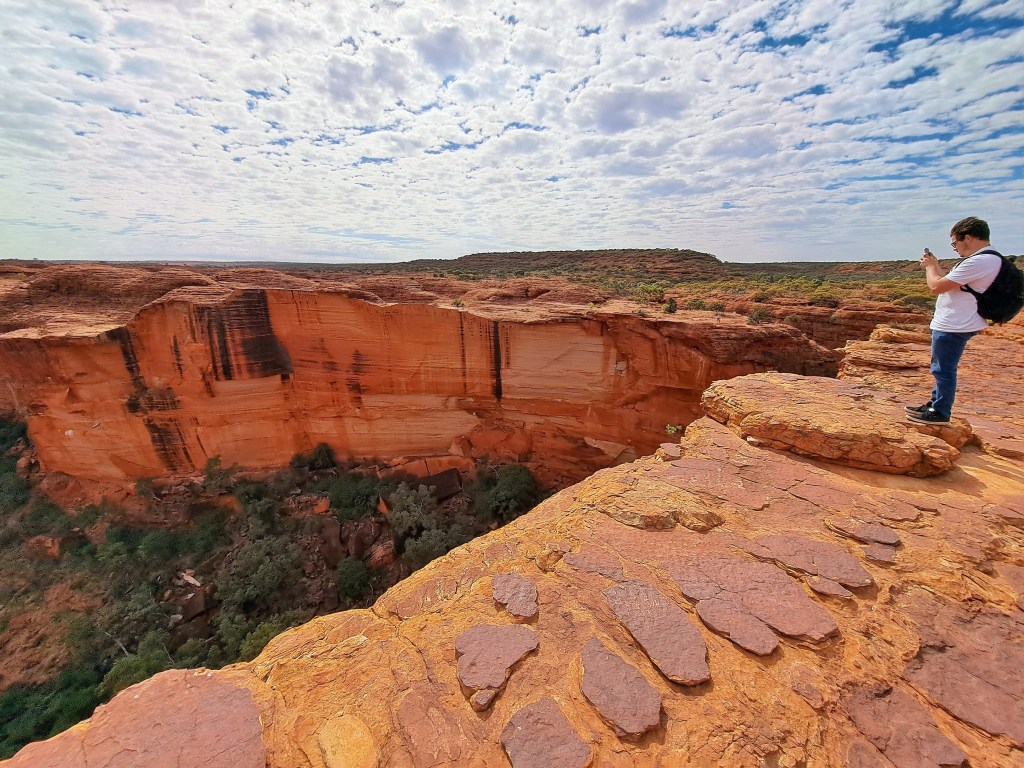
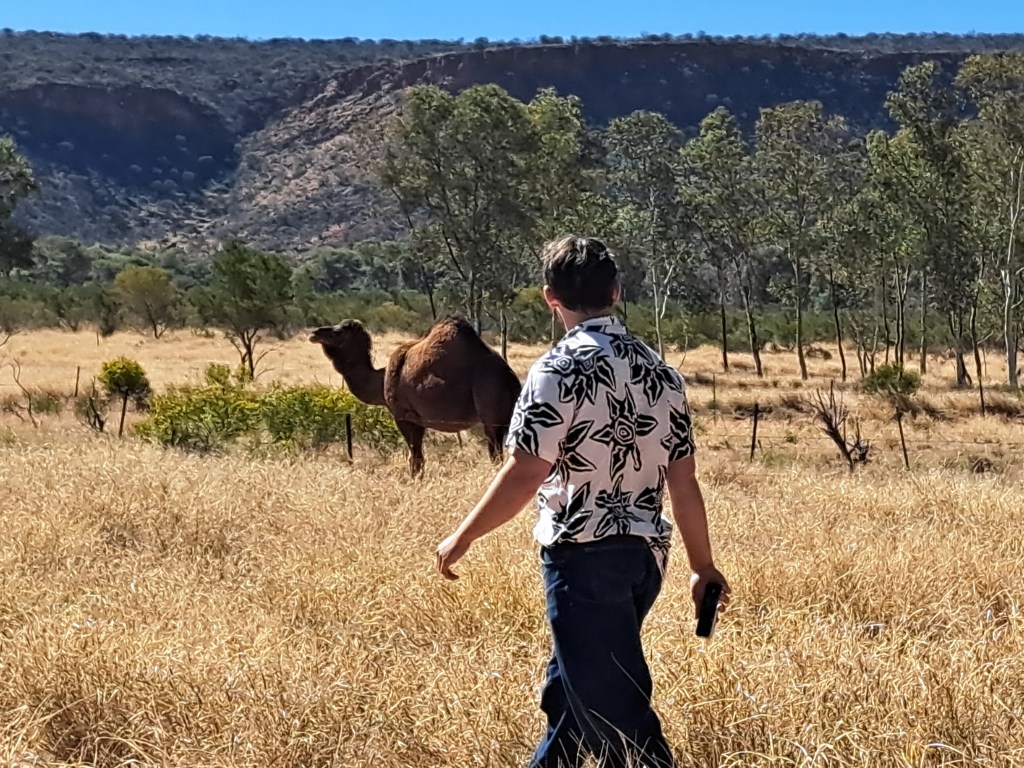
My younger son Felix and I visited relatives in Australia in July last year. In the last week of our trip, I took Felix to the “red centre” of Australia to explore some of the spectacular desert and mountain scenery. I have visited central Australia a number of times when I was younger, with trips to Alice Springs and Uluru (Ayers Rock), Katherine Gorge and the Arnhem Land Escarpment. Felix is an Australian by descent, but had never visited the centre before.

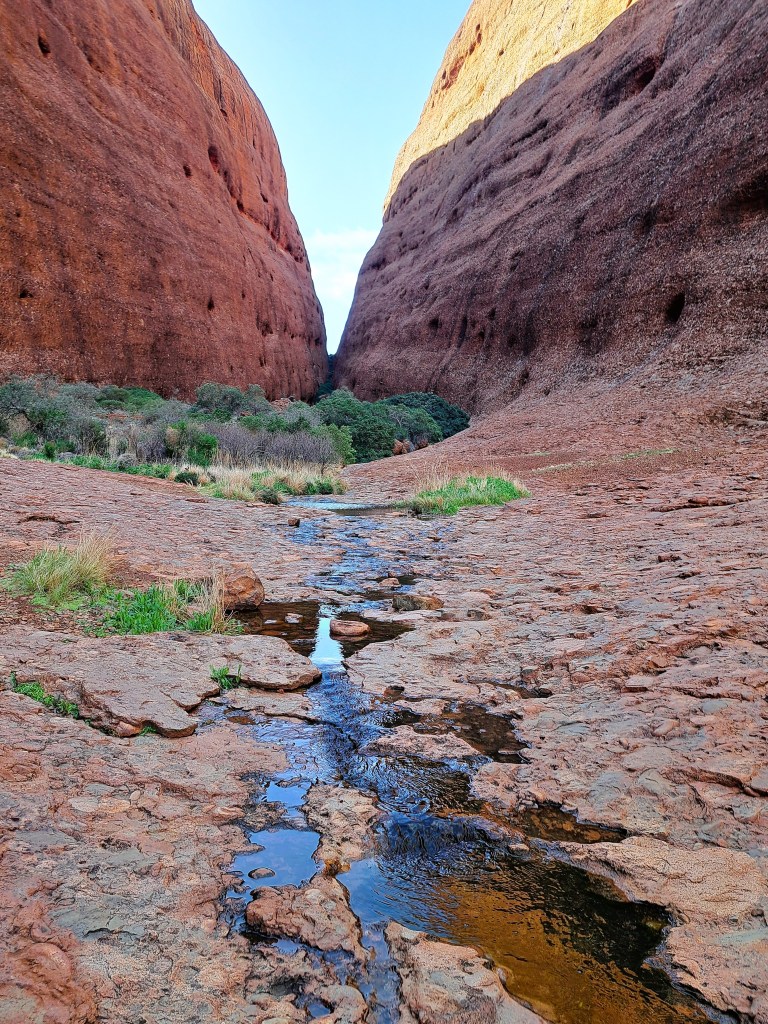
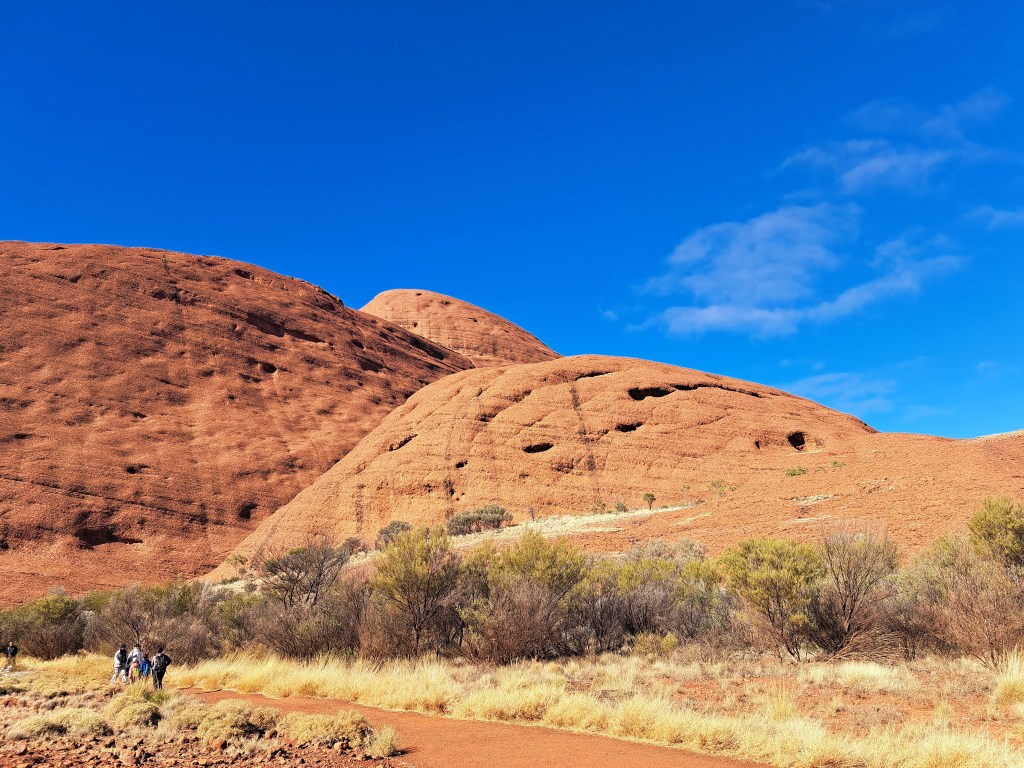
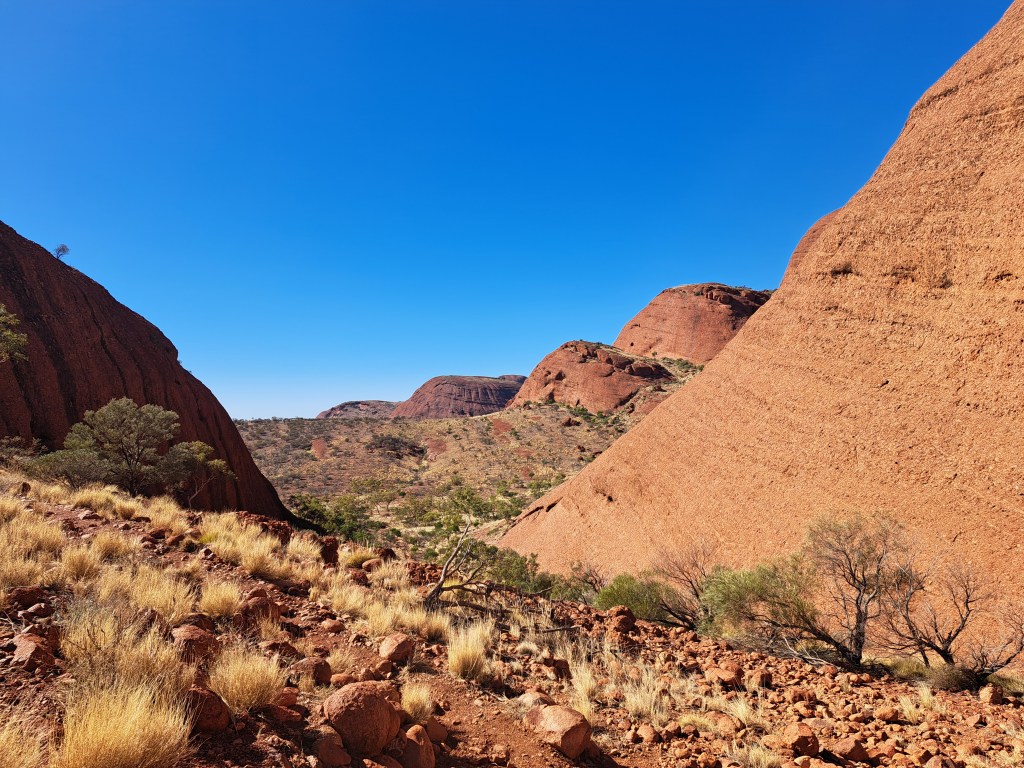
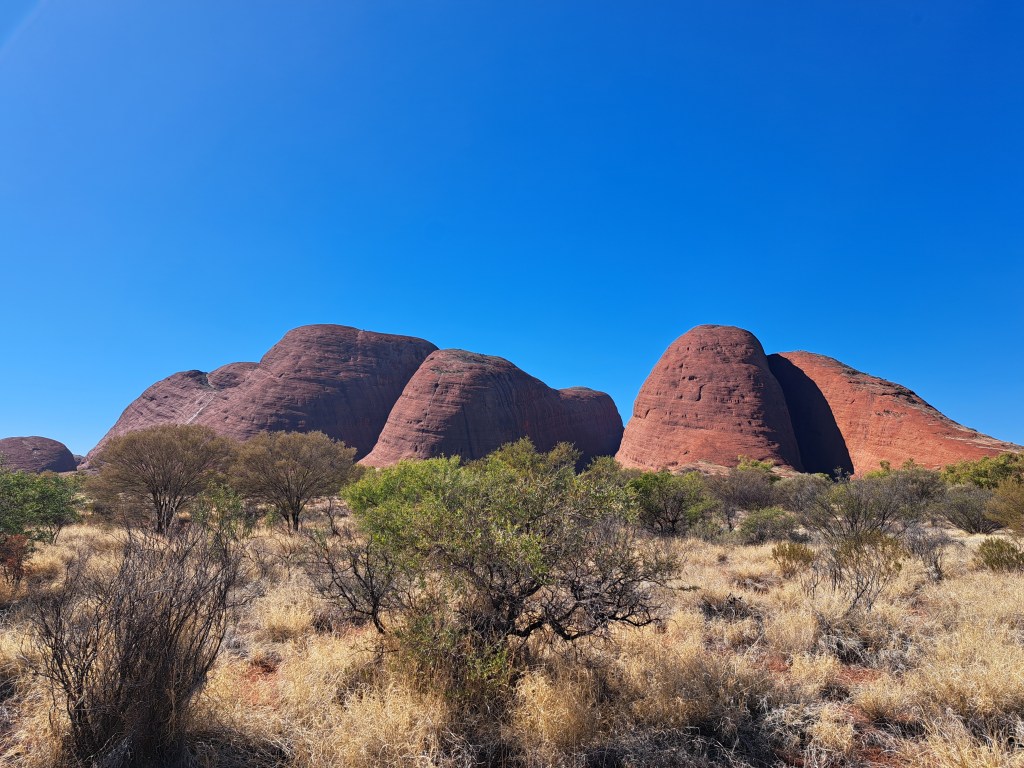
We flew from Brisbane to Alice Springs to spend ten days in the Northern Territory. We hired a four-wheel drive car for a week, and spent our first day exploring Alice Springs. We then spent a day in the West MacDonnell Ranges, driving 140 km west of Alice Springs and visiting some of the many spectacular gaps and gorges as well as areas of Aboriginal significance.

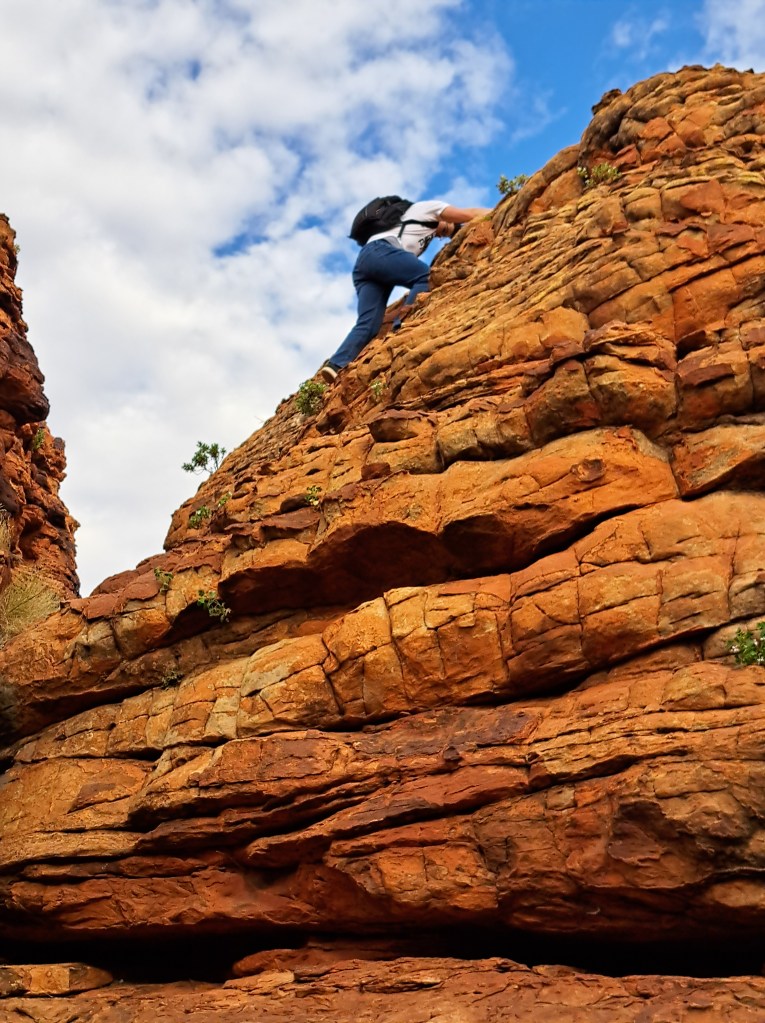
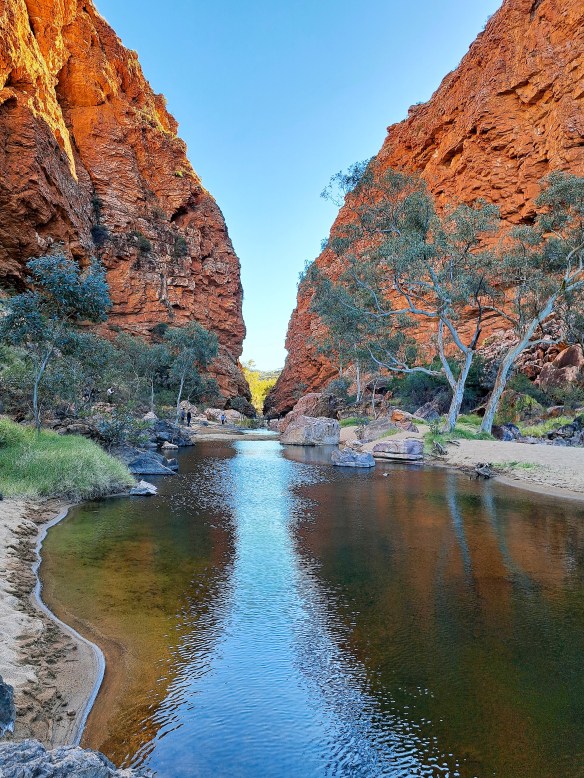
Simpson’s Gap, 24km from Alice Springs. The rock walls are home to the rare and endangered Black-footed Rock Wallaby. Felix managed to spot one when he was scrambling around.
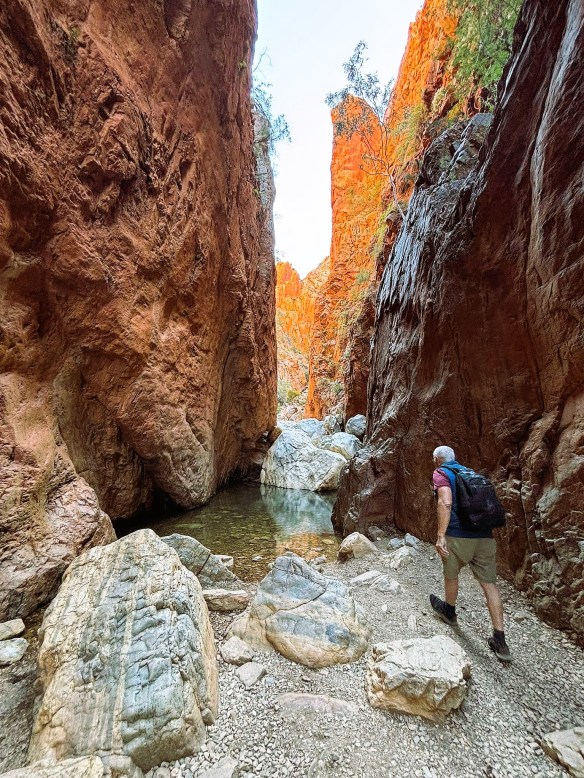
Standley Chasn is a 25 minute walk along a natural creek bed from the road head, through acaciasm cycads and ghost gums, until the dramatic 80m sheer rockfaces of the Chasm are reached.
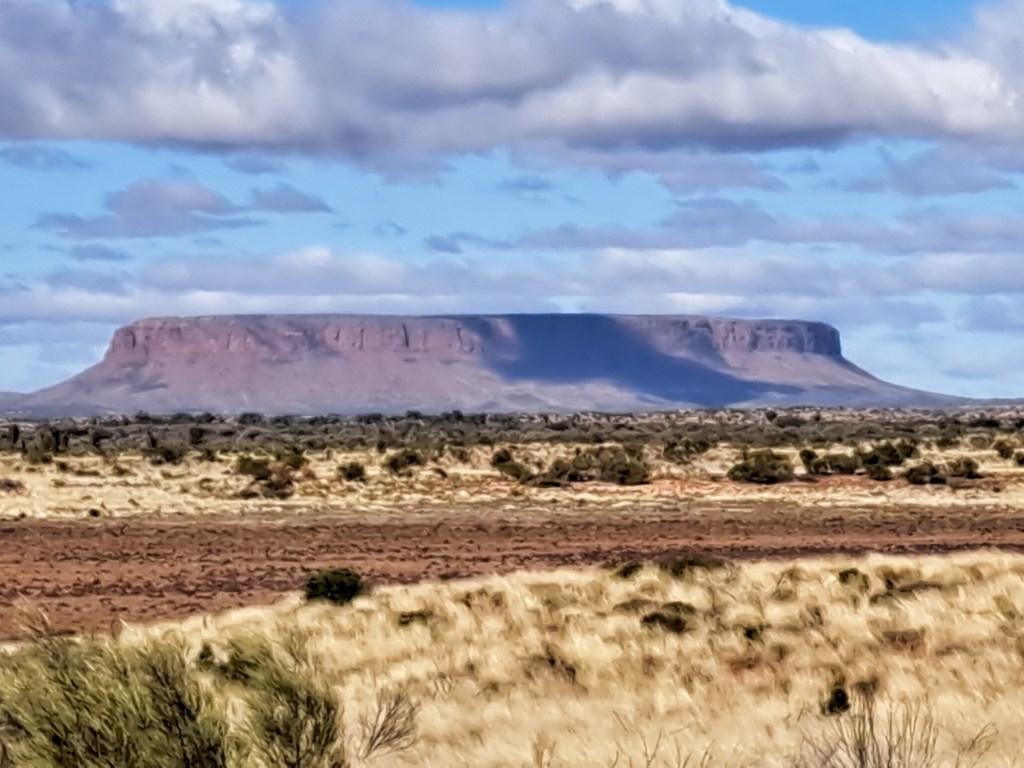
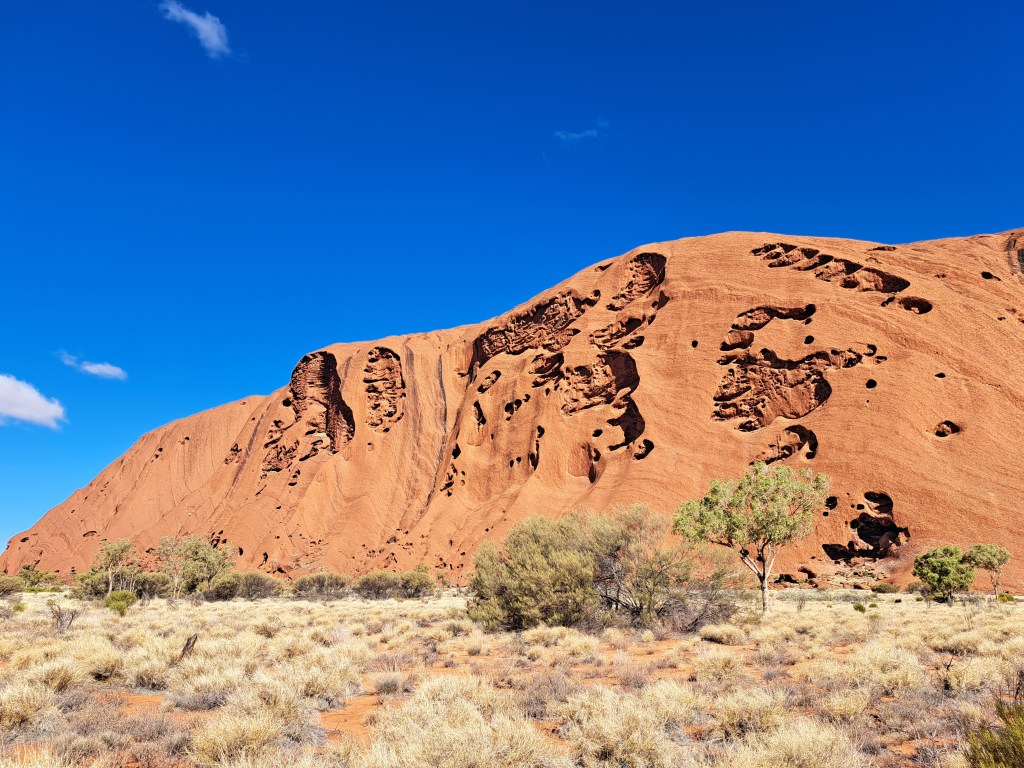
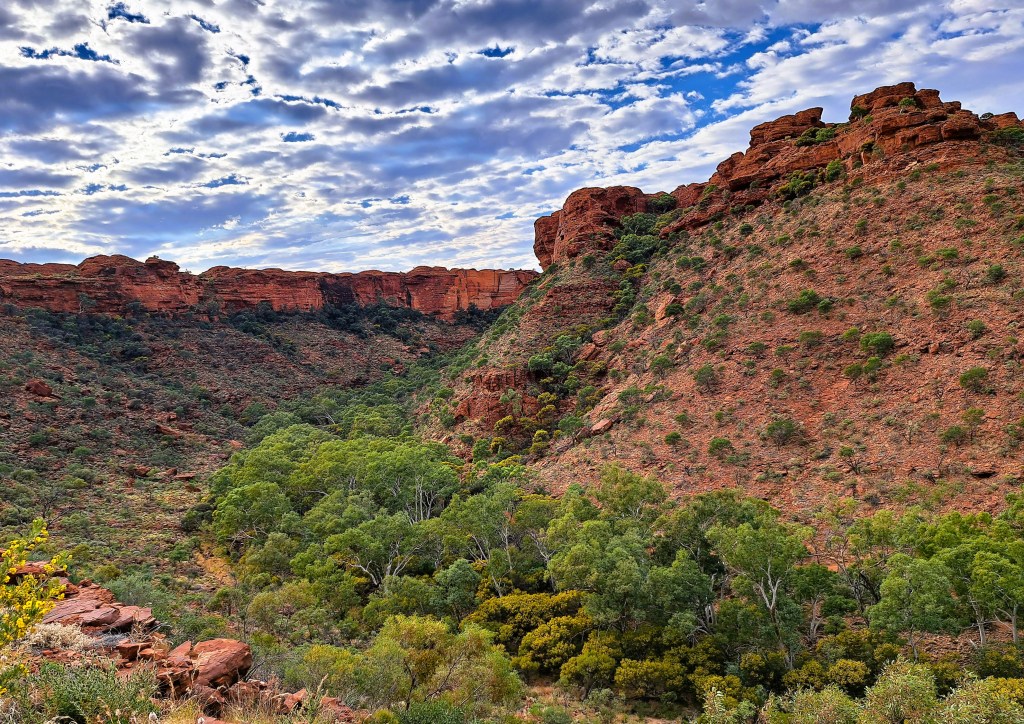
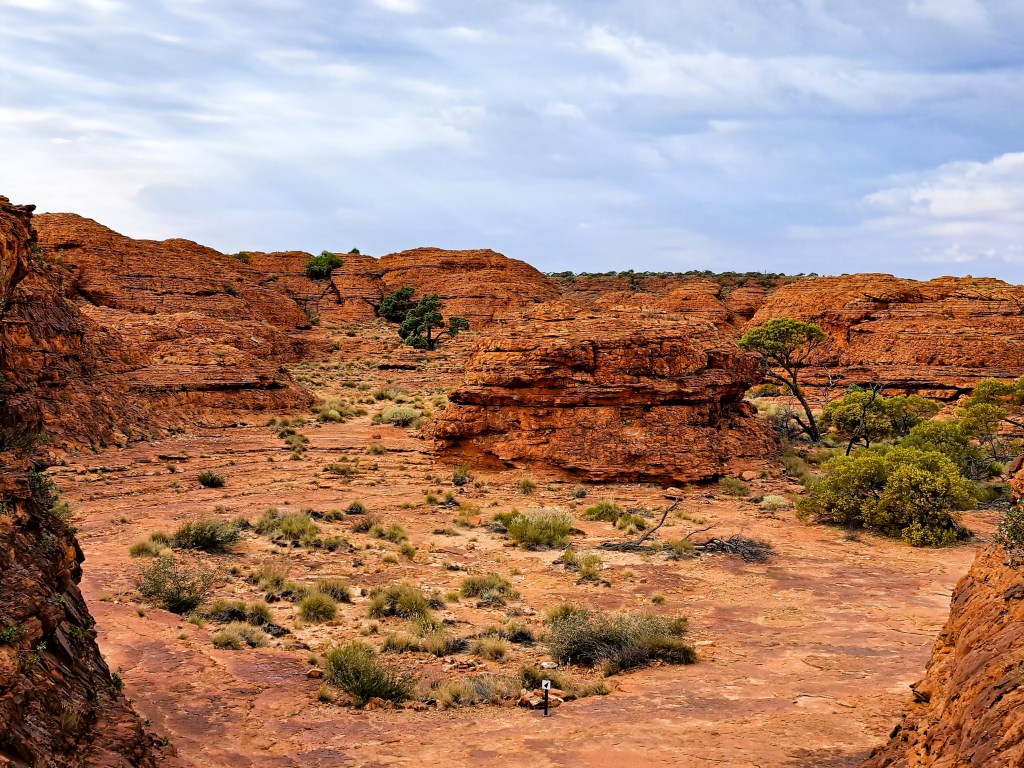
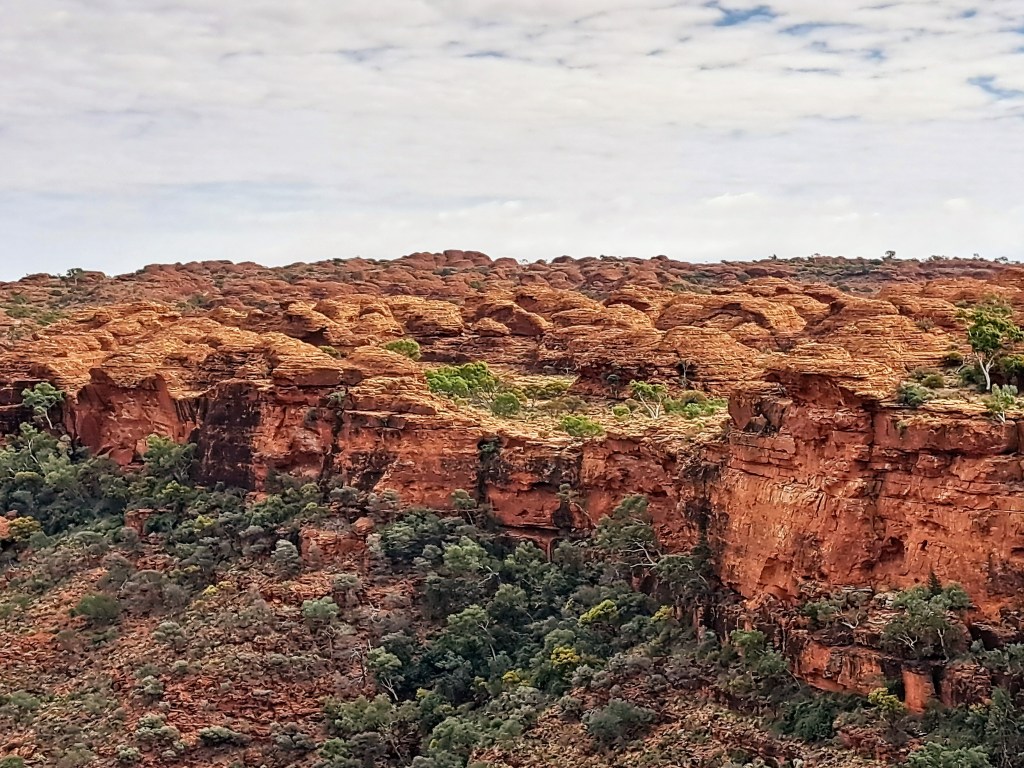
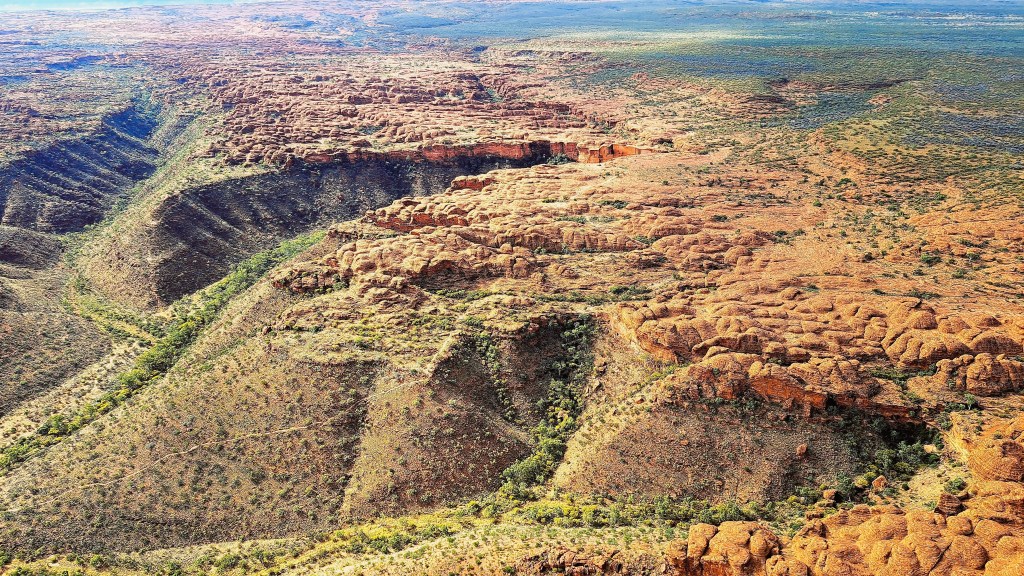
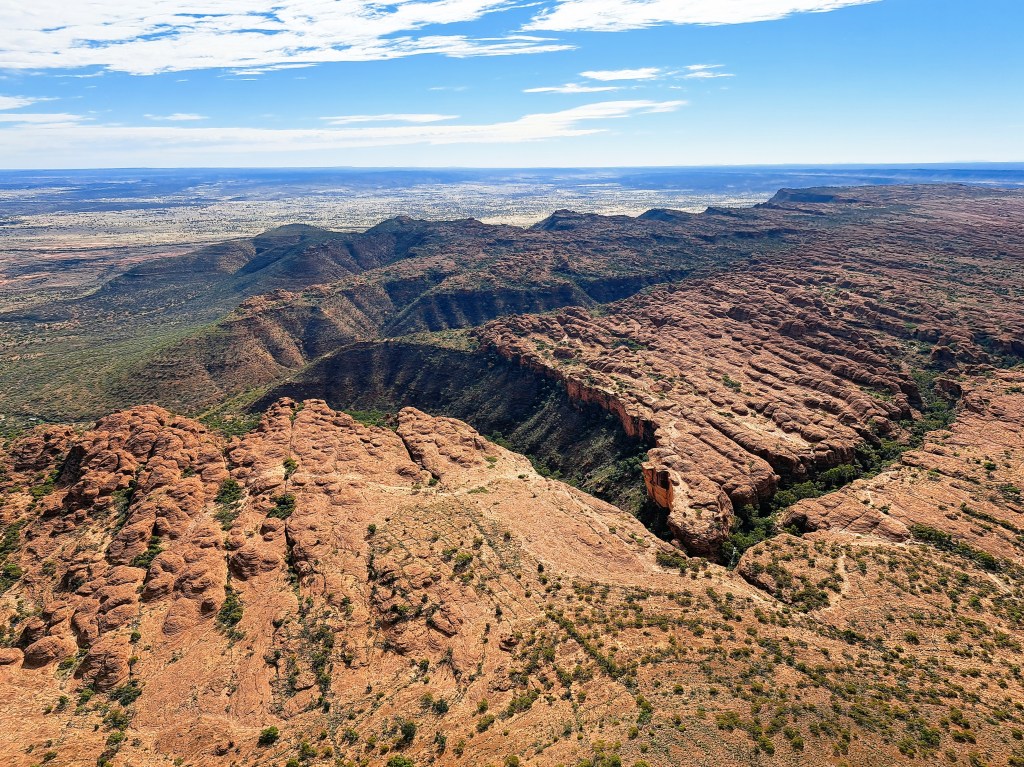
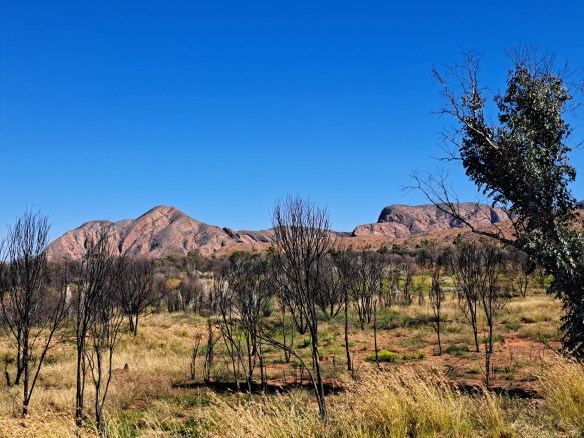
MacDonnell Ranges in the distance
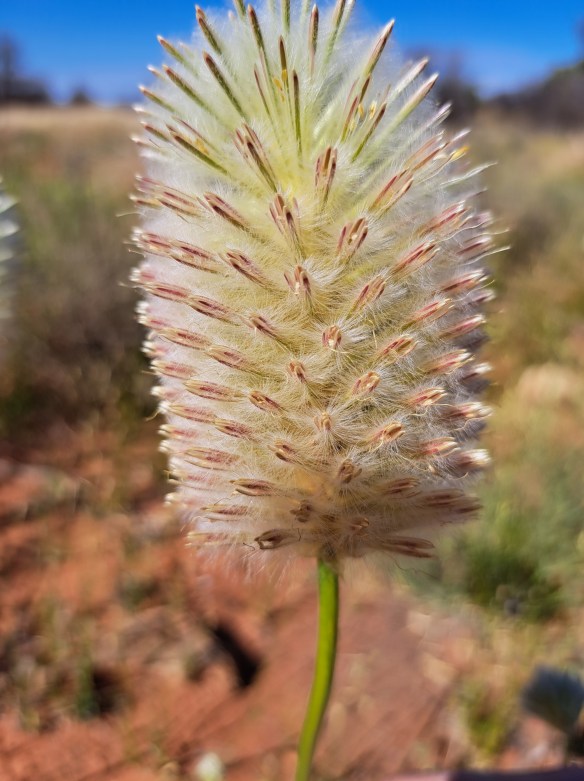
The Dryland Feather-Head (Ptilotus xerophilus) was only recognized as a separate species restricted to central and western Australian in 2019, distinct from a similar eastern Australian species.
Although they rise only 400-500 metres from the surrounding mulga scrub, the highest peak in the McDonnells, Mount Giles) is Australia’s 3rd highest mountain above sea level, at 1,389m.
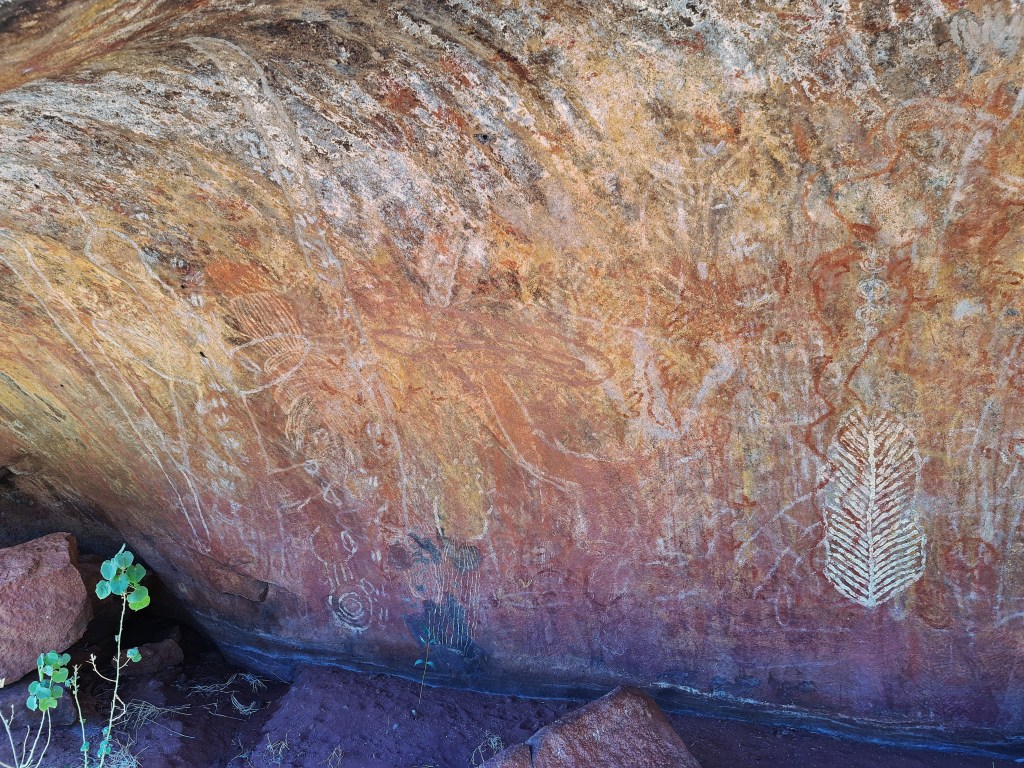
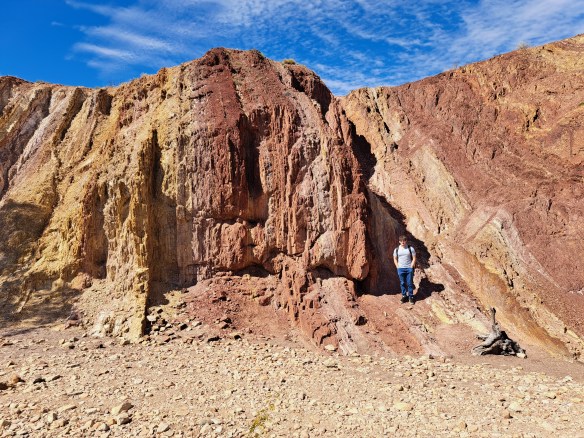
The Ochre Pits is an Aboriginal sacred site. The rock walls are covered with layers of red, yellow and white ochre.It provides material traditionally uised for ceremonies and trading.
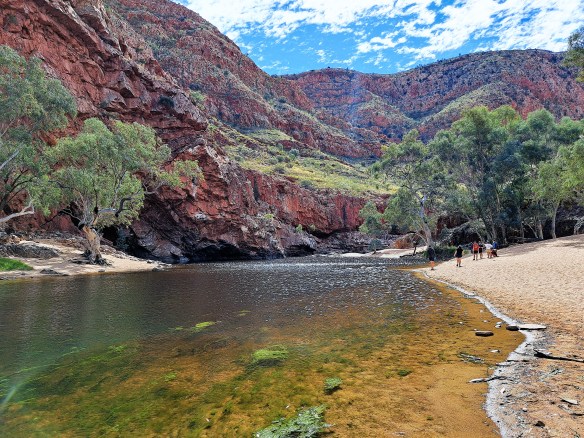
Ormiston Gorge is 136 km from Alice Springs and contains a quite large semi-permanent waterhole. A great place for a swim on a hot day.
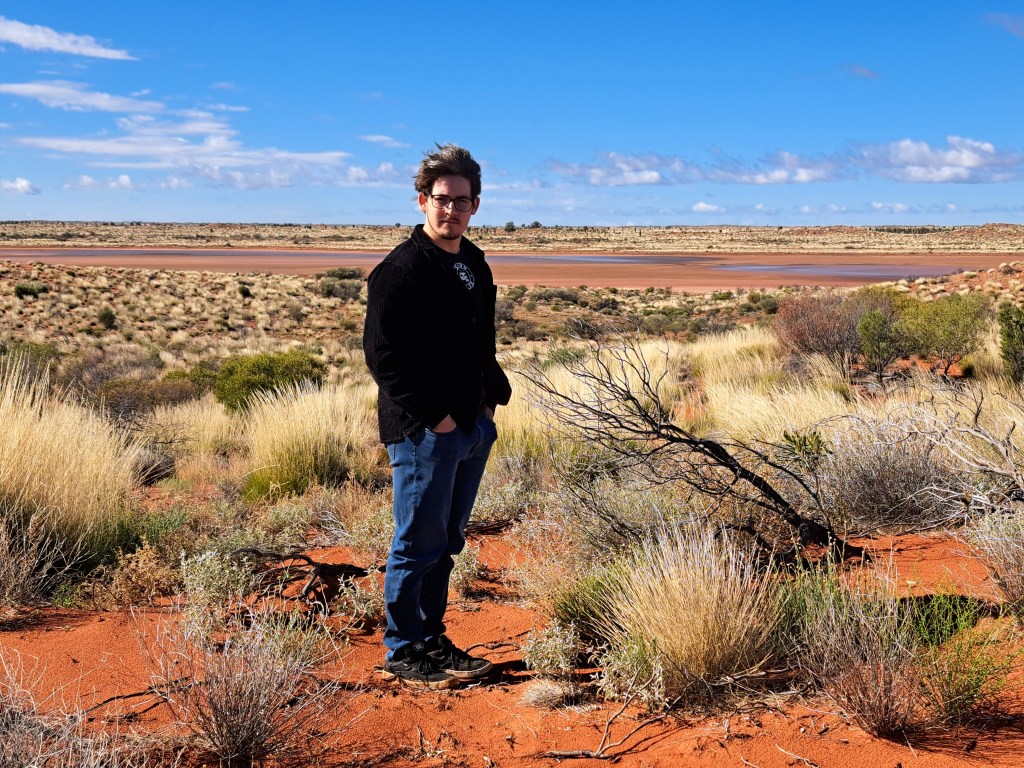
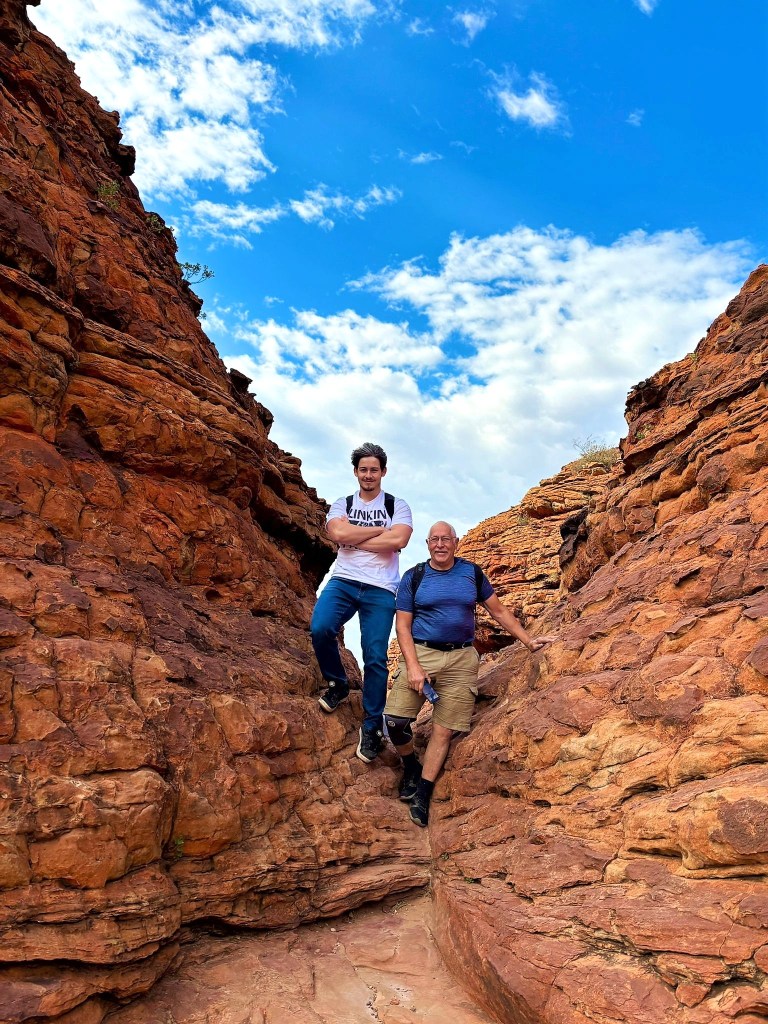
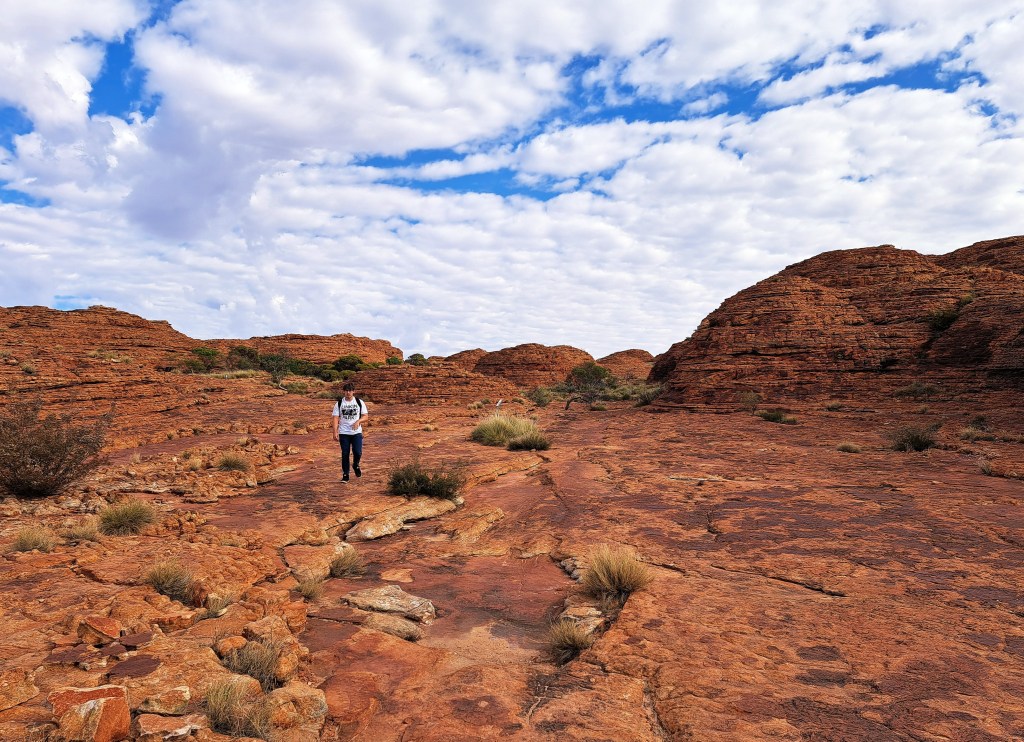
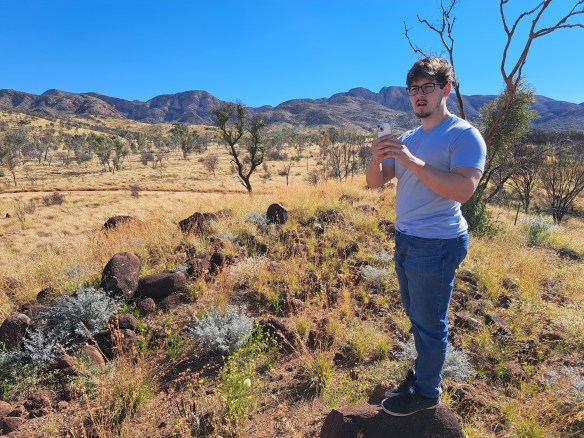
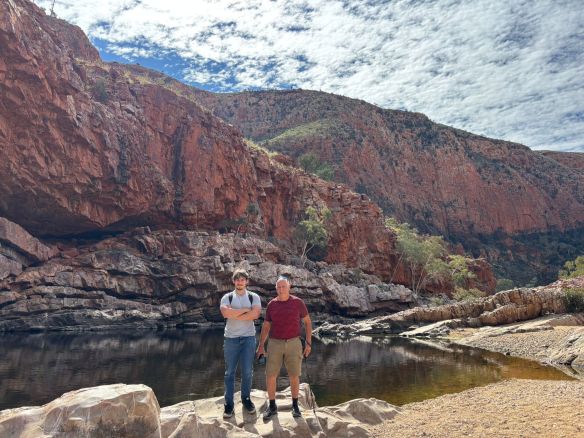
Felix and I at Ormiston Gorge

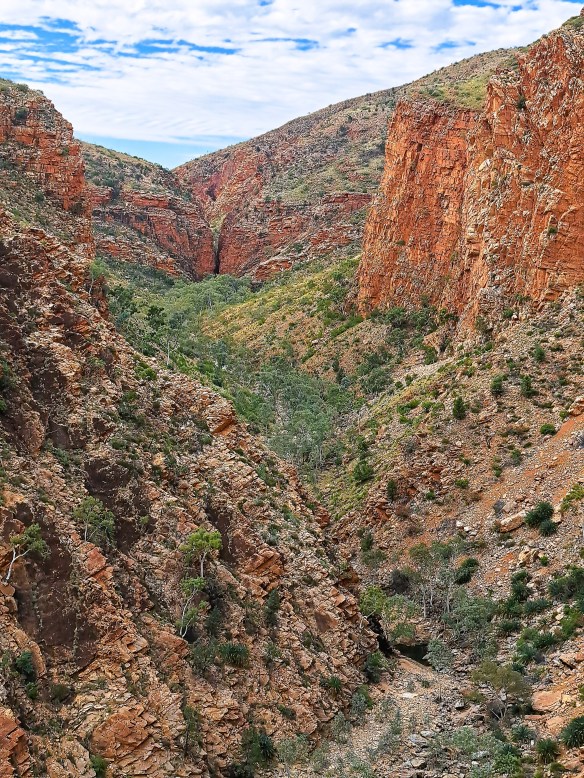
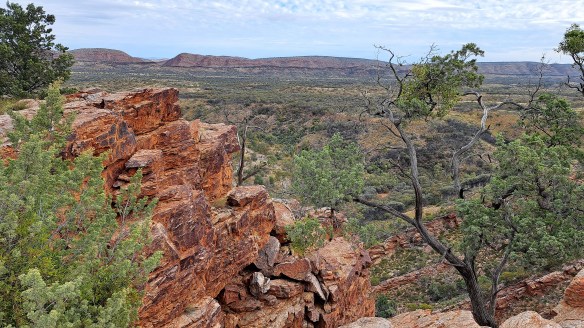
We drove a little further on from Ormiston Gorge to the Finke River crossing, then turned back to head to Alice Springs, stopping on the way at Serpentine Gorge and Ellery Creek Big Hole. I have to say, despite the spectacular beauty of the places we had already visited, I was blown away by Serpentine Gorge. We climbed a steep path to the top of the eastern wall of the gorge, and the views in all directions were stunning. Felix and I saw another rare Black-Footed Wallaby quite close to us on a rock near the rim of the cliff.

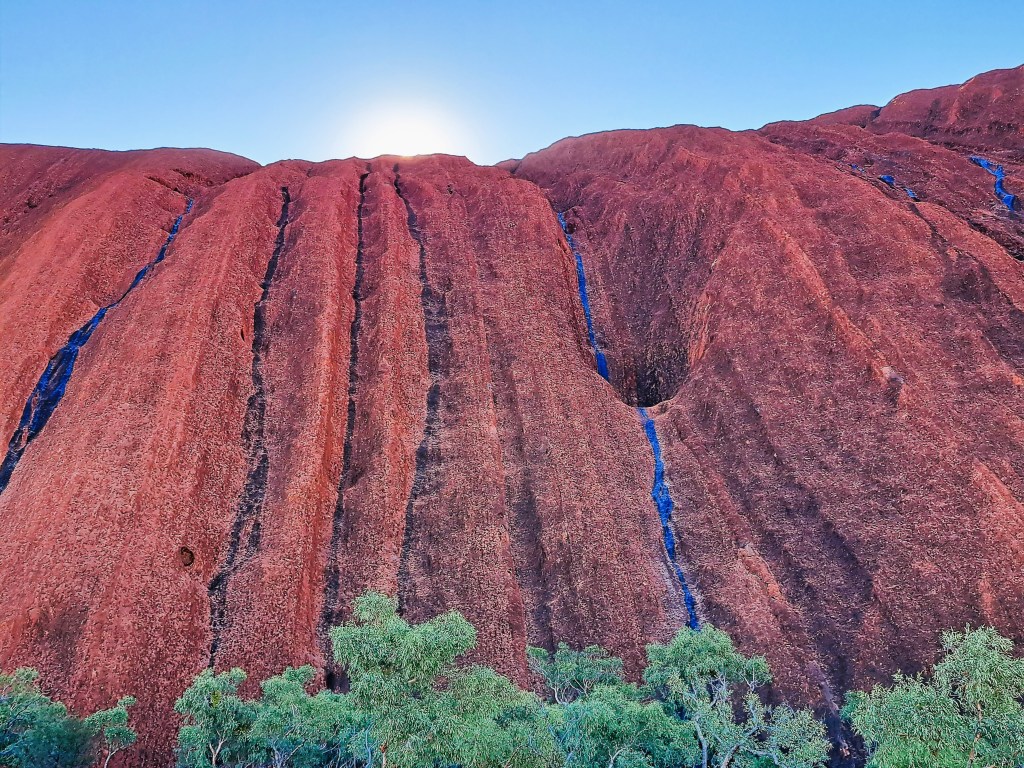
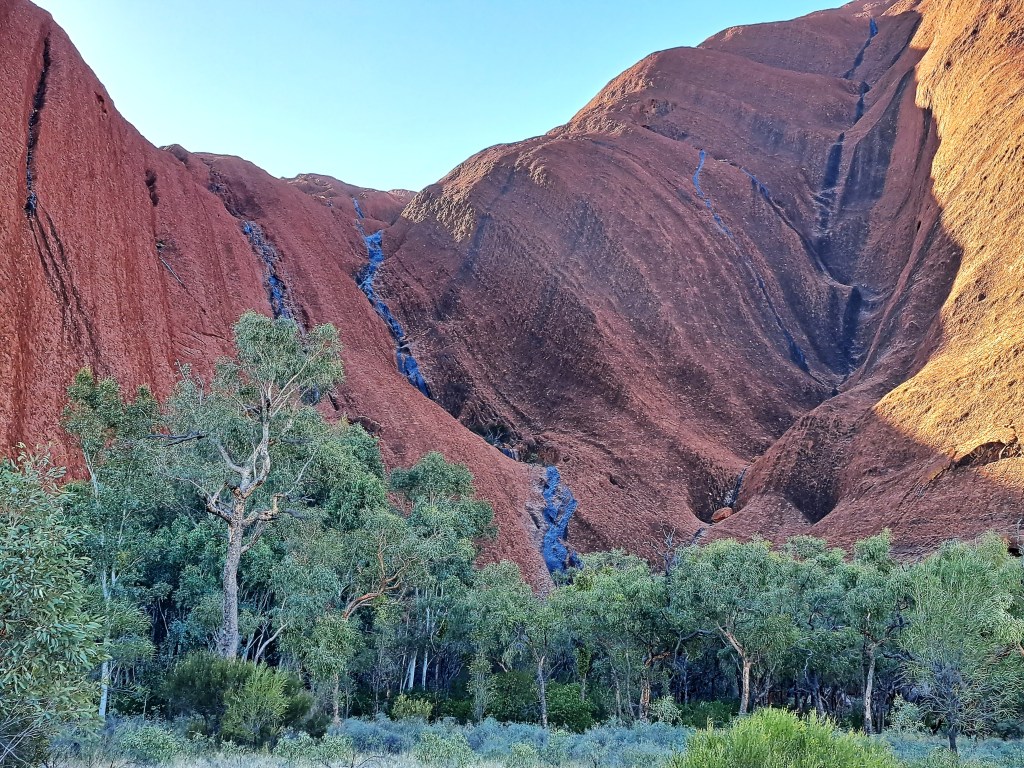
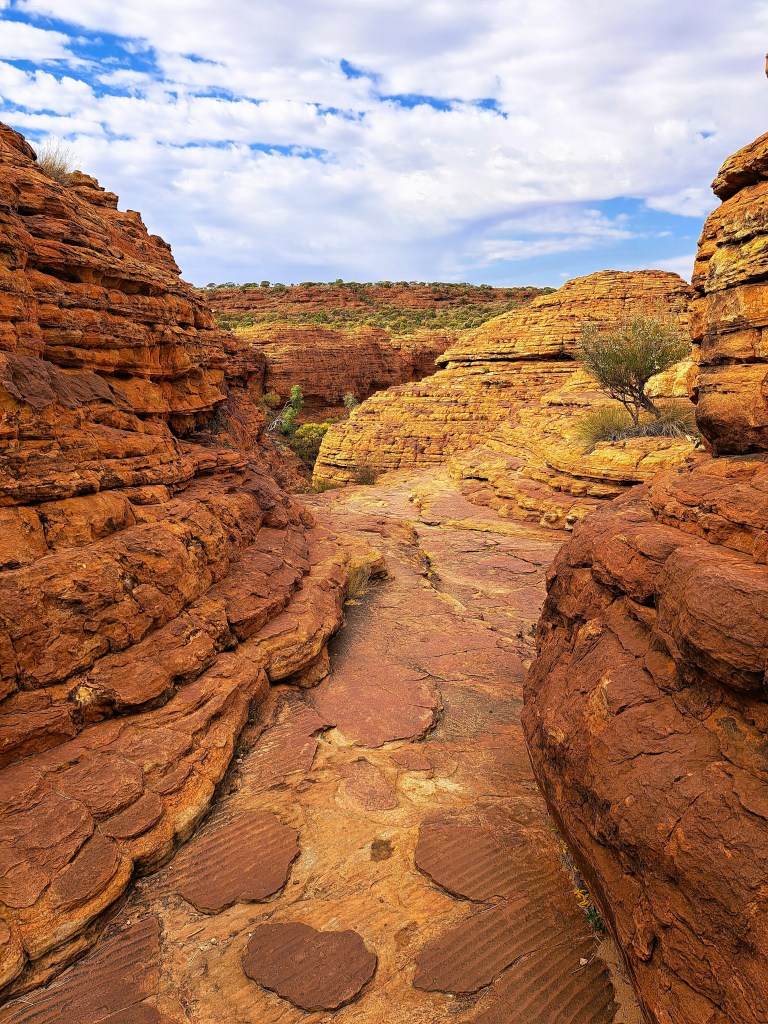
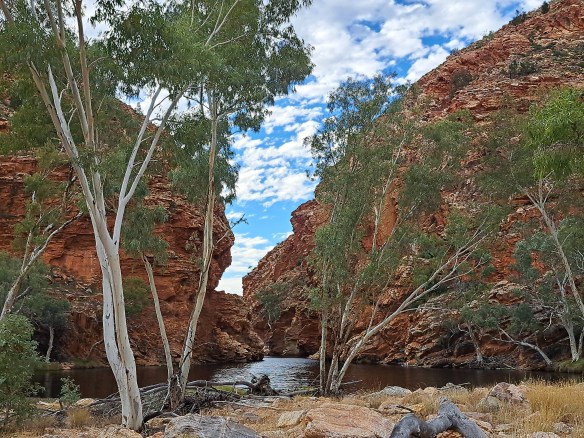
Serpentine Gorge
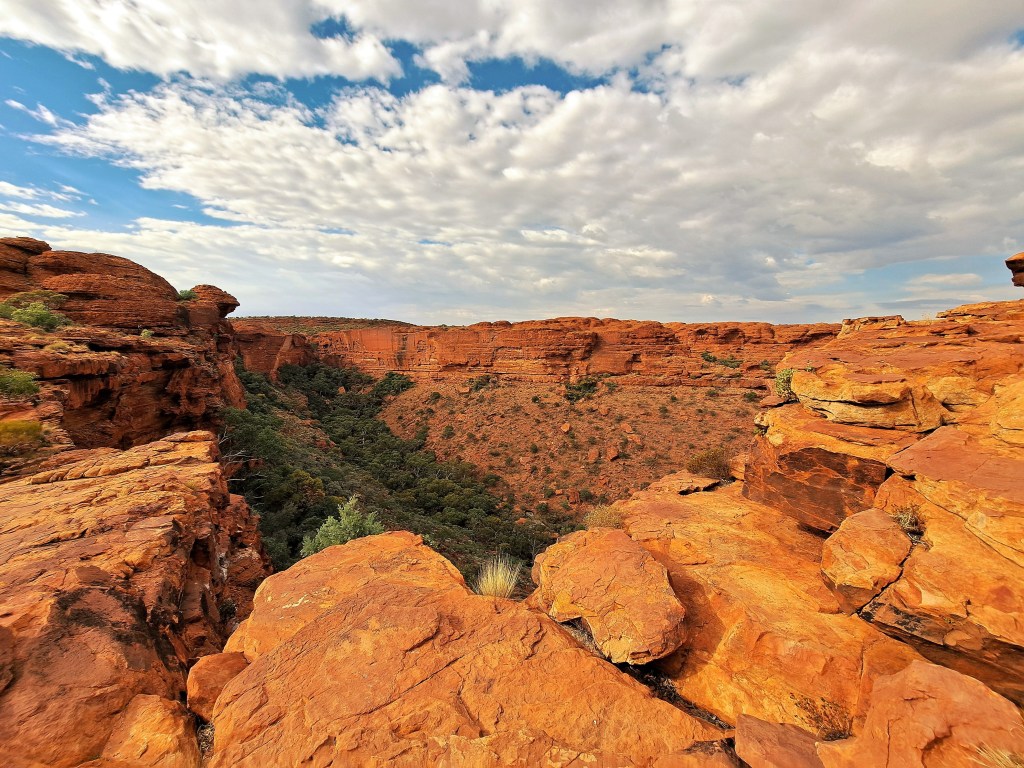
View south from Serpentine Gorge
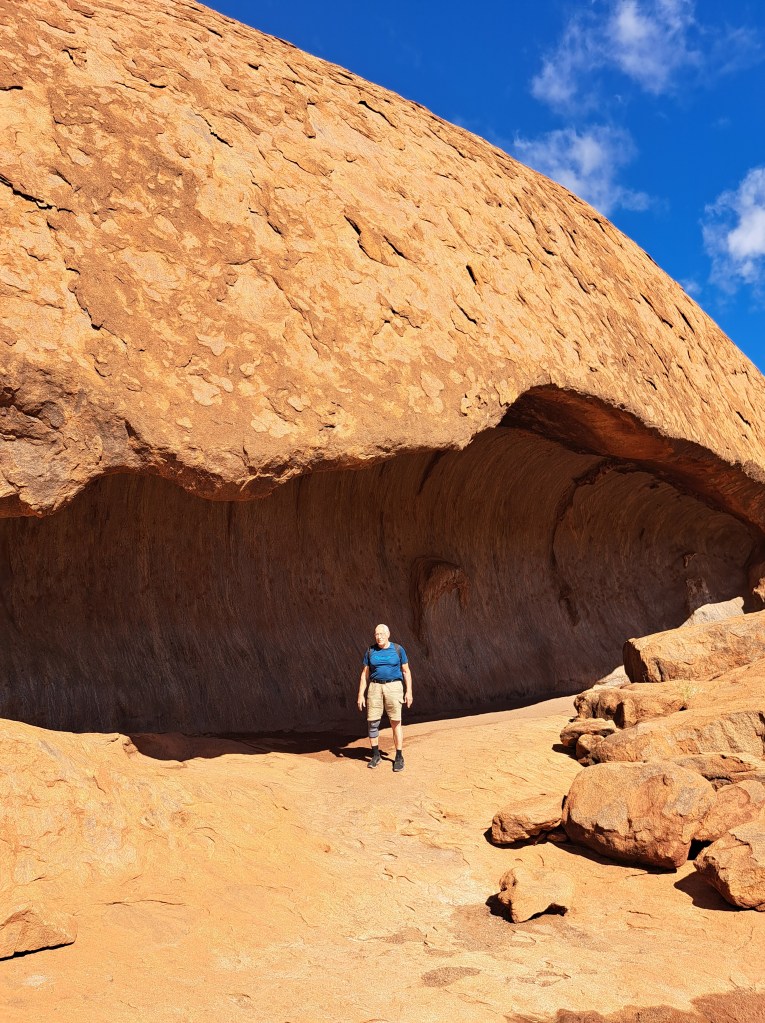
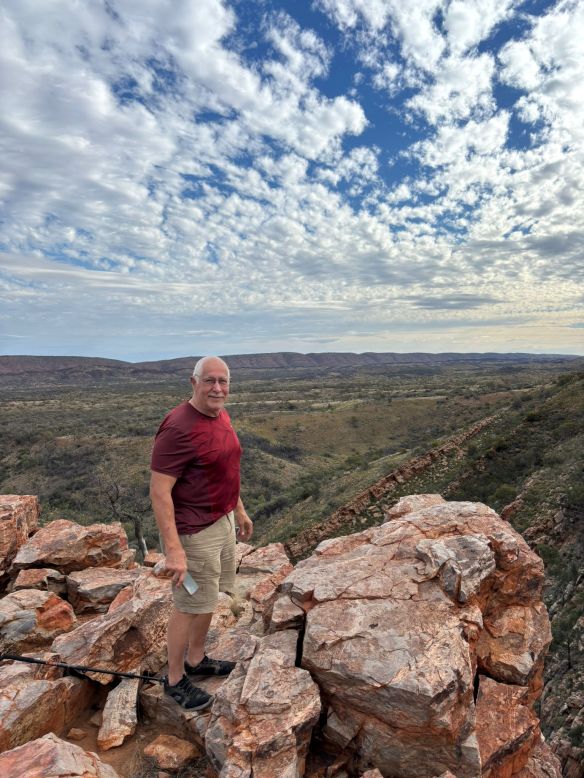
Me on the rim of the gorge, and the view towards the west.
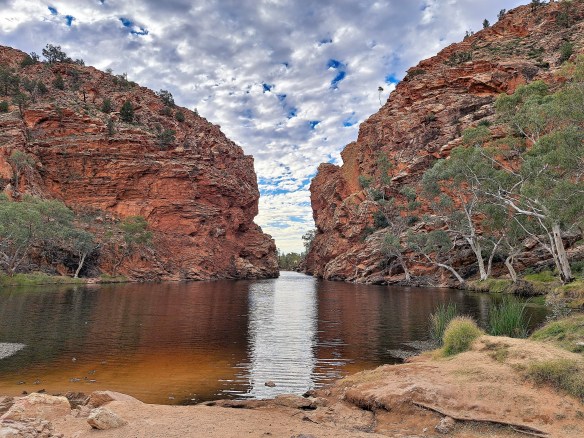
Ellery Creek Big Hole

To be continued…..as we head south west towards Kings Canyon.

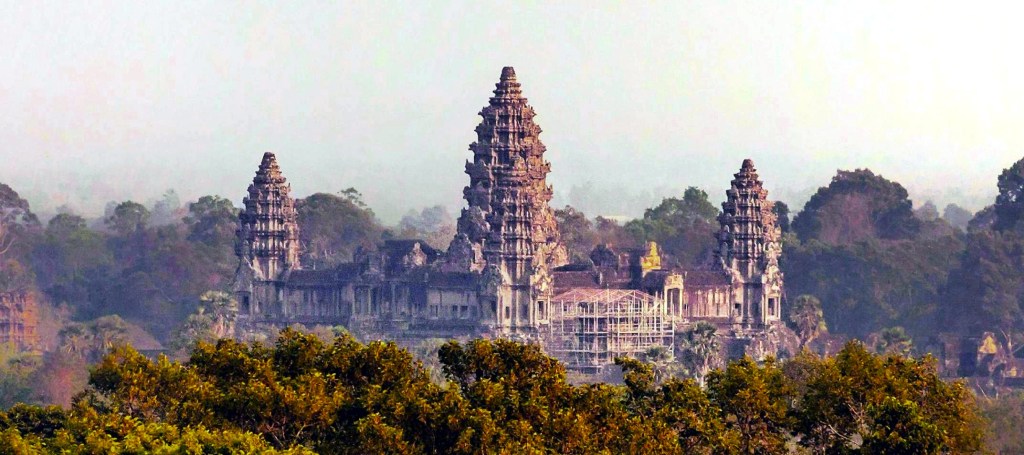
Memories of Angkor Wat – 1995

In March 1995, I spent two weeks in Cambodia and was able to make a visit to Angkor Wat. At that time, the Khmer Rouge were still active. As part of the peace process following the civil war of the 1980s, the UN-sponsored elections in 1993. The Khmer Rouge excluded itself from the peace process and maintained control of areas in northwestern Cambodia, in the provinces of Battambang and Siem Reap (where Angkor Wat was located), and neighbouring Thailand. Its forces numbered around 10,000 fighters and were able to extend Khmer Rouge control to more than half a million Cambodians, four times as many as before the peace accords. During the dry season in late 1994 and early 1995, the Khmer Rouge adopted new tactics, including the murder of civilians, the systematic destruction of civilian homes and rice fields, looting, rape and the kidnapping and murder of Westerners.

Continue reading

Winter surfing on the Sunshine Coast

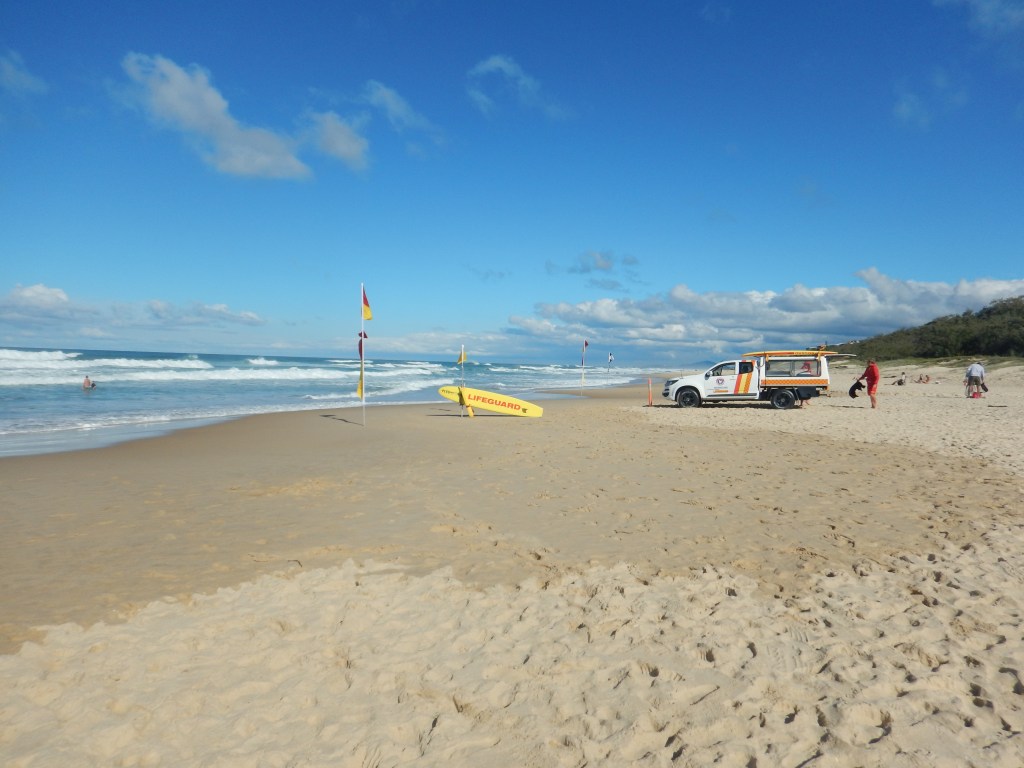
I returned to Australia with my son in late June this year. Our first trip back since the pandemic started. We stayed with my sister, who lives in Noosa on the Queensland Sunshine Coast. It was winter there, but Queensland winters are mild by European standards. We surfed at Sunshine Beach a number of times and thoroughly enjoyed it. Ocean temperature was on the cool side at 19-20 degrees C, but it was colder out of the water with air temperatures around 15-17 degrees and usually with a sea breeze.

Sunshine Beach life saver on duty

Most days there were a handful of people in the surf. On the day the photo above was taken, there were only two others in the water. The lifeguard was sitting in the truck. He did use his loudhailer twice to chastise my son, who was outside the flags and too far out.

Continue reading

Some mushrooms found in the woods of the Netherlands

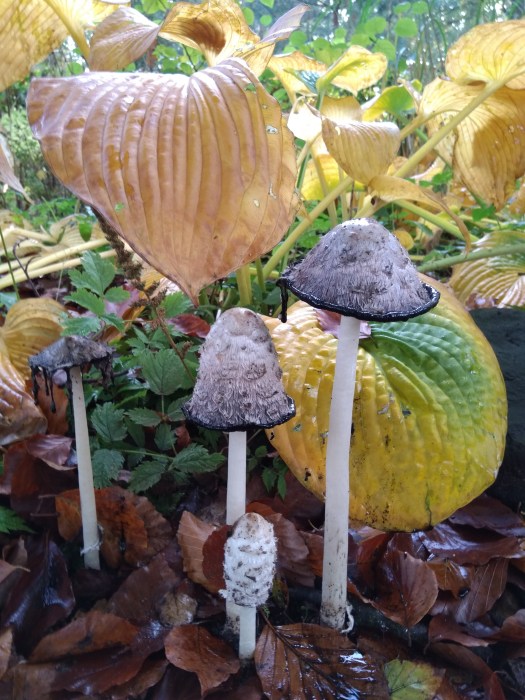
I have just returned from a week in the Netherlands. I spent five days at a retreat in the woods of Lage Vuursche, situated south of Amsterdam not too far from Utrecht. Wandering in the woods, I came across some beautiful mushrooms and fungi. I had not brought a camera on this trip, but took these photos using my phone.

Shaggy ink caps (Coprinus comatus)
Continue reading

Australian bushfires and global warming

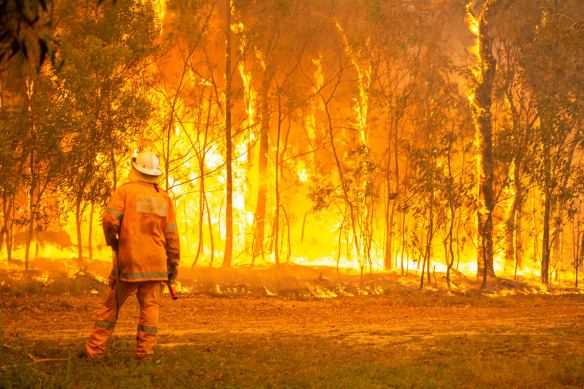
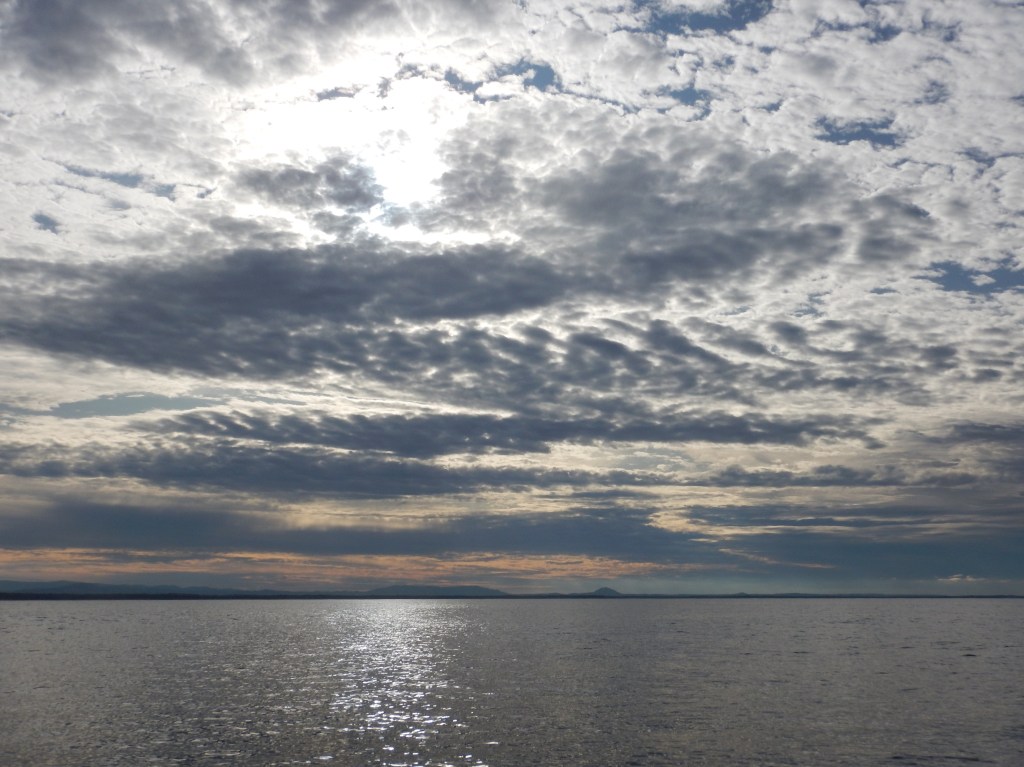
At the beginning of December, 118 forest fires were burning in NSW, 48 of them out of control. The bushfire season started much earlier this year, with more than 140 fires in northern New South Wales (NSW) and Queensland, which destroyed over 600 homes and killed six people. One of these fires destroyed the Binna Burra resort in the Lamington National Park, as well as surrounding rainforest. This was followed by another outbreak of bushfires in November, with more than 129 bushfires in NSW and Queensland. At least 200 houses were destroyed and four people killed.

By the end of November, around 2 million hectares (5 million acres) of bushland had been burnt, and all this before the start of summer and the traditional bushfire season  According to the Climate Council of Australia, the catastrophic, unprecedented fire conditions currently affecting NSW and Queensland have been aggravated by climate change. Bushfire risk was exacerbated by record breaking drought, very dry fuels and soils, and record breaking heat. Since the mid-1990s, southeast Australia has experienced a 15% decline in late autumn and early winter rainfall and a 25% decline in average rainfall in April and May. Across Australia average temperature has increased leading to more record breaking hot weather. Extreme fire danger days have increased.
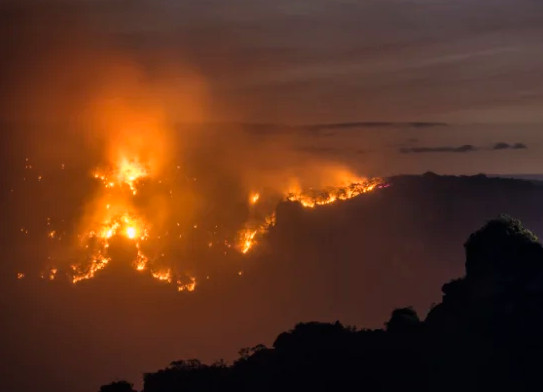
Extensive fires currently burning in the Blue Mountains

I was in Australia in November to visit family at Noosa. A couple of days before my trip, I was stunned to read on the web that Tewantin, the suburb next to Noosaville where I was headed, was being evacuated because of the threatening bushfire.

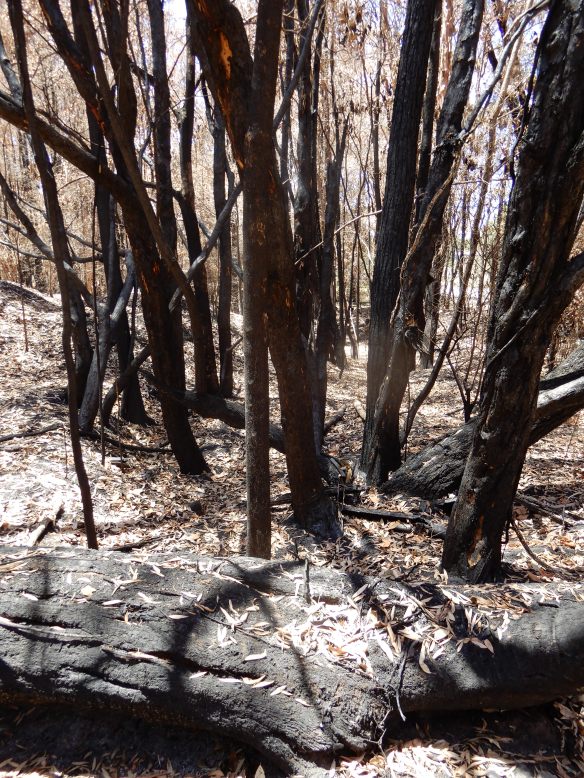
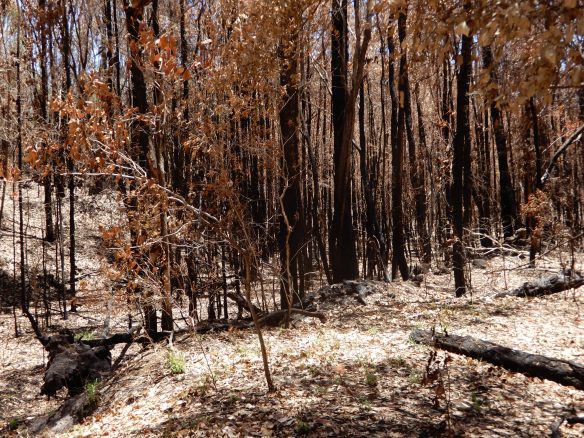
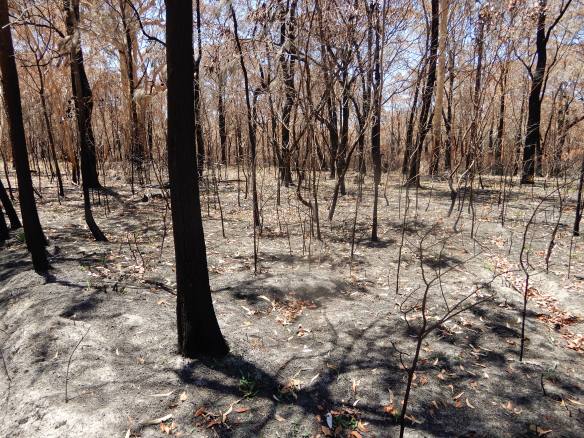
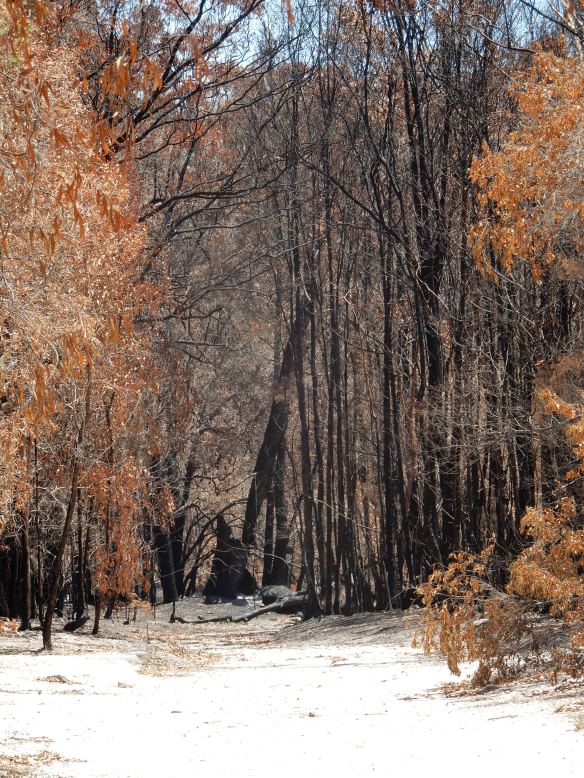
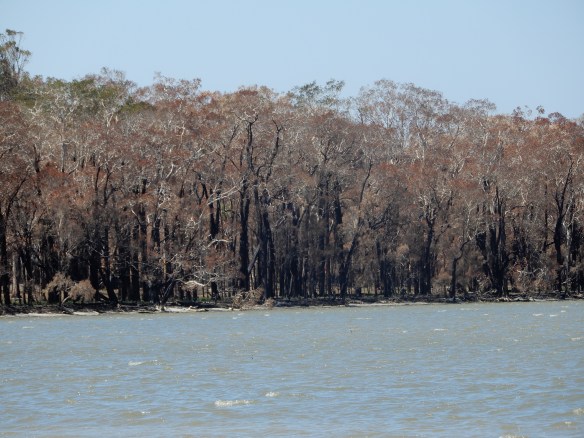
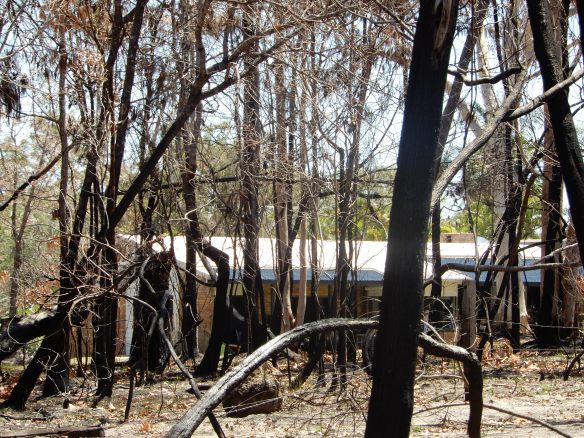
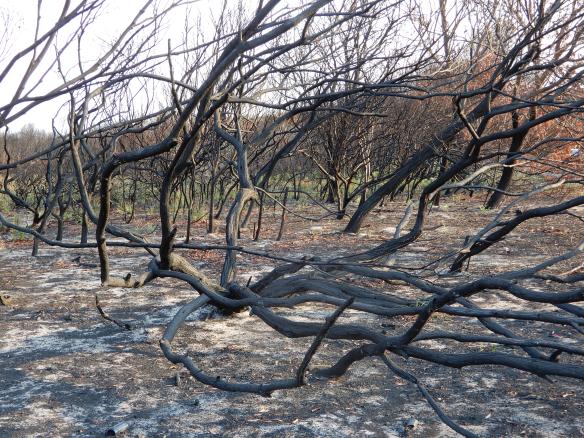
While I was in Noosa, the residents of Noosa North Shore were evacuated because of another fire, as were the people who lived around Lake Cooroibah, about 10 km upstream on the Noosa River. Some days later, I drove up to Cooroibah where I saw extensive burnt areas of bush.  The photos below show the fire damage. Most of the trees are evergreen eucalypts (gum trees) and the dead leaves from the heat are orange or brown. Though it may look like autumn colours to those from the Northern Hemisphere, it is actually dead leaves. Most of the larger trees will regenerate, as the ecucalypt forests of Australia have evolved to adapt to fire, with thick bark, an ability to resprout along their entire trunks, and in some cases depend on fire to open their seed pods.  Animals such as the koala bear and other threatened species do not do so well, particularly when the fires are widespread and have significant impact on populations.

Bushland near Lake Cooroiba

Around 2,500 people were evacuated from about 440 homes in this area, but only one house and some sheds were destroyed. A teenage boy on his own in the house that was destroyed managed to make it into the nearby lake as the fire came over.

Burnt forest on the shore of Lake Cooroiba

The fire came quite close to this house.

There is a small housing development here, and the fire came within 50 metres of the houses. I spoke to one resident who told me he and his dog stayed, and hid when the police came to evacuate everyone.

Years ago when I lived in Sydney, there were regularly bushfires in the nearby Blue Mountains where increasing numbers of people were living. Those who stayed with their homes were able to put out spot fires, fill gutters with water, and deal with floating embers. Those who left their houses often returned to find the houses burnt down. Of course, those who underestimated the intensity of the fire and stayed sometimes paid with their lives.

So it’s a difficult call whether to stay or leave. One time in the 1980s, I went up to the Blue Mountains to help some friends during a bushfire. We stayed with the house and fought the spot fires successfully. The house was on a ridge and the wind drove the fire up the side of the ridge and over the house. As the fire approached, the heat increased and it became very difficult to breathe due to smoke. We all wrapped ourselves in wet towels and lay flat in the gutter of the road where the air was clearer. The fire passed over us and we were OK, though somewhat terrified. Australian eucalypts have a lot of eucalyptus oil in the leaves, and the heat vaporises this into the air, so that fires will spread at tree height, and in the most intense fires will leap across the tops of the trees as the eucalyptus oil above the trees ignites.

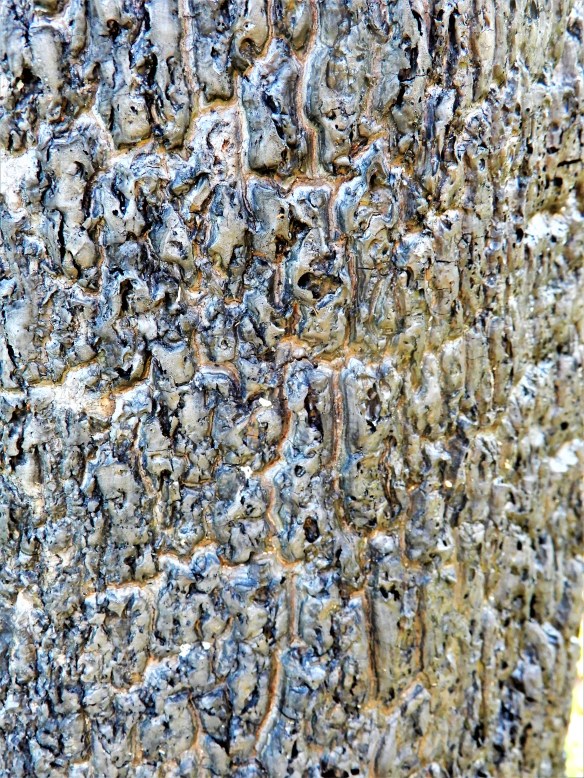
Fire damaged bark on a tree trunk

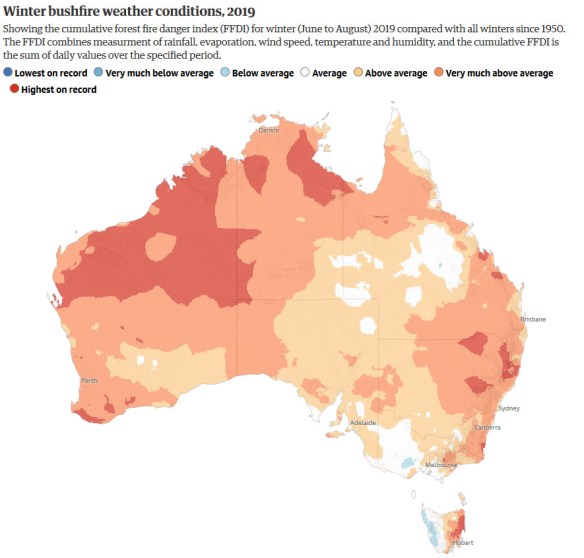
Returning to 2019, although Australia has always had devastating bushfires in some years, scientists and fire service chiefs have stated that the fire risk this year is the highest ever. Back in August, the The Bushfire and Natural Hazard Cooperative Research Centre (BNHCR) warned that New South Wales and Queensland and some other parts of Australia faced higher than normal fire potential. The Australian Bureau of Meteorology publishes a Forest Fire Danger Index (FFDI) which combines measurement of temperature, humidity, rainfall, evaporation and wind speel. Their cumulative winter index for 2019 (BOM), published in September, shows the overwhelming majority of the country, with a few exceptions in Victoria, central Queensland and western Tasmania, is experiencing between “above average” and “highest on record” fire conditions when compared with the average since 1950 (see map below). The measured FFDI values were in the extreme category (over 75) across large areas, reaching the catastrophic category (FFDI values of 100 or above) at some locations in New South Wales.

In line with the measured rise in average annual surface temperature over recent decades, the FFDI has been increasing across most of eastern Australia. Projections by Bureau of Meteorology Scientists recently published in Nature (ref), continue to show an increase in FFDI values due to increasing greenhouse gas emissions over the course of the century. This result is robust across a range of climate projection models, methods and metrics. This means that the number of days in the year where the FFDI value represents “Very High” fire danger will increase substantially over the next 50 years.

What is the political response to all this?  The Australian Prime Minister Scott Morrison is a climate denialist and stated that there was no evidence to link the increased bushfire risk to climate change. He went further and stole a line from US poliiticians, telling the nation “Now is not the time to discuss possible causes of the fires, instead we must pray for the victims.”

Extinction Rebellion and other forms of climate protest have become more vocal recently, and Morrison recently announced hi intention to outlaw and criminalize protest by climate activists. The Queensland government is also fast-tracking laws to crack down on climate protesters.

The Australian government is also discussing how to outlaw consumer boycotts of businesses such as coal miners. They have a bit of a problem figuring out how to do that as some of the major banks and investment companies are also avoiding investment in fossil fuels.

Bushland burnt in September near Peregian Beach

The Maroochy Wetlands

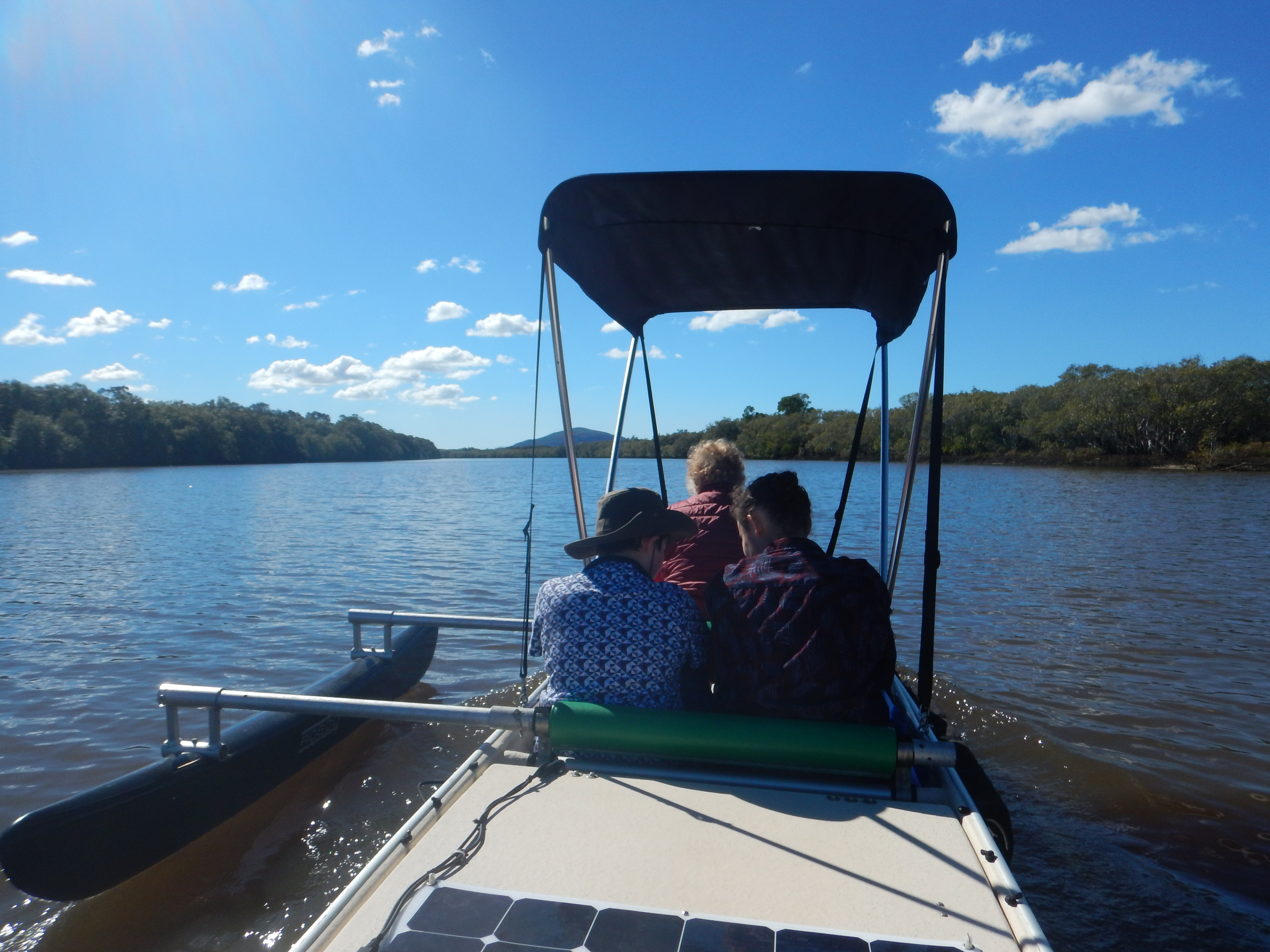
While in Australia recently, I took my boys on a trip up the Maroochy River into the Maroochy wetlands. We had all enjoyed our canoe trip into the Noosa Everglades the previous year (https://mountainsrivers.com/2018/09/06/canoeing-in-the-noosa-everglades/) but this time we had a solar-powered canoe. The solar panel charges a battery that runs an electric outboard motor. It produces a reasonable speed and is very quiet. And we certainly appreciated the ease of gliding upriver without effort.

Continue reading

Wayland’s Smithy

After walking from the White Horse across Uffington Castle perched on the hilltop (see previous post  Iron Age hillforts), I walked for about a kilometre to join the Ridgeway track that leads across the Wessex Downs in southern England. I followed this west for about a mile to another Neolithic chambered long barrow known as Wayland’s Smithy. The Smithy is about 100 metres off the Ridgeway nestled in a grove of trees.

The ancient Ridgeway track

Some forest near the Ridgeway

The first version of the barrow was built between 3,590 and 3,555 BC. It was 20m long and the remains of 14 people were buried here in a stone and timber box over a period of less than 15 years. Between 3,460 and 3,400 BC a second larger barrow 56m in length with a stone chamber was constructed over it, and the chambers contained the jumbled remains of several people.

Wayland’s Smithy

Continue reading

There were fortresses on the heights

“They heard of the Great Barrows, and the green mounds, and the stone-rings upon the hills and in the hollows among the hills. Sheep were bleating in flocks. Green walls and white walls rose. There were fortresses on the heights.” [1]

As well as the barrows and stone-circles of my two previous posts, the Wessex Downs have quite a large number of Iron Age fortresses on the hilltops. The closest of these to Avebury, and the first I visited was Barbury Castle, a few miles south of Swindon.

Barbury Castle

Barbury Castle is perhaps the most remarkable of the Ridgeway hill forts. It’s on the edge of the Marlborough Downs with views in all directions, on the Ridgeway, and it’s huge! It is defined by a broadly elliptical double rampart with a ditch in between, which even after two millennia of erosion, remains quite steep and imposing. The fort was built in the 6th century BC as a refuge against warring tribes. At times of attack, people would bring their animals and shelter in huts inside the 12 acre enclosure. The outer bank was reinforced by huge sarsen stones and the inner bank was topped by chalk blocks and a continuous wooden fence.
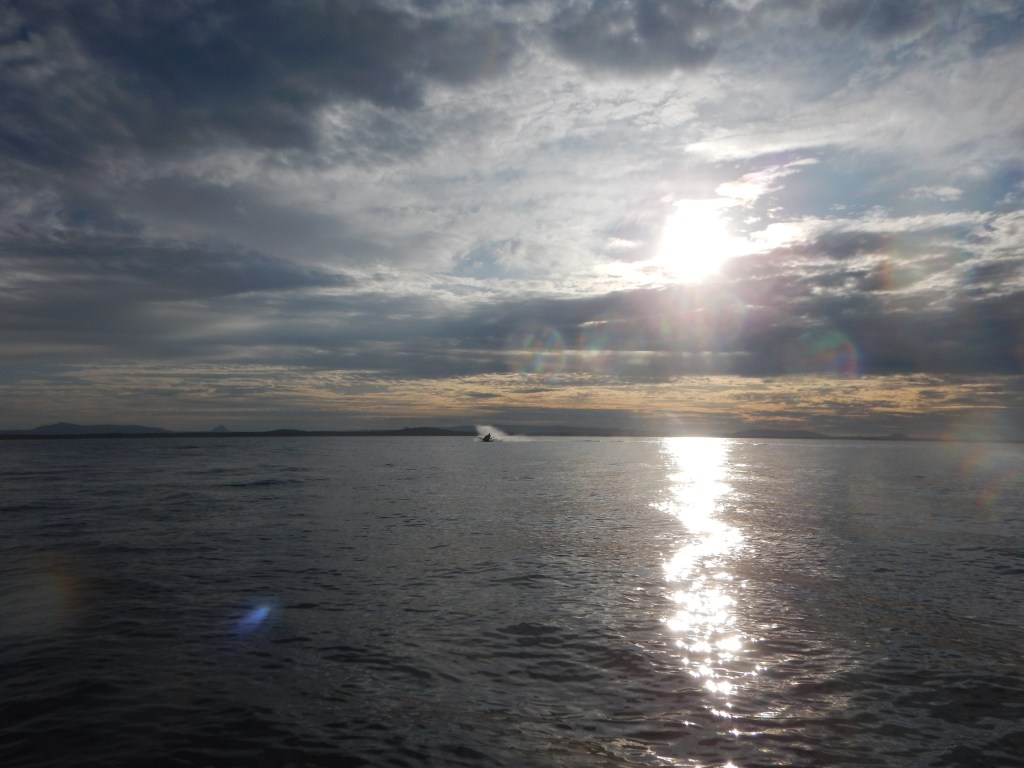
The fortress is clearly visible in this satellite photo, taken from Google Earth Pro, and also just outside the western entrance can be seen a round barrow which dates from 1,700 BC.

Barbury Castle  (Google Earth Pro)

Continue reading

The Avebury megalithic stone circles

While in Wiltshire earlier this month, I stayed in the village of Avebury, which lies within the world’s largest megalithic stone circle, and is about a mile north of Silbury Hill (see previous post at Exploring-the-barrow-downs-of-wessex

Constructed over several hundred years during the Neolithic period from around 3,000 BC to 2,600 BC, a large henge (a bank and a ditch) with a large outer stone circle encircles part of Avebury village. Two separate smaller stone circles are located closer to the centre of the henge.

The ditch and mound surrounding the Avebury outer stone circle

The outer stone circle is 332 metres in diameter with a circumference just over 1,000 metres and encloses two smaller stone circles near its centre.[1] The available evidence suggests that in the early Neolithic, Avebury and the surrounding hills were covered in dense oak woodland, and as the Neolithic progressed, the woodland around Avebury and the nearby monuments receded and was replaced by grassland.

Continue reading