A “free solo” ascent of Federation Peak

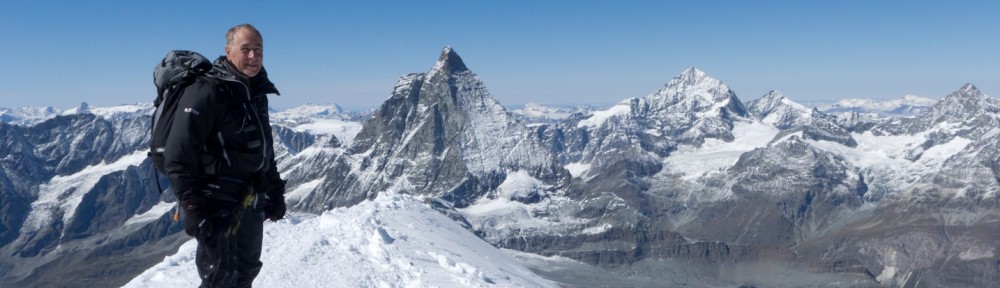
Seeing Free Solo (mountainsrivers.com/free-solo-inspiring-and-disturbing/) reminded me of my “free solo” on Federation Peak years ago. Barely a rock climb, but the exposure was similar to that on El Cap. In Dec 1980- Jan1981, I did a three week traverse of the Eastern and Western Arthur Range in southern Tasmania with my then wife. One of our objectives was to climb Federation Peak (1,224 metres or 4,016 ft), whose spectacular summit rises like a spike in the middle of the Eastern Arthur Range (see photo below).

Looking towards Federation Peak from the Four Peaks.

Continue reading

Augusta Raurica

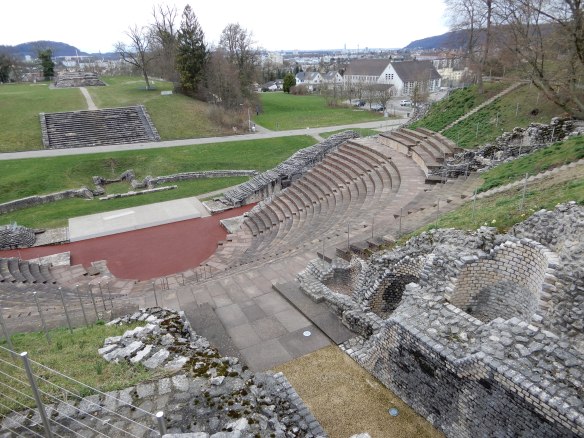
I went to Basil for a powerlifting competition in mid-March and stayed in a small town just outside Basel called Kaiseraugst. In this town are the remains of the Roman town, Augusta Raurica, which was founded around 15 BC and named after Augustus Caesar and the local Celtic inhabitants, the Raurici. At its height around 100 AD, the town had around 15,000 inhabitants. The surrounding modern town is now called Kaiseraugst (Caesar Augustus) and I stayed in a hotel just across the road from the fortress (see below). I spent an afternoon visiting the ruins of Augusta Raurica, which  has the best-preserved Roman theatre north of the Alps. This theatre once seated between 10,000 and 12,000 visitors.

Continue reading

Canoeing in the Noosa Everglades

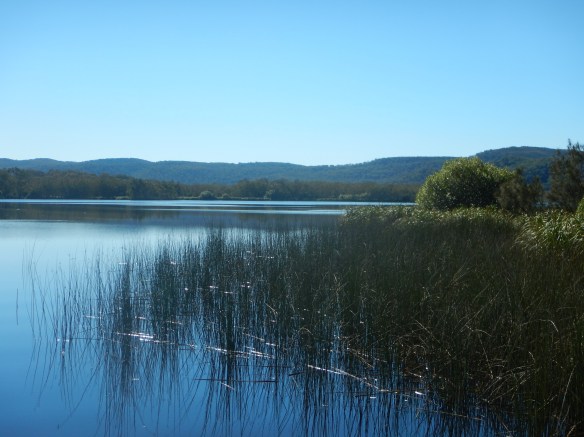
While visiting Noosa in July, I took my two boys on a kayak trip into the Noosa Everglades.  Located in the Great Sandy National Park, the upper reaches of the Noosa River are a network of waterways, rivers, lakes and marshes and are best explored by kayak or canoe. The Everglades are situated in the Noosa Biosphere, which is one of Australia’s most diverse ecosystems and includes more than 40 per cent of the country’s bird species.

We drove about 20 km from Noosa to Booreen Point on Lake Cootharaba and crossed the lake in a larger boat to the mouth of the Upper Noosa River, where we changed to canoes, and continued into the Everglades by canoe. Lake Cootharaba is one of three large lakes connected to the Noosa River, the others are Lake Cooroibah and Lake Weyba.

Lake Cootharaba

The banks of the river are a mix of swampy grassland and subtropical forest, with patches of rainforest. There are lots of banksia trees and tea-trees. The tea-trees stain the water a deep brown colour from the tannin in their leaves. The Tea Tree, Melaleuca alternifolia, is an Australian native plant, and its leaves are also used to produce tea-tree oil, prized for its it’s anti-bacterial and anti-fungal prowess.

Upper Noosa River

Continue reading

Hot and cold: from New Year in heatwave Australia to mid-winter Geneva

Somewhat belatedly, a few photos from a quick trip to Australia in the New Year break 2016-2017 to visit my family in Noosa on the Queensland coast.  Flying from the midwinter Geneva around zero C to heatwave in the middle of summer – middle 30s C and then back to a cold spell at -4 C. Around 35°C temperature drop from my last Saturday on Sunshine Beach to the first day in Geneva.

img_5674

Even though it was hot, there were some stormy days and some dark clouds on Noosa Main Beach. It was much more crowded when the sun was out.

Continue reading

Fraser Island – largest sand island in the world

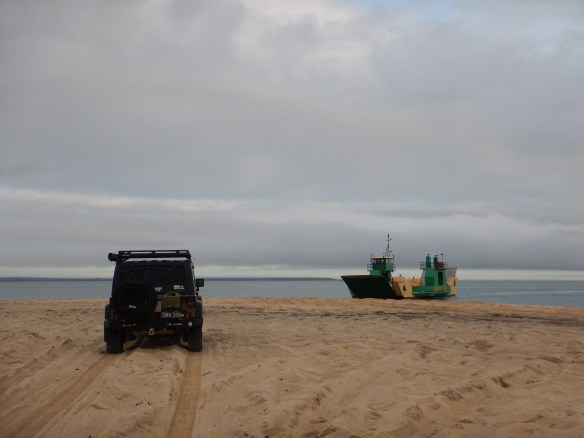
While in Australia in July, we hired a 4WD for a trip to Fraser Island, largest sand island in the world. From Noosa, it was a 50 km drive on Cooloola Beach to Rainbow Bay, then across to Fraser Island by barge to drive up 75 Mile Beach on the eastern side.

DSCN0609

Waiting at Rainbow Beach for the barge to cross to Fraser Island.

Early morning light on 75 Mile Beach

Early morning light on 75 Mile Beach

Continue reading

Bungee jumping at Victoria Falls

When I was in Harare in April 2000, I  took a day to go to Victoria Falls (victoria-falls-and-the-zambesi-river). When I saw the bungee jump off the bridge across the Zambesi Gorge below the falls, I had to do it. This is arguably the best bungee jump in the world, with a 111 metre plummet (nearly 400 feet) towards the Zambezi. The short video below is taken from an old VHS tape of my two jumps. That’s me after the 15 second intro.

Continue reading

Victoria Falls and the Zambesi River

00968_n_10af2g2zzb0968

Victoria Falls

Some years ago, I was in Harare, Zimbabwe, for a WHO meeting and took the opportunity to make a flying visit to Victoria Falls, about a one hour flight away. While it is neither the highest nor the widest waterfall in the world, it is classified as the largest, based on its width of 1,708 metres (5,604 ft) and height of 108 metres (354 ft),[ resulting in the world’s largest sheet of falling water. Victoria Falls is roughly twice the height of North America’s Niagara Falls and well over twice the width of its Horseshoe Falls.

01060_n_10af2g22v41128

Continue reading

Surfing at Noosa


This Easter, the boys and I went to Noosa on the Sunshine Coast of Queensland, Australia to visit relatives. Apart from heavy rain storms the first couple of days it was hot and sunny just like mid-summer. We went to the beach every day and the boys had some surfing lessons (boards). I also did a jet ski trip with each of them out to the open ocean to jump waves at speed.

Nine Stanes, Eslie the Greater and Eslie the Lessor

I have had a longstanding interest in megalithic monuments since I was a teenager. In part sparked by my interest in astronomy as a teenager, since the megalithic monuments of Europe show that Neolithic humans had sophisticated astronomical skills. And in part, by my interest in deep ancestry (see previous post https://mountainsrivers.com/2014/03/11/maternal-ancestors-bronze-age-iron-age-roman-britain/). And also by their connection with the barrowdowns of Middle Earth. On my first extended trip to Britain, I visited various megalithic stone circles in England and explored the barrows around the Ridgeway near Oxford.

So on my trip to Eastern Scotland last Easter, I took a look on the internet to see whether there were any megalithic monuments within an easy drive from the area I was staying in near the villages of Mathers (https://mountainsrivers.com/2014/05/20/the-villages-of-mathers-easter-2014/). And discovered there were three stone circles about 45 km north-west of St Cyrus where I was staying. Continue reading