My main Zen teacher in the 1990s was Hogen Yamahata, known as Hogen-san to his students, who travelled regularly from Japan to conduct sesshin, and in the late 1990s started to spend more of his time in Australia. I was planning a visit to Japan in 1995 and hoped to visit Hogen-san at his temple, Chogen-ji, near Mt Fuji. Apart from the fact that I found out he was actually visiting Australia at the time I planned to go to Japan, his long-term student Peter Thompson advised me that Hogen-san’s temple was only a small family temple with one or two students at most. and that it would be better for me to visit Bukkokuji, where Hogen-san had trained with his main teacher, Harada Tangen Roshisama. So in 1995, I went to Bukkokuji and spent a week training with Roshisama.
Category Archives: Travel
The night the universe sang to me
I had tried kava some years ago when I was in Fiji at a holiday resort. There was a bowl of what looked like (and tasted like) muddy tea. I had a cup of it, and did not notice anything much. So when Irene told me that the Vanuatu kava was much stronger, and the locals said that the kava in Fiji was more like dishwater, I decided I should try the local stuff while I was on Tanna. Continue reading
The villages of Mathers – Easter 2014
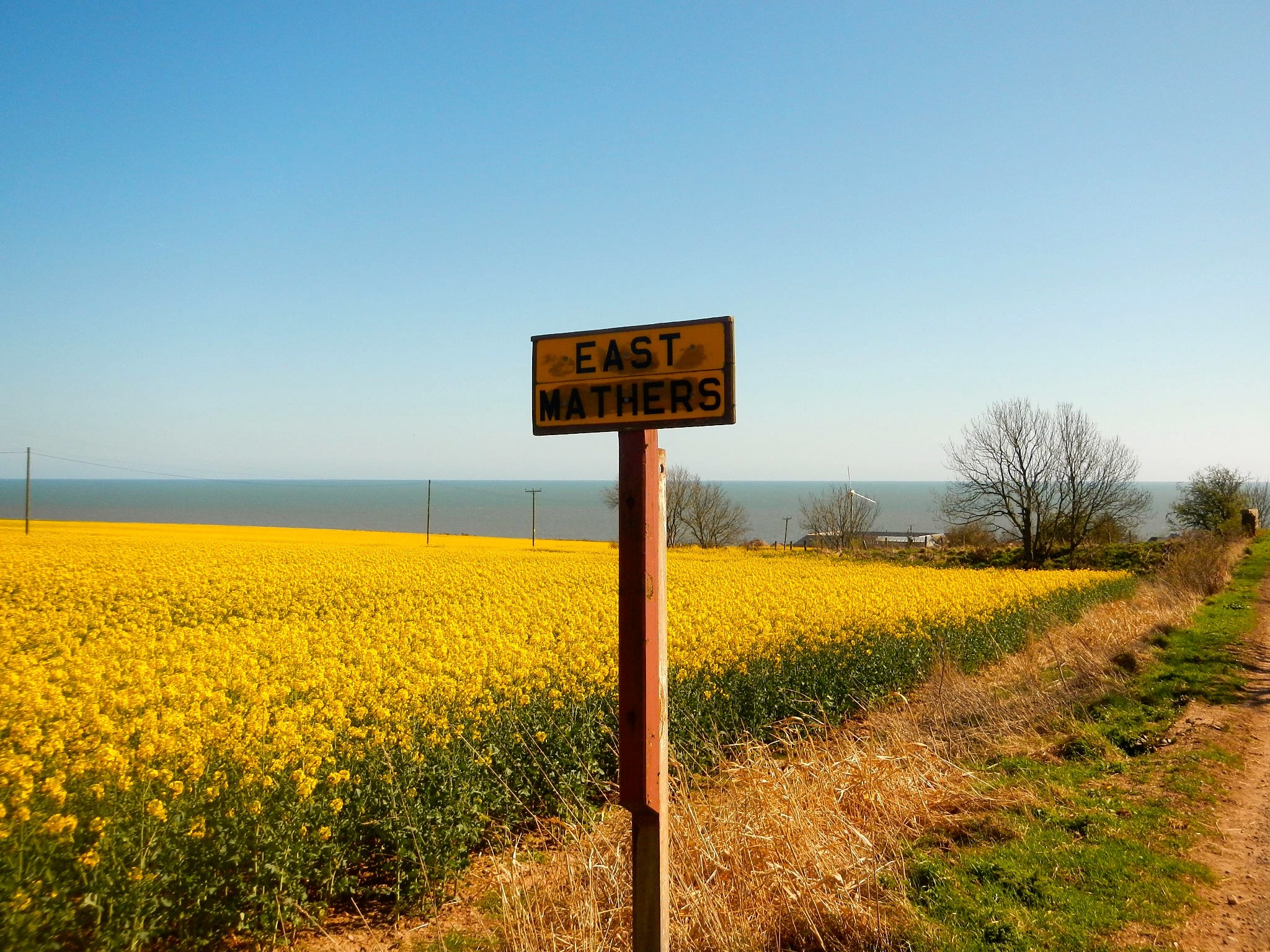
East Mathers, West Mathers and Milton of Mathers are villages just north of St Cyrus and the Kaim of Mathers (see previous post https://mountainsrivers.com/2014/05/11/a-visit-to-the-mathers-ancestral-castle-in-scotland/). St Cyrus is about 60 km north east of Dundee in Angus and about 50 km south of Aberdeen. St Cyrus lies between the mouths of the South and North Esk Rivers, and developed at a natural harbour that traded in skins, hides and cured salmon in medieval times. It is about 50 km south of Aberdeen. The cliffs and dunes provide a nationally important habitat for flowering plants and insects, and a breeding ground for tern and have been declared a National Nature Reserve.
A visit to the Mathers ancestral castle in Scotland
According to some researchers, the Scottish name Mathers originates from a place name on the east coast of Scotland, a place name associated with the Clan Barclay. The Barclay lairds of Mathers took the title “laird of Mathers” or equivalently “Second of Mathers” etc, and some Mathers claim that this is the origin of the Mathers surname, and by implication, that the Mathers descend from the early Barclays of Mathers. There are certainly quite a number of people called Mathers who lived in this area in the nineteenth century, but its more than likely that they took their name from the place rather than by descent from the Barclays. But I won’t let that stop me from claiming a cannibal laird as an ancestor – see my earlier post https://mountainsrivers.com/2014/01/20/my-cannibal-ancestors/
Cathar castles: Montréal de Sos and the Grail Cave
Further up the Vicdessos valley from the ice age paintings of Niaux ( https://mountainsrivers.com/2014/02/23/the-ice-age-paintings-of-the-grotte-de-niaux/) is one of the less well known Cathar castles, known as Montréal de Sos. It sits on a rocky outcrop, the Vic de Sos, from which the valley gets its name. Occupied since the Bronze age, this was the site of an Iron Age oppidum, a Carolingian fortress, and during the Cathar period one of the most powerful castles of the Foix region, Montréal-de-Sos. Under the castle remains is a cave with two exits – or an entrance and a different exit. Such caves were used for initiation rituals in Cathar times.
The ice age paintings of the Grotte de Niaux
One of my deep maternal ancestors, Una, probably lived in the Basque region or perhaps a little further north around 12,000 years ago, which would make her my great*780th grandmother (give or take a few generations). She may well have been part of the Magdalenian culture in the foothills of the Pyrenees who produced the stunning cave paintings at sites such as Roc-de Sers, Lascaux, and Niaux. I have visited the Grotte de Niaux twice, once in 1992 and again in 2011. It is one of the few caves with Paleolithic paintings that can still be visited.
Cathar castles: Montsegur
The Cathar castle of Montsegur sits on top of a limestone peak (or pog in Occitan) at around 3000 feet. Here several hundred Cathars held out for 10 months against the besieging French army of over 6,000 men in 1243-44.
Cathar castles: Puilaurens
One of the southernmost Cathar castles, in the foothills of the Pyrenees, Puilaurens sits on a 700 m high rocky outcrop.. Perhaps the best-preserved of Languedoc’s many cathar castles of the area, it offers breathtaking views of the surrounding valleys. Very atmospheric! Puilaurens was originally built by the Visigoths
Cathar castles: Peyrepertuse and Quéribus
The Cathar country in the foothills of the French Pyrenees is one of my favourite places. I first went there in 1992 while living in Montpellier, then again in 1996, 2002 and most recently in 2011 with my family. I have pulled together a few photos from these trips and this first post features Château de Peyrepertuse and the nearby Château de Quéribus. Continue reading