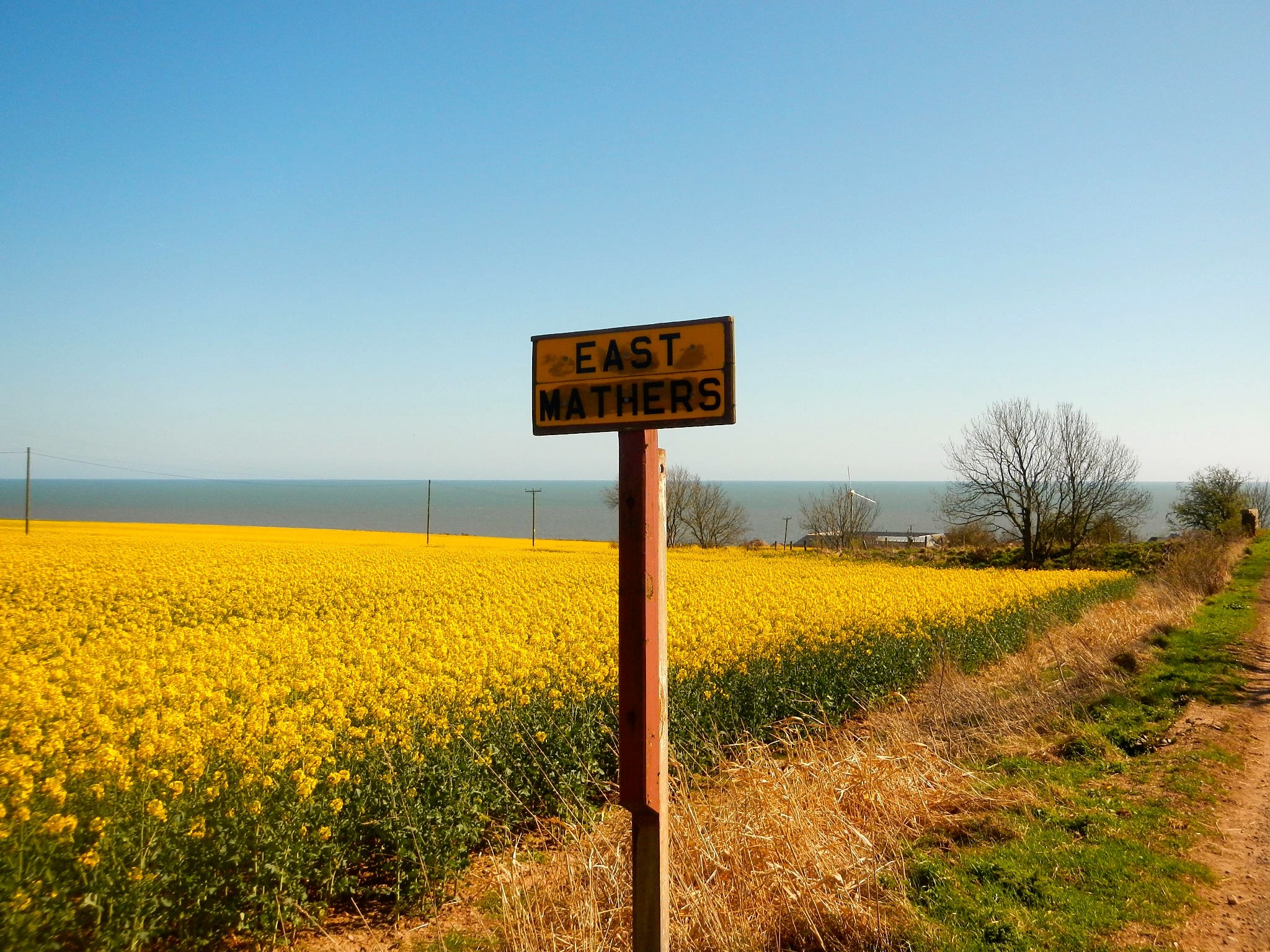
According to some researchers, the Scottish name Mathers originates from a place name on the east coast of Scotland, a place name associated with the Clan Barclay. The Barclay lairds of Mathers took the title “laird of Mathers” or equivalently “Second of Mathers” etc, and some Mathers claim that this is the origin of the Mathers surname, and by implication, that the Mathers descend from the early Barclays of Mathers. There are certainly quite a number of people called Mathers who lived in this area in the nineteenth century, but its more than likely that they took their name from the place rather than by descent from the Barclays. But I won’t let that stop me from claiming a cannibal laird as an ancestor – see my earlier post https://mountainsrivers.com/2014/01/20/my-cannibal-ancestors/
Sunset over the Juras
Cashews
I think cashews have been scientifically proven to be the most addictive substance on earth. I tried to find the studies that must have been published on this hidden epidemic, but instead I found this:
cashews are in the same plant family as poison oak (the sumac family) — that’s why you never see them in shells, handling them would be a bad thing for anyone sensitive to sumacs. You may also have heard of “mango mouth,” a rash that results from contact with mango skin — another member of the sumac family. I’ve not heard of the sumac connection causing anyone problems from consuming cashews or mangos, but I get poison oak very easily and have been the victim of mango mouth myself, so I stay away from cashews for the most part on general principals.I was bemused to read this. I have a cashew addiction and my mum had a mango addiction…..until the day she ate a whole box of mangos in one sitting. She developed an allergic reaction to mangos that was so strong she would swell up if she just walked into a room containing a mango.
I checked in Wikipedia and indeed the cashew, mango, poison ivy and pistachios are all members of the same plant family and mango and poison ivy share a common chemical irritant.
Spring skiing at Verbier
Last weekend of March, temperatures definitely spring-like in the valley, around 20 C. Headed up to Verbier with the boys for some spring skiing. Verbier is one of the higher ski areas, the highest point is Mont Fort at 3300 m, from which it is 1800 vertical descent to Verbier village.
Sunset over the Juras
The language of mountains and rivers
Maternal ancestors: Bronze age, iron age, Roman Britain
This post has been superceded by a new post my-maternal-ancestors-from-eve-via-ice-age-europe-to-victorian-england which contains latest information from a recent more detailed analysis of my mtDNA together with revised and updated dates and locations of haplogroup founders.
This is the last of a series of posts on my deep maternal ancestors, identified through analysis of mitochondrial DNA (mtDNA) which is passed only from the mother to the child and so provides a trail of maternal ancestors identifiable through the mutations accumulated in the mtDNA. In this post I summarize the “recent” maternal ancestors who lived through the beginnings of agriculture in Britain, the British bronze age, the British iron age, the Roman occupation, and post-Roman Britain.
Grand Montets: high mountain skiing
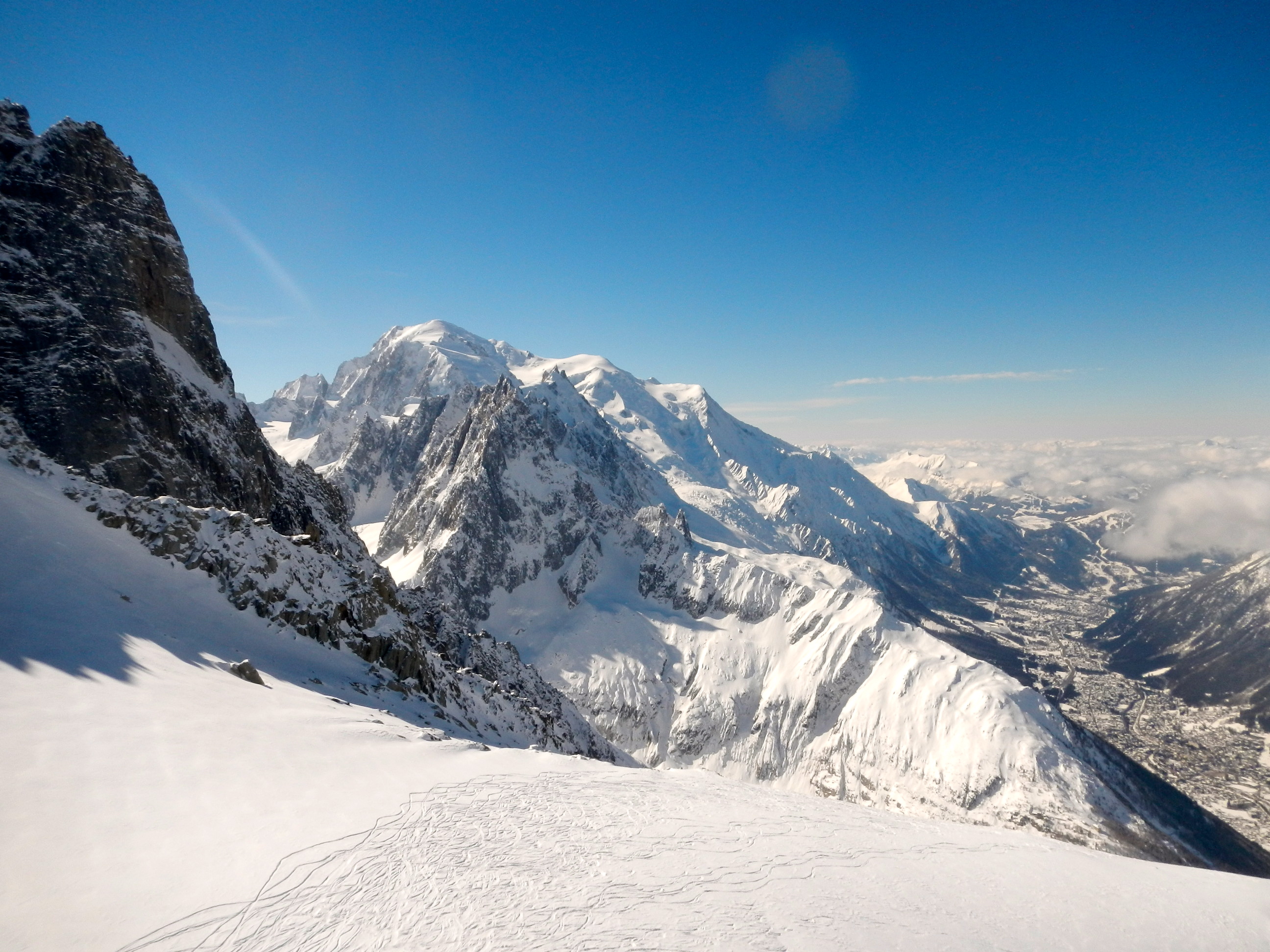
Les Grands Montets rises above the village of Argentiere near Chamonix in the French Alps. With exceptional vertical drops and tough terrain, about half the runs are black. I dropped the boys at school and in about an hour was in Argentiere. After another hour (mainly waiting in queues) and two telecabine rides I was on top of Grand Montets at 3300 m, with a spectacular view of Mont Blanc and clear blue skies. Chamonix is visible in the valley below.
Cathar castles: Montréal de Sos and the Grail Cave
Further up the Vicdessos valley from the ice age paintings of Niaux ( https://mountainsrivers.com/2014/02/23/the-ice-age-paintings-of-the-grotte-de-niaux/) is one of the less well known Cathar castles, known as Montréal de Sos. It sits on a rocky outcrop, the Vic de Sos, from which the valley gets its name. Occupied since the Bronze age, this was the site of an Iron Age oppidum, a Carolingian fortress, and during the Cathar period one of the most powerful castles of the Foix region, Montréal-de-Sos. Under the castle remains is a cave with two exits – or an entrance and a different exit. Such caves were used for initiation rituals in Cathar times.
Two brand new uncles, a new aunt, and a flock of cousins in a pear tree
What did I give Mum for Christmas 2013? Two brand new uncles, a new aunt, and a flock of cousins in a pear tree!
Mum never knew her maternal grandfather as he disappeared from the scene after the birth of his last child in 1905, and the family has never known what happened to him. He was an American born in Boston and in the early 2000s I hired a researcher in Boston who found almost no information except some indication that his mother existed and was a widow in Boston around 1905.
Last Christmas while visiting Mum and my sister, I decided to spend a little time searching the web yet again for some clues about him. And I was stunned to discover a marriage certificate for him in Sydney to another woman and then to discover he had a daughter and two sons who in turn had children, my Mum’s new cousins. And they seemed to have lived in the same suburb of Sydney as my Mum’s parents. So my grandmother may easily have bumped into her half-brothers and sisters in the shops. What’s more, he described himself as a bachelor on his second marriage certificate, so he was almost certainly a bigamist. My sister found this quite entertaining http://irenewaters19.com/2014/01/18/weekly-photo-challenge-families/.