Breathwork and sensed energy

In an earlier post, I described my experience with transformational breathwork and the Wim Hof method. I’ve continued to practice these, and to do some online sessions with the breathwork instructor from the retreat I attended late last year. In looking around for more information on breathwork, I came across a book by David Lee called “Life force: Sensed Energy in Breathwork, Psychedelia and Chaos Magic” (Norwich: The Universe Machine, 2018).

Lee gives an overview of and simple instructions for ten types of breathwork, as well as discussing their various purposes and effects, and the relationships between them. This is interesting enough, but his approach to understanding breathwork completely changed my experience of it. He describes the book as an exploration of “sensed energy” and schemes of belief that work best for experiencing, cultivating and manipulating these subtle sensations. In particular, he frames breathwork in terms of the arousal and relaxation of sensed energy.

Transformational breathing produces within minutes a tingling within the hands and feet and a sense of energy surging around the body. Lee advises to simply witness this energy as it circulates and coalesces into definite sensations and emotions. Layers of unresolved emotion may surface and the high level of sensed energy helps them to resolve. So breathwork may untangle pain and discomfort from the past. Lee describes how to modulate the intensity of the breathwork to hover in the space between suppression of this unresolved material and its too intense activation, allowing a process of resolution to occur, rather than repression or re-traumatizing. I certainly experience intense emotions at times during breathwork, and the periods of “tantrum” and application of pressure to particular points on the body enable you to intensify and experience or release these intense emotions.


Continue reading

A pandemic out of control

Over the last two days, I’ve been assessing the coronavirus situation across the world. I’ve posted a regional analysis of trends in new cases on my professional site (an-out-of-control-pandemic-in-most-world-regions).

I reproduce a graph of regional trends below. The dramatic difference in trajectories for Western Europe and the Americas is obvious. While levels are lower in most developing regions, this is mostly due to much lower levels of testing. But confirmed new cases in all regions apart from Europe and East Asia and Pacific are rising.

North America has the most out-of-control epidemic, and that is all due to the USA. I plotted trends for blue and red states in the USA. There is a dramatic difference, with most of the recent rise in new cases occurring in red states (that voted for Republican presidents in most of the recent presidential elections). In the week ending July 5, there were an average 226 new cases per 1 million population in red states compared to 88 per million in blue states.

In a second post which-countries-are-succeeding-and-not-succeeding, I have shown country-specific plots for selected examples of three groups of countries: (1) those that are beating Covid-19, (2) those that are nearly there, and  (3) those that need to take action.  The experiences of the first two groups of countries show that (a) it is important to act early, not wait till there a hundreds of deaths in the country, (b) it only takes about 5-7 weeks of strong interventions to get rid of the majority of cases and (c) half measures don’t work.

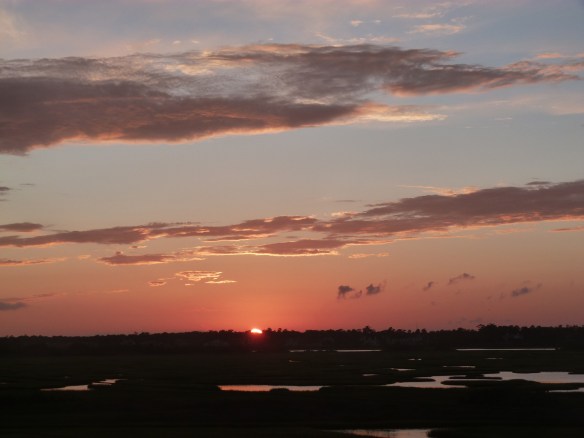
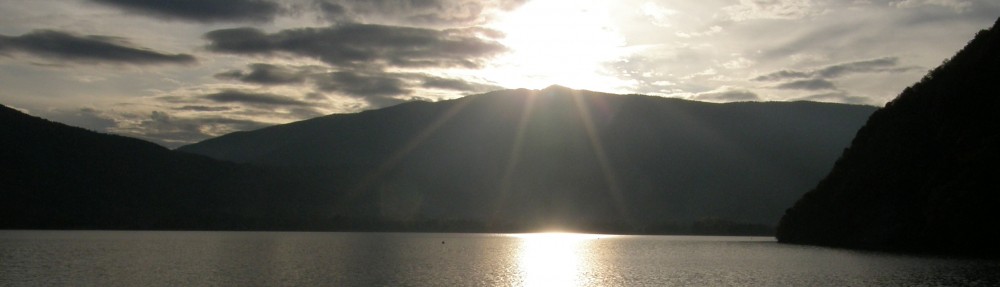
Lake sunset

Sitting by the lake at sunset.
Thoughts drop away as the light of the sun drops away,
the stillness of mind and the stillness of the lake here-now

Looking south across Lake Leman from Montreux, Switzerland.

Geneva hidden in a golden glow

Sunset behind the Intra-coastal water way, Ocean Isle, North Carolina

Swans on Lake Garda, northern Italy

Sunset reflected in a farm dam, Gloucester, New South Wales

.

Tracing my paternal ancestors through Y DNA

The human Y chromosome is a male-specific sex chromosome. When mutations (errors in the copying process) arise in the Y chromosome, they are passed down directly from father to son in a direct male line of descent and define a tree of Y “haplogroups”. The mutations on the Y chromosome can thus be used to trace our paternal ancestors all the way back to the most recent common paternal ancestor of all men alive today, Y chromosomal Adam.

When I first got interested in genetic genealogy around 2010, I had my DNA tested by the National Genographic Project, funded by the National Geographic to collect over a million DNA samples to map the patterns of human migration across the world. This project measured mutations known as short tandem repeats (STRs) at 12 sites, and gave a statistical prediction of my Y-haplogroup, R1b (M343) and subclade R-M269. A year later I upgraded my Y-DNA analysis to 44 STRs with Ancestry.com. At the time, I decided that I would wait for the technology to improve and the cost to drop and do a more comprehensive test which would definitively determine my Y haplogroup.

And so last year I did the Big Y-700 test with FamilyTreeDNA which examines 700 short tandem repeats, and over 200,000 single-nucleotide polymorphisms(SNPs) identifying known haplogroups as well as millions of locations where there may be new branch markers on the Y chromosome. This company claims to have the world’s largest genealogical YDNA database with over 2 million people included.

Continue reading

Y chromosomal Adam

Y-chromosomal Adam is the name given to the patrilineal most recent common ancestor (MRCA) of modern humans. In other words, he was the man from whom all living humans today descend, on their father’s side, and through the fathers of those fathers and so on, back until all lines converge on one person. He is the male counterpart of Mitochondrial Eve, who,lived in north-western Botwsana around 177,000 years ago (confidence interval ± 11,300 years).

When I did my first Y-DNA test in 2012 with the National Geographic’s  National Genographic Project, it gave a date of 60,000 years ago (60 kya) for Y-chromosomal Adam. This was already outdated, as other recent estimates around that time gave dates ranging from 120 to 160 kya. By definition, it is not necessary and highly unlikely that Y-chromosomal Adam and Mitochondrial Eve lived at the same time or in the same location.

However, in 2013 scientists announced the discovery of an extremely ancient Y DNA haplogroup from a sample submitted for an African-American man in the USA.  Y-chromosomal haplogroups are defined by mutations in the non-recombing portions of DNA from the Y chromosome. These mutations accumulate at the rate of roughly two per generation. The accumulation of mutations in the descendants of Y-chromosomal Adam allow us to map out the major branches of the family tree in terms of Y-haplogroups. This discovery adds a completely new branch to the Y-DNA family tree and pushes back the age of Y-chromosomal Adam to around 250 to 300 kya.

Continue reading

COVID-19: light at the end of the tunnel for some countries

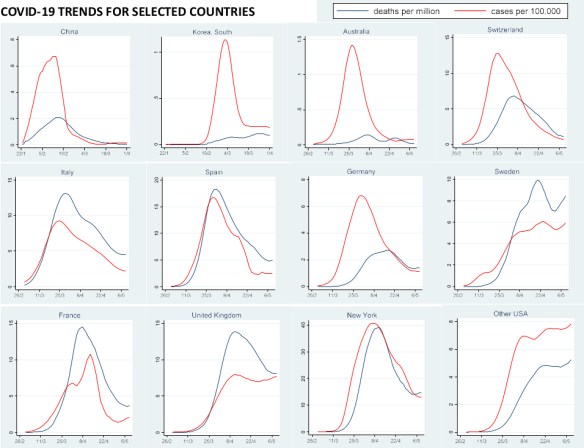
Tomorrow, Switzerland will relax its social distancing regime. Classroom teaching at primary and lower secondary schools will again be permitted. Shops, markets, museums, libraries, gyms and restaurants will be able to reopen under strict compliance with precautionary measures. Switzerland has had the 10th highest death rate per million people but has been one of the few high death rate countries to successfully control the epidemic. See the plot for Switzerland below.

Continue reading

Breathwork and altered states of consciousness

Until recently I had paid little attention to breathwork techniques for achieving non-ordinary states of consciousness.  I’ve done zen meditation for many years now, on and off, and spent quite a bit of time paying attention to the breath, counting the breath etc, but I had been somewhat sceptical of claims I had read that breathwork could induce psychedelic-like experiences.

Late last year I went to a 5 day retreat in the Netherlands which introduced me to a number of new (to me) practices aimed at personal transformation. Among these were breathwork sessions which introduced me to several forms of breathwork, including the form of energising breathwork taught by Wim Hof, the Iceman. Our facilitator was a trained Wim Hof instructor. He also taught us another form of breathwork, called transformational breathwork, and I will describe one of my transformational breathwork sessions at the retreat.

Continue reading

COVID-19 short-run projections

Its now one month since my earlier post on the coronavirus pandemic    A lot has changed since then. We have gone from 24,392 deaths globally on March 26 to 206,915 on April 26th. And recent analysis of total registered deaths by week in February and March, compared to the same periods in the previous year, suggest that the reported deaths (mostly hospital deaths) are only about 70% of the actual deaths. The proportion of deaths reported in developing countries without good death registration (including most of Africa, and much of Asia) will be even lower.

Continue reading

Becoming Human Part 2

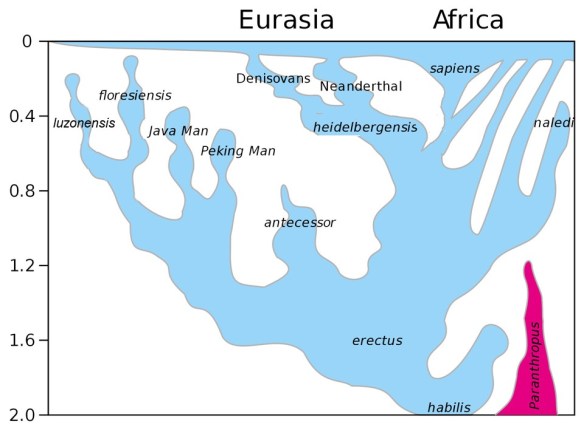
This is the second part of a post summarizing current understanding of the evolution of humans. In the previous post, I outlined the evolution of pre-human species from the first monkeys around 35 million years ago (Mya) to the appearance of the first human species around 2 Mya. This post takes a look across the evolution of humans from the appearance of the first human species Homo habilis to the appearance of anatomically modern Homo sapiens sapiens around 250 thousand years ago. The following figure summarizes the evolution of humans over the last 2 million years, based on [1] with some modifications to take account of some recent discoveries.

The evolution of humans (the genus Homo) over the last 2 million years. Updated from Figure in Wikimedia. User:Conquistador, User:Dbachmann / CC BY-SA. (https://creativecommons.org/licenses/by-sa/4.0)- . The late survival of robust australopithecines (Paranthropus) alongside humans until about 1.2 Mya is indicated in purple. The rapid “Out of Africa” expansion of H. sapiens is indicated at the top of the diagram, with admixture indicated with Neanderthals, Denisovans, and unspecified archaic African hominins.

Continue reading

Buddhism without beliefs

My son has been reading the existentialists, starting with Camus (of course, The Plague is quite relevant for more than one reason now). He recently moved on to Kierkegaard, who took a form of Christianity as a solution to existential angst. I was reminded of a book I read probably 15 years ago, by Stephen Batchelor: Buddhism Without Beliefs (London: Bloomsbury 1997) which argued that the Buddha was concerned with addressing the existential issue of suffering not with metaphysics and beliefs.  I couldn’t find my copy of this, and bought another, which I enjoyed reading even more than the first time.

Continue reading