
In the last decade or so, there has been a renaissance of interest in the therapeutic potential of psychedelics. While natural psychedelic substances have been used by humans for many thousands of years, psychedelics had a massive cultural impact on the West in the 1950s and 1960s. Albert Hoffman, a research scientist working for the Swiss pharmaceutical company Sandoz, accidentally invented LSD (lysergic acid diethylamide) in 1938 and discovered its psychedelic properties five years later. In 1955, a New York banker named Gordon Wasson sampled the psilocybe (magic) mushroom in Mexico and published an article on his experience in Life magazine.
Scientists discovered the role of neurotransmitters in the brain in the 1950s, and psychedelics inspired scientists to search for the neurochemical origins of mental disorders previously thought to be psychological. Psychedelics were also used in psychotherapy to treat various disorders, including alcoholism, anxiety and depression, with some promising results, although these studies generally did not reach modern standards of research design.
However, psychedelics were also embraced by the counterculture and became linked in the mind of authorities with youth counterculture and the anti-Vietnam war protests. By the end of the 1960s, most Western governments had outlawed and forced underground the psychedelic drugs which had been legal in most places previously, and also shut down all scientific research.
In the 1990s small groups of scientists managed to start conducting various trials of the therapeutic uses of psychedelics and this has led to the so-called psychedelic “renaissance” in which larger well-designed trials of psychedelic use for treating a range of mental disorders are being carried out by research groups at institutions such as Imperial College London, Johns Hopkins University and New York University. Just today, it was announced that the Australian government will be providing $15 million funding for clinical trials into the use of psilocybin and other psychedelics for the treatment of mental illnesses, including depression and PTSD. Michael Pollan’s book How to Change Your Mind gives an excellent account of the history of psychedelics, both above ground and underground, and the psychedelic renaissance, and was a best seller. See also this article by Michael Pollan on the “Psychedelic Renaissance”.
As part of my work on the global burden of disease for the World Health Organization (WHO), I carried out several assessments of the direct and indirect health impacts of the use of drugs, alcohol and tobacco. I recently did an approximate update to year 2019 for deaths directly due to drug use disorders (overdoses and directly toxic effects) and indirect deaths from road injury, suicide and infectious diseases attributable to drug use. A proportion of HIV, hepatitis B and hepatitis C deaths can be attributed to injecting drug use with contaminated needles. The great majority of direct and indirect deaths due to drug use are due to the use of opioids, both illicit and pharmaceutical opioids. Very few deaths are associated with psychedelic drug use, but I was curious to get a ballpark estimate for comparison with other drug deaths. I will present a brief summary of the broad estimates of drug-attributable deaths, then review evidence on the likely contribution of psychedelic drugs.
 Japanese martial arts and the role of Zen in them. Bruce Lee also sparked a huge surge of Western interest in the Asian martial arts with his 1973 film Enter the Dragon. The idea of practicing a martial art was something I could relate to, and in 1974 I enrolled in a lunch-time karate class at the University during my 4th year Physics Honors Year. I was so enthusiastic about karate that I remember being puzzled why others were not joining once they knew about the availability of classes. Over the next two or three years I trained in several karate styles including Goju Ryu, Dioshin Lyanbukan and Kei Shin Kan.
 Having recently re-read The Lord of the Rings trilogy (see my
  There is an immense amount of recent research on European Bronze Age genetics and migrations and a very considerable unfinished debate on how to interpret the evidence. New evidence is being published almost weekly, as increasing numbers of ancient European remains are analysed and Y haplogroup identified. So this post will only aim to describe the big picture as best I can summarize it, and details and perhaps even some of the big picture will likely change in the future.
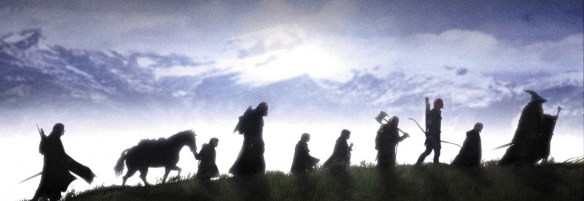 My first encounter with Middle Earth was when I came across The Hobbit in my first year of high school. The Hobbit gave me the same sense of the numinous and of “Northerness” as earlier had C.S. Lewis’s Chronicles of Narnia. I had borrowed it from the local library, did not remember the name of the author and only several years later as a teenager did I discover the Lord of the Rings (LOTR). It was originally published in three volumes in 1954 and 1955, 18 years after the Hobbit was published in 1937. The Lord of the Rings became immensely popular in the 1960s with the publication of the Ballantine paperback editions, and in North America, the publication of the Ace pirated edition. I first read it in 1969, when I purchased the 1968 first edition of the George Allen and Unwin one volume paperback with cover illustrations by Pauline Baynes: